Blog
How Do Electric Window Openers Work? A Complete Guide for US Suppliers (2026)
Author
Ray
Published
Category
Electric Window Opener
Discover how electric window openers and chain actuators work. This technical guide for US suppliers covers mechanics, specifications, UL codes, BMS integration, and how to choose the right systems for commercial projects.

Author
Ray
An experienced automation specialist with a strong background in motor technology and industrial solutions. With years of expertise in central motors, tubular motors, and automation systems, the author is dedicated to sharing insights that connect engineering innovation with real-world applications. Passionate about advancing reliable, energy-efficient, and high-performance automation products for global markets.
What’s better than insider perks, pro tips, and surprises?
Sign up to get the most recent blog articles in your email every week.
Join now.
WHY I WRITE THIS
About my business
Our company’s main product lines include tubular motors, sliding gate motors, swing gate motors, roller shutter motors, and other door automation solutions, all manufactured by trusted partner factories we have worked with for many years.
Our Services
I help them with sales and export operations, while our company also provides sourcing and procurement services in China to help international clients solve supply-related challenges. If you need assistance with procurement, please feel free to contact us.
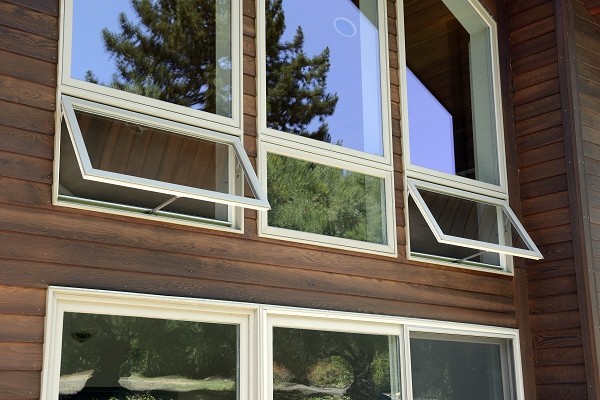
Electric window openers — also called window actuators — convert electrical energy into controlled linear motion to open and close windows, skylights, roof vents, and atrium panels.
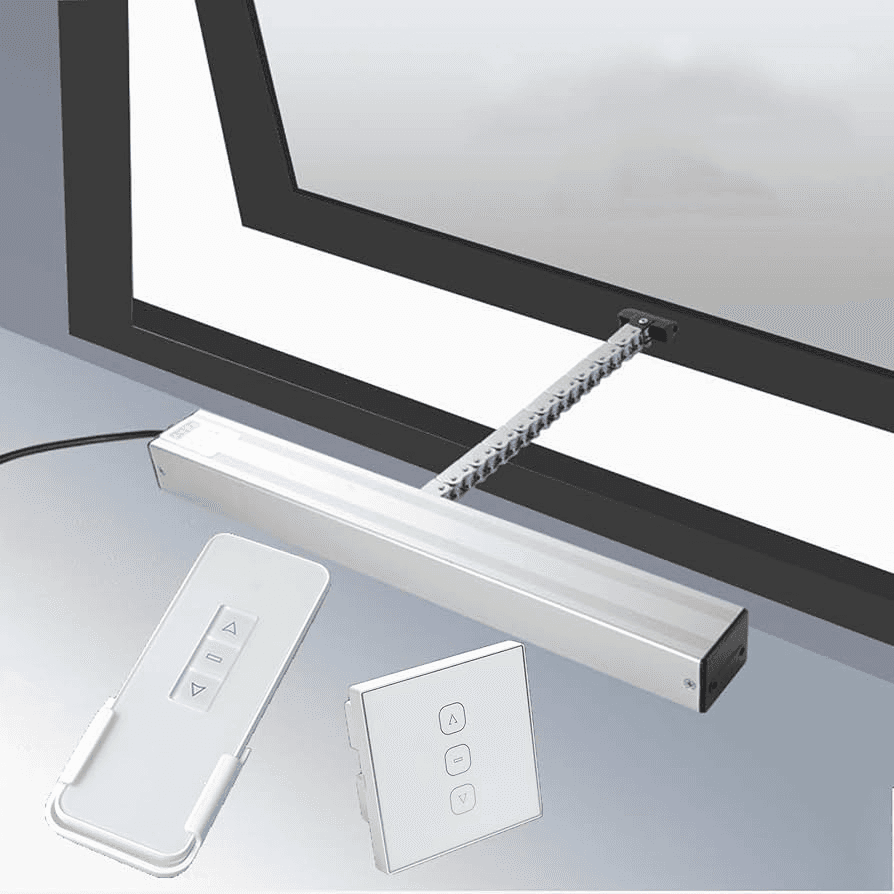
At their core, most units use a 24V DC motor connected to either a chain drive, screw jack, or rack-and-pinion system. When the motor receives a signal from a switch, sensor, or building management system (BMS), it rotates, driving the mechanism to extend or retract with specific force and speed. This allows precise, reliable operation for natural ventilation, smoke extraction, and energy-efficient climate control.
For U.S. suppliers and distributors, understanding these mechanics is no longer optional. As commercial construction increasingly demands automated natural ventilation and code-compliant smoke control, the ability to confidently specify and support these systems has become a competitive advantage.
Key Takeaways
Electric window openers typically use chain or screw mechanisms driven by low-voltage DC motors.
Stroke length, opening force (measured in Newtons or pounds), speed, and duty cycle are the most important performance variables.
Smoke ventilation actuators require fail-safe operation and stricter certifications (UL 864, NFPA 92) compared to natural ventilation models.
Proper actuator selection depends on window size, weight, wind load, and integration requirements.
Quality manufacturing directly impacts synchronization, noise levels, longevity, and long-term warranty support.
What Is an Electric Window Opener (Window Actuator)?
An electric window opener is a motorized linear actuator designed specifically for moving windows, vents, and louvers. Unlike general-purpose linear actuators, window actuators are engineered for repeated cycling, weather resistance, and quiet operation in occupied spaces.
The term “window actuator” has become the industry standard, while “electric window opener,” “chain actuator,” and “motorized vent opener” are used interchangeably depending on the drive mechanism. Commercial-grade units are built to handle thousands of cycles with minimal maintenance, making them suitable for both everyday natural ventilation and life-safety smoke extraction applications.
How Do Electric Window Openers Work? The Core Operating Principle
The fundamental process is straightforward yet precisely engineered:
Signal Input: The actuator receives an electrical command from a wall switch, rain sensor, thermostat, fire alarm panel, or BMS.
Motor Activation: A 24V DC motor (preferred in commercial installations for safety and compatibility) begins rotating.
Drive Mechanism Conversion: The motor’s rotational force is converted into linear motion through one of three primary systems — chain, screw, or rack and pinion.
Output Motion: The drive mechanism extends or retracts, pushing or pulling the window sash or vent panel to the desired position.
Feedback and Control: Higher-quality units use reed switches, potentiometers, or encoders to provide position feedback, enabling synchronization of multiple actuators on large windows or atria.
When power is removed, braking systems or self-locking mechanisms (common in screw jack designs) hold the window in position. In fail-safe smoke ventilation models, stored energy systems (springs or supercapacitors) ensure the vent opens even during power failure.
This elegant conversion of electricity into controlled mechanical movement is what makes modern natural ventilation and smoke control systems possible.
Main Types of Window Actuators and How They Differ
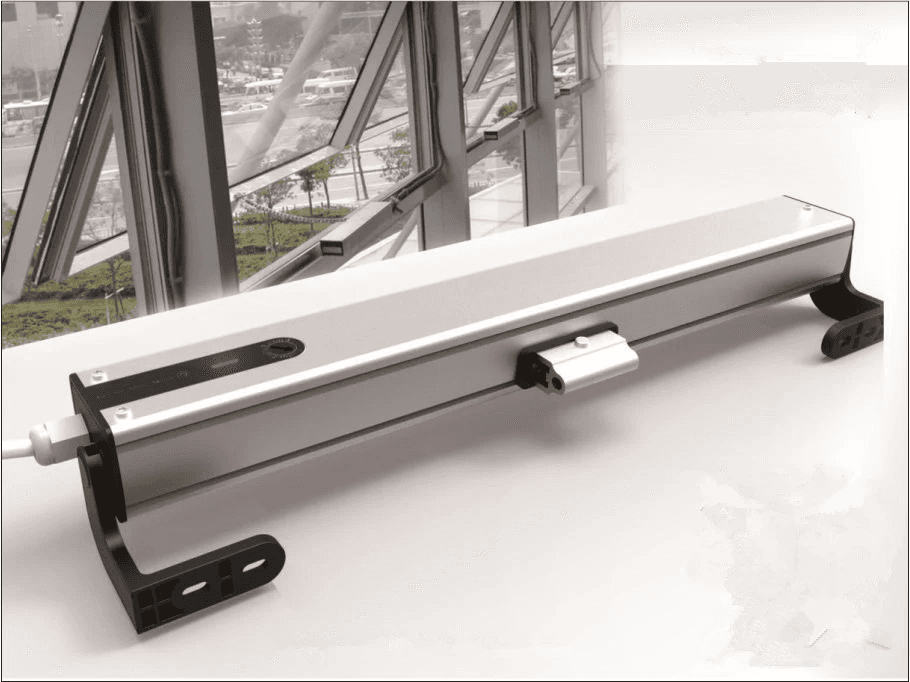
Chain Drive Actuators (Most Common)
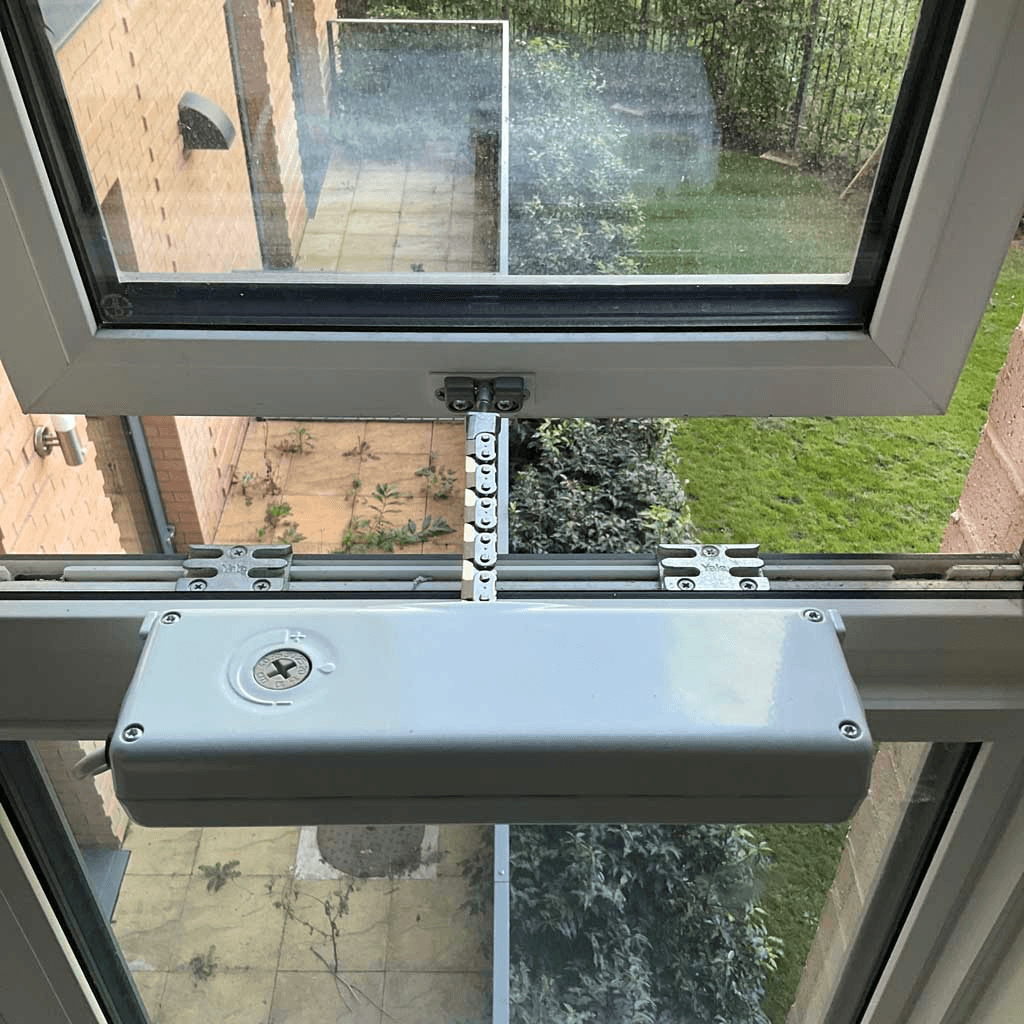
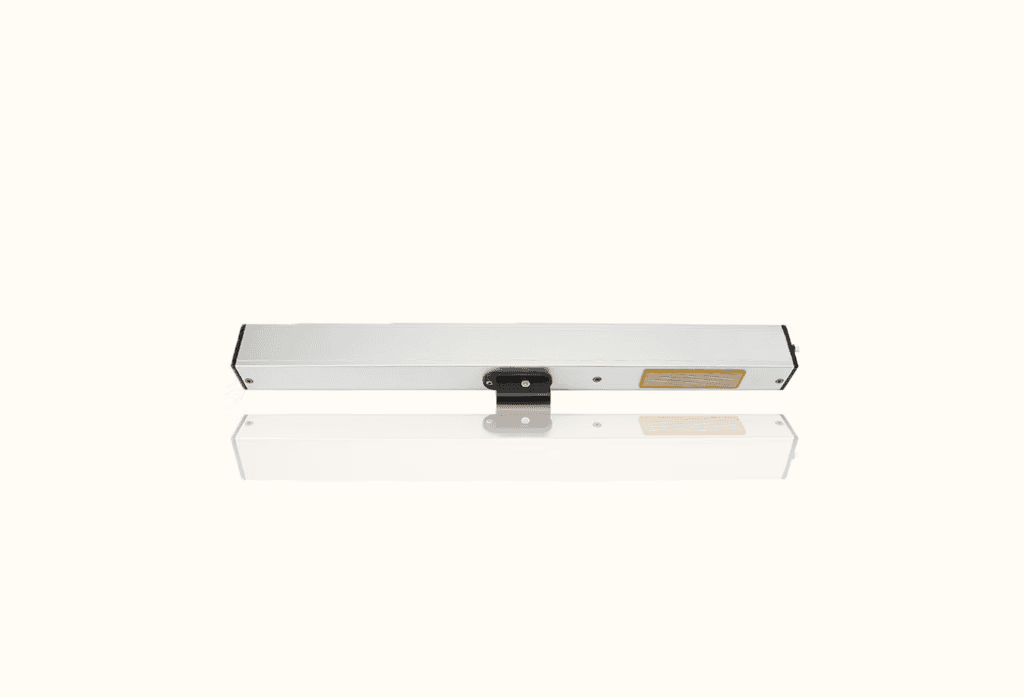
Chain actuators are the dominant choice for most commercial and institutional projects. A hardened stainless steel chain is driven by a worm gear connected to the motor.
Advantages:
Excellent reach (stroke lengths commonly 200–800mm)
Compact when retracted
Good force-to-size ratio
Relatively quiet operation
Double-chain versions provide greater stability for wider vents or heavy skylights.
Screw Jack (Spindle) Actuators
These use a rotating threaded rod (lead screw) to drive a traveling nut. They are generally stronger and more rigid than chain actuators.
Best suited for: Heavy roof vents, high wind-load applications, or situations where the actuator must push rather than pull. They offer excellent self-locking characteristics but typically have slower opening speeds.
Rack and Pinion and Hidden Chain Designs
Hidden chain actuators conceal the chain within the hinge or frame for aesthetic applications such as high-end conservatories or architectural glazing. Rack and pinion systems are less common but provide very linear, stable motion for specialized installations.
Critical Technical Specifications Explained
When evaluating electric window actuators for your inventory or projects, focus on these variables:
Stroke Length: How far the actuator opens the window (typically 200mm to 1000mm+).
Opening Force: Usually measured in Newtons. A 500N actuator equals roughly 112 lbs of force. Higher force is required for heavy vents or those operating against wind pressure.
Speed: Measured in mm/second. Natural ventilation units typically run 8–15 mm/s. Faster speeds are possible but often generate more noise.
Duty Cycle: The percentage of time an actuator can operate without overheating. Look for at least 30–50% duty cycle in commercial applications.
IP Rating: IP65 or IP66 is standard for exterior use to protect against dust and water.
Synchronization: Critical when multiple actuators operate on one large window or skylight to prevent racking and binding.
Smoke Ventilation vs Natural Ventilation Actuators
This distinction is vital for U.S. suppliers.
Natural Ventilation Actuators focus on daily comfort, energy efficiency, and indoor air quality. They prioritize quiet operation, long duty cycles, and integration with weather sensors.
Smoke Vent Actuators (part of Smoke and Heat Exhaust Ventilation Systems — NSHEV) are life-safety devices. They must comply with stricter standards, often require fail-safe operation that opens the vent during power loss, and typically need UL 864 listing and NFPA 92 compliance.
Many manufacturers produce dual-purpose units, but the certification path and internal components differ significantly.
How to Select the Right Electric Window Actuator for Your Customers
A practical framework for distributors:
Calculate total opening force required (window weight + wind load).
Determine required stroke based on desired opening angle.
Choose voltage (24V DC is the commercial standard).
Match actuator type to application (chain for most windows, screw for heavy roofs).
Verify certifications against project requirements (UL 325 for general use, UL 864/NFPA 92 for smoke control).
Evaluate synchronization needs and control system compatibility.
Working with an experienced OEM manufacturer allows customization of stroke, force, color, and connection points to meet specific project demands.
Integration with Building Management Systems (BMS) and Sensors
Modern window actuators rarely operate in isolation. Most commercial installations integrate with:
Rain, wind, and temperature sensors
CO₂ and indoor air quality monitors
Fire alarm systems
BACnet or Modbus-enabled BMS platforms
Actuators with feedback signals allow the BMS to verify exact position — a requirement in many sophisticated installations.
UL Certification and U.S. Code Compliance
The American market demands clear certification pathways. UL 325 covers electric operators for doors, draperies, and windows. Smoke control systems often require additional compliance with NFPA 92 and the International Building Code (IBC).
When sourcing, insist on seeing current UL listings rather than manufacturer claims. Reliable partners will provide documentation packages that simplify your sales process and protect you from liability.
Common Applications for American Suppliers and Contractors
Commercial atria and skylights
Institutional buildings (schools, hospitals, laboratories)
Greenhouse and indoor agriculture ventilation
Mixed-use high-rise facades
Fire smoke exhaust in warehouses and manufacturing facilities
Smart glass curtain wall systems
The most successful suppliers bundle actuators with sensors, controls, and installation support as complete ventilation packages.
Maintenance and Long-Term Reliability Considerations
Quality actuators require minimal maintenance but benefit from:
Periodic lubrication of chains (where applicable)
Checking synchronization on multi-actuator installations
Verifying battery or capacitor backup systems on fail-safe models
Protecting wiring from UV and water ingress
Choosing actuators from manufacturers with robust testing protocols and accessible spare parts dramatically reduces warranty claims and service calls.
Conclusion
Understanding how electric window openers work is the foundation for successfully specifying, selling, and supporting these systems in the American market. The combination of precise mechanical engineering, smart controls, and strict code compliance creates both technical and commercial opportunity for suppliers who master the category.
As demand for energy-efficient buildings and life-safety systems continues to grow through 2025 and beyond, distributors who can speak fluently about actuator mechanics, integration, and application will win more projects and build stronger manufacturer relationships.
Looking for a manufacturing partner that understands both the engineering and commercial realities of the U.S. market? China Develop specializes in OEM electric window actuators, offering custom stroke lengths, force ratings, UL-compliant models, and flexible branding options for established distributors.
Contact our engineering and sales team to discuss your specific product requirements.
FAQS
How long do electric window actuators typically last?
Commercial-grade units from quality manufacturers are designed for 10,000–20,000 cycles or more. Actual lifespan depends heavily on duty cycle, environmental conditions, and proper sizing.
What is the difference between 24V and 230V window actuators?
24V DC is the standard for commercial and institutional buildings due to safety, easier BMS integration, and lower voltage requirements. 230V AC units are more common in some residential or retrofit applications but face stricter code restrictions in commercial smoke control.
Do all window actuators work with BMS systems?
Not all. Only models equipped with feedback signals (reed switches, potentiometers, or digital encoders) provide the position verification that modern BMS platforms require.
Are chain actuators or screw jack actuators better?
Neither is universally better. Chain actuators offer faster operation and longer strokes, while screw jack actuators provide greater rigidity and self-locking characteristics. Selection depends on the specific window weight, wind load, and aesthetic requirements.
What does “fail-safe” mean for smoke vent actuators?
Fail-safe actuators are designed to open automatically during power failure, usually through spring return or supercapacitor systems. This is a critical life-safety requirement in compliant smoke control systems.
How important is UL listing for selling in the United States?
Extremely important. Many architects, engineers, and general contractors will not specify products without appropriate UL listings. It also significantly reduces liability exposure for distributors.
Other Blogs