Blog
How That "Magic" Barrier Knows Exactly When to Lift
Author
Ray
Published
Category
Car Park Barriers
Discover how automatic car park barriers work. From induction loops to motor logic, explore the technology, safety features, and components of modern parking systems.

Author
Ray
An experienced automation specialist with a strong background in motor technology and industrial solutions. With years of expertise in central motors, tubular motors, and automation systems, the author is dedicated to sharing insights that connect engineering innovation with real-world applications. Passionate about advancing reliable, energy-efficient, and high-performance automation products for global markets.
What’s better than insider perks, pro tips, and surprises?
Sign up to get the most recent blog articles in your email every week.
Join now.
WHY I WRITE THIS
About my business
Our company’s main product lines include tubular motors, sliding gate motors, swing gate motors, roller shutter motors, and other door automation solutions, all manufactured by trusted partner factories we have worked with for many years.
Our Services
I help them with sales and export operations, while our company also provides sourcing and procurement services in China to help international clients solve supply-related challenges. If you need assistance with procurement, please feel free to contact us.
The Anatomy of Access: A Deep Dive into Automatic Car Park Barriers
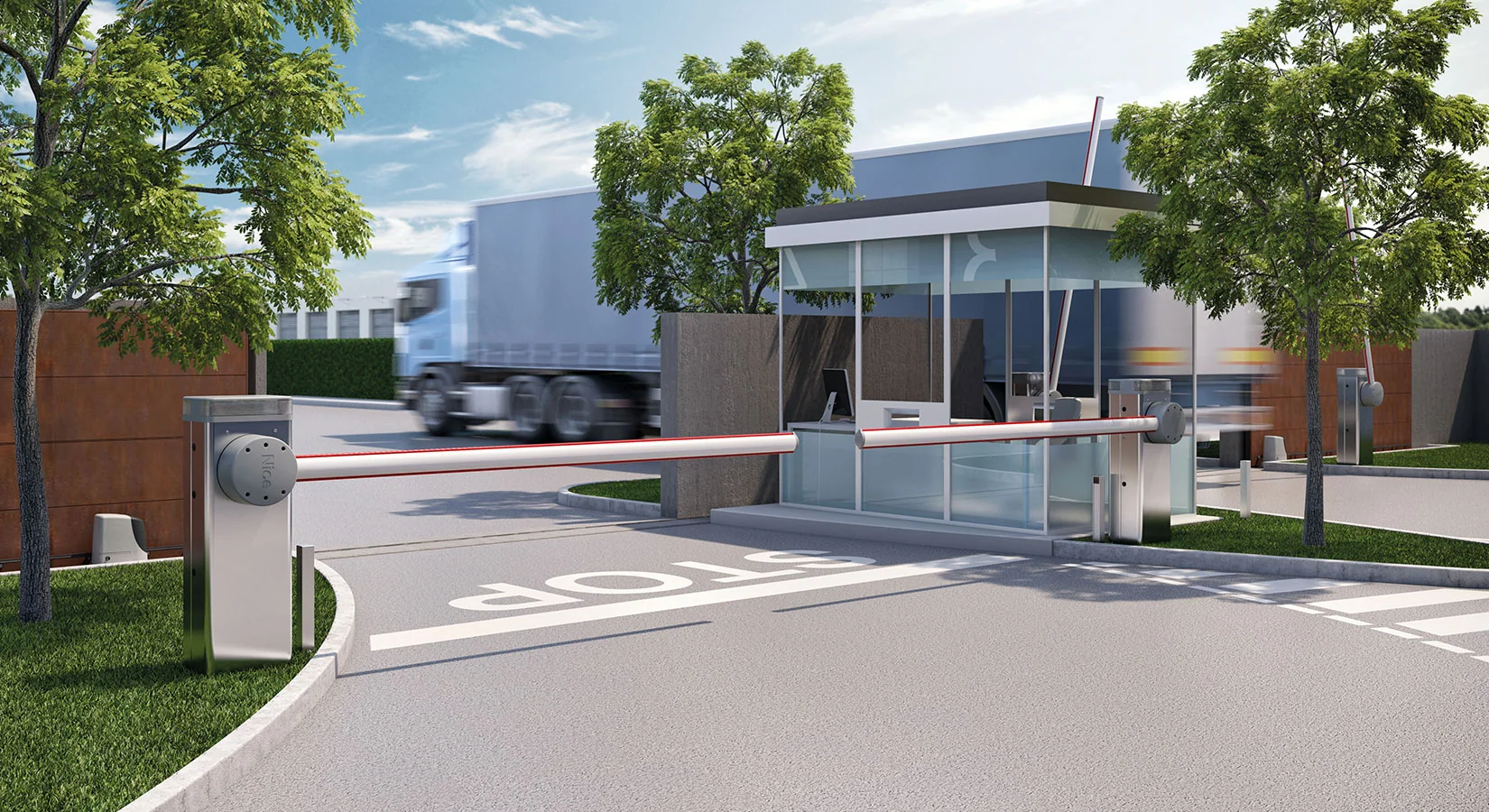
In the modern urban landscape, the automatic car park barrier is often the first point of contact between a facility and its visitors. While it may look like a simple "rising arm," it is actually a sophisticated symphony of mechanical engineering, sensor technology, and digital logic.
Whether you are a facility manager or a tech enthusiast, understanding how these gatekeepers operate reveals the complex security infrastructure guarding our vehicles.

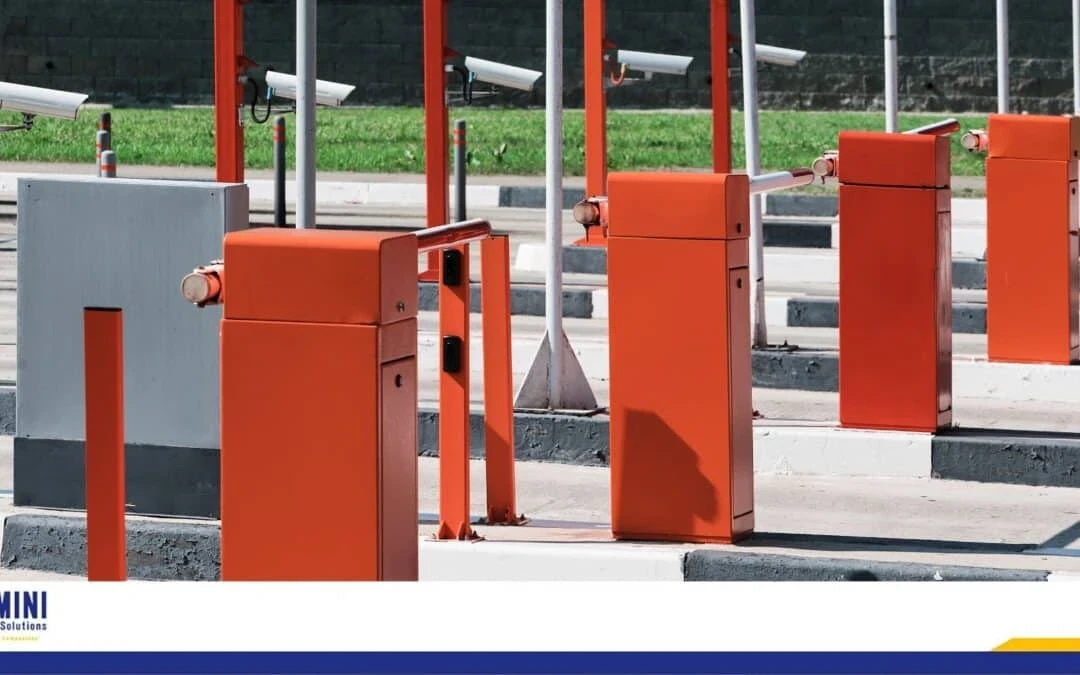
1. The Core Anatomy: How the "Muscle" Meets the "Brain"
To understand a barrier, you must look beneath the housing. An
system is comprised of four pillars of technology:
Component | Function | The "Analogy" |
Control Unit | Processes signals from sensors and issues commands. | The Brain |
Electric Motor | Drives the movement of the arm via a gearbox. | The Muscle |
Counterbalance Spring | Offsets the weight of the arm to ensure smooth, low-strain lifting. | The Sinew |
Barrier Arm | The physical deterrent (Aluminium or Fibreglass). | The Face |
The Engineering Secret: The Counterbalance
A common misconception is that the motor does 100% of the heavy lifting. In reality, tensioned springs act as a counterbalance. This ensures the motor operates with minimal wear and tear, allowing for thousands of cycles per day without mechanical failure.
2. The Operational Logic: From Detection to Actuation
The "magic" of a barrier lifting as you approach is actually a three-stage communication loop:
Step 1: Detection & Validation
As a vehicle approaches, the system must verify its identity. This is no longer just about "pressing a button." Modern systems use:
ANPR (Automatic Number Plate Recognition): AI cameras read the plate and cross-reference it with a database.
RFID & Proximity Cards: Used for long-term tenants or staff for "hands-free" entry.
Inductive Loop Detectors: Coils of wire buried in the asphalt that detect the metal mass of a vehicle via electromagnetic changes.
Step 2: The Command
The Control Unit validates the credentials (e.g., "Is the parking fee paid?" or "Is this plate authorized?"). Once confirmed, it triggers the motor.
Step 3: Rapid Actuation & Closure
The motor engages the gearbox to lift the arm—often in as little as 1.5 to 4 seconds. Once the vehicle clears the exit sensors, the system initiates "Rapid Closure" to prevent tailgating (where a second vehicle tries to sneak through).
3. Advanced Solutions: When Space is the Enemy
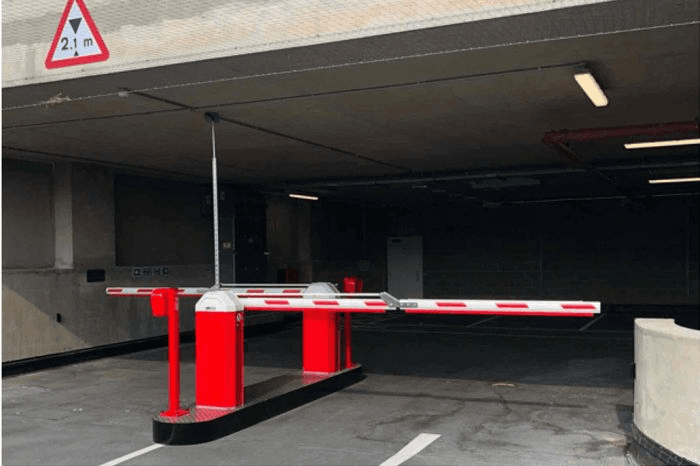
Standard straight-arm barriers require significant vertical clearance. But what happens in underground car parks or facilities with low ceilings?
The Articulated (Folding) Boom Arm
This is the "Transformer" of the parking world. An articulated arm features a mechanical pivot point. As the barrier rises, the arm folds at a 90° angle, allowing it to provide full access control in areas with low overhead obstructions like beams, pipes, or trees.
Pro-Tip: While articulated arms are more expensive than straight ones, they are the only viable solution for basement levels where vertical space is a luxury.
4. The "Safety First" Protocol: Preventing the Smash
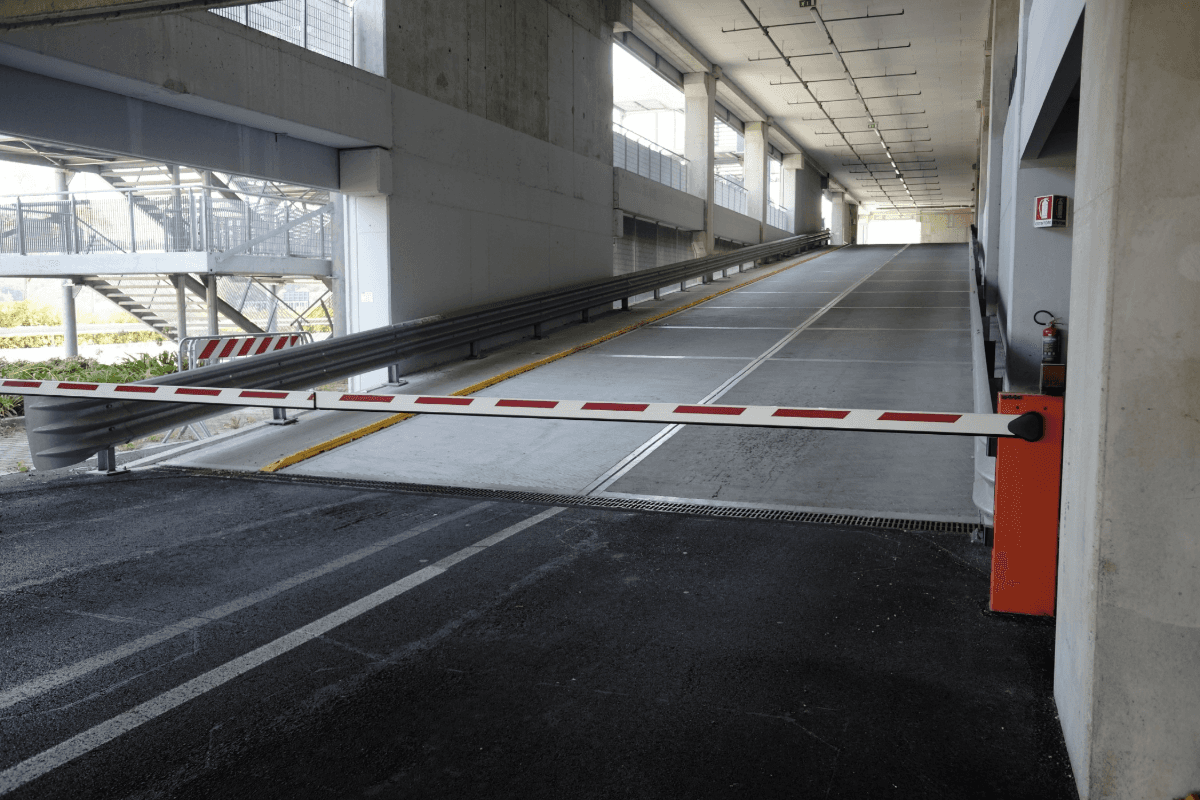
Safety is the most critical aspect of automatic barrier design. To prevent the arm from coming into contact with a car or pedestrian, systems employ a redundant safety layer:
Safety Induction Loops: These act as a "stay-open" command. As long as a metal mass (your car) is sitting over the loop, the barrier will refuse to close.
Infrared Photocells: These emit an invisible beam across the path. If the beam is broken by a person or a vehicle, the arm immediately stops or reverses.
Pressure-Sensitive Edges: A rubber strip on the bottom of the arm that, if it touches anything, triggers an instantaneous reversal.

5. Why Modern Facilities Invest in High-End Barriers
Investing in an automated system isn't just about "stopping cars"; it’s about Data and ROI (Return on Investment).
Traffic Flow Management: Automation eliminates the bottleneck of manual ticketing, reducing CO2 emissions from idling cars.
Revenue Generation: Integration with cloud-based payment systems ensures that every minute of parking is accounted for and billed accurately.
Visual Deterrence: A robust barrier is a psychological barrier. It signals to potential vandals that the facility is monitored and controlled.
Lower Overheads: By replacing on-site personnel with remote monitoring and autonomous access, facilities significantly reduce labor costs.
Conclusion
The automatic car park barrier is a masterclass in functional reliability. From the electromagnetic fields of the induction loops to the precision of the motor gearbox, every movement is calculated to balance speed, security, and safety. In the era of the "Smart City," these barriers are no longer just obstacles—they are the essential data nodes that keep our urban environments moving.
Frequently Asked Questions (FAQs)
1. How does an automatic parking barrier detect a vehicle?
Automatic barriers primarily use inductive loop detectors buried under the road surface. These loops create a magnetic field that senses the metal mass of a vehicle. Additionally, modern systems use infrared photocells and ANPR (Automatic Number Plate Recognition) cameras to identify and track vehicle movement for seamless access.
2. What happens if a car park barrier hits a car?
High-quality automatic barriers are equipped with safety fail-safes to prevent vehicle damage. These include safety edges (pressure sensors on the arm), photocells that detect obstructions, and auto-reverse mechanisms. If an object is detected during the closing cycle, the control unit immediately signals the motor to stop and reverse the arm.
3. What is the difference between a straight arm and an articulated boom arm?
A straight arm is a single, solid beam used in open areas with plenty of vertical clearance. An articulated boom arm (or folding arm) features a mechanical joint that allows the beam to fold in the middle. This is the ideal solution for underground car parks or facilities with low ceilings and limited overhead space.
4. Can automatic car park barriers work during a power outage?
Yes, most professional systems include a manual override feature. This allows authorized personnel to disengage the motor with a key and lift the barrier arm manually. Many high-end models also offer battery backup (UPS) systems to ensure continued operation during brief power failures.
5. How much does an automatic car park barrier cost?
The price varies significantly based on the arm length, motor type (AC vs. brushless DC), and integrated technology (like RFID or LPR). While a basic unit might be more affordable, investing in a high-speed, high-duty cycle motor and durable materials like fiberglass can save costs in the long run by reducing maintenance and replacement frequency.
6. Are automatic barriers effective for preventing "tailgating"?
Yes. Advanced control units feature a "rapid closure" logic. Once the safety sensors confirm a vehicle has cleared the path, the barrier arm closes immediately to prevent a second, unauthorized vehicle from following closely behind.
Other Blogs