Blog
Best Industrial Sectional Door Motor for Warehouses and Logistics Centers
Author
Ray
Published
Category
Industry Insights

Author
Ray
An experienced automation specialist with a strong background in motor technology and industrial solutions. With years of expertise in central motors, tubular motors, and automation systems, the author is dedicated to sharing insights that connect engineering innovation with real-world applications. Passionate about advancing reliable, energy-efficient, and high-performance automation products for global markets.
What’s better than insider perks, pro tips, and surprises?
Sign up to get the most recent blog articles in your email every week.
Join now.
WHY I WRITE THIS
About my business
Our company’s main product lines include tubular motors, sliding gate motors, swing gate motors, roller shutter motors, and other door automation solutions, all manufactured by trusted partner factories we have worked with for many years.
Our Services
I help them with sales and export operations, while our company also provides sourcing and procurement services in China to help international clients solve supply-related challenges. If you need assistance with procurement, please feel free to contact us.
In a warehouse or logistics center, the sectional door motor is not just a convenience—it is a critical operational component. It determines how fast goods move, how safely doors operate, and how often downtime interrupts your workflow.
The best industrial sectional door motor is not simply the most powerful one. It is the one correctly matched to your door’s weight, cycle frequency, and operating environment—while delivering consistent torque, reliable duty performance, and built-in safety protections.
If you choose based on price or generic specifications alone, you risk premature failure, overheating, or unsafe operation. If you choose based on torque, duty cycle, gearbox quality, and safety systems, you get long-term reliability and smoother logistics flow.
Key Takeaways
The best motor is defined by application fit, not maximum power
Torque and duty cycle are the two most critical selection factors
High-traffic warehouses require high-cycle rated motors, not standard models
Safety systems like photoelectric sensors and auto-reverse are essential, not optional
A reliable gearbox and thermal protection determine long-term performance
What Is an Industrial Sectional Door Motor?
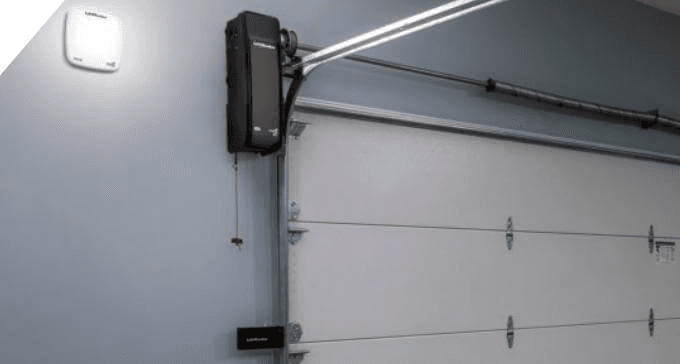
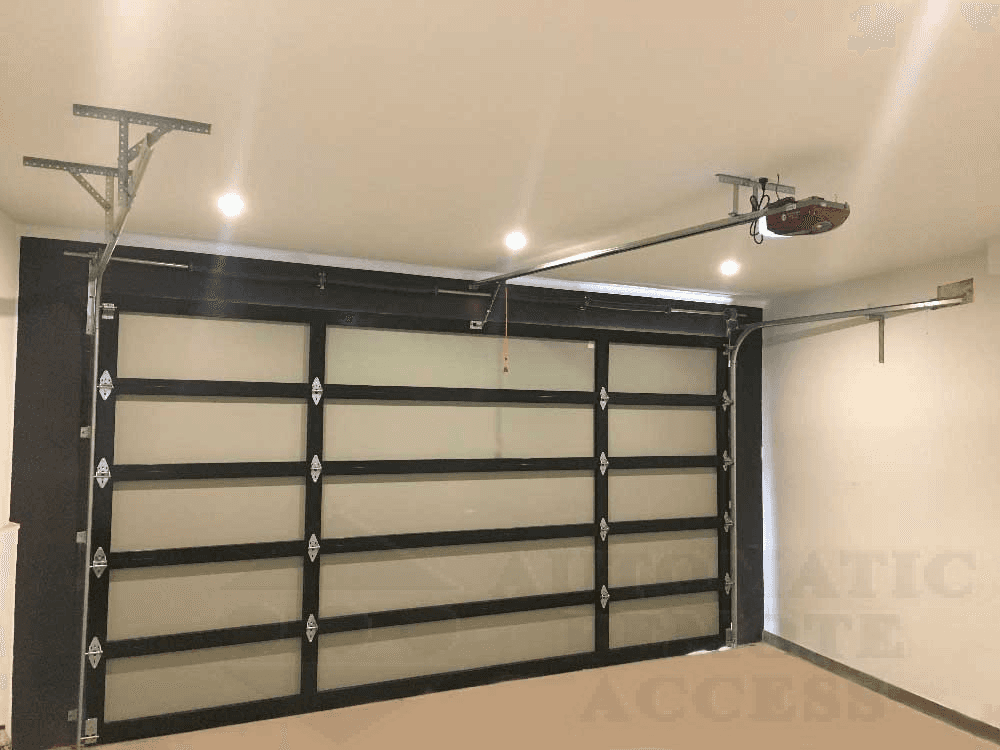
An industrial sectional door motor (also called a sectional door operator or opener) is a powered drive system designed to open and close large sectional doors used in warehouses, factories, and logistics hubs.
Unlike residential openers, these motors are built for:
heavier door loads
frequent operation cycles
continuous daily use
integration with automation systems
They typically include a motor, gearbox, control unit, and safety mechanisms, forming a complete door automation system.
Why Warehouses and Logistics Centers Need High-Performance Motors
High cycle usage demands
In logistics environments, doors may open and close dozens or even hundreds of times per day. This creates continuous mechanical and thermal stress.
A standard-duty motor will overheat or wear prematurely under these conditions. That is why high cycle duty sectional door motors are essential for warehouses.
Operational efficiency and traffic flow
Door speed directly impacts throughput. Slow or inconsistent door operation creates bottlenecks in:
loading bays
vehicle entry points
material handling workflows
The right motor ensures smooth, predictable movement, reducing idle time and improving logistics efficiency.
Safety and compliance requirements
Industrial doors operate in environments with:
forklifts
workers
vehicles
This makes entrapment prevention, obstruction detection, and emergency stop systems mandatory for safe operation.
How to Choose the Best Industrial Sectional Door Motor
1. Torque and lifting capacity
Torque determines whether the motor can start and move the door reliably, especially under load.
Key considerations:
door weight
door size and height
counterbalance system efficiency
starting (breakaway) torque requirement
A motor that is underpowered may stall or strain. An oversized motor, however, may increase wear on mechanical components if not properly controlled.
Rule of thumb:
Always size the motor based on real operating load, not theoretical door weight alone.
2. Duty cycle and thermal performance
Duty cycle defines how often the motor can operate without overheating.
In warehouses:
high cycle = frequent operation (continuous use)
standard cycle = intermittent use
Motors designed for high cycle applications include:
better thermal management
higher insulation class
overload protection
Ignoring duty cycle is one of the most common reasons for motor failure.
3. Gearbox reliability and drive system
The gearbox converts motor speed into usable torque.
A high-quality gearbox ensures:
smooth operation
reduced noise and vibration
longer lifespan
Key factors:
gear material and precision
lubrication quality
sealing against dust and moisture
Drive system options:
chain drive (robust, common in heavy-duty applications)
belt drive (quieter, less common in industrial heavy loads)
For logistics environments, durability typically outweighs noise reduction.
4. Lift speed vs motor power
Higher motor power does not automatically mean better performance.
What matters is balanced design:
correct speed for workflow efficiency
stable acceleration and deceleration
minimal mechanical stress
Features like soft start and soft stop (ramp control) help reduce wear and improve safety.
5. Power supply and control compatibility
Industrial facilities may use different power systems.
Ensure the motor supports:
local voltage standards
control panel integration
remote or automated operation
Modern systems often integrate with:
access control systems
warehouse automation platforms
remote monitoring tools
Safety Features You Should Never Compromise
Photoelectric sensors and obstruction detection
These sensors detect obstacles in the door path and trigger automatic reversal.
They are essential for:
worker safety
vehicle protection
compliance with safety standards
Emergency release and manual override
In case of power failure, the door must still be operable.
A proper system includes:
manual chain or crank release
emergency disengagement mechanism
Limit switches and travel protection
Limit systems define how far the door travels.
Without them, doors can:
over-travel
damage structure
create safety hazards
Reliable systems include end-of-travel protection and precise positioning.
High Cycle vs Standard Motors: What’s the Difference?
Feature | Standard Motor | High Cycle Motor |
|---|---|---|
Usage frequency | Low to moderate | High, continuous |
Thermal resistance | Limited | Enhanced |
Lifespan under load | Shorter | Longer |
Application | Small facilities | Warehouses, logistics centers |
If your door operates frequently, a standard motor is not a cost-saving option—it is a future failure point.
Common Mistakes When Selecting Door Motors
Avoid these common errors:
choosing based on price instead of performance
ignoring duty cycle requirements
underestimating torque needs
neglecting safety features
selecting incompatible control systems
These mistakes often lead to:
frequent breakdowns
safety risks
higher long-term costs
Maintenance and Long-Term Reliability
Even the best motor requires proper maintenance.
Key practices include:
regular inspection of gearbox and drive components
checking alignment and mounting stability
testing safety sensors and emergency systems
monitoring unusual noise or vibration
Preventive maintenance reduces downtime and extends equipment life.
Final Selection Framework
To choose the best industrial sectional door motor, evaluate these five factors:
Torque adequacy – Can it handle real load conditions?
Duty cycle rating – Can it survive your usage frequency?
Gearbox quality – Will it remain reliable over time?
Safety systems – Does it protect people and assets?
System compatibility – Does it integrate with your facility?
The right choice is not the most powerful motor. It is the one that delivers consistent, safe, and efficient performance under real warehouse conditions.
FAQ
1) What motor size is needed for a sectional door?
It depends on door weight, size, and counterbalance efficiency. Torque and duty cycle matter more than just horsepower.
2) What is a high cycle door motor?
A motor designed for frequent operation with enhanced thermal protection and durability.
3) Are safety sensors required for industrial door motors?
Yes. Photoelectric sensors and obstruction detection are essential for safe operation and compliance.
4) How long do industrial door motors last?
Lifespan depends on usage, quality, and maintenance. High-cycle motors last significantly longer in demanding environments.
5) What is the most common failure cause?
Overheating due to incorrect duty cycle selection and poor maintenance.
Other Blogs