Blog
How Sectional Door Motors Transform Industrial and Commercial Spaces
Author
Ray
Published
Category
Industry Insights
Learn how sectional door motors improve safety, efficiency, and automation in warehouses, factories, and commercial facilities. Explore features, applications, and benefits.

Author
Ray
An experienced automation specialist with a strong background in motor technology and industrial solutions. With years of expertise in central motors, tubular motors, and automation systems, the author is dedicated to sharing insights that connect engineering innovation with real-world applications. Passionate about advancing reliable, energy-efficient, and high-performance automation products for global markets.
What’s better than insider perks, pro tips, and surprises?
Sign up to get the most recent blog articles in your email every week.
Join now.
WHY I WRITE THIS
About my business
Our company’s main product lines include tubular motors, sliding gate motors, swing gate motors, roller shutter motors, and other door automation solutions, all manufactured by trusted partner factories we have worked with for many years.
Our Services
I help them with sales and export operations, while our company also provides sourcing and procurement services in China to help international clients solve supply-related challenges. If you need assistance with procurement, please feel free to contact us.
Introduction
In industrial and commercial environments, every square meter matters. Warehouses need fast access for loading and unloading. Commercial facilities need secure entrances that operate smoothly throughout the day. Factories need reliable doors that support workflow without slowing down operations. In these settings, sectional door motors are more than a convenience. They are a practical technology that improves space utilization, safety, energy efficiency, and overall operational performance.
A sectional door is built from multiple horizontal panels that move vertically along a track system. When paired with a motor, the door can open and close automatically with speed and consistency. This simple mechanical upgrade can transform how a building functions. Instead of relying on manual operation, businesses gain a controlled system that reduces labor, improves access, and supports modern automation requirements.
As commercial buildings and industrial sites become more demanding, sectional door motors are increasingly viewed as an essential part of infrastructure. They help facilities move goods faster, protect indoor environments, and create safer access points for employees and vehicles. In many cases, the right motor system can make a visible difference in efficiency from the very first day of operation.
What Is a Sectional Door Motor?
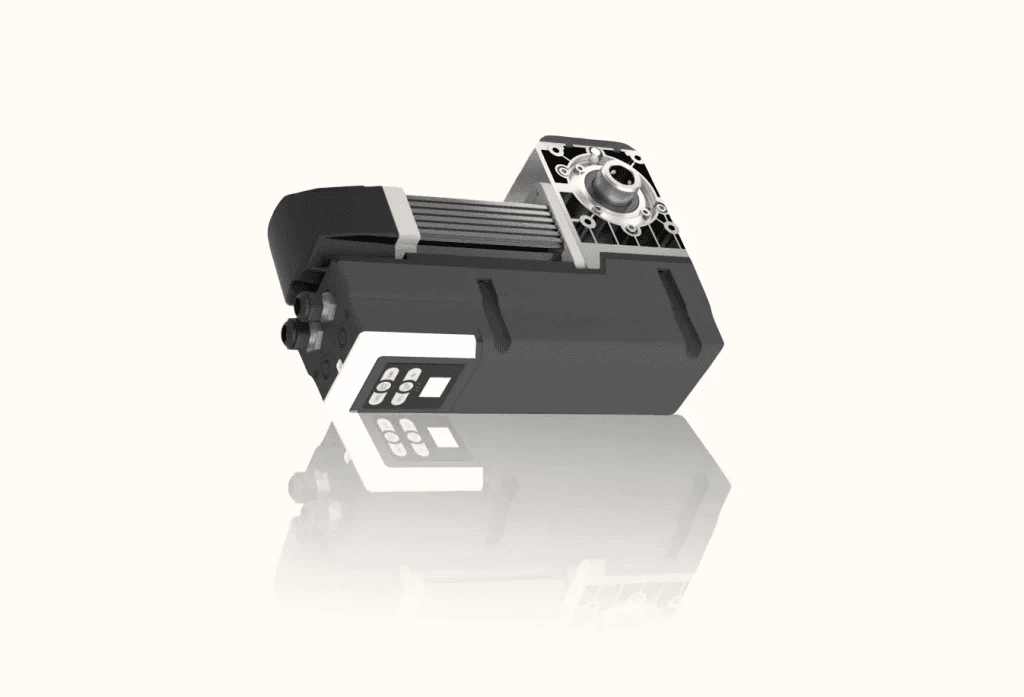
A sectional door motor is an electric drive unit designed to automate the opening and closing of a sectional overhead door. These motors are typically installed above the door opening or along the drive system, depending on the design. Their function is to convert electrical energy into controlled mechanical movement, allowing the door to operate smoothly without manual lifting.
The motor works together with a control panel, limit settings, sensors, and safety devices. Once activated by a remote control, wall switch, access system, or automation signal, the motor drives the door through its opening cycle. When the door reaches the desired position, the system stops automatically. This process ensures consistent movement and reduces wear caused by manual handling.
In industrial and commercial settings, sectional door motors must be durable, reliable, and matched to the specific size and weight of the door. A properly selected motor ensures stable performance even when the door is used many times each day.
Why Sectional Door Motors Matter in Modern Buildings
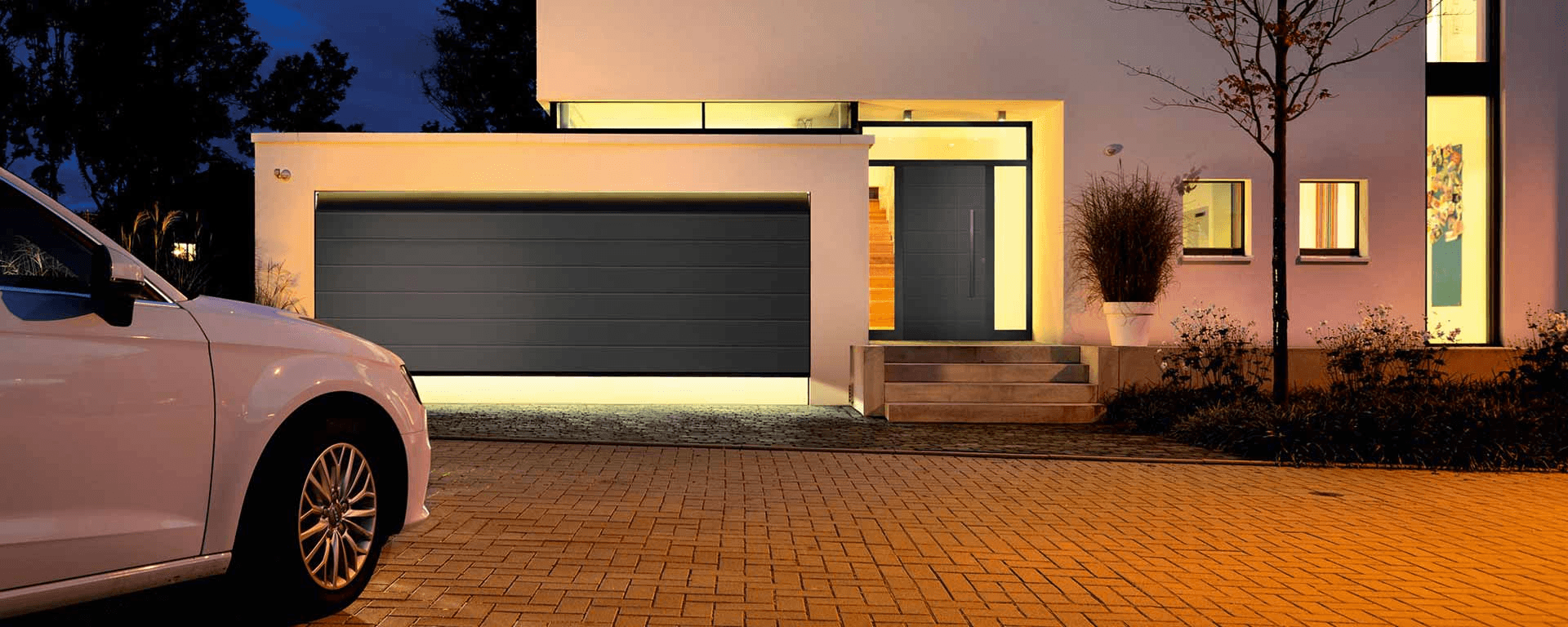
Modern buildings are designed for speed, efficiency, and control. Sectional door motors support all three. They help facilities manage traffic flow, reduce waiting time, and improve the movement of people and goods. In warehouses and logistics centers, this can directly affect productivity. In factories, it can reduce disruption during production or shipping. In commercial buildings, it can improve convenience while maintaining security.
One of the biggest advantages of sectional door automation is consistency. Manual operation can vary depending on the user, the load, and the condition of the door. A motorized system performs the same way each time. This improves reliability and helps businesses maintain smoother daily operations.
Another important factor is safety. Large overhead doors can be heavy and difficult to manage manually. A motorized system reduces physical strain on workers and can include protection features such as obstacle detection, thermal protection, and emergency stop functions. For facilities that prioritize workplace safety, this is a valuable improvement.
Space Efficiency and Better Building Utilization
One of the most important ways sectional door motors transform industrial and commercial space is through space efficiency. Traditional swinging doors require a large opening area in front of or behind the door. By contrast, sectional doors move vertically and rest along the ceiling when open. This means the floor area near the doorway remains available for equipment, vehicles, storage, and foot traffic.
In a warehouse, this can be especially useful. Forklifts can approach without interference, loading zones stay open, and the area near the entrance can be used more efficiently. In a commercial facility, the same principle helps improve layout flexibility. Businesses can design their entrances and interior spaces with fewer restrictions because the door does not consume usable floor space during operation.
Sectional door motors enhance this benefit by making the vertical movement fast and controlled. Instead of delaying access due to manual lifting, the door can open with a quick command. This reduces bottlenecks and helps buildings perform more like modern automated facilities rather than static structures.
Improving Workflow in Industrial Operations
Industrial facilities depend on timing. Materials must enter and leave the site on schedule. Workers move between zones. Vehicles load and unload with precision. Any delay at the entrance can affect the rest of the process. Sectional door motors help remove this friction.
When a door opens automatically, employees do not need to stop and manually operate it. This saves time and reduces interruptions. In high-traffic environments, the difference becomes even more noticeable. Repeated manual operation can slow down movement and create inefficiencies that add up over the course of a shift. A motorized sectional door helps maintain momentum.
This is especially valuable in warehouses, distribution centers, and production sites where access points are used throughout the day. A dependable motor system allows doors to operate quickly without sacrificing control. The result is a smoother workflow and a more responsive facility.
Enhancing Safety for Workers and Equipment
Safety is one of the strongest reasons businesses invest in sectional door motors. Large industrial doors can pose risks if they are difficult to operate, poorly balanced, or not equipped with modern protection features. Motorized systems reduce many of these concerns.
First, automation reduces the need for workers to physically handle heavy doors. This helps prevent strain injuries and limits exposure to moving parts. Second, modern sectional door systems often include sensors that detect obstacles. If a person, vehicle, or object is in the path of the door, the system can stop or reverse movement to prevent damage or injury.
Many systems also include soft start and soft stop functions, which reduce sudden movement and mechanical shock. This improves the overall stability of the door and lowers the chance of wear-related failure. In environments where heavy machinery and foot traffic exist in the same area, this type of safety improvement is especially important.
For businesses that must comply with workplace safety expectations, sectional door automation is not just a technical upgrade. It is part of a broader safety strategy.
Supporting Energy Efficiency and Indoor Climate Control
Energy efficiency is another area where sectional door motors make a major difference. In facilities that are climate-controlled, every moment a door remains open affects temperature stability. Heat may escape in winter, and cool air may be lost in summer. In cold storage or temperature-sensitive environments, these losses can be costly.
Automated sectional doors help reduce this problem by opening and closing quickly and predictably. The faster the door cycle, the less time conditioned air is exposed to the outside environment. This helps businesses reduce energy waste and maintain better indoor conditions.
Sectional systems are also useful in buildings where dust, wind, or moisture control matters. A motorized system ensures the door closes fully and consistently after each use, reducing the chance of gaps or incomplete closure. For many facilities, this contributes to better environmental control and lower operating costs over time.
Strengthening Security and Access Control
Security is a major concern in both industrial and commercial spaces. A sectional door motor can be integrated with access control systems, making it easier to manage who can enter and when. This is valuable for warehouses storing inventory, commercial garages, logistics hubs, and other sites where unauthorized access must be prevented.
By linking the door to remote controls, keypads, card readers, intercoms, or smart control systems, businesses can create controlled entry procedures. Some sites may also use timed access, audit records, or integration with security cameras and alarms. This makes the sectional door part of a larger security network rather than a standalone mechanical device.
A motorized system also helps ensure the door is properly closed after each operation. Manual doors are sometimes left partially open or not fully latched. Automation reduces this risk by controlling the full opening and closing cycle. That adds an important layer of protection for the building and its contents.
Reducing Wear and Maintenance Problems
A well-designed sectional door motor can also improve the long-term condition of the door system. Manual operation may create inconsistent force, uneven movement, or unnecessary impact. Over time, this can increase wear on tracks, rollers, hinges, and other hardware.
Motorized systems are built to move the door in a more controlled way. This helps distribute force more evenly and reduces stress on the structure. Features such as electronic braking, soft start, and soft stop also help preserve mechanical components.
Of course, the system still requires regular maintenance. Tracks should be checked, rollers inspected, springs balanced, and sensors tested. But when the motor system is correctly selected and installed, it can help extend service life and reduce the likelihood of operational problems.
For business owners, that means fewer interruptions, lower repair costs, and a more predictable maintenance schedule.
Choosing the Right Sectional Door Motor
Not every sectional door motor is suitable for every building. Selection should be based on the actual conditions of the site. Door size, weight, usage frequency, operating environment, and safety requirements all matter.
For light commercial use, a compact motor may be sufficient. For industrial facilities with heavy doors and high daily cycles, a stronger motor with better duty performance will be necessary. In some cases, backup power, manual release, or remote diagnostics may also be important.
The control system should also be considered. A good motor is only one part of the solution. The controller, sensors, and access devices must work together properly. When these components are matched correctly, the door system becomes more reliable and easier to operate.
Businesses should also pay attention to certification and manufacturer support. A supplier with strong engineering capability, quality control, and OEM or ODM support can provide more dependable long-term value.
Applications Across Industrial and Commercial Space
Sectional door motors are used in a wide range of environments. In warehouses, they help manage loading bays and improve traffic flow. In factories, they support movement between production zones and exterior access points. In car service centers and commercial garages, they improve convenience and security. In cold storage buildings, they help preserve temperature control. In distribution hubs, they support fast and frequent access.
The common factor across all these applications is the need for efficient, safe, and reliable entry management. Sectional door motors help businesses meet those needs while supporting modern operational standards.
As facilities continue to automate, the role of the sectional door becomes even more important. It is no longer just an entry point. It is part of the building’s operational system.
The Future of Sectional Door Automation
The next generation of sectional door motors is becoming smarter, more efficient, and more connected. Many systems now support remote monitoring, intelligent controls, and improved safety functions. In the future, businesses will likely see more integration with building management systems, access platforms, and predictive maintenance tools.
This shift is part of a broader trend in industrial automation. Buildings are being designed not just to contain activity, but to actively support it. Sectional door motors fit naturally into this direction because they combine mechanical function with digital control.
As expectations rise, businesses will continue to look for door systems that are quieter, safer, faster, and easier to manage. Sectional door motors are well positioned to meet these demands.
Conclusion
Sectional door motors transform industrial and commercial space by making entrances more efficient, safer, more secure, and more space-conscious. They support workflow, reduce manual labor, improve climate control, and strengthen access management. In facilities where performance matters, these benefits are not minor. They have a direct impact on daily operations.
For warehouses, factories, logistics centers, and commercial properties, a sectional door motor is more than an automation accessory. It is a practical investment in operational quality and long-term value. When properly selected and installed, it can improve the way a building functions from the ground up.
FAQ
What is the main advantage of a sectional door motor?
The main advantage is automated, reliable door operation that improves efficiency, safety, and space utilization.
Where are sectional door motors commonly used?
They are commonly used in warehouses, factories, garages, commercial buildings, and cold storage facilities.
Are sectional door motors suitable for heavy doors?
Yes. With the correct motor size and duty rating, sectional door motors can handle heavy industrial doors.
Do sectional door motors help save energy?
Yes. Faster and more controlled opening and closing can help reduce heat loss or air leakage.
Can sectional door motors be integrated with access control systems?
Yes. They can work with remotes, keypads, card readers, intercoms, and other smart access devices.
Other Blogs