Blog
What Is an Industrial Sectional Door Motor and How Does It Work?
Author
Ray
Published
Category
Industrial Sectional Door Motor
What an industrial sectional door motor is, how it works, its main components, benefits, applications, and how to choose the right operator for your facility.

Author
Ray
An experienced automation specialist with a strong background in motor technology and industrial solutions. With years of expertise in central motors, tubular motors, and automation systems, the author is dedicated to sharing insights that connect engineering innovation with real-world applications. Passionate about advancing reliable, energy-efficient, and high-performance automation products for global markets.
What’s better than insider perks, pro tips, and surprises?
Sign up to get the most recent blog articles in your email every week.
Join now.
WHY I WRITE THIS
About my business
Our company’s main product lines include tubular motors, sliding gate motors, swing gate motors, roller shutter motors, and other door automation solutions, all manufactured by trusted partner factories we have worked with for many years.
Our Services
I help them with sales and export operations, while our company also provides sourcing and procurement services in China to help international clients solve supply-related challenges. If you need assistance with procurement, please feel free to contact us.
Introduction
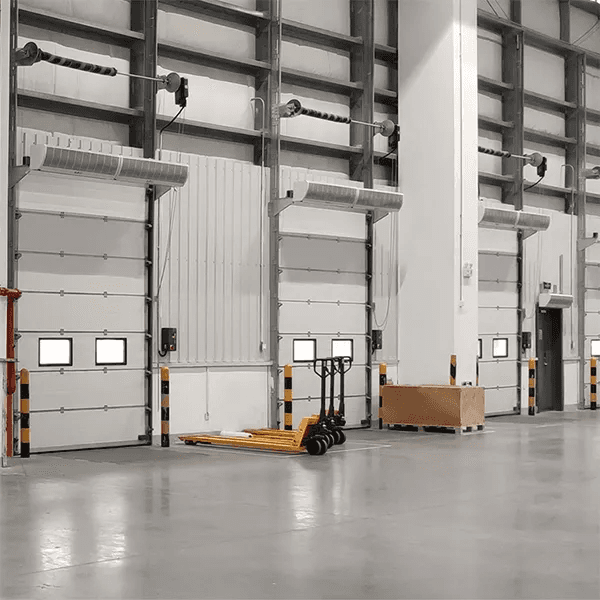
In warehouses, factories, logistics hubs, and commercial loading areas, doors are more than simple entry points. They affect workflow, safety, energy efficiency, and vehicle movement throughout the day. That is why more industrial facilities are choosing automated sectional door systems instead of relying on manual operation. Industrial sectional doors open vertically and travel along ceiling tracks, which helps save space inside and outside the building.
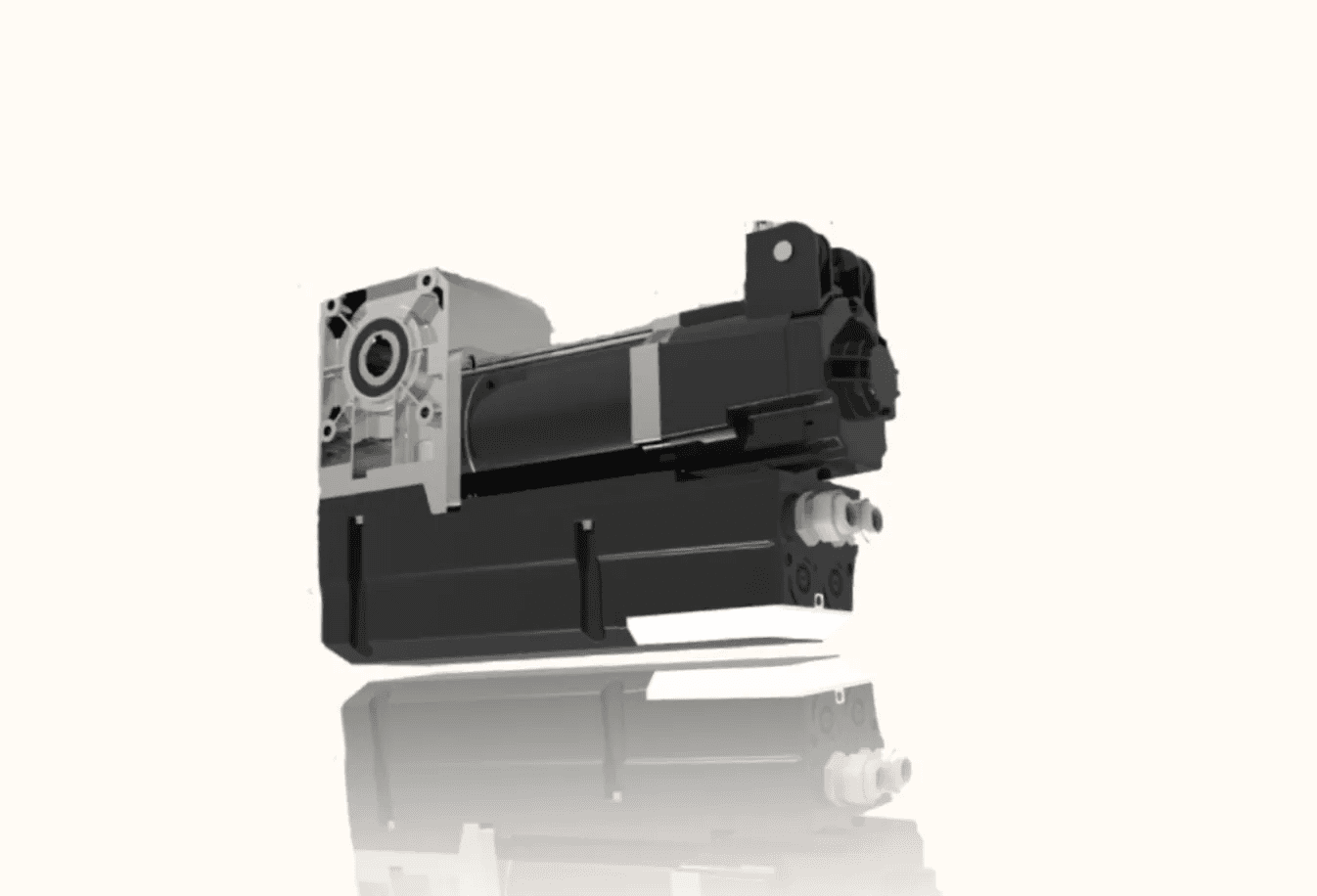
At the center of this automation system is the industrial sectional door motor, sometimes called a sectional door operator. It is the drive unit that powers the opening and closing of the door, helping facilities move heavy doors more safely, consistently, and efficiently. Current manufacturer and industry guides describe the operator as the system that provides the force, control logic, and safety integration needed to automate commercial and industrial doors.
In this guide, you will learn what an industrial sectional door motor is, how it works, what components it includes, where it is used, and how to choose the right one for your facility.
What Is an Industrial Sectional Door Motor?
An industrial sectional door motor is an electromechanical drive system designed to automate the movement of an industrial sectional door. A sectional door is made of multiple horizontal panels connected by hinges. As the door opens, those panels move upward and follow a track system until the door rests overhead. The motor provides the mechanical power that makes this movement possible.
Unlike light-duty residential openers, industrial sectional door motors are built for heavier doors, larger openings, and more demanding work cycles. Public product and specification pages show that these motors may be configured for different power supplies, including 230 V single-phase and 400 V three-phase, with higher-power setups generally intended for bigger, heavier doors or higher-frequency use. Some systems also use frequency converters to generate stronger multi-phase output where only 230 V power is available.
In simple terms, this motor is the component that turns a manual industrial door into an automated access system.
How Does an Industrial Sectional Door Motor Work?
The working principle is straightforward: the motor receives a command, drives the door’s shaft or transmission mechanism, and moves the sectional door to its open or closed end position under controlled conditions. Public manufacturer guides describe these systems as combining motor power, controls, end-position programming, and safety devices into one coordinated operating process.
Step 1: A command is sent
The system is activated through a wall button, key switch, remote control, or another access device. In busy industrial environments, pulse control and remote control are commonly used because they allow the door to travel automatically to its end position without the operator holding the button continuously.
Step 2: The control unit processes the signal
The controller or control board acts as the system’s decision-making center. It receives the signal, checks programmed settings and safety inputs, and then tells the motor when to start, stop, and in some systems how fast to move.
Step 3: The motor drives the shaft or transmission
Many industrial sectional door motors are mounted directly to the shaft, while others use related transmission components depending on the configuration. Public product pages highlight direct shaft fixing, pre-made wiring, and encoder-based programming as common features.
Step 4: The door moves along the tracks
As the shaft turns, the door panels rise vertically and follow the track path overhead. This vertical-opening design is one of the main reasons sectional doors are popular in warehouses and industrial buildings, because it preserves usable space around the opening.
Step 5: Safety systems monitor movement
Modern industrial door operators are often integrated with photocells, safety edges, opto sensors, magnetic loops, traffic lights, obstacle detection, and emergency stop functions, depending on the installation. These features help prevent unsafe closing and support compliance-oriented operation.
Step 6: The motor stops at the set limit
The system stops automatically when the door reaches its programmed end position. Depending on the setup, this may be handled by electronic limit programming, encoder logic, or related control mechanisms.
Main Components of an Industrial Sectional Door Motor System
Although configurations vary by brand and door size, most industrial sectional door motor systems include the following core elements.
1. Electric motor
This is the power source that creates the mechanical movement needed to open and close the door. Larger or more intensive installations often use stronger motor configurations.
2. Control unit
The control unit receives commands and manages the door’s operating logic, programming, and safety inputs. Many systems have built-in control buttons or can be connected to external controls.
3. Encoder or limit-setting system
Many modern systems use electronic encoders or electronic end-position programming for easier setup and more precise motion control.
4. Shaft or transmission connection
Industrial sectional door motors are commonly shaft-mounted or connected through transmission kits, depending on the door design and installation method.
5. Safety accessories
Common accessories include photocells, safety bands, opto sensors, magnetic loops, traffic lights, and emergency stop switches. High-traffic installations may also use remote-control safety sensing for vehicles such as forklifts.
6. Manual release or emergency operation
Industrial door motor systems often include a manual unlocking or emergency operation feature so the door can still be moved during a power failure or fault condition.
Key Benefits of an Industrial Sectional Door Motor
1. Faster and more efficient operation
Electrically powered sectional doors reduce manual effort and improve workflow, especially in facilities where doors open and close repeatedly throughout the day. Public guidance for industrial doors specifically recommends electrically powered pulse control where traffic is heavy.
2. Better space utilization
Because sectional doors open vertically and travel overhead, they leave more room in front of and behind the opening than swing or sliding alternatives.
3. Improved safety
Obstacle detection, photocells, safety edges, emergency stop functions, and controlled closing help reduce risk during operation.
4. Support for high-frequency use
Some operators are specifically recommended for frequent opening cycles, and product pages distinguish between low-frequency systems and motors intended for intensive use.
5. Easier integration with access control
Remote controls, key switches, built-in control panels, and other external devices can be integrated into many industrial sectional door systems.
6. Reduced operator strain
Manual opening systems are still available for smaller or rarely used doors, but public manufacturer guidance notes that electric operators are more suitable where ease of use and consistent motion are priorities.
Common Applications
Industrial sectional door motors are widely used in environments where door automation supports daily operations.
Warehouses
Frequent loading and unloading requires fast, repeatable door movement and dependable access control.
Logistics centers
High-traffic loading bays benefit from remote operation and pulse-controlled opening cycles.
Factories and manufacturing plants
Industrial operators support larger openings and repeated daily use in production environments.
Commercial and industrial service buildings
Automated sectional doors help manage security, energy retention, and daily vehicle access.
Types of Industrial Sectional Door Motors
There is no single motor type that fits every door. Current public product and guide pages commonly distinguish by power supply, door size, and frequency of use.
Single-phase motors
Single-phase 230 V motors are often positioned as a good solution where heavy-duty power is not available and for smaller door surfaces or lower opening frequency.
Three-phase motors
Three-phase 400 V motors are commonly recommended for big, heavy doors and more demanding applications.
Frequency-converter-based solutions
Some systems use a frequency converter to produce stronger multi-phase output from a 230 V supply, allowing heavier doors to be operated even without a conventional three-phase connection.
Intensive-use models
Public product listings also distinguish motors intended for intensive use, including options promoted for larger door areas and lower vibration or quieter operation.
How to Choose the Right Industrial Sectional Door Motor
If you want this article to perform well commercially, this is one of the most important sections. Buyers searching this topic are often trying to match a motor to a real project.
Door size and surface area
Public product pages often specify recommended maximum door area, with different models aimed at different square-meter ranges.
Door weight and structure
Heavier doors generally require stronger motor output and more robust operating systems. Current manufacturer guidance explicitly ties motor choice to large and heavy doors.
Opening frequency
Some systems are suitable for occasional use, while others are recommended for frequent daily cycles or intensive use.
Available power supply
Whether your site has single-phase or three-phase power can strongly affect the best motor choice.
Safety requirements
If the door is installed in a busy industrial environment, safety accessories such as photocells, opto sensors, emergency stop functions, and monitored closing edges may be essential.
Control method
Facilities can choose from dead-man control, pulse control, key switches, and remote operation depending on usage patterns and safety policy. Public guidance notes that dead-man control is better suited to less frequent use, while pulse control is recommended when doors open and close often.
Maintenance Tips
High-ranking content in this space almost always includes maintenance, because buyers and facility managers want long service life and fewer breakdowns. Current public guidance stresses that regular maintenance helps preserve reliable performance and extend automation lifespan.
Here are practical maintenance points to include in your article:
Inspect the motor and control unit regularly for wear or visible damage.
Test safety devices such as photocells, safety edges, and emergency stop switches.
Check the shaft connection or transmission components for alignment issues.
Verify that the door reaches its correct end positions.
Watch for abnormal noise, vibration, or slower movement than usual.
Schedule professional servicing if the door is used intensively.
Why Industrial Sectional Door Motors Matter
An industrial sectional door motor does much more than automate opening and closing. In modern facilities, it supports workflow speed, operational safety, energy management, and access control. Public industry guides frame sectional doors as core infrastructure for logistics, manufacturing, and warehousing rather than as simple building accessories.
That is why choosing the right motor is not just a technical decision. It is an operational one.
Conclusion
So, what is an industrial sectional door motor and how does it work? It is the powered operator that automates a sectional door by receiving a command, driving the door’s shaft or transmission system, monitoring safety devices, and stopping at programmed end positions. It helps industrial sectional doors open vertically, move reliably, and operate more safely in demanding environments.
For warehouses, factories, logistics centers, and commercial facilities, the right industrial sectional door motor can improve efficiency, reduce manual effort, and support safer day-to-day operation. If your goal is long-term reliability, the best choice will depend on your door size, usage frequency, available power supply, and required safety functions.
FAQ
What is an industrial sectional door motor?
An industrial sectional door motor is the powered operator that automates the opening and closing of an industrial sectional door. It is designed for heavier doors and more demanding operating conditions than typical residential systems.
How does an industrial sectional door motor work?
It works by receiving a control signal, driving the door shaft or transmission, moving the door along its track system, and stopping at preset end positions while safety devices monitor operation.
What is the difference between single-phase and three-phase door motors?
Public manufacturer guidance indicates that single-phase systems are often used where heavy-duty power is unavailable or for smaller/lower-frequency installations, while three-phase motors are better suited to bigger, heavier doors and more demanding applications.
What safety features should an industrial sectional door motor have?
Common safety-related features include photocells, safety edges or bands, opto sensors, emergency stop capability, remote safety sensing, and manual emergency operation.
How do I choose the right industrial sectional door motor?
You should evaluate the door’s size, weight, opening frequency, power supply, control needs, and safety requirements before selecting a motor.
Other Blogs