Blog
Are Shutters Outdated in 2026? Trends, Benefits, and Modern Alternatives
Author
Ray
Published
Category
Guide
Recognize the early warning signs of roller shutter failure before they become costly emergencies. This guide covers 10 critical failure signs, their root causes, consequences of ignoring them, and when to act.


Author
Ray
An experienced automation specialist with a strong background in motor technology and industrial solutions. With years of expertise in central motors, tubular motors, and automation systems, the author is dedicated to sharing insights that connect engineering innovation with real-world applications. Passionate about advancing reliable, energy-efficient, and high-performance automation products for global markets.
What’s better than insider perks, pro tips, and surprises?
Sign up to get the most recent blog articles in your email every week.
Join now.
WHY I WRITE THIS
About my business
Our company’s main product lines include tubular motors, sliding gate motors, swing gate motors, roller shutter motors, and other door automation solutions, all manufactured by trusted partner factories we have worked with for many years.
Our Services
I help them with sales and export operations, while our company also provides sourcing and procurement services in China to help international clients solve supply-related challenges. If you need assistance with procurement, please feel free to contact us.
Introduction
Few home feature decisions generate more conflicted opinions than shutters. Ask a traditional architecture enthusiast and they will tell you shutters are timeless. Ask a minimalist interior designer and they may suggest shutters belong in the last decade. Ask a security-conscious commercial property manager and shutters are as relevant as ever. Ask a homeowner who just moved into a house with aging louvred shutters and they are probably wondering whether to replace or remove them entirely.
The honest answer to "are shutters outdated in 2026?" is: it depends entirely on which shutters you mean, and what you want them to do.
The word "shutters" covers a remarkably diverse product category. Plantation shutters on interior windows have little in common with steel roller security shutters on commercial premises. Exterior timber shutters on a traditional country house serve different purposes than motorized aluminium solar shutters on a contemporary apartment building. Café-style half shutters in a kitchen are a different product, with different aesthetics and different functions, than solid panel exterior shutters on a coastal property.
Each of these shutter types has its own design trajectory, its own set of genuine benefits, its own limitations, and its own competitive alternatives. Treating them as a single category and asking whether the whole category is "outdated" produces a meaningless answer.
This guide separates the question properly. It examines the current design status of each major shutter category, identifies where genuine innovation is happening, honestly addresses where shutters are losing ground to alternatives, and helps you make a well-informed decision based on your specific situation — whether you are fitting out a new home, upgrading a commercial property, or simply wondering whether to keep what you already have.
Understanding the Shutter Landscape: What "Shutters" Actually Covers
The Major Shutter Categories in 2026
Before addressing trends, establishing clear category definitions prevents the confusion that makes most "are shutters outdated" discussions frustratingly vague.
Interior window shutters:
Plantation shutters — wide-louvred interior shutters, typically full-height, hinged panels
Café-style shutters — covering the lower half of windows only
Solid panel shutters — flat panel interior shutters without louvres
Tier-on-tier shutters — independently operable upper and lower sections
Exterior window and door shutters:
Louvred exterior shutters — decorative and functional, traditional architectural feature
Board and batten shutters — solid vertical-plank shutters, typically decorative
Raised panel exterior shutters — formal, traditional aesthetic
Bahama/Bermuda shutters — top-hinged, angled outward for shade and airflow
Security and functional shutters:
Roller shutters — motorized or manual, aluminum or steel, for windows and doors
Roller doors — commercial and residential garage and loading dock applications
Roller security grilles — perforated or open-bar security for retail and commercial
Solid panel security shutters — maximum security applications
Solar and climate control shutters:
Exterior solar shutters — automated external shading systems
Venetian-style external shutters — adjustable external louvres for solar control
Each category has a distinct design status, market trajectory, and competitive landscape in 2026.
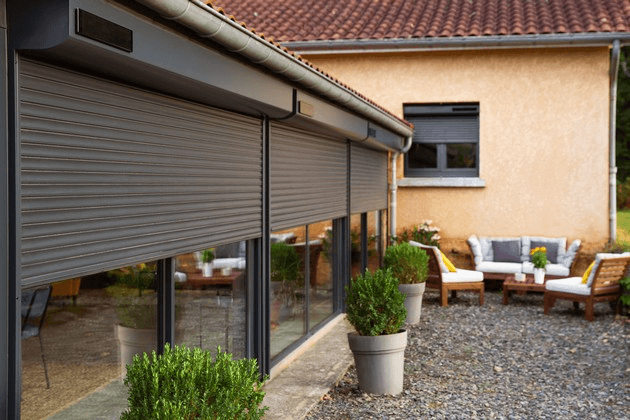
Interior Plantation Shutters: Far From Outdated
Current Design Status
Of all shutter categories, plantation shutters are experiencing the most consistent and sustained demand across residential markets. They are not experiencing a nostalgic revival — they never meaningfully fell out of favor in quality residential construction and are now more sophisticated in execution than at any previous point.
Why Plantation Shutters Remain Relevant in 2026
Light Control Precision
Plantation shutters offer a level of light management that competing window treatments struggle to match.
The louvre angle can be adjusted continuously — from fully open (maximum light and view) through partial angles that diffuse direct sunlight while maintaining airflow, to fully closed (blackout-comparable in premium solid-louvre designs). This precise, mechanical control does not require power, does not depend on a remote battery, and does not lose functionality in a connectivity outage.
For rooms with variable daylight requirements throughout the day — east-facing bedrooms, south-facing living rooms, west-facing home offices — this adjustability has genuine daily utility rather than occasional decorative value.
Thermal Performance
Quality plantation shutters — particularly those with tight-fitting frames and close-tolerance louvres — contribute meaningfully to window insulation performance.
They create a still-air buffer between the shutter surface and the window glass that reduces convective heat transfer. In cold climates, this reduces heating demand. In hot climates, combined with correct louvre adjustment, exterior heat gain is significantly reduced.
This is not equivalent to double or triple glazing — shutters do not replace glass specification decisions — but for existing single-glazed windows in heritage properties where replacement is restricted, well-fitted shutters can make a measurable difference to thermal comfort.
Durability and Longevity
Premium plantation shutters — in MDF with painted finish, in real timber, or in PVC for wet areas — have operational lifespans measured in decades rather than years.
A quality roller blind may require replacement every 5–8 years. Curtains and drapes fade, sag, and require replacement on a similar timeline. Well-maintained plantation shutters in a suitable material for their environment routinely last 15–25 years without significant degradation.
Over a full property ownership lifecycle, the total cost of ownership of plantation shutters often compares favorably with repeatedly replaced soft furnishing alternatives — even accounting for higher upfront cost.
Aesthetic Versatility
The perception that plantation shutters are limited to traditional or country aesthetics is increasingly outdated. Contemporary plantation shutter design includes:
Slim-frame systems with minimal visible framework — suited to modern and minimalist interiors
Full-height floor-to-ceiling panels that read as architectural elements rather than window treatments
Integrated sliding systems where shutters slide rather than hinge — suited to large glazed openings
Monochromatic color-matched designs in anthracite, charcoal, and statement colors alongside traditional white
Hidden tilt rod systems that eliminate the central tilt bar for a cleaner louvre appearance
In 2026, plantation shutters are being specified in contemporary, Scandinavian-influenced, and industrial-aesthetic interiors — not only in traditional settings.
Where Plantation Shutters Have Genuine Limitations
Honesty requires acknowledging where plantation shutters are not the optimal solution:
Very large openings: Floor-to-ceiling shutters on wide openings can be operationally awkward and aesthetically heavy
Rooms requiring complete darkness: Standard louvred shutters do not achieve true blackout — specialist solid-louvre or blackout-backing systems are required
Budget-constrained projects: Quality plantation shutters represent a significant upfront investment — cheap alternatives in poor materials underperform in durability and finish quality
Wet areas: Standard MDF or timber shutters are unsuitable for high-humidity environments — PVC or moisture-resistant composites are required in bathrooms, wet rooms, and kitchens near cooking areas
Exterior Decorative Shutters: The Honest Assessment
Current Design Status
This is the category where "outdated" is most legitimately debated.
Purely decorative exterior shutters — those that are permanently fixed to the wall, sized incorrectly for the windows they flank, and never intended to actually close — are genuinely declining in design relevance.
The architectural authenticity movement that has influenced residential design over the past decade has been particularly critical of non-functional decorative shutters. When shutters are clearly the wrong size to cover the window, clearly fixed open and never operable, and clearly present only as decorative appliqué, they increasingly read as an architectural anachronism rather than a genuine design feature.
Where Functional Exterior Shutters Remain Highly Relevant
The distinction is between decorative-only shutters and functional exterior shutters — and the latter category is performing well in 2026.
Bahama/Bermuda shutters in tropical and subtropical climates serve genuine combined functions: hurricane protection, solar shading, ventilation control, and visual privacy — while contributing a regional architectural character that is entirely appropriate and not dated.
Solid operable exterior shutters on heritage, coastal, and rural properties that can actually be closed for weather protection, privacy, or security serve a real functional purpose that is not replicated by alternative window treatments.
Exterior louvred shutters on contemporary architecture — when properly sized, motorized, and integrated as a designed element rather than an afterthought — are experiencing a design renaissance in high-end residential and hospitality architecture.
The lesson: functionality legitimizes exterior shutters in 2026. Decoration without function is what has become architecturally questionable.
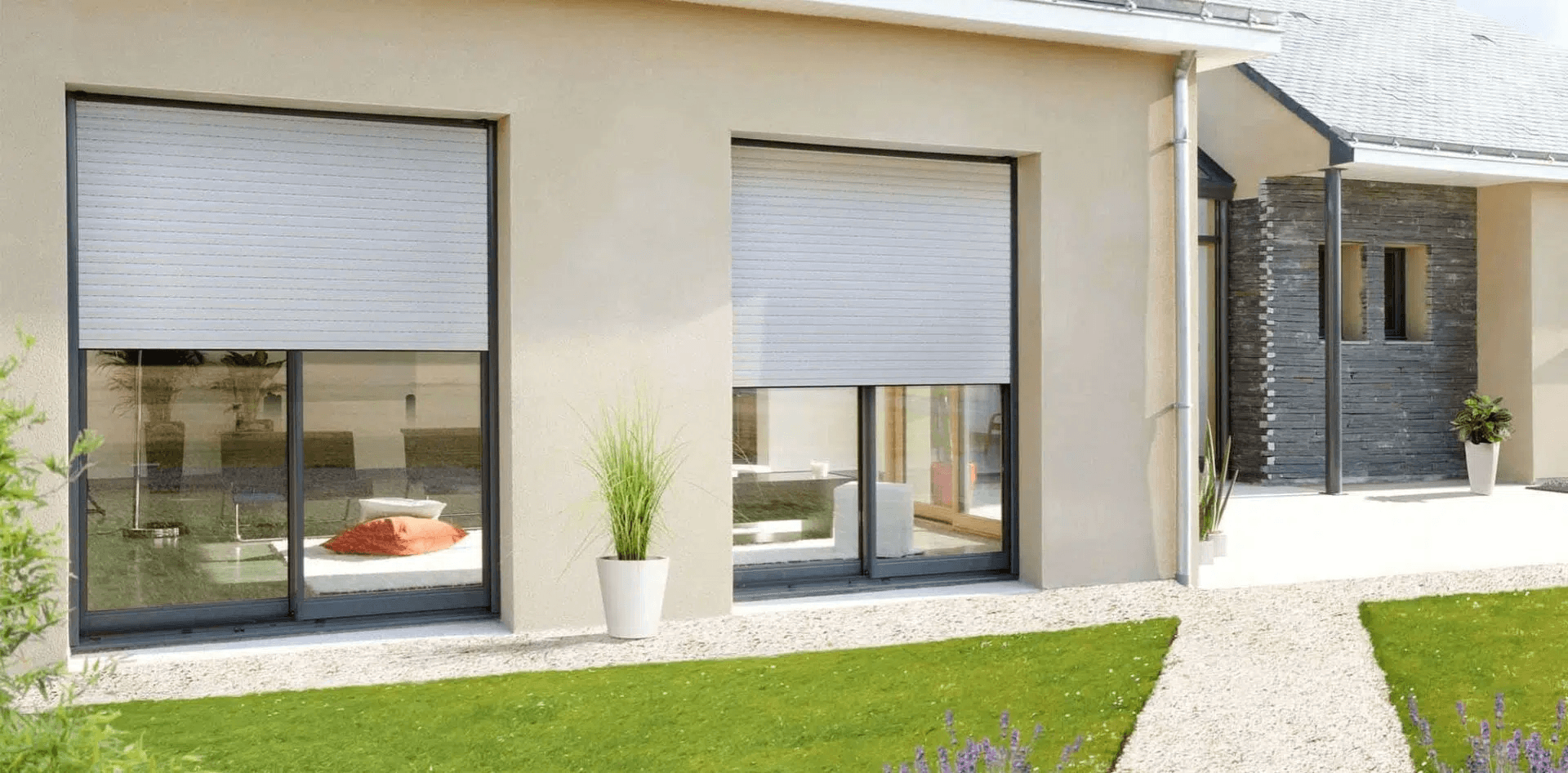
Security Roller Shutters: More Relevant Than Ever
Current Design Status
In the security and commercial property category, roller shutters are not experiencing any decline in relevance — they are evolving rapidly in both technology and aesthetic integration.
The perception that security shutters are utilitarian and aesthetically incompatible with quality commercial environments is increasingly obsolete.
What Is Driving Continued Roller Shutter Relevance
Smarter Automation Integration
Modern roller shutter systems integrate with:
Building management systems (BMS) for centralized control across multiple installations
Smart home platforms (Apple HomeKit, Google Home, Amazon Alexa) for residential integration
Access control systems for commercial premises — shutters triggered by access card, keypad, or biometric authentication
Solar position sensors that automatically adjust external shutters based on sun angle and intensity
Wind sensors that automatically retract external shutters at unsafe wind speeds
Security alarm integration — shutters that automatically close when an alarm is triggered
This automation capability makes modern roller shutters a genuinely intelligent building component rather than a simple mechanical barrier.
Improved Aesthetic Design
The steel-grey industrial aesthetic of traditional security shutters is giving way to:
Powder-coated color options across a full RAL range — matching or complementing building facade colors
Perforated and grille designs that maintain security while allowing visibility and light transmission
Vision strip integration — clear polycarbonate sections within the curtain for display window visibility when closed
Slim-profile guide systems with reduced visual bulk
Concealed housing designs where the barrel is hidden within the fascia or soffit
For retail premises in particular, a shutter that previously had to close the shopfront visually is increasingly replaced by designs that allow window displays to remain visible — maintaining brand presence even when the premises is closed.
Energy Management Applications
External roller shutters on glazed facades are increasingly specified as solar management tools rather than purely security devices.
A motorized external roller shutter or external Venetian blind system on a south-facing glazed elevation can reduce solar heat gain by 60–80% compared to unshaded glass — making it more effective than internal blinds (which allow solar energy to enter the building before attempting to reflect or absorb it).
For commercial buildings pursuing energy efficiency certifications (BREEAM, LEED, Green Star), automated external shading via roller shutter technology contributes meaningfully to performance metrics.
Modern Alternatives to Shutters: An Honest Comparison
Smart Glass and Electrochromic Glazing
What it is: Glass that changes transparency in response to electrical current (electrochromic) or heat (thermochromic), controlled manually or automatically.
Where it outperforms shutters:
Completely eliminates window treatment hardware
Enables truly seamless architectural glazing with no visible mechanism
Automated tinting responds continuously to changing light conditions
Where shutters outperform it:
Cost — smart glass remains significantly more expensive than shutters at equivalent scale
Thermal performance — smart glass does not provide the insulation value of closed shutters
Security — smart glass does not provide physical security barrier properties
Darkness — electrochromic glass typically achieves a tinted rather than true dark state
Verdict: Smart glass is a genuine competitor in high-specification new commercial construction where budget allows. It is not a realistic alternative for the majority of residential or commercial retrofit applications in 2026 — cost, retrofit complexity, and performance limitations constrain its addressable market.
Motorized Roller Blinds and Automated Fabric Systems
What it is: Electric roller blinds, Roman blinds, and honeycomb blind systems controlled by remote, app, or building automation.
Where they outperform shutters:
Lower upfront cost for equivalent window coverage
Softer aesthetic for fabric-focused interiors
Blackout performance in specialist blackout fabrics
Compact installation profile
Where shutters outperform them:
Durability — fabric blinds require periodic replacement; quality shutters do not
Thermal performance — shutters provide better insulation due to their rigid air-gap construction
Security — fabric blinds provide no security function
Light control precision — shutters offer adjustment without full opening or closing
Maintenance — fabric blinds accumulate dust and require cleaning that is more challenging than shutters
Verdict: Motorized roller blinds are a legitimate alternative in applications where aesthetics favor soft furnishings, budget is constrained, and security is not a requirement. They are not a superior product — they are a different product with a different cost-performance profile.
External Solar Films and Coatings
What it is: Applied films on glass that reduce solar transmission, UV exposure, and glare without external or internal window treatments.
Where they outperform shutters:
No visible mechanism — clean architectural appearance maintained
No operational requirement — passive performance at all times
Lower cost than motorized shutter systems
Retrofittable to existing glazing
Where shutters outperform them:
Adjustability — shutters can be fully opened for maximum light when desired; film provides permanent reduction
Thermal insulation — film reduces solar gain but does not provide the insulation value of closed shutters
Security — film provides no physical security function
Darkness — even dark-tinted film does not achieve the darkness level of closed shutters
Verdict: Solar film is a complement to window treatments rather than a replacement. Many high-specification installations use both — film for baseline performance and shutters or external shading for adjustable control.
Curtains and Drapes: The Traditional Alternative
Current status: In interior design, curtains and drapes are themselves experiencing a strong revival — particularly floor-to-ceiling linen, velvet, and natural fabric panels in contemporary interiors.
Where they outperform shutters:
Aesthetic softness and texture — shutters cannot replicate the soft furnishing quality of luxury fabric
Color and pattern expression — fabrics offer infinite variation
Lower upfront cost for standard applications
Acoustic absorption — fabric panels reduce room reverberation
Where shutters outperform them:
Durability and replacement cycle
Precision light control
Thermal performance
Security and privacy (shutters cannot be seen through when closed; light fabric curtains often can)
Hygiene — shutters are easier to clean in allergy-sensitive households
Verdict: Curtains and shutters are not truly competing products — they serve different design and functional purposes and are frequently used together. The combination of plantation shutters with curtain panels over the top is a consistent interior design pattern in quality residential projects.
Shutter Trends Genuinely Shaping 2026
Trend 1: Biophilic Design Integration
The biophilic design movement — which prioritizes connection to natural materials, natural light, and natural environments — has produced interesting shutter applications.
Real timber shutters with natural grain finish (rather than painted white) are being specified in Japandi, Scandinavian, and organic-modern interiors. The material honesty of natural wood grain, particularly in oak and walnut, positions shutters as a biophilic interior element rather than a purely functional fitting.
External timber-effect composite shutters that deliver the aesthetic of natural timber with improved weather resistance are gaining significant market share in the exterior application segment.
Trend 2: Integrated and Concealed Systems
The strongest growth area in high-specification shutter installation is systems that virtually disappear when not in use.
Roller shutters with housings concealed within ceiling or fascia construction
Sliding plantation shutters that pocket into wall cavities
Bifold shutter systems that fold completely clear of the window opening
Slim-profile guide systems with reduced visual footprint
The design goal is achieving shutter functionality without the visual presence of the mechanism — the shutter should appear as the window treatment when deployed and as nothing at all when retracted.
Trend 3: Motorization as Standard Rather Than Premium
What was a premium upgrade five years ago is rapidly becoming a standard specification.
Motorized plantation shutters, automated external roller shutters, and remotely controlled security shutters are now within accessible price points for mid-market residential and commercial projects.
This shift matters because motorization changes how shutters are used. A manually operated shutter tends to be set and left — adjusted infrequently because adjustment requires physical engagement. A motorized shutter responds to a button tap or an automated schedule — users adjust it multiple times per day because the friction of adjustment has been eliminated.
Usage frequency changes the performance value proposition: a shutter that is adjusted four times per day provides more thermal, privacy, and light-management value than one adjusted once per week.
Trend 4: Sustainability and Circular Economy Considerations
Specification decisions in 2026 increasingly include sustainability metrics alongside aesthetic and functional criteria.
Shutters score well on several sustainability dimensions:
Longevity: A 20-year shutter lifespan versus a 5-year blind replacement cycle means significantly lower lifetime material consumption
Repairability: Unlike roller blind cassettes or motorized fabric systems, shutter components — individual louvres, hinges, tilt mechanisms — can be individually replaced
Material choices: Reclaimed timber shutters, recycled aluminum roller shutter curtains, and FSC-certified timber options address material provenance concerns
Energy performance: External shutters that reduce mechanical cooling loads have operational carbon benefits that can be quantified
For commercial projects pursuing sustainability certification, the lifecycle and energy performance arguments for quality shutters are increasingly being formally assessed.
Trend 5: Security Shutter Aesthetics Closing the Gap with Architecture
Perhaps the most significant market shift in the commercial shutter segment is the near-elimination of the aesthetic gap between security shutters and architectural quality.
Perforated aluminum roller shutters with custom perforation patterns — brand logos, geometric patterns, site-specific artwork — are being installed on retail and cultural buildings where the shutter is explicitly designed as a visual element rather than hidden or minimized.
This shifts the conversation from "how do we make security shutters less visible" to "how do we make them a feature" — a fundamentally different design brief with fundamentally different outcomes.
How to Decide: Are Shutters Right for Your Situation?
Decision Framework by Application
For residential interior window treatments:
Consider plantation shutters when:
You value precise, repeatable light control throughout the day
You want a durable, low-maintenance window treatment with a long service life
You are working in a style that suits their aesthetic (traditional, contemporary, coastal, Japandi)
Thermal performance at the window is a priority
You have children or pets that make fabric window treatments impractical
Consider alternatives when:
The budget does not support quality shutters — cheap shutters underperform significantly
You want the softness and texture of fabric as a primary aesthetic goal
The window geometry is non-standard and custom fabrication is prohibitively expensive
For exterior residential applications:
Consider exterior shutters when:
They are genuinely operable and correctly sized for the windows they serve
The architectural style of the property calls for them authentically
Climate conditions (hurricane zones, high solar gain regions) justify functional shutters
Motorized external shading for solar control is a performance objective
Reconsider exterior shutters when:
They would be permanently fixed and non-functional — consider whether the decorative value justifies the cost
The architectural style is contemporary or minimalist — external shutters may read as stylistically incongruent
For commercial and security applications:
Roller shutters remain the appropriate specification when:
Physical security is a primary requirement — no alternative provides equivalent barrier performance
External solar shading with meaningful energy performance is required
The application involves high-cycle daily use that requires robust mechanical reliability
Building management system integration is desired
Consider alternatives primarily when:
Smart glass specification is feasible within budget for new construction glazing systems
The security requirement is lower and visibility is prioritized — security grilles may be preferred to solid shutters
Shutter Types at a Glance: 2026 Design Status Summary
Shutter Type | Design Status | Best Application | Main Competitor |
|---|---|---|---|
Plantation shutters | Strong, growing | Residential interior light control | Motorized roller blinds |
Café-style shutters | Niche but stable | Lower window privacy, kitchen/café aesthetics | Net curtains, film |
Decorative-only exterior | Declining | Heritage architecture only | Omission / genuine functional shutters |
Functional exterior (operable) | Stable, legitimate | Hurricane zones, heritage, solar shading | External Venetian systems |
Bahama/Bermuda shutters | Strong in climate regions | Subtropical/tropical residential | Fixed solar films |
Roller security shutters | Strong, evolving | Commercial security, solar management | Security grilles |
Perforated retail shutters | Growing | Commercial retail, visibility when closed | Traditional solid shutters |
Motorized solar shutters | Growing rapidly | Commercial energy management | Smart glass, solar film |
FAQ: Are Shutters Outdated in 2026?
Are plantation shutters still in style in 2026?
Yes. Plantation shutters remain a consistently popular and architecturally appropriate interior window treatment in 2026. Contemporary designs — slim frames, hidden tilt rods, sliding systems, and expanded color palettes — have evolved the product well beyond the traditional white-louvred aesthetic. They are being specified in contemporary, Scandinavian, and minimalist interiors alongside more traditional settings.
Are exterior shutters outdated?
Permanently fixed, non-functional, decorative-only exterior shutters are increasingly considered architecturally inauthentic and are declining in new residential design. However, genuinely operable exterior shutters — correctly proportioned, functional, and appropriate to the architectural style — remain relevant, particularly in climate-appropriate applications (hurricane zones, high solar gain environments) and heritage architecture.
What are the best modern alternatives to shutters?
The most relevant modern alternatives depend on the application:
For interior light control: motorized roller blinds, smart glass (where budget allows)
For exterior solar management: automated external Venetian systems, solar films as complement
For security: security grilles (where visibility is preferred), access-controlled barriers
None of these alternatives comprehensively replaces shutters across all applications — each has specific contexts where it outperforms shutters and others where it does not.
Are roller shutters still used in commercial properties?
Extensively. Roller security shutters remain the primary physical security barrier for commercial premises globally. In 2026, they are more technologically sophisticated — smart automation, building management integration, improved aesthetics — and more relevant to energy management applications than at any previous point. Their commercial relevance is increasing, not declining.
Do shutters add value to a property?
Quality plantation shutters are generally regarded as adding value to residential properties — they are perceived as a premium feature by buyers and do not need to be specified as a sale item (unlike curtains, which buyers often expect to be removed). The value contribution is greater when shutters are well-fitted, in good condition, and appropriate to the property style. Poorly fitted, cheap, or stylistically incongruent shutters may not contribute positively.
Are shutters better than blinds?
They serve overlapping but distinct purposes. Shutters outperform blinds in durability, thermal performance, light control precision, security, and long-term cost of ownership. Blinds outperform shutters in upfront cost, aesthetic softness, blackout performance (specialist blackout fabric), and installation simplicity. The better choice depends on priorities — there is no universally superior option.
What shutter styles are trending in 2026?
Key trends include: natural timber and timber-effect finishes for biophilic interiors, slim-profile and concealed-housing systems, motorization as standard, external solar shutter integration in commercial construction, and perforated or vision-panel roller shutters for retail applications. Color expansion beyond traditional white — particularly in anthracite, warm greys, and natural tones — is consistent across both interior and exterior shutter categories.
Conclusion
Are shutters outdated in 2026? The genuine answer, delivered honestly: some types are losing relevance, most are not, and several are more relevant now than they have been in decades.
Plantation shutters remain a strong, evolving product category with genuine functional and aesthetic merit — they are not outdated and are unlikely to become so.
Decorative-only exterior shutters that serve no function are increasingly architecturally questionable — not because shutters are outdated but because inauthenticity is outdated.
Roller security shutters are more technologically capable and aesthetically sophisticated than at any previous point — their relevance is growing in both security and energy management applications.
Functional exterior shutters in climate-appropriate contexts — hurricane protection, solar shading, heritage authenticity — remain entirely legitimate.
The question is not really whether shutters as a category are outdated. The question is whether the specific type of shutter, in the specific application, for the specific property, represents the best available solution for the functional and aesthetic objectives it is meant to serve.
For many applications in 2026, the honest answer is still yes.
Other Blogs