Blog
Photocells and Motion Sensors: What’s the Difference?
Author
Ray
Published
Category
Door Photocell Sensor
Photocells and Motion Sensors control lights differently. Learn the difference between photocell vs motion sensor and choose the right option for security and energy savings.

Author
Ray
An experienced automation specialist with a strong background in motor technology and industrial solutions. With years of expertise in central motors, tubular motors, and automation systems, the author is dedicated to sharing insights that connect engineering innovation with real-world applications. Passionate about advancing reliable, energy-efficient, and high-performance automation products for global markets.
What’s better than insider perks, pro tips, and surprises?
Sign up to get the most recent blog articles in your email every week.
Join now.
WHY I WRITE THIS
About my business
Our company’s main product lines include tubular motors, sliding gate motors, swing gate motors, roller shutter motors, and other door automation solutions, all manufactured by trusted partner factories we have worked with for many years.
Our Services
I help them with sales and export operations, while our company also provides sourcing and procurement services in China to help international clients solve supply-related challenges. If you need assistance with procurement, please feel free to contact us.
Introduction
If you have ever installed an outdoor light that stayed on when it should not, or failed to turn on when someone approached, the problem usually is not the fixture. It is the control method behind it.
Photocells and Motion Sensors are both used in automatic light control, but they solve different problems. A photocell sensor switches lighting based on surrounding light levels, which makes it ideal for dusk-to-dawn operation. A motion sensor for lighting activates fixtures only when movement is detected, which makes it more suitable for security, occupancy-based use, and energy reduction in intermittent-use spaces.
That distinction matters more than most buyers expect. Choosing between photocell lighting control and motion activated lights affects visibility, operating hours, maintenance patterns, and energy use. In this guide, you will learn how each sensor works, where each one performs best, when to combine them, and how to avoid the common specification mistakes that lead to poor lighting performance.
What Are Photocells and Motion Sensors?
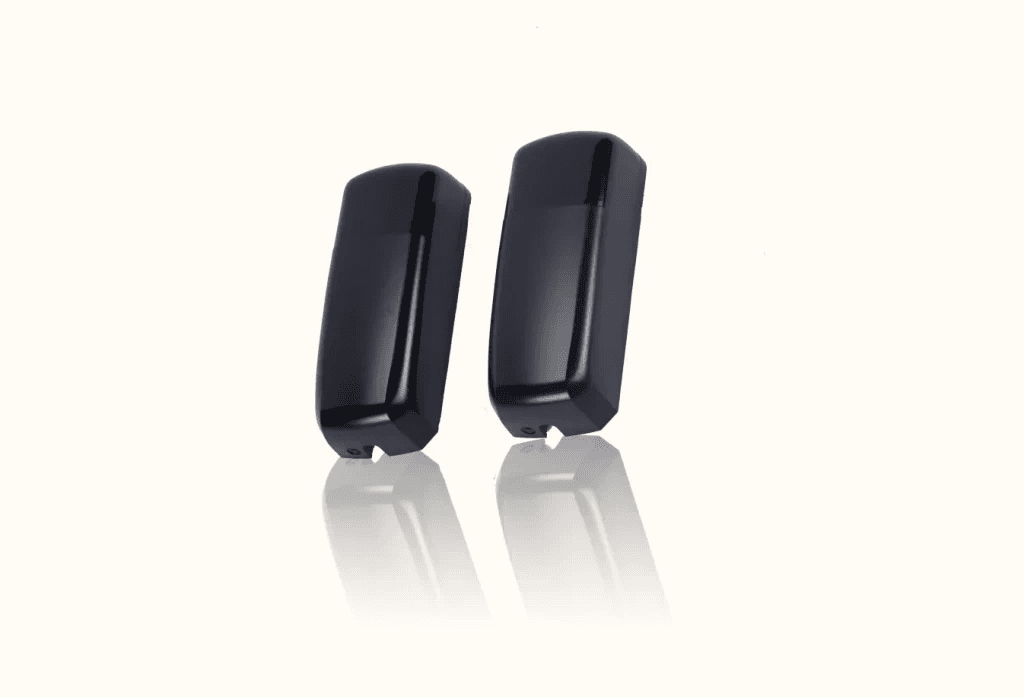
Photocells and motion sensors are two different types of lighting controls used to automate when lights turn on or off. They are often grouped together because both reduce manual switching, but they rely on completely different inputs.
A photocell sensor measures ambient light. When daylight drops below a set threshold, the sensor signals the light to switch on. When daylight returns, it switches the light off. This makes photocells useful wherever lighting should follow natural light conditions.
A motion sensor detects movement within a defined range or field. When movement is detected, the sensor triggers the light. After a delay period with no motion, the light turns off or returns to a lower output level, depending on the control setup.
Simple definition: A photocell responds to darkness. A motion sensor responds to movement.
That is the core difference, and it shapes every practical decision that follows.
How a Photocell Sensor Works in Lighting Control
A photocell sensor works by measuring ambient light levels and switching a fixture based on brightness, not occupancy. It is one of the simplest and most common outdoor lighting controls.
Ambient light is the trigger
Photocells use a light-sensitive component to detect surrounding illumination. When natural light falls to evening or storm-level darkness, the sensor closes or opens the circuit depending on the design and activates the connected light.
This method is useful because it aligns lighting operation with real environmental conditions rather than fixed schedules. A dusk-to-dawn photocell system can adapt automatically as seasons change.
Common photocell applications
Photocells are most commonly used in:
Street lights
Parking lot lights
Building perimeter lighting
Billboard and sign lighting
Garden and landscape lighting
Exterior wall packs
These are all areas where consistent nighttime illumination matters more than occupant-triggered activation.
Strengths of photocell lighting control
Automatic dusk-to-dawn operation
Simple control logic
Reduced need for manual switching
Reliable use in outdoor lighting sensors
Useful for safety and visibility
Small summary: If your goal is to make sure a light operates whenever it is dark, a photocell is usually the right tool.
How a Motion Sensor for Lighting Works
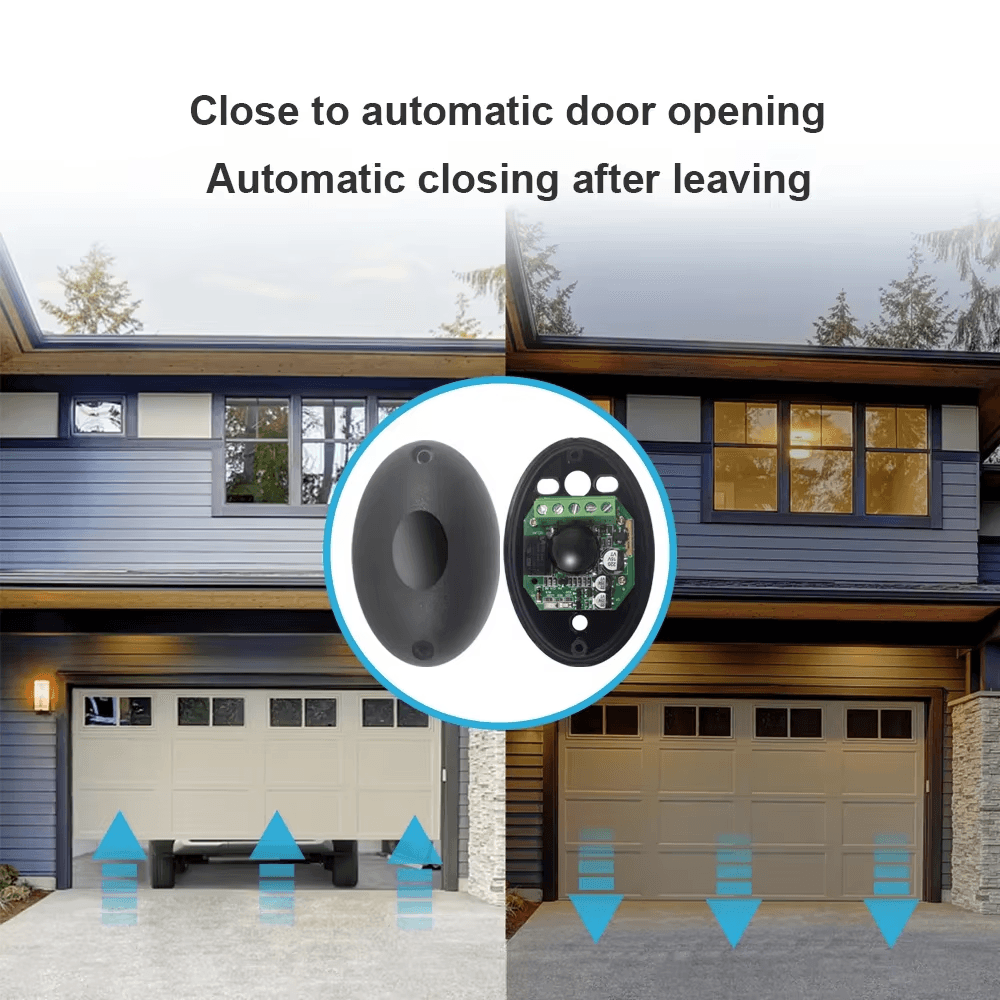
A motion sensor for lighting works by detecting movement in a monitored area and triggering light output when activity occurs. Unlike photocells, motion sensors do not care whether it is day or night unless they are configured with a light-level threshold.
Movement is the trigger
Motion sensors detect changes in their environment using sensing technologies such as passive infrared, microwave, or dual-technology detection. The technology varies, but the purpose is the same: activate lights when movement is present.
This makes motion sensors well suited to spaces where people or vehicles appear intermittently rather than continuously.
Common motion sensor applications
Motion sensors are commonly used for:
Entryways
Garages
Driveways
Walkways
Stairwells
Restrooms
Warehouses
Storage areas
Security lighting zones
In these applications, lighting should not stay on all night. It should respond to use.
Strengths of motion activated lights
Lower energy waste in low-traffic areas
More targeted security response
Hands-free convenience
Suitable for occupancy-based control
Flexible timing settings in many systems
Small summary: If your goal is to light an area only when someone is present, a motion sensor is usually more effective than a photocell.
Photocell vs Motion Sensor: The Core Difference
The difference between photocell and motion sensor is the condition each sensor monitors. A photocell monitors light level. A motion sensor monitors activity.
That sounds simple, but it has practical consequences for every lighting project. One sensor answers the question, “Is it dark enough to need light?” The other answers, “Is someone here right now?”
Comparison table: Photocell vs motion sensor
Feature | Photocell Sensor | Motion Sensor |
|---|---|---|
Main trigger | Ambient light level | Movement in detection area |
Best use case | Dusk-to-dawn lighting | On-demand lighting |
Typical location | Outdoors, perimeter, roads, signage | Entrances, paths, garages, interiors |
Energy behavior | Light stays on while it is dark | Light runs only when triggered |
Security role | Improves constant visibility | Reacts to movement and intrusion |
User experience | Predictable nightly operation | Intermittent, event-based operation |
Best for | Continuous overnight illumination | Occupancy or activity-based control |
The most important takeaway is this: a photocell controls time-of-darkness behavior, while a motion sensor controls occupancy behavior.
When to Use Photocells
Use a photocell when lights should operate automatically whenever the surrounding environment becomes dark. This is the better choice when visibility matters throughout the night, not just during short periods of activity.
Best-fit scenarios for photocells
Roadways and public outdoor areas
Street lights and path lights often need to turn on every evening and stay on until morning. A photocell handles that automatically without requiring manual scheduling.
Building perimeters
Perimeter lighting benefits from constant visibility. If the area should remain illuminated to improve safety or reduce blind spots, photocell lighting control makes sense.
Signage and façade lighting
Signs and architectural lighting need to follow dusk conditions rather than human presence. A motion sensor would be unreliable here because the purpose is display, not occupancy response.
Large exterior areas
Parking lots and expansive outdoor spaces often need broad nighttime visibility. Photocells are a more stable solution than motion sensors when the lighting objective is continuous coverage.
Short summary: Use photocells when darkness itself is the reason the light should turn on.
When to Use Motion Sensors
Use a motion sensor when the light should activate only when a person, vehicle, or other movement is detected. This is the better choice when energy control and event-based illumination matter more than constant output.
Best-fit scenarios for motion sensors
Residential entrances and driveways
Homeowners often want lights that stay off until someone walks up or a vehicle enters the property. Motion activated lights are ideal here.
Security lighting
Motion-triggered lights create immediate visual response when activity occurs. That makes them useful near gates, garages, side yards, and access points.
Interior support spaces
Hallways, storage areas, utility rooms, and restrooms often do not need continuous lighting. Motion sensors reduce unnecessary runtime.
Commercial and industrial intermittently used areas
Warehouses, back corridors, loading zones, and service rooms can benefit from occupancy-based operation, especially when traffic is inconsistent.
Short summary: Use motion sensors when presence, not darkness, is the reason the light should turn on.
Outdoor Lighting Sensors: Which One Is Better?
Neither is universally better. The better sensor depends on what the lighting needs to do. This is where many buyers go wrong: they compare photocells and motion sensors as if one should replace the other in every application.
Choose a photocell if you need:
Predictable dusk-to-dawn lighting
Constant nighttime visibility
Low-complexity outdoor automation
Lighting for roads, lots, signs, or exterior walls
Choose a motion sensor if you need:
Lights only when someone is present
Lower runtime in low-traffic zones
Security-triggered activation
Occupancy-based lighting control
Choose both if you need:
Night-only motion activation
Baseline dim light with full brightness on motion
Better control in advanced outdoor lighting systems
The best outdoor lighting sensors are chosen by function, not popularity.
Can You Use Photocells and Motion Sensors Together?
Yes, and in many projects that is the most effective solution. A combined strategy can improve both energy performance and lighting usability.
A common setup works like this: the photocell determines whether it is dark enough for the system to operate, and the motion sensor determines when full light output is needed. This prevents the motion sensor from triggering lights during daytime and improves efficiency after dark.
Examples of combined use
Security floodlights
A photocell ensures the system is active only at night. A motion sensor turns the floodlight on when movement occurs.
Parking lots with dimming controls
A photocell activates the nighttime mode, while motion sensors raise fixture output from dim to full brightness when activity is detected.
Commercial building entrances
The area can maintain basic visibility after dark, while motion increases output when occupants approach.
Small summary: Combining photocells and motion sensors is often the best answer when you need both nighttime logic and occupancy logic.
Common Mistakes People Make When Choosing Between Them
The most common mistake is choosing a sensor without first defining the lighting objective. If you do not know whether the area needs constant illumination or event-triggered lighting, the wrong product will seem like a bad product.
Mistake 1: Using a motion sensor where constant visibility is needed
A motion sensor is a poor fit for a perimeter zone that should stay illuminated all night. It creates dark intervals where visibility should be continuous.
Mistake 2: Using a photocell where occupancy-based control is needed
A photocell will keep lights on whenever it is dark, even if nobody is there. That may waste energy in low-use spaces.
Mistake 3: Ignoring sensor placement
A good sensor placed badly performs poorly. Motion sensors need proper detection angles. Photocells need exposure to real ambient light, not artificial light spill from the fixture.
Mistake 4: Not accounting for application type
An entrance, a warehouse aisle, a parking lot, and a billboard all require different control logic. One sensor type does not suit every location.
Mistake 5: Forgetting about combined controls
Many lighting systems perform better when photocell and motion sensor functions are layered rather than forced into an either-or choice.
Short summary: The right sensor begins with a clear use case, not a product catalog.
How to Choose the Right Sensor for Your Project
The best way to choose between photocells and motion sensors is to start with the behavior you want from the light. Ask what should trigger the fixture, how long it should stay on, and what problem the system is solving.
Step 1: Define the purpose of the light
Is the goal security, visibility, convenience, compliance, or energy reduction? This determines the control logic you need.
Step 2: Identify whether darkness or movement is the trigger
If darkness should trigger the light, use a photocell. If movement should trigger the light, use a motion sensor.
Step 3: Evaluate the installation environment
Outdoor lighting sensors must handle weather, placement constraints, detection zones, and neighboring light sources.
Step 4: Decide whether combined control would work better
If the site needs nighttime control plus occupancy response, using both technologies together often produces the best result.
Step 5: Match sensor type to fixture and project scale
Residential lighting, commercial entrances, roadway systems, and industrial spaces all require different control approaches and performance expectations.
Small summary: The right sensor is chosen by trigger logic, site conditions, and desired lighting behavior.
Practical Use Cases by Application
Looking at real applications is often the fastest way to understand the difference between photocells and motion sensors. The table below simplifies typical choices.
Application | Best Sensor | Why |
|---|---|---|
Street lighting | Photocell | Needs dusk-to-dawn operation |
Residential driveway | Motion sensor | Lights only when someone arrives |
Parking lot perimeter | Photocell or combined | Depends on visibility and energy goals |
Building entrance | Motion sensor or combined | Needs occupancy response |
Sign lighting | Photocell | Should follow daylight conditions |
Warehouse aisle | Motion sensor | Occupancy varies throughout the day |
Security floodlight | Combined | Night-only activation on motion |
Garden path | Photocell | Predictable nighttime illumination |
This comparison helps answer the most common buyer question: which is better photocell or motion sensor? The answer depends entirely on how the space is meant to function.
Why This Difference Matters for Buyers, Contractors, and Facility Managers
Understanding the difference between photocells and motion sensors helps you avoid over-lighting, under-lighting, and unnecessary operating cost. It also reduces installation revisions and user complaints.
For contractors, the wrong sensor choice can lead to callbacks. For facility managers, it can lead to poor safety perception or wasted energy. For homeowners, it often results in frustration: lights stay on too long, or fail to turn on when needed.
A clear control strategy improves more than convenience. It improves performance, cost control, and user satisfaction across residential, commercial, and outdoor lighting projects.
Conclusion
Photocells and Motion Sensors are not competing versions of the same product. They are different control tools designed for different lighting behaviors. A photocell responds to darkness and is best for dusk-to-dawn operation. A motion sensor responds to movement and is best for occupancy-based or security-triggered lighting.
If you are planning a project, the next step is simple: define what should trigger the light. Once you know whether your goal is continuous nighttime visibility, on-demand activation, or both, choosing between photocells and motion sensors becomes much easier and much more accurate.
FAQ Section
Q1: What is the difference between photocells and motion sensors?
A photocell turns lights on or off based on ambient light levels, while a motion sensor activates lighting when movement is detected. The first responds to darkness; the second responds to activity.
Q2: Which is better, photocell or motion sensor?
Neither is better in every situation. A photocell is better for dusk-to-dawn lighting, while a motion sensor is better for entrances, security lighting, and spaces where lights should run only when needed.
Q3: Can photocells and motion sensors be used together?
Yes. A photocell can limit operation to nighttime, while a motion sensor controls when lights actually activate or brighten. This combination is common in security and energy-saving lighting systems.
Q4: Are photocells good for outdoor lighting?
Yes. Photocells are widely used in outdoor lighting because they respond automatically to changing daylight conditions. They are especially useful for street lights, perimeter lighting, landscape lights, and signs.
Q5: Are motion sensors better for security lights?
Yes, in many cases. Motion sensors are effective for security lighting because they trigger a visible response when movement occurs, which can improve awareness around entrances, driveways, side yards, and access points.
Q6: Do motion sensors work during the day?
They can, depending on the settings. Some motion sensors include daylight thresholds, while others will trigger regardless of ambient brightness unless paired with a photocell or light-level control.
Q7: What are the best outdoor lighting sensors for energy savings?
Motion sensors usually provide stronger energy savings in low-traffic areas because lights run only when activity is detected. Photocells are better when steady overnight lighting is required for safety or visibility.
Other Blogs