Blog
Garage Door Installation Guide: How to Install a Roll Up Garage Door Correctly
Author
Ray
Published
Category
Roller Shutter Motor
Installing a roll up garage door correctly requires more than lifting the curtain into place. The job depends on accurate opening measurements, bracket alignment, axle support, door balance, safety hardware, and opener compatibility.

Author
Ray
An experienced automation specialist with a strong background in motor technology and industrial solutions. With years of expertise in central motors, tubular motors, and automation systems, the author is dedicated to sharing insights that connect engineering innovation with real-world applications. Passionate about advancing reliable, energy-efficient, and high-performance automation products for global markets.
What’s better than insider perks, pro tips, and surprises?
Sign up to get the most recent blog articles in your email every week.
Join now.
WHY I WRITE THIS
About my business
Our company’s main product lines include tubular motors, sliding gate motors, swing gate motors, roller shutter motors, and other door automation solutions, all manufactured by trusted partner factories we have worked with for many years.
Our Services
I help them with sales and export operations, while our company also provides sourcing and procurement services in China to help international clients solve supply-related challenges. If you need assistance with procurement, please feel free to contact us.
Installing a roll up garage door correctly means more than mounting a door and attaching a motor. The job starts with accurate measurements, a structurally sound mounting surface, proper bracket and guide alignment, and a door assembly that is balanced before the opener is commissioned. If the roll up garage door opener is installed on a door that is misaligned, poorly tensioned, or incompatible with the system, the result is usually noisy operation, premature wear, or unsafe performance.
In practical terms, the right installation sequence is: measure the opening, verify the door system, mount the structural components accurately, align the curtain and guides, test manual movement, then install and set up the opener.
Key Takeaways
Roll up garage doors require system-level installation, not just panel mounting.
Accurate measurements come first. Opening size, headroom, side room, and mounting surface condition determine whether the install will work.
Manual door operation should be smooth before the opener is installed.
A roll up garage door opener must match the door’s size, weight, use cycle, and operating environment.
Poor alignment causes many long-term issues, including noisy movement, uneven wear, and unreliable travel limits.
Commercial and industrial roll up doors usually require more rigorous installation planning than standard residential doors.
What makes roll up garage door installation different
A roll up garage door is not installed the same way as a sectional overhead garage door. Instead of separate hinged panels moving along tracks, a roll up door typically coils into a compact roll above the opening. That changes the installation logic.
The key differences include:
the door curtain wraps around a barrel or drum
guide alignment is critical for smooth vertical travel
mounting loads are concentrated differently
opener compatibility depends on the door shaft, weight, cycle demands, and control setup
safety devices and limit setting become especially important in frequent-use environments
That is why a generic “garage door installation” article often leaves out the details that matter most for rolling doors.
The short answer: how to install a roll up garage door correctly
How do you install a roll up garage door correctly?
Start by confirming the exact opening dimensions, headroom, side room, and wall condition. Install the brackets, barrel, guides, and curtain according to the door specification, making sure all structural components are plumb, level, and securely anchored. Test the door manually before installing the roll up garage door opener. Then mount the opener, set travel limits, verify safety controls, and complete a full operating test.
This is the correct order because the opener should never be used to compensate for a poor mechanical installation.
Before you start: what to confirm first
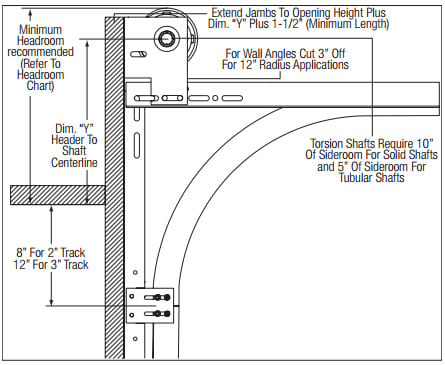
Opening size and headroom
Every correct installation begins with measurement. Confirm:
clear opening width
clear opening height
headroom above the opening
side room on both sides
back room or operating space where relevant
obstructions such as beams, lights, pipes, or conduit
A roll up door that technically fits the opening on paper can still become a bad installation if the coil, supports, or opener do not have enough clearance.
Wall condition and mounting surface
The mounting surface must be structurally suitable for the door system. If the wall is uneven, weak, cracked, or inconsistent across anchor points, the installed assembly may twist or shift during operation.
For commercial sites, it is especially important to verify steel, masonry, or framed structural support conditions before hardware is fixed in place.
Door model and opener compatibility
Do not assume any roll up door opener works with any rolling door. Compatibility should be checked against:
door size
curtain weight
door type
operating frequency
shaft or drive requirements
control requirements
power supply conditions
safety device integration
This matters because a properly installed door can still perform poorly if the operator is undersized or mismatched.
Tools, hardware, and site conditions you will need
The exact tool list depends on the door model and jobsite, but most installations require:
tape measure and level
drill and appropriate bits
anchors or fasteners specified for the substrate
lifting equipment or support stands for heavier assemblies
socket and wrench set
screwdrivers
plumb line or laser alignment tool
PPE such as gloves, eye protection, and safety footwear
For larger commercial doors, lifting assistance and multiple installers are often necessary. A roll up door assembly can be awkward to handle even when the parts are not exceptionally heavy.
Step-by-step roll up garage door installation
Step 1: Measure the opening and verify specifications
Measure twice and compare the actual opening conditions with the door order specifications. Check width, height, clearances, floor level, and structural mounting points.
This step prevents the most expensive early mistake: trying to adapt the installation around an opening that does not match the ordered system.
Step 2: Prepare the mounting area
Clear the area around the opening. Confirm the surface is clean, stable, and ready for fastening. Mark the installation points for brackets, guides, and support hardware.
If the floor is out of level or the jamb surfaces are irregular, note that early. Those conditions can affect guide alignment and bottom seal contact.
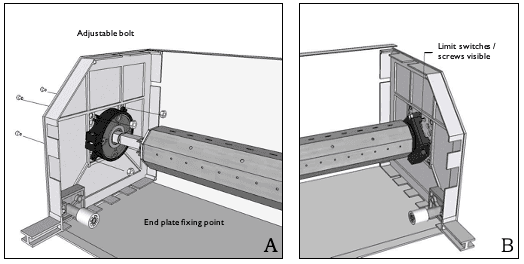
Step 3: Install brackets and support components
Install the structural brackets and support hardware according to the door design. Accuracy matters here because these components establish the geometry for the entire assembly.
A small error in bracket placement can produce larger issues later, including skewed curtain travel or uneven loading on the opener.
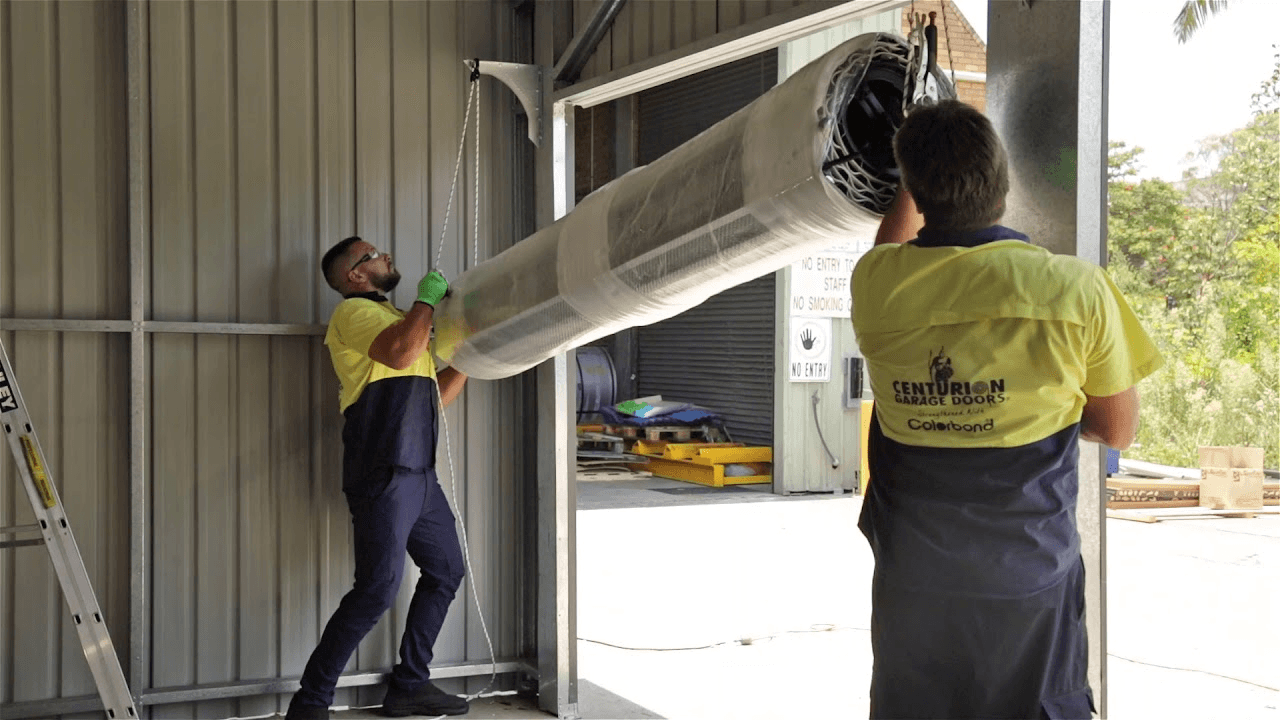
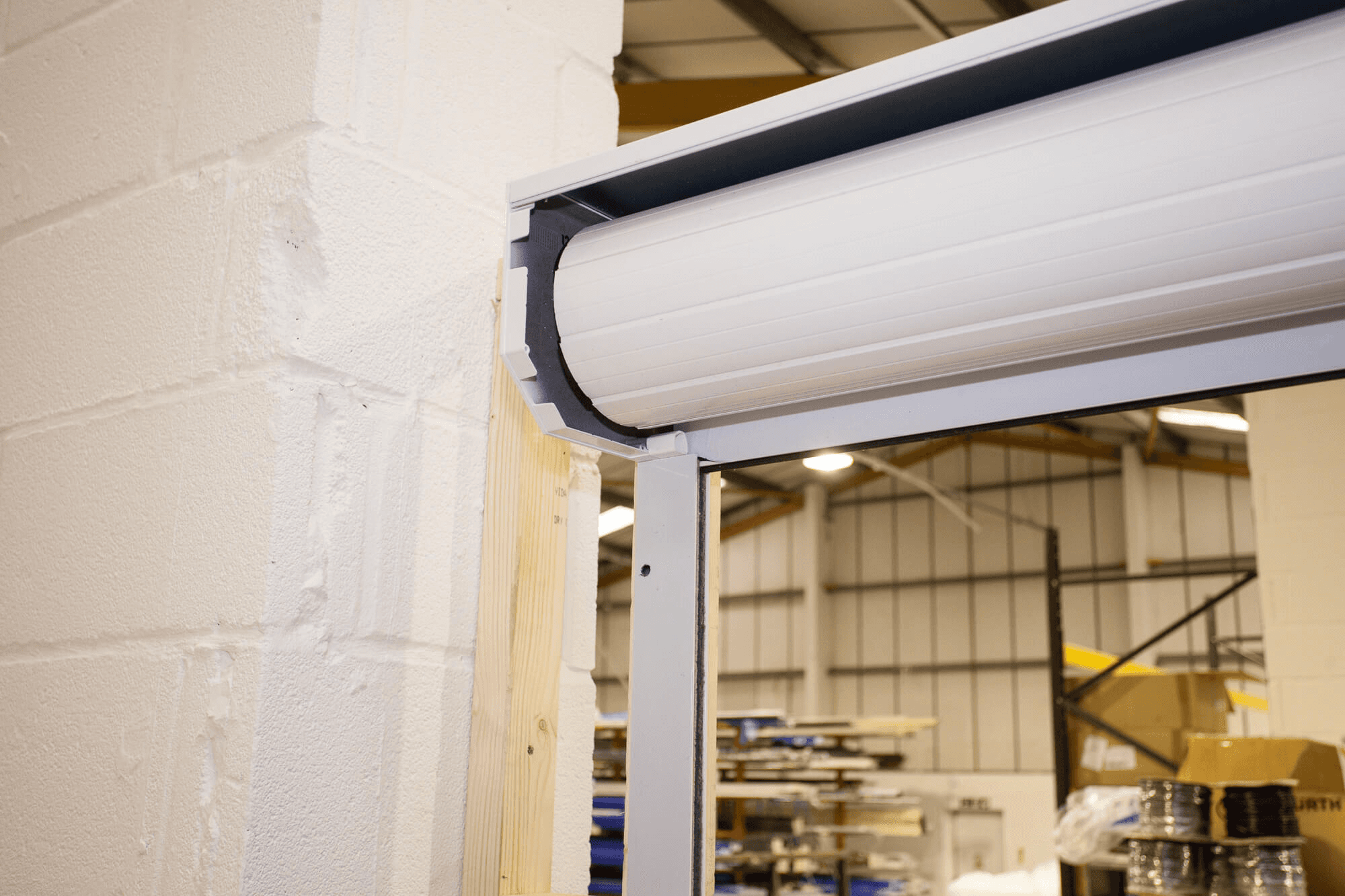
Step 4: Position the barrel, curtain, and guides
Lift and position the barrel or drum assembly and prepare the curtain for installation. Then install the guides so they are straight, plumb, and correctly spaced.
This is one of the most sensitive stages. The curtain must enter and travel through the guides cleanly, without rubbing, binding, or shifting laterally.
Step 5: Align and secure the door assembly
Once the main components are in place, verify alignment again before final tightening.
Check:
plumb of both guides
level or intended orientation of support components
centered curtain travel
even clearances
secure anchoring at all structural points
The door should look mechanically balanced before it is ever powered.
Step 6: Set tension or balance according to manufacturer instructions
This is a critical safety and performance step. The door system may require spring tensioning, balancing, or other mechanical adjustment depending on the design.
Because tensioning procedures vary by product, this should always follow the manufacturer’s instructions directly. Do not improvise here. Incorrect tensioning can damage the system or create a serious safety hazard. [source needed]
Step 7: Test manual operation
Before installing the roll up garage door opener, operate the door manually if the system design allows.
You are looking for smooth, controlled travel with no obvious binding, scraping, twisting, or drop behavior. If the door does not move properly by hand, the opener should not be installed yet. The mechanical issue must be corrected first.
This is one of the most useful rules in the entire process: the opener is not a fix for poor door installation.
Step 8: Install and configure the roll up garage door opener
Once the door is mechanically sound, mount the opener and connect it according to the operator design and manufacturer instructions.
At this stage, confirm:
mounting stability
drive compatibility
power supply requirements
control station placement
emergency operation provisions where applicable
photo eyes, safety edges, or other required protection devices where applicable
For the U.S. market, product suitability, compliance expectations, and safety setup should be evaluated against the application type and applicable local requirements. Specific compliance claims should only be made where documented. [source needed]
Step 9: Test safety and travel limits
Set the open and close limits carefully. Then run multiple test cycles and confirm:
the door opens fully without overtravel
the door closes evenly and seats correctly
the opener does not strain during travel
the safety devices function as intended
the controls respond consistently
the installation remains stable under repeated operation
A good installation is not judged by one successful cycle. It should operate consistently across repeated tests.
Common installation mistakes that cause performance problems
Many roll up door problems begin during installation, not after months of use.
The most common mistakes include:
Incorrect measurements
Even a small measurement error can create major fit and clearance issues, especially around the barrel and opener mounting area.
Guide misalignment
If the guides are not plumb and properly spaced, the curtain may drag, jam, or wear unevenly.
Weak or unsuitable anchoring
A rolling door places repeated load on its mounting structure. Poor anchors or an inadequate substrate can lead to movement over time.
Installing the opener too early
The opener should only be installed after the door works properly as a mechanical system.
Ignoring compatibility between door and opener
A mismatched roll up door opener may lack the torque, duty cycle, or control logic the application requires.
Incomplete safety testing
A door that opens and closes is not automatically ready for use. Safety devices, stops, limits, and emergency functions all need verification.
How to know if your roll up door opener is the right match
A roll up door opener should be selected based on the actual demands of the door system, not just availability or price.
Evaluate the opener based on:
door dimensions
estimated operating load
frequency of daily cycles
indoor or outdoor exposure
required opening speed
control method
safety accessory requirements
maintenance expectations
This is where many buyers make a subtle but important mistake. They treat the opener as a secondary accessory, when in reality it is part of the operating system.
For higher-use commercial and industrial environments, opener durability and control reliability can matter just as much as the door itself.
Residential vs commercial roll up door installation
The installation principles are similar, but the application demands are not.
Residential installations
Residential roll up doors are often smaller and less cycle-intensive. The installation may still require precision, but structural loads, control complexity, and operating frequency are usually lower.
Commercial installations
Commercial roll up doors often involve larger openings, heavier curtains, more frequent cycling, and more demanding safety expectations. They may also require more robust control systems and stronger opener performance.
That means the acceptable margin for installation error is usually smaller in commercial work.
When professional installation is the better choice
Some roll up garage door installations are not appropriate for a casual DIY attempt.
Professional installation is often the better choice when:
the door is large or heavy
spring or tensioning procedures are complex
the jobsite has structural uncertainty
the opener requires integrated control or safety devices
the application is commercial or industrial
local code or safety obligations are stricter
installation documentation must support warranty or compliance needs
A useful rule is this: if the door system affects daily business operations, security, or personnel safety, a professional installation approach is usually the wiser decision.
Final installation checklist
Use this checklist before commissioning the system:
opening dimensions verified
mounting surfaces confirmed structurally sound
brackets and supports securely installed
guides plumb and correctly spaced
curtain aligned and traveling smoothly
tension or balance set per manufacturer instructions
manual operation tested
roll up garage door opener matched to the application
travel limits set and verified
safety devices tested
repeated operating cycles completed successfully
This kind of checklist improves both installation quality and post-installation confidence.
Conclusion
A successful roll up garage door installation depends on precision, sequence, and system compatibility. The door must be measured correctly, mounted on a sound structure, aligned carefully, balanced properly, and tested manually before the opener is brought into the equation.
That is the difference between an installation that merely functions on day one and one that performs reliably over time.
For U.S. buyers, installers, and distributors evaluating a new system, the smartest path is to think in terms of the full operating package: door, structure, opener, controls, and safety setup. If those parts are selected and installed as one coordinated system, the result is usually safer, smoother, and easier to maintain.
If you are sourcing roll up garage door systems or opener solutions, it helps to review product compatibility, installation requirements, and application details before ordering rather than solving those issues on site.
FAQ
1. How do you install a roll up garage door correctly?
Install a roll up garage door by measuring the opening accurately, preparing the mounting surface, installing brackets and guides precisely, aligning the curtain and barrel, setting tension correctly, testing manual movement, and only then installing and adjusting the opener.
2. Can I install a roll up garage door opener before testing the door manually?
No. The door should move properly as a mechanical system before the opener is installed. The opener should automate correct operation, not compensate for poor alignment or balance.
3. What is the difference between a roll up door opener and a standard garage door opener?
A roll up door opener is designed for rolling or coiling door systems and is matched to the shaft, operating load, and application requirements of that door type. A standard opener for sectional doors may not be suitable.
4. What are the most common roll up garage door installation mistakes?
The most common mistakes include incorrect measurements, guide misalignment, poor anchoring, improper tension adjustment, installing the opener too early, and failing to verify compatibility between the door and opener.
5. Is professional installation necessary for a commercial roll up door?
In many cases, yes. Commercial roll up doors are often larger, heavier, and more demanding in terms of safety, control integration, and operating frequency, which makes professional installation the safer option.
6. How do I choose the right roll up garage door opener?
Choose the opener based on door size, operating load, cycle frequency, environment, control needs, and safety accessory requirements. The right opener should match the actual use case, not just the door opening size.
Other Blogs


