Blog
AC vs DC Roller Shutter Motor: A Practical Buying Guide for Commercial Doors
Author
Ray
Published
Category
Roller Shutter Motor
Compare AC vs DC roller shutter motors for commercial and industrial doors. Learn the key differences in power supply, torque, backup battery, control systems, safety features, and buying decisions with CHINA-DEVELOP.


Author
Ray
An experienced automation specialist with a strong background in motor technology and industrial solutions. With years of expertise in central motors, tubular motors, and automation systems, the author is dedicated to sharing insights that connect engineering innovation with real-world applications. Passionate about advancing reliable, energy-efficient, and high-performance automation products for global markets.
What’s better than insider perks, pro tips, and surprises?
Sign up to get the most recent blog articles in your email every week.
Join now.
WHY I WRITE THIS
About my business
Our company’s main product lines include tubular motors, sliding gate motors, swing gate motors, roller shutter motors, and other door automation solutions, all manufactured by trusted partner factories we have worked with for many years.
Our Services
I help them with sales and export operations, while our company also provides sourcing and procurement services in China to help international clients solve supply-related challenges. If you need assistance with procurement, please feel free to contact us.
Introduction
When buyers choose a roller shutter motor for commercial or industrial doors, one common question is whether to choose an AC roller shutter motor or a DC roller shutter motor. At first, the difference may seem simple: AC uses alternating current, while DC uses direct current. In real purchasing decisions, however, the choice is more complex.
The right motor type depends on the door size, door weight, torque requirement, power supply, usage frequency, backup power needs, control method, safety features, and installation environment. A motor that works well for a small shopfront shutter may not be suitable for a heavy warehouse door. Likewise, a motor designed for industrial rolling shutters may be unnecessary for a light commercial application.
For distributors, importers, contractors, door manufacturers, and project buyers, choosing the wrong motor can cause slow operation, overheating, difficult installation, poor user experience, and higher after-sales costs.
This guide explains the key differences between AC and DC roller shutter motors and helps buyers decide which option is more suitable before placing an order.
What Is an AC Roller Shutter Motor?
An AC roller shutter motor is powered by alternating current from the main electrical supply. It is widely used in commercial, industrial, and heavy-duty roller shutter door systems because AC power is commonly available in buildings, warehouses, factories, and commercial facilities.
AC motors are often selected for projects where the door is large, heavy, or frequently used. They are also common in applications where the building already has a stable fixed power supply.
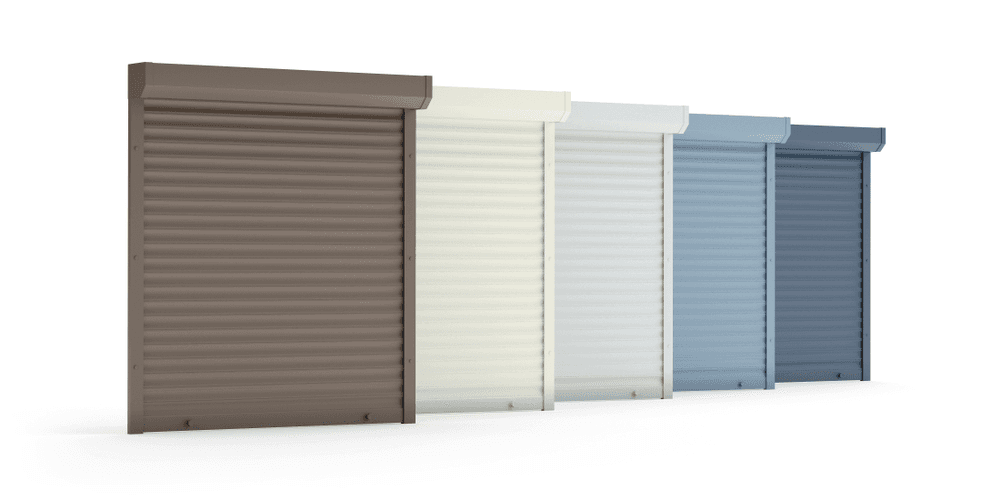
Common Applications of AC Roller Shutter Motors
AC roller shutter motors are often used for:
Warehouse roller shutter doors
Industrial rolling doors
Factory roll-up doors
Commercial storefront shutters
Loading dock doors
Heavy-duty rolling shutters
Commercial garage roll-up doors
Metal security shutters
For many commercial and industrial projects, AC motors are considered a practical and familiar option because they are widely used, easy to understand, and suitable for many standard electrical environments.
Main Advantages of AC Roller Shutter Motors
The biggest advantage of an AC motor is its suitability for stable mains-powered applications. For larger doors and heavier shutters, AC motors are often preferred because they can be designed for strong lifting performance and reliable daily operation.
Key advantages include:
Suitable for many commercial and industrial doors
Good option for larger or heavier shutters
Commonly used with fixed building power supply
Mature technology with broad market acceptance
Practical for warehouse and factory environments
Compatible with common wall switch and control box systems
However, AC does not automatically mean “better.” Buyers still need to check torque, load capacity, duty cycle, voltage, brake system, and safety compatibility before ordering.
What Is a DC Roller Shutter Motor?
A DC roller shutter motor is powered by direct current. It is often used in systems where low-voltage operation, battery backup, smoother control, or smart automation is important.
DC motors are common in smaller roller shutters, residential shutters, garage shutters, smart shutter systems, and light commercial doors. In some applications, a DC motor can be easier to combine with backup battery systems, which allows the shutter to operate during a power failure.
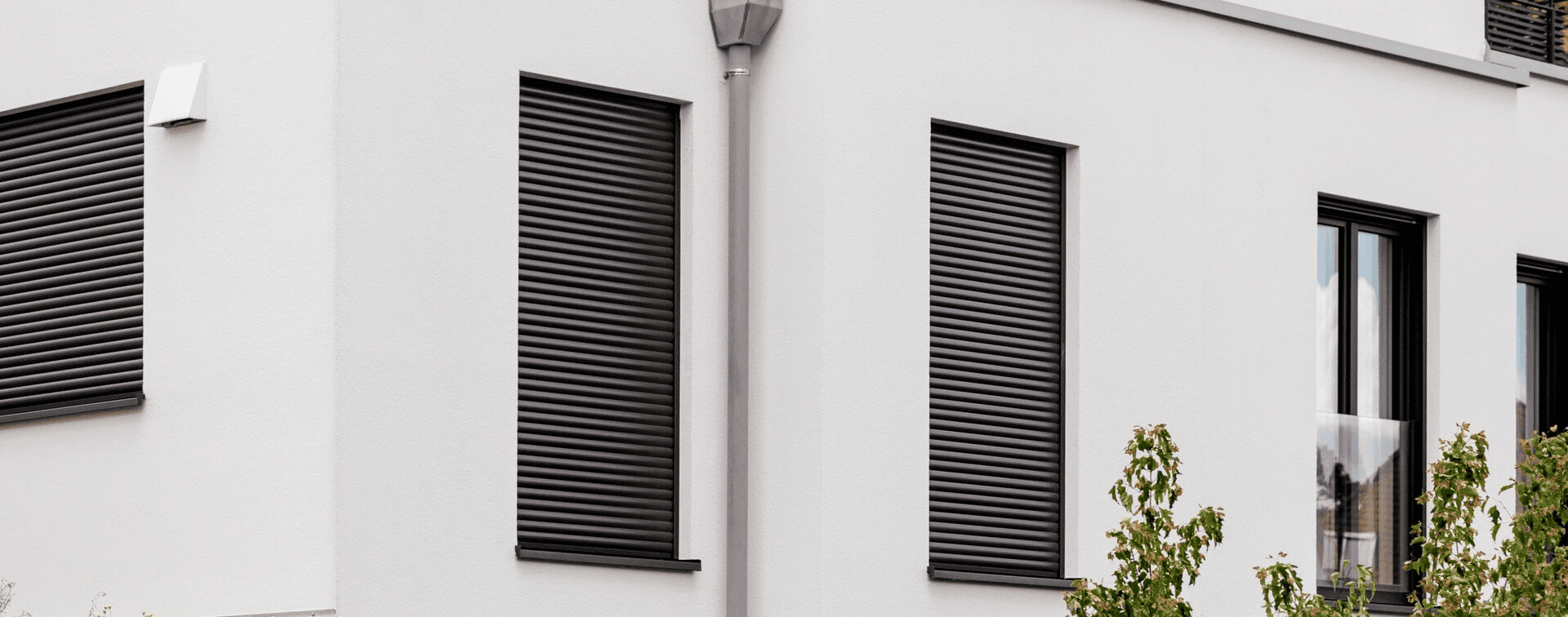
Common Applications of DC Roller Shutter Motors
DC roller shutter motors are often used for:
Residential roller shutters
Small commercial shutters
Shopfront shutters
Garage shutters
Smart roller shutter systems
Battery backup shutter systems
Light-duty automatic roller shutters
Low-voltage control applications
For buyers who prioritize backup power, quiet operation, or smart control integration, DC motors may be a good option.
Main Advantages of DC Roller Shutter Motors
The main advantage of DC motors is flexibility in control and backup power design. DC systems are often easier to connect with battery backup and low-voltage controls, depending on the motor and control system design.
Key advantages may include:
Easier integration with backup battery systems
Suitable for smaller and medium-sized shutters
Often preferred for low-voltage control systems
Good option for smart automation applications
Can provide smooth operation when properly designed
Useful for shops, homes, garages, and light commercial doors
However, buyers should not assume that DC is always more advanced or always better. For heavy-duty industrial rolling doors, a DC motor may not be the best choice unless it is specifically designed for that load and duty level.
AC vs DC Roller Shutter Motor: Key Differences Buyers Should Compare
The best way to compare AC and DC roller shutter motors is to look at practical buying factors, not only technical definitions.
Buying Factor | AC Roller Shutter Motor | DC Roller Shutter Motor |
|---|---|---|
Power supply | Uses alternating current from mains power | Uses direct current, often from a low-voltage or converted power source |
Typical use | Commercial, industrial, warehouse, and heavy-duty doors | Residential, light commercial, garage, and smart shutter systems |
Load capacity | Often suitable for larger and heavier shutters | Usually better for smaller or medium-duty shutters |
Backup battery | Possible with additional system design, but less direct | Often easier to integrate with battery backup |
Control method | Wall switch, control box, remote, key switch | Remote, smart control, low-voltage control, battery system |
Noise level | Depends on motor design and door structure | Often smoother in light-duty applications |
Maintenance focus | Motor, brake, wiring, limit switch, control box | Motor, control board, battery, wiring, limit setting |
Best application | Warehouse doors, factory doors, large commercial shutters | Shopfront shutters, garage shutters, smaller automated doors |
Main buyer concern | Torque, duty cycle, voltage, brake system | Battery life, load capacity, control compatibility |
This comparison shows one important point: AC vs DC is not a question of which motor is universally better. It is a question of which motor fits the door system and project requirement better.
Power Supply and Voltage
AC motors usually rely on mains power, such as 110V, 220V, 230V, or other market-specific voltages. Some industrial systems may also use three-phase power, depending on the motor and application.
DC motors use direct current and may require a power adapter, transformer, control board, or battery system. This can be useful when the project needs backup power or low-voltage control.
Before ordering, buyers should always confirm the voltage used in the target market and the actual electrical condition of the installation site.
Torque and Load Capacity
Torque is one of the most important parameters in any roller shutter motor buying decision. It determines how much rotational force the motor can provide to lift the shutter.
A heavy industrial door requires more torque than a small shop shutter. A large warehouse roller shutter door may also require stronger braking, better heat management, and a motor designed for higher usage frequency.
Buyers should never choose AC or DC based only on the motor name. The correct selection must consider:
Door width
Door height
Curtain material
Slat thickness
Bottom bar weight
Shaft size
Balance system
Daily operation frequency
Backup Battery Requirement
One of the biggest differences between AC and DC roller shutter motors is backup power compatibility. In many cases, DC systems are easier to combine with battery backup.
This matters for shops, garages, and commercial buildings where the shutter must still operate during a power outage. For example, a retail store may need to open or close its shutter even when electricity is temporarily unavailable.
AC systems can also use backup power, but this usually requires additional system design. Buyers should ask the supplier whether the selected motor model supports emergency power operation.
Which Motor Is Better for Commercial and Industrial Doors?
For commercial and industrial applications, the best motor depends on the actual door and operating environment. Buyers should avoid simple assumptions such as “AC is always stronger” or “DC is always smarter.”
Choose an AC Roller Shutter Motor When…
An AC roller shutter motor is often suitable when the project requires stable power, higher lifting capacity, and reliable daily operation.
Choose AC when:
The shutter door is large or heavy
The door is used in a warehouse or factory
The building has stable mains power
The door operates frequently during the day
The buyer needs a practical commercial door motor
The application requires strong torque
The shutter is part of an industrial rolling door system
Battery backup is not the main priority
For many commercial and industrial doors, AC motors remain a strong and practical option because they fit common building power systems and heavy-duty access requirements.
Choose a DC Roller Shutter Motor When…
A DC roller shutter motor may be more suitable when backup battery, smooth control, or low-voltage operation is important.
Choose DC when:
The door is small or medium-sized
Backup battery operation is required
Quiet operation is preferred
The project involves smart control
Low-voltage control is needed
The shutter is used for a shopfront, garage, or light commercial door
The buyer wants easier integration with certain automation systems
DC motors can be a good solution for modern automatic roller shutter systems, especially when the door is not extremely heavy and the control system is properly designed.
Commercial Door Example
A small retail shop may choose a DC motor if the shutter is light, the owner wants remote control, and battery backup is important during power failure.
A large warehouse loading dock, however, may require an AC side motor or another heavy-duty motor system because the door is larger, heavier, and used more frequently.
This is why buyers should provide complete door specifications before ordering.
Key Specifications Buyers Should Check Before Ordering
A reliable roller shutter motor selection depends on more than AC or DC. Buyers should compare the complete specification package.
Voltage and Power Supply
Voltage mismatch is one of the easiest mistakes to avoid. Before ordering, confirm the target market’s power supply and the project’s electrical conditions.
Buyers should check:
110V, 220V, 230V, or other required voltage
Single-phase or three-phase power
Control box compatibility
Power cable requirements
Local electrical installation conditions
Whether a battery backup system is needed
For importers and distributors, voltage options should match the markets where the motors will be sold.
Torque and Door Weight
The motor must match the actual shutter weight. A motor that is too weak may overheat, stop during operation, or fail early. A motor that is oversized without proper system matching may increase cost and create unnecessary stress on the door system.
To help the supplier recommend the correct motor, buyers should provide:
Door width and height
Slat material and thickness
Approximate shutter weight
Shaft diameter
Door balance system
Usage frequency
Installation environment
This information is much more useful than simply asking for “a strong motor.”
Duty Cycle and Usage Frequency
A motor used twice per day does not face the same workload as a motor used dozens of times per shift.
For commercial and industrial doors, buyers should ask:
How many times will the door open and close each day?
Is the door used by staff, forklifts, or vehicles?
Is it used during one shift or multiple shifts?
Is the installation indoor or outdoor?
Is the environment dusty, humid, hot, or cold?
High-frequency doors need motors with better durability, heat resistance, and mechanical reliability.
Safety and Emergency Functions
Safety features are important for both AC and DC roller shutter motors. This is especially true in warehouses, factories, loading docks, and commercial buildings where people, goods, and vehicles move near the door.
Important safety-related features may include:
Manual override
Emergency release
Limit switch
Brake system
Thermal protection
Overload protection
Photocell compatibility
Safety edge compatibility
Warning light compatibility
Emergency stop function
Buyers should confirm the safety requirements of their target market before placing bulk orders.
Common Buying Mistakes When Comparing AC and DC Motors
Many motor problems are caused by poor selection before installation. When comparing AC vs DC roller shutter motors, buyers should avoid the following mistakes.
Mistake 1: Choosing Only by Price
A low-cost motor may reduce the initial purchase price, but it can increase after-sales costs if it overheats, fails early, or creates customer complaints.
For commercial and industrial doors, reliability is often more important than the lowest unit price.
Mistake 2: Assuming AC Is Always Stronger
AC motors are often used in heavy-duty applications, but not every AC motor is suitable for every industrial door. Buyers still need to check torque, load capacity, brake system, duty cycle, and installation structure.
A poorly matched AC motor can still fail in a demanding application.
Mistake 3: Assuming DC Is Always More Advanced
DC motors may support battery backup and smart control more easily, but that does not mean they are always better. For large, heavy, high-frequency doors, the DC motor must still be properly rated for the load.
Technology should match the application, not just the buyer’s preference.
Mistake 4: Ignoring Door Weight
Door weight is one of the most important factors in motor selection. A shutter made with thicker metal slats will require more lifting force than a lighter shutter of the same size.
Buyers should never select a motor based only on door width.
Mistake 5: Forgetting Manual Override
Power failure can happen in any market. A commercial door should still be operable during an outage or emergency.
Manual override is especially important for:
Warehouses
Factories
Retail stores
Loading docks
Commercial garages
Emergency access points
Mistake 6: Not Asking for Technical Documents
Before bulk ordering, buyers should ask for datasheets, wiring diagrams, installation manuals, warranty information, and control system details.
A professional supplier should be able to explain how the motor should be selected and installed.
How to Choose the Right AC or DC Roller Shutter Motor
The following step-by-step process can help buyers make a better purchasing decision.
Confirm the door application.
Identify whether the motor will be used for a retail shutter, warehouse door, factory door, garage shutter, loading dock, or industrial rolling door.Measure the door size.
Confirm the width, height, shaft size, headroom, side room, and installation space.Estimate the shutter weight.
Check the curtain material, slat thickness, bottom bar, reinforcement, and total load.Check the power supply.
Confirm whether the site uses AC mains power, requires DC operation, or needs battery backup.Compare torque and load capacity.
Match the motor’s rated capacity with the actual door load.Review daily usage frequency.
High-frequency warehouse and factory doors need stronger motor performance than low-use shop shutters.Check control system requirements.
Decide whether the project needs remote control, wall switch, key switch, smart control, group control, or access control integration.Confirm safety requirements.
Review manual override, safety sensors, emergency stop, brake system, and limit switch reliability.Ask for supplier recommendation.
Provide the full door specifications to the supplier and request a suitable AC or DC motor solution.
This process helps buyers move from a simple product comparison to a real project-based purchasing decision.
Application Guide: AC or DC Motor by Door Type
Different door applications require different motor priorities. The table below gives a practical selection reference.
Door Application | Usually Better Option | Main Reason |
Small shopfront shutter | DC or small AC motor | Light-duty use, remote control, possible backup battery |
Medium commercial shutter | AC or DC depending on load | Selection depends on size, usage, and control needs |
Warehouse roller shutter door | AC motor | Better suited for heavier doors and stable mains power |
Factory rolling door | AC side motor or heavy-duty system | Strong torque and industrial durability |
Garage shutter | DC motor or AC motor | Depends on door size and battery backup needs |
Loading dock door | AC motor | Frequent use and heavier door structure |
Smart shutter system | DC motor | Easier low-voltage and backup integration |
Heavy-duty security shutter | AC motor | Higher load and stronger operating requirements |
This table should be used as a starting point, not a final rule. The actual motor selection should still be based on door weight, door size, and usage frequency.
Why Choose CHINA-DEVELOP for Roller Shutter Motor Solutions
CHINA-DEVELOP provides motor and automation solutions for roller shutter doors, commercial doors, garage doors, and access automation systems. For buyers comparing AC vs DC roller shutter motors, CHINA-DEVELOP can help evaluate the project requirements before recommending a suitable product option.
Product Solutions for Different Applications
CHINA-DEVELOP can support different door automation needs, including:
Roller shutter motors
Tubular motors
Central motors
Side motors
Garage door motors
Control systems
Remote controls
Receivers
Safety accessories
OEM/ODM motor solutions
This makes CHINA-DEVELOP suitable for distributors, importers, project contractors, installers, and door system manufacturers.
Support for B2B Buyers
B2B buyers often need more than a product list. They need help matching the motor with the real door system.
CHINA-DEVELOP can help buyers evaluate:
Door size
Door weight
Motor type
AC or DC power requirement
Torque requirement
Control method
Safety accessory compatibility
Bulk order requirements
OEM/ODM customization needs
For buyers who are not sure whether to choose an AC or DC roller shutter motor, providing door specifications is the most practical first step.
Better Procurement Decisions
A good procurement decision should reduce long-term risk. The goal is not simply to buy a motor, but to select a motor system that works reliably in the actual application.
For example, a shopfront shutter may prioritize quiet operation and backup battery. A warehouse shutter may prioritize torque, braking, durability, and frequent operation. A factory door may require stronger industrial performance and easier maintenance.
CHINA-DEVELOP can help buyers compare these requirements and select a more suitable solution.
FAQ: AC vs DC Roller Shutter Motor
Which is better for roller shutters, AC or DC motor?
Neither is always better. AC motors are often suitable for commercial, warehouse, and industrial rolling shutter doors. DC motors may be better for smaller doors, battery backup systems, and smart control applications. The best choice depends on door size, door weight, power supply, and usage frequency.
Is an AC roller shutter motor stronger than a DC motor?
AC motors are commonly used for heavier commercial and industrial doors, but strength depends on the specific motor design, torque rating, and load capacity. Buyers should compare technical specifications instead of assuming all AC motors are stronger.
Can a DC roller shutter motor support battery backup?
Yes, many DC roller shutter motor systems are easier to integrate with battery backup. This can be useful for shops, garages, and buildings where the door must operate during power failure.
Which motor is better for warehouse roller shutter doors?
For warehouse roller shutter doors, AC motors are often a practical choice because warehouses usually need stronger lifting capacity, stable operation, and frequent use. However, the final choice should be based on door weight, size, and operating frequency.
Which motor is better for shopfront shutters?
For small and medium shopfront shutters, DC motors or smaller AC motors may both be suitable. DC motors can be useful when battery backup, quiet operation, or smart control is important. AC motors may be suitable when mains power is stable and the shutter is heavier.
Can I replace an AC roller shutter motor with a DC motor?
It may be possible in some cases, but buyers should not replace the motor without checking door weight, shaft structure, control system, voltage, installation space, and safety requirements. A motor replacement should be reviewed by a professional installer or supplier.
Do AC and DC roller shutter motors use different control systems?
They can. AC motors often use mains-powered control boxes, wall switches, remote receivers, and key switches. DC motors may use low-voltage controllers, battery systems, or smart control modules. Always confirm compatibility before ordering.
What should buyers check before bulk ordering roller shutter motors?
Buyers should check motor type, torque, voltage, load capacity, duty cycle, control method, manual override, safety compatibility, warranty, packaging, documentation, and supplier support.
Are DC roller shutter motors suitable for industrial doors?
Some DC motors may be suitable for certain medium-duty applications, but heavy industrial doors usually require motors designed specifically for high load and frequent operation. Buyers should confirm the motor’s rated capacity before using DC motors for industrial doors.
Can CHINA-DEVELOP help choose AC or DC roller shutter motors?
Yes. CHINA-DEVELOP can help buyers evaluate door size, door weight, power supply, application type, control requirements, and usage frequency before recommending a suitable roller shutter motor solution.
Conclusion
Choosing between an AC and DC roller shutter motor is not simply a technical preference. It is a project decision based on door size, door weight, power supply, torque requirement, control method, usage frequency, backup power needs, and safety requirements.
An AC roller shutter motor is often a practical option for commercial doors, warehouse doors, factory rolling doors, loading dock shutters, and heavy-duty applications with stable mains power. A DC roller shutter motor may be more suitable for smaller shutters, shopfront doors, garage shutters, smart control systems, and applications where battery backup is important.
The best decision is not “AC or DC” in isolation. The best decision is choosing the motor that fits the actual door system.
CTA Closing
Not sure whether your project needs an AC or DC roller shutter motor? CHINA-DEVELOP can help review your door size, door weight, voltage, usage frequency, control requirements, and application scenario to recommend a suitable motor solution.
Contact CHINA-DEVELOP to request product specifications, compare AC and DC roller shutter motor options, or discuss bulk orders and OEM/ODM door automation solutions.
Other Blogs