Blog
What Are the Most Common Roller Door Problems? A Complete Troubleshooting Guide
Author
Ray
Published
Category
Roller Shutter Motor
Roller door not opening, making noise, or moving unevenly? This complete troubleshooting guide covers the most common roller door problems, their causes, DIY fixes, and when to call a professional for safe repair.

Author
Ray
An experienced automation specialist with a strong background in motor technology and industrial solutions. With years of expertise in central motors, tubular motors, and automation systems, the author is dedicated to sharing insights that connect engineering innovation with real-world applications. Passionate about advancing reliable, energy-efficient, and high-performance automation products for global markets.
What’s better than insider perks, pro tips, and surprises?
Sign up to get the most recent blog articles in your email every week.
Join now.
WHY I WRITE THIS
About my business
Our company’s main product lines include tubular motors, sliding gate motors, swing gate motors, roller shutter motors, and other door automation solutions, all manufactured by trusted partner factories we have worked with for many years.
Our Services
I help them with sales and export operations, while our company also provides sourcing and procurement services in China to help international clients solve supply-related challenges. If you need assistance with procurement, please feel free to contact us.
Introduction
A roller door that fails at the wrong moment — when you are trying to leave for work, secure your premises at closing time, or park your vehicle out of the rain — is more than an inconvenience. Depending on the cause, it can be a security vulnerability, a safety hazard, or the early warning sign of a more serious mechanical failure developing beneath the surface.
Roller doors — including residential garage roll-up doors, commercial roller shutters, and industrial sectional doors — share a common set of failure patterns. The symptoms differ in detail but the underlying causes repeat across installations: worn springs, misaligned tracks, failing motors, damaged slats, compromised weather seals, and electrical faults in automated systems.
The challenge for most homeowners and facility managers is that roller door problems are rarely self-explanatory. A door that stops halfway could have a spring problem, a track obstruction, a motor fault, a limit switch failure, or a safety sensor misalignment — all producing identical symptoms but requiring entirely different remedies.
This guide is organized by symptom, not by component — because that is how people actually experience and search for roller door problems. For each symptom, you will find:
The most likely causes in order of probability
What to check yourself safely
What the repair typically involves
When the problem requires professional service
One important note before proceeding: roller door springs — both torsion and extension types — are under extreme mechanical tension and are responsible for the majority of serious roller door injuries. Any troubleshooting or repair involving springs should be performed by qualified technicians. This guide flags those situations explicitly throughout.
How Roller Doors Work: A Quick Mechanical Overview
Understanding the Key Components
Before diagnosing problems, understanding what each component does clarifies why specific failures produce specific symptoms.
The main components of a typical roller door system:
Slats or panels — the interlocking horizontal sections that form the door face; aluminum, steel, or polycarbonate in most installations
Tracks and guides — the vertical channels on each side that guide the door as it travels up and down
Springs — torsion springs (mounted above the door on a horizontal shaft) or extension springs (running parallel to horizontal tracks) that counterbalance the door weight
Drum and shaft assembly — the horizontal axle and drums around which the door curtain wraps when open
Motor and drive mechanism — the electric motor, gearbox, and drive chain, belt, or screw that powers automated doors
Limit switches — sensors that tell the motor when the door has reached its fully open or fully closed position
Safety sensors — infrared or pressure-sensitive devices that prevent the door from closing on obstructions
Weather seals — rubber or brush seals along the bottom, sides, and top that prevent weather, dust, and pests from entering
Locking mechanism — manual or automatic locking systems for security
Understanding this architecture makes problem diagnosis significantly more systematic.
Problem 1: Roller Door Won't Open or Close at All
What You Are Experiencing
The door is completely unresponsive — no movement, no motor sound, or the motor runs but the door does not move.
Most Likely Causes (In Order of Probability)
For automated roller doors:
Power Supply Failure
The simplest and most common cause of complete non-response is loss of power to the motor unit.
Check first:
Is the motor unit plugged in and the outlet functioning? Test the outlet with another device
Has a circuit breaker tripped? Check your electrical panel for tripped breakers
Is there a power outage affecting the property?
Has the motor's internal thermal overload tripped after extended use? Some units require a reset period
What to do: Restore power, reset the breaker, or wait for thermal overload to reset (typically 15–30 minutes). If power is confirmed but the motor still does not respond, the fault is within the motor unit or control system.
Remote Control or Keypad Failure
Before assuming a motor fault, verify the control device.
Check:
Replace remote batteries — this solves the problem more often than most homeowners expect
Test using the wall button or keypad if available
Verify the remote is within range and pointed toward the receiver
Check whether the remote needs reprogramming after a power outage
What to do: Replace batteries, reprogram the remote following manufacturer instructions, or replace a damaged remote.
Motor Unit Failure
If power is confirmed and control devices are functioning, the motor itself may have failed.
Motor failures can involve:
Burned-out motor windings
Failed capacitor (common in single-phase motors)
Damaged circuit board or control electronics
Failed gearbox
What to do: Motor diagnosis requires a qualified technician. Attempting to disassemble motor units without proper knowledge risks electrical injury and further damage.
Broken Spring (Critical Safety Issue)
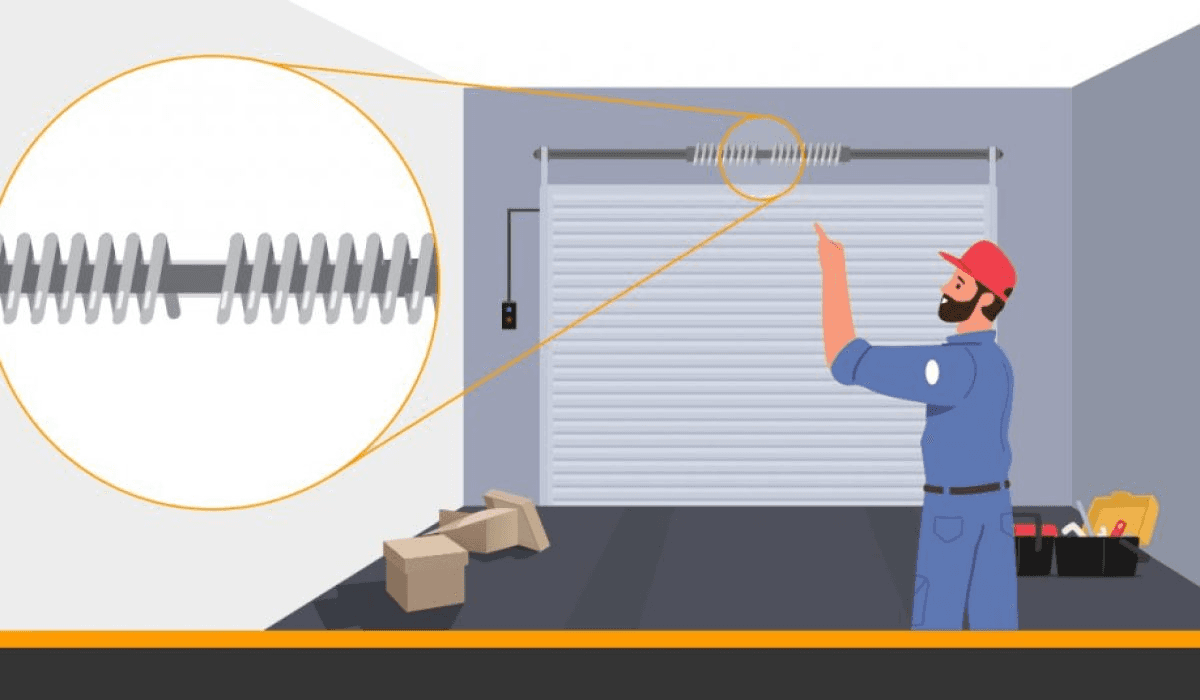
A broken torsion or extension spring is a common cause of a door that is completely immovable or extremely heavy to lift manually.
How to identify:
The door feels extremely heavy when you attempt manual operation
You can see a gap or separation in the torsion spring above the door
The door may have dropped suddenly with a loud bang (the sound of a spring breaking)
⚠️ WARNING: Do not attempt to operate a door with a broken spring. The spring provides the counterbalancing force that makes the door manageable — without it, the door's full weight is unsupported. Spring replacement must be performed by a qualified roller door technician. This is one of the most hazardous DIY repairs in home maintenance.
Disengaged Manual Release
Many roller door motors include a manual release mechanism — a cord or lever that disconnects the door from the drive mechanism for manual operation during power outages.
If this release has been accidentally activated, the motor will run without moving the door.
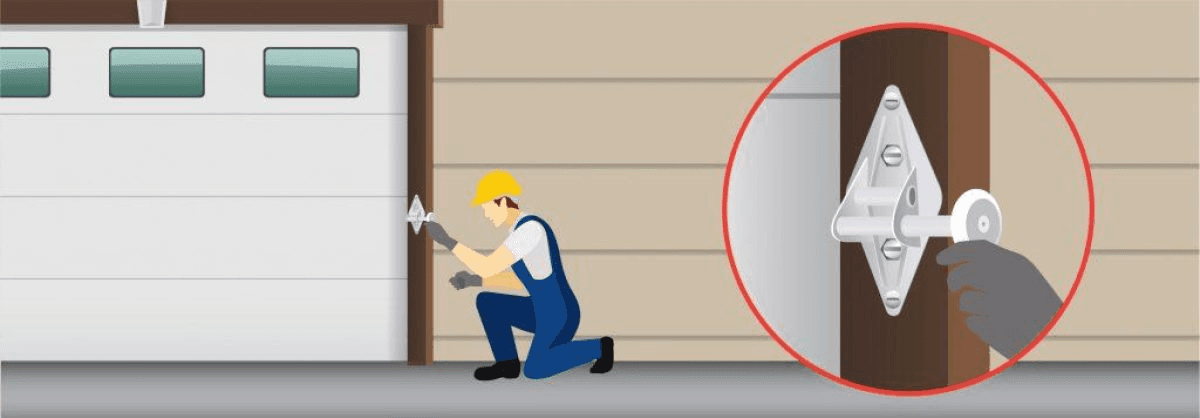
Check: Locate the manual release mechanism (typically a red cord hanging from the motor unit) and re-engage it per the manufacturer's instructions.
Problem 2: Roller Door Is Stuck Halfway (Won't Complete Full Travel)
What You Are Experiencing
The door starts moving but stops before reaching fully open or fully closed position — sometimes reversing direction, sometimes simply stopping.
Most Likely Causes
Limit Switch Miscalibration
Limit switches tell the motor when to stop. If they are incorrectly set, the motor stops the door before it completes full travel — or drives it past the correct stopping point.
Symptoms of limit switch issues:
Door stops consistently at the same point, just short of fully open or closed
Door reverses just before reaching the closed position
Door hits the floor and continues running briefly before stopping
What to do: Most motor units include limit switch adjustment screws accessible on the motor housing. Consult your specific motor manual for adjustment procedure. This is a safe DIY task on most residential systems with proper guidance.
Safety Sensor Obstruction or Misalignment
Infrared safety sensors (photo-eyes) are mounted near the bottom of the door tracks. If the beam between sender and receiver is interrupted — by an object, a spider web, dust accumulation, or physical misalignment — the door will reverse or refuse to close.
Check:
Look for objects blocking the sensor beam path
Clean the sensor lenses with a soft cloth
Verify both sensor units are aligned (most have indicator lights — both should be steady, not blinking)
Check sensor wiring for damage or loose connections
What to do: Clear obstructions, clean lenses, and realign sensors. This is typically a straightforward DIY task.
Track Obstruction or Damage
An object in the track — a stone, debris, or a dislodged component — can stop door travel at any point.
Check:
Visually inspect both tracks for visible obstructions
Look for bent track sections, loose track hardware, or track separation from the wall mounting
What to do: Remove obstructions and re-tighten loose track hardware. Bent tracks require professional straightening or replacement — operating a door on damaged tracks can cause further damage to slats and rollers.
Worn or Damaged Rollers
The rollers that run within the tracks wear over time. Flat spots, cracked wheels, or seized roller bearings create resistance that can stop the door mid-travel.
What to do: Roller replacement is a moderate DIY task on most systems — rollers are typically held by brackets that can be unbolted. However, if rollers are seized near a spring attachment point, defer to a technician.
Problem 3: Roller Door Is Making Unusual Noises
Types of Noise and Their Likely Causes
Roller door noise is one of the most common complaints — and one of the most informative diagnostic indicators. Different types of noise point to different components.
Grinding or Scraping Noise
Most likely cause: Metal-on-metal contact between the door panels/slats and the tracks, or between rollers and track walls.
Common reasons:
Tracks are misaligned, too close together, or bent
Rollers are worn or broken
Debris is lodged in the tracks
Track hardware has loosened and shifted
What to do: Inspect tracks for alignment and debris. Apply appropriate lubricant to rollers and track contact points. Check track hardware for tightness.
Squeaking or Squealing
Most likely cause: Lack of lubrication on moving parts.
Roller door components — hinges, rollers, spring shafts, and bearings — require periodic lubrication. Without it, metal-on-metal friction creates high-pitched squealing.
What to do:
Apply lubricant to:
Rollers and roller bearings
Hinges (on sectional doors)
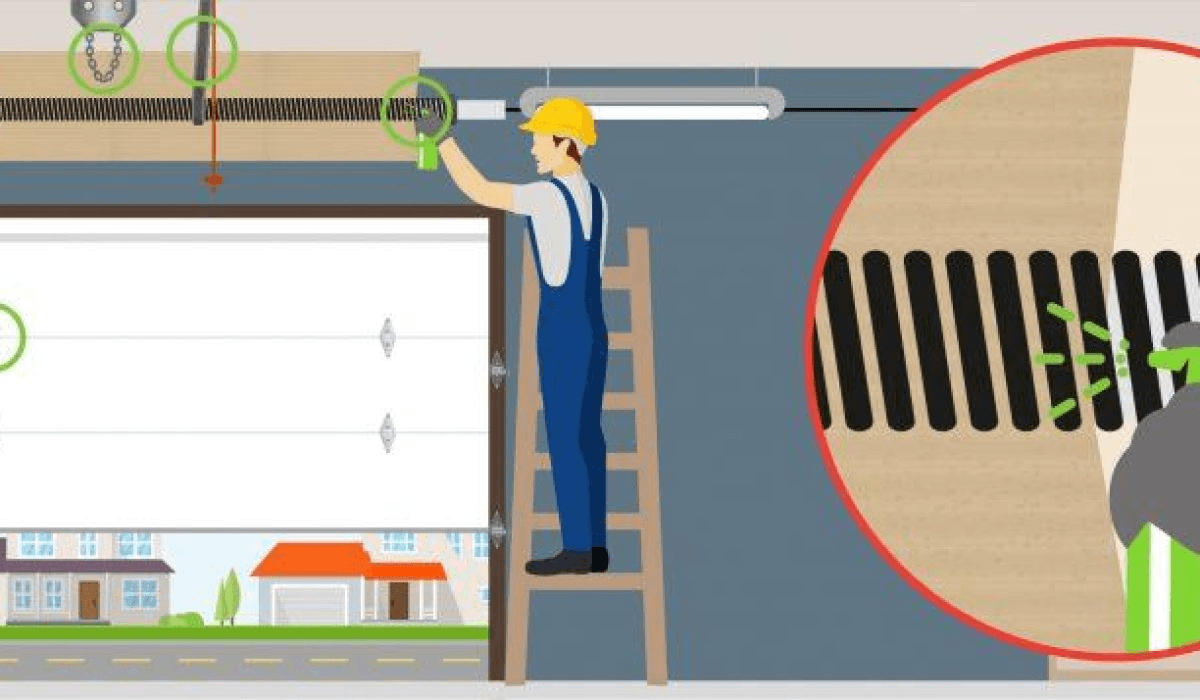
Torsion spring and shaft
Track contact points (do not lubricate the tracks themselves on chain-drive systems)
Use the correct lubricant: White lithium grease or a dedicated garage door lubricant spray. Do not use WD-40 as a primary lubricant — it is a solvent and moisture displacer, not a durable lubricant, and can attract dirt to moving parts.
Banging or Popping
Most likely cause: Sections or slats flexing under movement, temperature expansion, or a component snapping under load.
If the banging is sudden and loud — particularly if accompanied by the door dropping — suspect a broken spring. Stop operating the door immediately and call a professional.
Moderate banging during normal operation can indicate:
Loose panels or hardware
Slats that have partially separated or cracked
Tension imbalance across the spring system
Rattling
Most likely cause: Loose hardware — bolts, brackets, track fasteners, or motor mounting hardware vibrating during operation.
What to do: Systematically check and tighten all accessible hardware using appropriate tools. Do not overtighten — hardware that is repeatedly over-tightened strips its threads.
Thumping at Regular Intervals
Most likely cause: A flat spot on a roller — one point on the roller wheel that has worn or deformed, creating a bump on every rotation.
What to do: Replace the affected roller(s).
Problem 4: Roller Door Is Moving Unevenly or Crooked
What You Are Experiencing
The door moves but does not travel smoothly — it jerks, moves faster on one side, appears tilted, or wobbles during operation.
Most Likely Causes
Uneven Spring Tension
On doors with two springs (common in wider residential and commercial installations), unequal tension across the springs causes uneven lifting force. One side of the door rises faster than the other, creating visible tilting.
⚠️ WARNING: Spring tension adjustment is a professional task. Do not attempt to adjust torsion spring tension without proper training and tools. Torsion spring winding is dangerous and has caused serious injuries and fatalities.
Track Misalignment
If one track is mounted further from the door than the other, or if a track has shifted due to loose mounting hardware, the door will travel unevenly.
Check:
Look at both tracks from in front of the door — they should be parallel and at equal distances from the door face
Check that track mounting brackets are securely fastened to the wall
Verify that vertical tracks are plumb (use a level)
What to do: Loosen track mounting hardware, realign, and re-tighten. This is a manageable DIY task if tracks are accessible and damage is limited to alignment rather than deformation.
Worn or Damaged Rollers on One Side
If rollers on one side wear faster than the other — due to uneven load or localized debris accumulation — one side of the door will move more smoothly than the other.
What to do: Inspect rollers on both sides and replace worn units.
Cable Issues (Extension Spring Systems)
On extension spring systems, lifting cables run from the door bottom brackets to the spring system. A frayed, kinked, or unwound cable creates uneven lifting.
⚠️ WARNING: Cable replacement on spring-loaded systems involves working near high-tension components. This is professional work.
Problem 5: Roller Door Reverses Before Fully Closing
What You Are Experiencing
The door descends toward the closed position but reverses back up before reaching or touching the floor — sometimes consistently, sometimes intermittently.
Most Likely Causes
Safety Sensor Misalignment or Obstruction
This is the most common cause and the first thing to check.
Modern automated roller doors include photo-eye sensors near the floor on each side of the door opening. If the infrared beam between them is broken by any object — including misalignment that redirects the beam — the door interprets this as an obstruction and reverses as a safety measure.
Check:
Both sensor indicator lights should be solid (not blinking or off)
Ensure no objects are crossing the beam path
Clean sensor lenses
Realign sensors so they directly face each other
Close Limit Switch Set Too Far
If the close limit switch is set to stop the door after the floor contact point, the door's pressure sensor may interpret floor contact as an obstruction and reverse.
What to do: Adjust the close limit to stop the door just as it contacts the floor seal. Consult your motor unit manual.
Sensitivity Setting Too High
Many modern roller door motors include adjustable sensitivity/force settings. If the closing force sensitivity is set too high, the door reverses on minimal resistance — including the slight resistance of a worn weather seal or minor floor irregularity.
What to do: Adjust the force sensitivity setting per the motor unit manual. Note that sensitivity settings exist for safety — do not reduce them so far that the door fails to reverse when it contacts an actual obstruction.
Warped or Damaged Bottom Weather Seal
A damaged, uneven, or excessively stiff bottom seal can create resistance that triggers reversal before the door fully closes.
What to do: Inspect the bottom seal for damage, stiffness, or uneven contact. Replace if necessary — this is a straightforward DIY task.
Problem 6: Roller Door Operates Slowly
What You Are Experiencing
The door moves, but more slowly than it used to — noticeably sluggish during opening or closing.
Most Likely Causes
Insufficient Lubrication
Increased friction throughout the mechanism slows door travel even when the motor is functioning correctly.
What to do: Lubricate all moving parts as described above. On many systems, proper lubrication restores normal operation speed immediately.
Weak or Aging Spring System
Springs lose tension over time. As spring tension decreases, the motor must work harder to lift the door — slowing operation and stressing the motor.
Signs of spring fatigue:
Door is slow on opening but faster on closing
Motor sounds strained during opening
Door feels heavier than normal during manual operation
⚠️ What to do: Spring replacement is required — professional service.
Motor Approaching End of Life
Electric motors in roller door systems typically last 10–15 years under normal residential use, and less under heavier commercial cycling. A motor losing efficiency produces slower, weaker door movement.
What to do: Have the motor professionally assessed. Motor replacement is straightforward for qualified technicians and dramatically improves system performance.
Cold Weather Effects
Lubricants thicken in cold temperatures, and metal components contract — both of which can cause temporary slow operation in cold climates.
What to do: Use lubricants rated for low-temperature performance. In extreme cold, brief slow operation at startup may be normal and will improve as components warm.
Problem 7: Roller Door Won't Stay Open
What You Are Experiencing
The door opens but then slowly drifts back down — or drops suddenly — rather than staying in the open position.
Most Likely Causes
Spring Tension Too Low
Insufficient spring tension means the spring system cannot support the door's weight in the open position. The door slowly closes under gravity.
⚠️ What to do: Spring tension adjustment — professional service required.
Open Limit Switch Failure
If the motor's open limit switch fails, the motor may not engage the holding function that keeps automated doors in position.
What to do: Limit switch diagnosis and replacement by a qualified technician.
Worn Cables or Drums
Cables that have stretched or partially unwound from the drums allow the door to drift down.
⚠️ What to do: Cable and drum service — professional service in most cases due to proximity to spring components.
Problem 8: Damaged Slats or Panels
What You Are Experiencing
Individual slats on a roller door, or panels on a sectional door, are visibly bent, cracked, dented, or separated.
Causes and Implications
Slat and panel damage typically results from:
Impact damage — vehicle contact, hail, storm debris, forced entry attempts
Corrosion — salt air exposure on coastal installations, chemical exposure in industrial settings
Age and material fatigue — particularly in aluminum slats under thermal cycling
Operational damage — door operated against an obstruction, spring failure that caused the door to drop
Why damaged slats matter beyond aesthetics:
Security: Damaged sections create weak points that can be forced
Weather resistance: Gaps in slat engagement allow wind, rain, and pests to enter
Operational integrity: Severely bent slats can jam in the tracks or cause damage to adjacent sections
Insulation: Damaged slats on insulated doors reduce thermal performance
What to Do
Minor dents in steel slats can sometimes be straightened by a technician with appropriate tools. Severely bent, cracked, or corroded slats require replacement.
Slat replacement is a moderate professional task — it requires partially disassembling the curtain and ensuring the replacement slat is correctly integrated. DIY slat replacement is possible on some systems but requires careful attention to locking and end cap installation.
For polycarbonate (transparent) slats, replacement is straightforward on many systems and is more commonly a DIY-friendly task.
Problem 9: Weather Seal Failure
What You Are Experiencing
Drafts, water, light, dust, insects, or noise entering beneath, around, or above the door despite it being fully closed.
Types of Weather Seal Problems
Seal Location | Common Failure | Typical Cause |
|---|---|---|
Bottom seal (blade or brush) | Cracking, tearing, flattening | Age, UV exposure, vehicle contact |
Side seals (jamb seals) | Gap formation, seal detachment | Building settlement, seal shrinkage |
Top seal (header seal) | Air infiltration, seal separation | Age, improper installation |
Between slats | Gap formation | Slat wear, spring tension loss |
What to Do
Weather seal replacement is one of the most DIY-accessible roller door maintenance tasks.
Bottom seals are typically held by a retainer channel and can be slid out and replaced. Side and top seals are usually adhered or fastened and can be replaced with matching products from door hardware suppliers.
Proper weather sealing provides:
Improved energy efficiency (significant in climate-controlled garages and commercial spaces)
Pest and rodent exclusion
Noise reduction
Improved security at perimeter gaps
Problem 10: Remote Control or Smart System Failures
What You Are Experiencing
The door operates inconsistently — sometimes responding to the remote, sometimes not. Or smart home integration has stopped functioning.
Most Likely Causes
Interference from Other Devices
Radio frequency interference from LED lighting, baby monitors, neighboring garage door systems, and commercial radio equipment can disrupt remote signals.
Check: Test operation from close range and then from further away. If the door responds reliably close but not from distance, interference or signal strength is likely the issue.
What to do: Identify and remove interfering devices where possible. Some motors allow frequency adjustment. Replacing older remote systems with newer rolling-code technology reduces interference susceptibility.
Remote Needs Reprogramming
After power outages or battery changes, some remotes lose their programming.
What to do: Reprogram following manufacturer instructions — typically involves pressing a button on the motor unit and then the remote.
WiFi or Smart Controller Issues
Smart-enabled roller door systems connected via WiFi may lose connectivity after router changes, password updates, or firmware updates.
What to do: Follow the specific smart controller manufacturer's reconnection procedure. Verify WiFi signal strength at the motor location — motors installed at the far end of a property may need a WiFi range extender.
Roller Door Maintenance: Prevention Is Less Expensive Than Repair
Recommended Maintenance Schedule
The majority of roller door problems are preventable with consistent maintenance. A systematic approach reduces both repair frequency and repair cost.
Monthly checks (owner):
Visual inspection of slats, tracks, and hardware
Test manual operation (disengage motor, lift manually — door should feel balanced)
Test safety sensor function (place an object in the door path during closing — door should reverse)
Check weather seals for damage
Every 6 months (owner or technician):
Lubricate all moving parts (rollers, hinges, spring shaft, bearings)
Check and tighten all accessible hardware
Test limit switches and adjust if necessary
Inspect spring condition (visually — do not touch or adjust springs)
Clean sensor lenses and track interior
Annual professional service:
Full spring system inspection and tension verification
Cable inspection and condition assessment
Motor performance test
Professional lubrication of spring system
Track alignment verification
Full safety system test
Correct Lubricants for Roller Door Maintenance
Component | Recommended Lubricant | Avoid |
|---|---|---|
Rollers and bearings | White lithium grease | WD-40, cooking oil |
Hinges | White lithium grease | Petroleum-based oils |
Torsion spring | Dedicated spring lubricant spray | WD-40, grease (attracts debris) |
Tracks (metal) | Dry lubricant or light grease | Heavy oils (attract debris) |
Bottom seal (rubber) | Silicone spray | Petroleum-based lubricants |
Drive chain | Chain lubricant or light oil | Dry lubricant (insufficient) |
When to Call a Professional: The Safety-Critical Line
Always Call a Professional For:
A clear ordered list of situations that require professional service rather than DIY intervention:
Any spring-related work — torsion spring replacement, extension spring replacement, spring tension adjustment
Cable replacement or adjustment — cables are connected to the spring system and carry significant tension
Drum replacement — drums are mounted on the spring shaft
Motor replacement — involves electrical work and drive mechanism
Significant track damage — bent or broken tracks that have deformed structurally
Door that has come off its tracks — requires careful realignment under controlled conditions
Any problem you cannot clearly diagnose — guessing at roller door repairs can create dangerous situations
Safe DIY Tasks for Most Homeowners:
Remote battery replacement and reprogramming
Safety sensor cleaning and alignment
Weather seal replacement
Track cleaning and debris removal
Hardware tightening (bolts, brackets, mounting screws)
Lubrication of accessible components
Limit switch adjustment (per manufacturer instructions)
Visual inspection and condition monitoring
Roller Door Problem Diagnosis Quick Reference
Symptom | Most Likely Cause | DIY or Professional? |
|---|---|---|
No movement, no power | Power/breaker fault | DIY |
No movement, motor runs | Disengaged release or broken spring | DIY check / Pro if spring |
Stops mid-travel | Limit switch or sensor fault | DIY (sensor) / Pro (limits) |
Reverses before closing | Sensor misalignment | DIY |
Grinding noise | Track misalignment or worn rollers | DIY check / Pro if track |
Squeaking | Insufficient lubrication | DIY |
Loud bang, door drops | Broken spring | Professional immediately |
Uneven movement | Spring tension imbalance | Professional |
Won't stay open | Spring tension too low | Professional |
Slow operation | Lubrication or spring fatigue | DIY lube / Pro if spring |
Remote inconsistent | Battery, interference, reprogramming | DIY |
Weather infiltration | Seal damage | DIY |
Damaged slats | Impact or corrosion | Professional |
FAQ: Common Roller Door Problems
Why does my roller door keep reversing when closing?
The most common cause is a misaligned or obstructed safety sensor. Check that both photo-eye sensors near the floor are clean, aligned, and showing steady indicator lights. If sensors are functioning correctly, check the close limit switch setting and the closing force sensitivity on the motor unit.
How long do roller door springs last?
Standard torsion springs are typically rated for 10,000 cycles — approximately 7–10 years for a door that opens and closes four times per day. High-cycle springs rated for 25,000–50,000 cycles are available and strongly recommended for frequently used doors. Springs should be inspected annually by a professional.
Why is my roller door making a grinding noise?
Grinding typically indicates metal-on-metal contact — most commonly worn rollers, misaligned tracks, or debris in the tracks. Inspect tracks for obstructions and debris, check roller condition, and apply appropriate lubricant. If grinding persists after lubrication, track alignment should be professionally assessed.
Can I replace roller door slats myself?
Minor slat replacement is possible for confident DIYers on some roller door systems. However, it requires careful attention to ensure the replacement slat engages correctly with adjacent slats and that end caps are properly installed. For structural damage or multiple slat replacement, professional service ensures correct installation and preserves door integrity.
Why does my roller door open but not close?
This pattern strongly suggests a safety sensor issue. The sensors only affect closing (not opening) — if opening works but closing does not, check sensor alignment, cleanliness, and power. A blinking sensor LED indicates a fault. Other causes include close limit switch failure or close force setting issues.
How much does roller door repair typically cost?
Repair costs vary significantly by fault type and region:
Spring replacement: typically the most significant repair cost due to labor and safety requirements
Motor replacement: varies by motor type and brand
Roller replacement: moderate cost, often combined with a service visit
Weather seal replacement: typically the lowest-cost repair
Safety sensor replacement: low cost
Obtaining multiple quotes from qualified roller door technicians is recommended for major repairs.
How do I know if my roller door spring is broken?
Signs of a broken spring include: the door feels extremely heavy during manual operation, you see a visible gap or separation in the torsion spring above the door, the door dropped suddenly with a loud bang, or the motor strains noticeably and the door barely moves. Do not attempt to operate the door if a broken spring is suspected. Contact a qualified technician.
Conclusion
Roller door problems follow predictable patterns — and most can be accurately diagnosed from symptoms alone once you understand what each component does and how failures manifest.
The most common roller door problems are:
Power and control failures (usually the easiest to resolve)
Safety sensor misalignment (simple DIY fix)
Insufficient lubrication (preventable with regular maintenance)
Limit switch miscalibration (adjustable on most systems)
Worn rollers and hardware (moderate DIY or professional task)
Spring system fatigue or failure (always professional service)
Slat and weather seal damage (typically straightforward repair)
The consistent thread connecting most roller door failures is deferred maintenance. Springs that are inspected annually, rollers that are lubricated every six months, and hardware that is periodically tightened last significantly longer and fail less catastrophically than neglected systems.
For problems involving springs, cables, or any component you cannot confidently identify and safely access, professional service is not optional — it is the correct risk management decision.
Dealing with a roller door problem right now?
Use the symptom-to-cause table in this guide to identify the most likely source of your issue. If the diagnosis points to a DIY-safe fix — sensor cleaning, lubrication, remote reprogramming, weather seal replacement — follow the steps outlined above.
If the diagnosis points to springs, cables, motor failure, or any problem you cannot safely access and confidently repair, contact a qualified roller door technician.
For commercial properties managing multiple roller doors or high-cycle installations, a preventive maintenance contract with a certified roller door service provider is typically the most cost-effective approach — replacing reactive repair costs with predictable scheduled maintenance that extends component life and prevents operational disruptions.
Other Blogs