Blog
Rolling Shutter Doors: Key Components, Accessories, and Motor Options
Author
Ray
Published
Category
Roller Shutter Motor
Learn about rolling shutter doors, including key components, essential accessories, motor types, and how to choose the right system for industrial and commercial use.

Author
Ray
An experienced automation specialist with a strong background in motor technology and industrial solutions. With years of expertise in central motors, tubular motors, and automation systems, the author is dedicated to sharing insights that connect engineering innovation with real-world applications. Passionate about advancing reliable, energy-efficient, and high-performance automation products for global markets.
What’s better than insider perks, pro tips, and surprises?
Sign up to get the most recent blog articles in your email every week.
Join now.
WHY I WRITE THIS
About my business
Our company’s main product lines include tubular motors, sliding gate motors, swing gate motors, roller shutter motors, and other door automation solutions, all manufactured by trusted partner factories we have worked with for many years.
Our Services
I help them with sales and export operations, while our company also provides sourcing and procurement services in China to help international clients solve supply-related challenges. If you need assistance with procurement, please feel free to contact us.
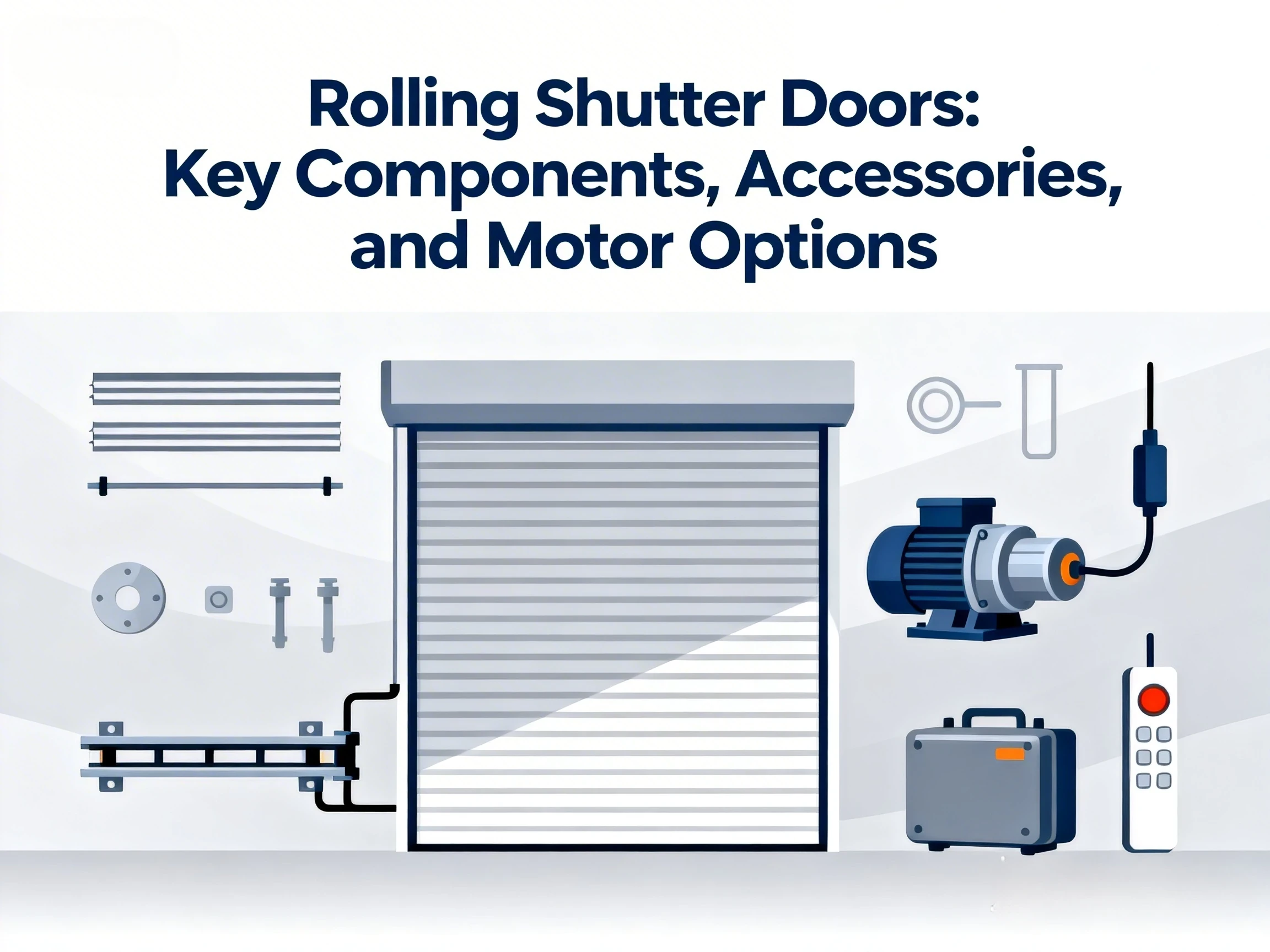
Rolling shutter doors are widely used in industrial, commercial, and residential settings because they offer a practical combination of security, space efficiency, and operational convenience. Whether installed in warehouses, factories, retail storefronts, garages, or logistics facilities, a rolling shutter door system is only as reliable as the components and motor that power it. Understanding the structure of the door, the required accessories, and the right motor configuration is essential for choosing a system that delivers long-term performance.
In simple terms, a rolling shutter door consists of interlocking slats or panels that roll up around a shaft above the opening. While the basic concept is straightforward, the effectiveness of the system depends on selecting the right parts, accessories, and motor according to door size, weight, frequency of use, and site conditions. For buyers, installers, and project planners, the real question is not just what a rolling shutter door is, but what is required to make it operate safely, efficiently, and reliably.
Key Takeaways
Rolling shutter doors are designed for security, durability, and space-saving operation.
A complete system includes mechanical parts, operating accessories, and a suitable motor.
Key components typically include the shutter curtain, guide rails, shaft, bottom bar, brackets, springs, and bearings.
Essential accessories may include control boxes, remote controls, safety sensors, manual override systems, and emergency stop devices.
Choosing the right motor depends on door size, curtain weight, usage frequency, and installation environment.
A well-matched rolling shutter door system improves safety, efficiency, and long-term maintenance performance.
What Are Rolling Shutter Doors?
Rolling shutter doors are vertically operating door systems made of connected slats or panels that roll upward into a compact coil above the entrance. This design makes them highly suitable for locations where side or overhead space is limited. Compared with other door types, rolling shutter doors are known for their strong security performance, compact structure, and adaptability across different environments.
They are commonly used in:
warehouses
manufacturing plants
commercial shops
service entrances
parking facilities
garages
logistics centers
industrial buildings
Their popularity comes from several practical benefits. Rolling shutter doors help maximize usable space, offer strong protection, can be automated with motors and control systems, and are available in different materials and configurations to meet project-specific requirements.
Main Components of a Rolling Shutter Door
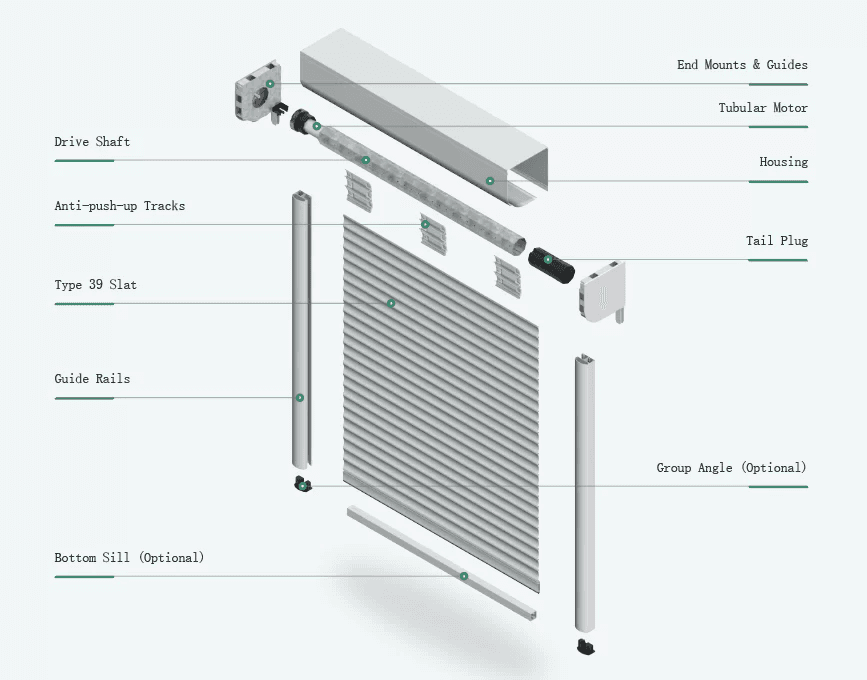
To understand how a rolling shutter door works, it is important to break the system down into its core components. Each part plays a specific role in the door’s movement, stability, and durability.
1. Shutter Curtain or Door Slats
The shutter curtain is the main body of the rolling shutter door. It is typically made of interlocking slats that form a flexible but secure surface. These slats may be manufactured from galvanized steel, aluminum, stainless steel, or insulated materials depending on the required security level, weight, and environmental conditions.
The quality of the slats directly affects the door’s durability, wind resistance, and appearance.
2. Guide Rails
Guide rails are installed vertically on both sides of the opening and keep the shutter curtain aligned during operation. They help ensure smooth movement and reduce vibration or misalignment. Properly designed guide rails are essential for operational stability, especially in larger industrial rolling shutter doors.
3. Shaft or Barrel
The shaft, sometimes called the barrel or drum, is the horizontal component located above the door opening. As the door opens, the shutter curtain wraps around this shaft. The strength and size of the shaft must match the size and weight of the door to ensure safe and reliable performance.
4. Bottom Bar
The bottom bar is attached to the lowest part of the shutter curtain. It provides stability, helps the door close properly, and may also support sealing or safety features. In many systems, the bottom bar contributes to improved contact with the floor and better protection against dust, air, or external intrusion.
5. Bracket Plates
Bracket plates support the shaft assembly and help secure the system structure at both ends. They are critical for maintaining the door’s mechanical integrity and ensuring that the load is properly distributed.
6. Spring System
Some rolling shutter doors include a spring system to assist in balancing the door weight and reducing the load placed on the motor. Springs can improve operating efficiency and help make manual operation easier in some systems.
7. Bearings
Bearings are used to reduce friction as the shaft rotates. Good-quality bearings contribute to smoother movement, less wear, and better long-term reliability.
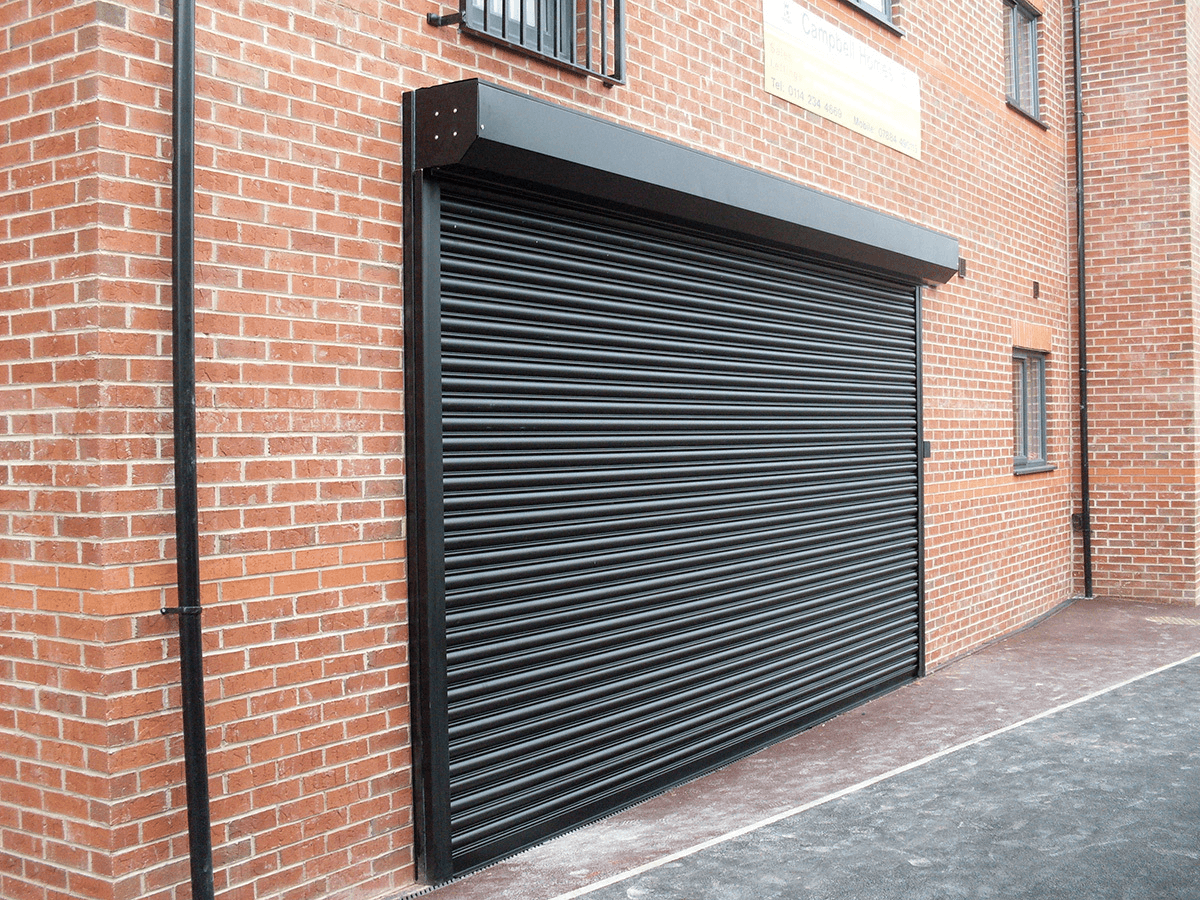
Essential Accessories for Rolling Shutter Doors
A rolling shutter door is more than its main structural parts. To function effectively in real-world applications, it also requires the right accessories. These accessories can improve usability, safety, automation, and overall control.
1. Control Box
The control box acts as the operational center of the motorized door system. It manages power supply, opening and closing functions, and sometimes additional automation settings. A reliable control box is essential for consistent operation.
2. Push Button Switch
A push button switch is one of the simplest control options for opening and closing the door. It is commonly used in factories, warehouses, and other controlled access environments.
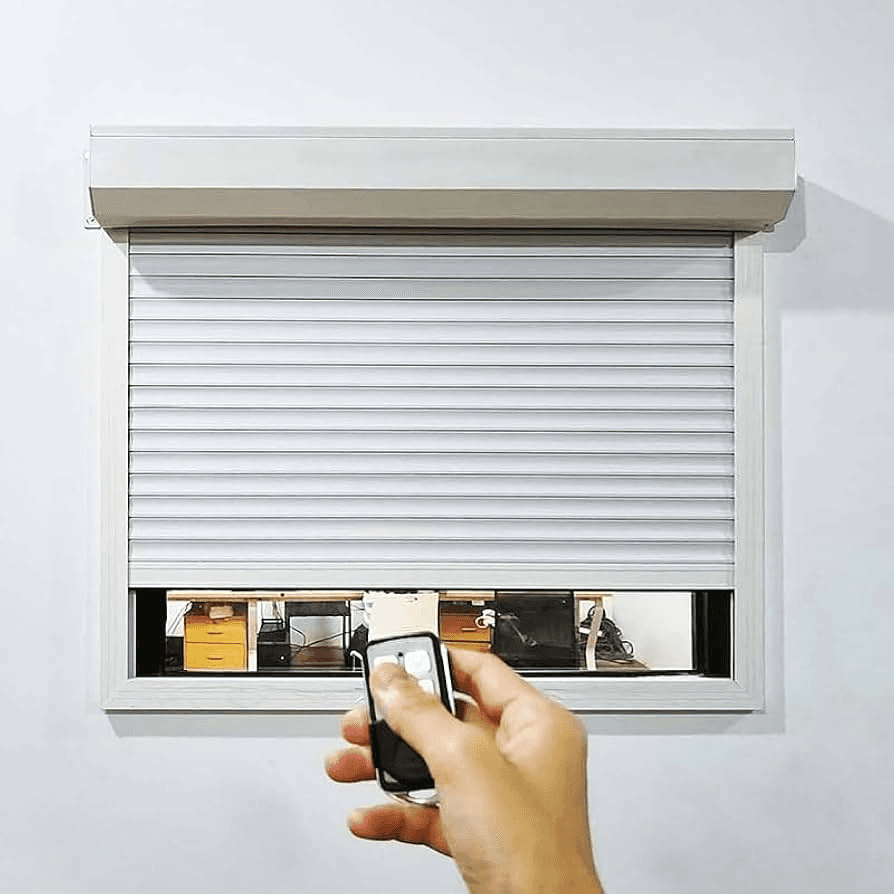
3. Remote Control
Remote controls improve convenience and efficiency, particularly in commercial and industrial environments where operators need to control access from a distance.
4. Limit Switch
The limit switch controls the upper and lower stopping positions of the door. It prevents over-travel and helps ensure that the door opens and closes to the correct points.
5. Manual Override
A manual override system allows the door to be operated during a power outage or motor failure. This is especially important for facilities where uninterrupted access is critical.
6. Photocell Sensor
Photocell sensors improve safety by detecting objects or people in the door path. If an obstruction is detected, the system can stop or reverse movement to help prevent accidents.
7. Safety Edge
A safety edge is usually installed on the bottom bar and adds another level of protection during closing. It helps reduce the risk of injury or damage if the door comes into contact with an obstruction.
8. Emergency Stop Device
An emergency stop button allows the operator to immediately halt door operation when necessary. This is an important safety feature in industrial applications.
9. Backup Battery
In some automated systems, a backup battery can help maintain access control or limited operation during power interruptions.
10. Locking and Security Devices
Additional locking mechanisms or security accessories may be included depending on the application, especially for high-security commercial or industrial facilities.
What Type of Motor Is Used for Rolling Shutter Doors?
The motor is one of the most important parts of a rolling shutter door system. A motor that is too weak may fail to operate the door smoothly or safely, while an oversized or mismatched motor may create inefficiency or unnecessary wear.
Several motor types are commonly used for rolling shutter doors.
Tubular Motor
Tubular motors are compact and are often installed inside the shaft. They are commonly used for smaller rolling shutter doors, especially in lighter commercial or residential applications. Their compact structure makes them a practical choice when installation space is limited.
Side Motor or External Motor
Side motors are mounted externally and are often used for larger or heavier rolling shutter doors. They are a common option in industrial and commercial applications because they can deliver stronger lifting capacity and are easier to access for maintenance.
Chain-Operated Motor
Some rolling shutter door motors include a chain-operated mechanism, which can provide manual operation support in the event of power failure. This can be useful in facilities that require emergency access.
Industrial Rolling Door Motor
Heavy-duty industrial motors are designed for large doors, frequent use, and demanding operating environments. These motors are typically selected for factories, warehouses, logistics centers, and large commercial openings.
How to Choose the Right Motor for a Rolling Shutter Door
Choosing the right motor is not only about horsepower or lifting force. It is about matching the motor to the full operating demands of the door system.
Door Size
Larger openings generally require stronger motor performance because the shaft, curtain, and operating load are all greater.
Door Weight
The total weight of the curtain is one of the most important selection factors. Heavier materials such as steel often require more powerful motors than lighter aluminum systems.
Frequency of Use
A door that opens a few times per day has very different motor requirements from one used repeatedly in a busy industrial facility. High-cycle applications need motors designed for frequent operation.
Installation Environment
The operating environment matters. Indoor commercial use, outdoor exposure, dusty factories, humid areas, and high-security facilities may require different motor and accessory specifications.
Power Supply Requirements
Motor selection must match the available power supply. Depending on the application, the system may require specific voltage or phase configurations.
Manual Operation Needs
In some facilities, manual operation during power failure is essential. In such cases, manual override or chain mechanisms should be considered during motor selection.
Noise Requirements
For certain commercial or mixed-use environments, low-noise operation may be a priority. This can affect both motor type and component selection.
Automation and Safety Integration
If the door system requires remote access, smart control, safety sensors, or automated operation, the motor and control system must be compatible with those functions.
Common Applications of Rolling Shutter Doors
Rolling shutter doors are widely used because they can be adapted to many industries and building types.
Industrial Facilities
Factories, workshops, and production sites often require durable doors that can handle repeated daily use while providing security and reliable access.
Warehouses and Logistics Centers
In logistics environments, rolling shutter doors are valued for efficient opening and closing, space-saving design, and compatibility with automation systems.
Commercial Storefronts
Retail shops often use rolling shutter doors for security after business hours. In this context, appearance, ease of operation, and theft protection are all important.
Garages and Parking Areas
Rolling shutter doors are also used in garages and parking facilities where compact overhead storage and secure closure are required.
Service and Loading Entrances
For service entrances, the combination of durability, automation, and controlled access makes rolling shutter doors a practical solution.
Installation and Maintenance Considerations
Even the best rolling shutter door components and motor will not perform well if the system is poorly installed or not maintained properly. Long-term reliability depends on proper alignment, secure fixing, smooth movement, and regular inspection.
Good maintenance practices generally include:
checking the guide rails for alignment
inspecting the shutter curtain for damage or wear
testing the motor and control system regularly
lubricating moving parts where appropriate
verifying the performance of safety devices
examining brackets, bearings, and fasteners
checking limit settings and manual override operation
A well-maintained rolling shutter door system will typically operate more safely, last longer, and reduce the risk of unexpected downtime.
How to Choose the Right Rolling Shutter Door System
When selecting a complete rolling shutter door system, it is best to evaluate the full application rather than focusing on just one component.
Important factors include:
opening dimensions
material selection
door weight
required security level
motor type
control method
usage frequency
safety accessory requirements
environmental conditions
maintenance expectations
customization needs
project budget
A professional rolling shutter door solution should be built around performance, compatibility, and long-term value, not just initial cost.
Why Components, Accessories, and Motor Matching Matter
One of the most common purchasing mistakes is treating rolling shutter doors as a single product rather than a coordinated system. In reality, the quality of the motor, accessories, and main structural components all affect how the door performs over time.
A high-quality shutter curtain with an unsuitable motor can create operational problems. A powerful motor without the right control box or safety accessories can reduce system usability and safety. In industrial and commercial settings, reliability depends on how well each component works together.
For that reason, buyers should look for a supplier or manufacturer that understands the complete system, not just individual parts.
Conclusion
Rolling shutter doors are a reliable and practical solution for a wide range of industrial and commercial applications, but their performance depends on much more than the door curtain alone. A complete system includes strong structural components, the right accessories, and a motor properly matched to the size, weight, and usage requirements of the door.
For businesses, contractors, and project planners, understanding these elements is essential when selecting a rolling shutter door system that delivers safety, durability, and long-term efficiency. Whether the priority is security, automation, space saving, or daily operational performance, the right combination of components and motor options will make a significant difference.
If you are planning a rolling shutter door project, it is worth evaluating the system as a whole—from slats and guide rails to control accessories and motor selection—to ensure the final solution fits your application and performs reliably over time.
FAQ
What are the main components of a rolling shutter door?
The main components typically include the shutter curtain, guide rails, shaft, bottom bar, bracket plates, spring system, and bearings.
What accessories are required for a rolling shutter door?
Common accessories include a control box, push button switch, remote control, limit switch, manual override, photocell sensor, safety edge, and emergency stop device.
What motor is used for a rolling shutter door?
The motor type depends on the application. Common options include tubular motors, side motors, chain-operated motors, and heavy-duty industrial rolling door motors.
How do I choose the right motor for a rolling shutter door?
Motor selection should be based on door size, curtain weight, frequency of use, installation environment, power supply, and safety requirements.
Are rolling shutter doors suitable for industrial use?
Yes. Rolling shutter doors are widely used in industrial facilities because they provide security, durability, and efficient use of space.
Other Blogs