Blog
180 Nm vs 260 Nm Roller Shutter Central Motor: Which One Should You Choose?
Author
Ray
Published
Category
Roller Shutter Motor
Compare 180 Nm vs 260 Nm roller shutter central motors and learn how torque, door weight, pulley size, power, and duty cycle affect motor selection.


Author
Ray
An experienced automation specialist with a strong background in motor technology and industrial solutions. With years of expertise in central motors, tubular motors, and automation systems, the author is dedicated to sharing insights that connect engineering innovation with real-world applications. Passionate about advancing reliable, energy-efficient, and high-performance automation products for global markets.
What’s better than insider perks, pro tips, and surprises?
Sign up to get the most recent blog articles in your email every week.
Join now.
WHY I WRITE THIS
About my business
Our company’s main product lines include tubular motors, sliding gate motors, swing gate motors, roller shutter motors, and other door automation solutions, all manufactured by trusted partner factories we have worked with for many years.
Our Services
I help them with sales and export operations, while our company also provides sourcing and procurement services in China to help international clients solve supply-related challenges. If you need assistance with procurement, please feel free to contact us.
Choosing between a 180 Nm and 260 Nm roller shutter central motor is not simply a matter of selecting the motor with the higher torque.
The correct choice depends on the total shutter load, curtain material, effective winding radius, shaft and pulley size, operating frequency, friction, installation condition, and the safety margin required for the project.
In general, a 180 Nm central motor is suitable for lighter or medium-load roller shutter applications, while a 260 Nm model provides greater torque capacity for heavier shutters and more demanding installations.
However, torque should always be evaluated as part of the complete roller shutter system.
A motor that is too small may run under excessive load, operate slowly, activate thermal protection more frequently, or experience premature wear. On the other hand, selecting a much larger motor without considering shaft compatibility, brake performance, control requirements, and actual door load does not necessarily create a better system.
This guide explains the difference between 180 Nm and 260 Nm roller shutter central motors, how output torque affects shutter performance, and what distributors, installers, contractors, and OEM buyers should check before choosing between the two.
What Does Nm Mean on a Roller Shutter Central Motor?
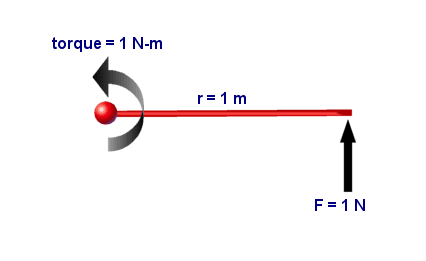
Nm stands for Newton-meter, a unit used to measure torque.
Torque represents rotational force.
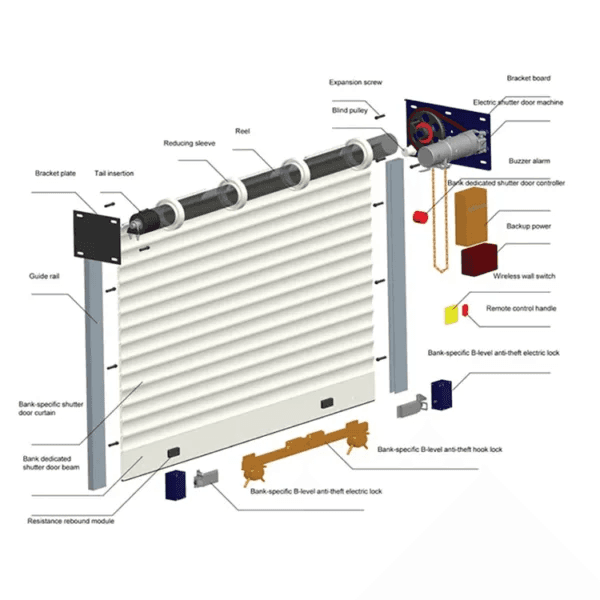
In a roller shutter system, the motor produces torque to rotate the shaft or drum so the shutter curtain can roll upward or downward.
A simple way to understand it is:
A heavier shutter requires more torque.
A larger effective winding radius requires more torque.
Higher friction requires more torque.
Poor mechanical alignment can also increase the torque required.
This is why two roller shutter doors with exactly the same width and height may still require different motors.
A lightweight aluminum shutter and a heavy galvanized steel shutter may have very different torque requirements even when their dimensions are identical.
What Is a 180 Nm Roller Shutter Central Motor?
A 180 Nm roller shutter central motor provides a rated output torque of 180 Newton-meters.
For the current CHINA-DEVELOP 180 Nm central motor configuration, the product specification includes approximately 590 W absorbed power, 2.56 A current consumption, 10 rpm output speed, Ø60 mm shaft compatibility, Ø200 mm pulley, and a 6 m mechanical limit range. The product page also lists a 4-minute running-time specification for the series.
This torque level is commonly positioned for medium-duty shutter applications where the required lifting torque remains within the motor's specified operating range.
Typical applications can include storefront shutters, garage shutters, small warehouses, commercial entrances, and other medium-sized roller shutter systems.
The actual door suitability should still be calculated from the shutter system rather than based only on the torque label.
What Is a 260 Nm Roller Shutter Central Motor?
A 260 Nm roller shutter central motor provides approximately 44% more rated torque than a 180 Nm model.
For the CHINA-DEVELOP 260 Nm configuration, the published specification includes approximately 800 W absorbed power, 3.48 A current consumption, 10 rpm output speed, Ø60 mm shaft compatibility, and Ø200 mm pulley.
Because the output speed and main shaft/pulley configuration remain similar while torque increases, the 260 Nm model is generally more suitable where the shutter system requires greater rotational force.
Possible applications include heavier shutters, larger curtains, steel shutter systems, higher-friction installations, and projects that require more operating margin.
However, a 260 Nm motor should not automatically be selected just because the shutter is described as “commercial” or “industrial.”
The actual required torque should still be checked.
180 Nm vs 260 Nm Roller Shutter Central Motor Comparison
Specification | 180 Nm Model | 260 Nm Model |
|---|---|---|
Output Torque | 180 Nm | 260 Nm |
Power Absorbed | Approx. 590 W | Approx. 800 W |
Current Consumption | Approx. 2.56 A | Approx. 3.48 A |
Output Speed | 10 rpm | 10 rpm |
Shaft Adapter | Ø60 mm | Ø60 mm |
Pulley Diameter | Ø200 mm | Ø200 mm |
Limit Range | 6 m | 6 m |
Running Time | Approx. 4 min | Approx. 4 min |
Application Level | Medium load | Higher load |
Main Advantage | Lower power requirement | Greater torque capacity |
These specifications correspond to the current CHINA-DEVELOP BOLT-AS central motor range.
The table shows an important point: the difference is not simply motor wattage.
The 260 Nm model delivers greater rotational force while maintaining the same nominal output speed in this product family.
Is 260 Nm Much Stronger Than 180 Nm?
Yes, in terms of rated torque.
A 260 Nm motor provides approximately:
260 ÷ 180 = 1.44
or about 44% more output torque than a 180 Nm motor.
That additional torque can provide more operating capacity when the curtain is heavier or when the effective winding radius is larger.
However, this does not mean a 260 Nm motor can simply lift 44% more door weight in every installation.
The relationship between torque and door load depends on several mechanical factors.
These include the drum or winding radius, friction in the guides, balance of the shutter, transmission efficiency, bottom-bar weight, curtain construction, and mechanical condition.
Does Higher Torque Mean the Motor Can Lift More Weight?
Generally, yes, but not in a simple one-to-one relationship.
The basic torque requirement of a roller shutter can be approximated using:
Required Torque = Load Force × Effective Radius
For a shutter system, this is often expressed as:
Required Torque ≈ Door Weight × Gravity × Effective Winding Radius
A safety factor and allowances for friction are then added.
Current roller shutter torque-sizing guidance similarly emphasizes curtain weight, winding radius, friction or efficiency losses, and a safety margin as the key variables rather than door weight alone.
This means that a motor advertised with a certain “lifting weight” should not be interpreted as a universal maximum for every shutter configuration.
Why Drum and Pulley Diameter Matter
Torque requirement increases as the effective radius increases.
Imagine using a wrench.
A longer wrench requires a different relationship between rotational force and load than a shorter one.
A roller shutter works according to a similar mechanical principle.
As the shutter curtain wraps around the drum, the effective radius changes.
The larger the winding radius, the more torque may be required to produce the same lifting force.
This is why shaft diameter alone is not enough for professional motor selection.
You should also understand the effective drum or pulley diameter and how the shutter curtain builds up during rolling.
For the CHINA-DEVELOP 180 Nm and 260 Nm central motor series discussed here, both versions use a Ø200 mm pulley with a Ø60 mm shaft adapter, which makes comparing the two torque options more straightforward within the same product family.

When Should You Choose a 180 Nm Central Motor?
A 180 Nm central motor may be the better choice when the shutter is within a medium-load operating range and additional torque is not required.
This can include applications where the curtain is relatively lightweight, the door dimensions are moderate, the shaft and guide system are correctly aligned, operating frequency is not unusually high, and the total required torque remains comfortably below the motor's capacity.
Choosing 180 Nm can also make sense when electrical consumption and equipment cost are important considerations.
Within the current CHINA-DEVELOP series, the 180 Nm model uses approximately 590 W compared with approximately 800 W for the 260 Nm configuration.
A properly selected 180 Nm motor can therefore be more appropriate than automatically specifying the larger model.
When Should You Choose a 260 Nm Central Motor?
A 260 Nm motor becomes more appropriate as the mechanical load increases.
This may include heavier steel shutters, larger door dimensions, increased winding radius, greater guide friction, heavier bottom bars, or applications where additional operating margin is needed.
The 260 Nm configuration can also be useful where a project sits too close to the practical operating limit of a 180 Nm model.
For example, if the calculated torque requirement already approaches the capacity of the smaller motor before a reasonable safety factor is applied, moving to the 260 Nm model may provide a more suitable margin.
The motor should not be intentionally operated continuously near its maximum capacity.
Real-world shutter systems become more demanding over time as dirt accumulates, guides wear, lubrication changes, and alignment deteriorates.
Should You Always Choose 260 Nm for Extra Safety?
No.
A reasonable safety margin is good engineering practice, but excessive oversizing is not automatically beneficial.
A larger motor may require greater electrical input, may cost more, and may be unnecessary for a properly designed lighter shutter.
More importantly, torque should be matched with the complete system.
Brake performance, limit system, shaft strength, pulley size, mounting structure, controls, and shutter hardware all need to remain compatible.
A motor with more torque does not compensate for a weak shaft, poor installation, damaged guides, or incorrect shutter construction.
The goal should be correct sizing with appropriate reserve capacity rather than simply choosing the largest motor available.
How Much Safety Margin Should a Roller Shutter Motor Have?
There is no single universal safety factor for every shutter installation.
The required margin depends on application, operating frequency, mechanical efficiency, curtain design, environment, and the reliability target of the project.
For practical torque calculations, motor sizing guides often apply a safety factor after calculating the theoretical load torque. One current industry example uses factors around 1.3 for moderate residential applications and around 1.5 for more demanding commercial conditions, although the appropriate factor should be determined for the actual system rather than copied blindly.
For manufacturers and professional installers, the important principle is to avoid selecting a motor whose calculated application torque is already close to its rated maximum before real-world losses are considered.
Torque vs Power: 180 Nm and 590 W vs 260 Nm and 800 W
Torque and power are related, but they are not the same specification.
Torque measures rotational force.
Power describes how quickly work can be performed.
A roller shutter motor therefore needs enough torque to move the load and sufficient power to perform that movement at the required speed.
The CHINA-DEVELOP 180 Nm central motor is specified at approximately 590 W, while the 260 Nm model is specified at approximately 800 W. Both are listed at approximately 10 rpm.
This makes the practical difference easier to understand.
The 260 Nm model is not simply designed to spin faster.
Instead, it provides greater torque capability at a similar output speed.
This is why torque is one of the first specifications professional buyers should compare when evaluating roller shutter motors.
Does More Wattage Mean a Better Roller Shutter Motor?
No.
A motor with higher wattage is not automatically better.
If the torque requirement of the shutter can be met comfortably by a 180 Nm motor, selecting a higher-power 260 Nm model may not provide a meaningful benefit.
Likewise, wattage should not be used as a substitute for torque.
A motor may have a relatively high electrical power rating but still be inappropriate if its output torque, speed, gearbox, or shaft configuration does not match the shutter.
Professional buyers should compare torque, speed, rated power, operating time, door load, and mechanical compatibility together.
What Happens If Motor Torque Is Too Low?
Undersizing a roller shutter motor can create several problems.
The shutter may open slowly.
The motor may struggle during starting.
The door may stop before reaching the fully open position.
The motor may heat more quickly.
Thermal protection may activate repeatedly.
Mechanical and electrical components may experience increased stress.
Long-term service life may decrease.
Current roller shutter torque-sizing guidance also warns that insufficient torque can cause stalling, overheating, thermal cutout activation, and accelerated wear.
If a 180 Nm motor is operating very close to its practical limit, choosing the 260 Nm version can sometimes improve operating margin and reliability.
However, the first step should still be checking whether the shutter itself is correctly installed and moving smoothly.
Can Too Much Torque Damage a Roller Shutter Door?
Potentially, especially if the motor, control settings, brake, limits, or mechanical system are incorrectly matched.
A high-torque motor can place greater force on the shutter shaft, curtain attachments, bottom bar, brackets, and supporting structure.
If mechanical limits are incorrectly adjusted, the motor may continue applying force after the shutter reaches its intended end position.
This can increase mechanical stress.
For this reason, professional motor selection should include more than torque.
Limit-switch configuration, brake system, shaft design, controls, and installation quality are all important.
Does Door Material Affect the Choice Between 180 Nm and 260 Nm?
Yes.
Door material directly affects curtain weight.
Aluminum shutter profiles are generally lighter than comparable steel shutter profiles.
Insulated shutters, double-wall profiles, security shutters, and reinforced slats can be significantly heavier than basic lightweight curtains.
The bottom bar, locks, vision panels, wind reinforcement, and other accessories also add weight.
Therefore, door dimensions should never be used alone to choose between 180 Nm and 260 Nm.
A 4 m × 3 m lightweight aluminum shutter may have a completely different torque requirement from a 4 m × 3 m heavy steel shutter.
Does Door Size Determine the Motor Torque?
Door size is important because it helps determine curtain area and therefore total weight.
However, size alone is insufficient.
A useful starting point is:
Door Area = Width × Height
The curtain weight can then be estimated using:
Curtain Weight = Door Area × Material Weight per Square Meter
The weight of the bottom bar, locks, reinforcement, and accessories should then be added.
Once the approximate total load is known, the winding radius and mechanical losses can be considered to estimate torque.
This method is more reliable than simply saying that a particular Nm value fits a particular door width.
180 Nm vs 260 Nm for Commercial Roller Shutters
Commercial roller shutters are often installed in shops, retail entrances, warehouses, garages, and service areas.
For lighter commercial shutters, a 180 Nm central motor may provide sufficient capacity.
As door size, weight, and daily usage increase, the 260 Nm version may become more appropriate.
However, high-cycle commercial applications should also consider running time and duty requirements.
The current CHINA-DEVELOP 180 Nm–260 Nm BOLT-AS series lists a running-time specification of approximately 4 minutes.
For doors operating very frequently throughout the day, buyers should verify whether a central motor with this duty specification is appropriate or whether another commercial or industrial operator type would be better.
When Should You Move Beyond 260 Nm?
Not every roller shutter can be handled appropriately by simply moving from 180 Nm to 260 Nm.
Larger and heavier shutters may require a higher-torque central motor, double-motor central system, side motor, or industrial door operator.
CHINA-DEVELOP's current central motor range also includes higher-torque configurations such as 360–460 Nm double-motor systems, indicating that larger shutter applications may need a different motor platform rather than pushing a 260 Nm single motor beyond its intended range.
This is especially important for industrial shutters, large steel curtains, high-cycle doors, and applications requiring stronger braking or more demanding duty performance.
What Other Parameters Should You Check Besides Torque?
Torque is essential, but overseas buyers should evaluate several other specifications before selecting a central motor.
Rated Voltage and Frequency
The motor must match the destination market.
The current CHINA-DEVELOP 180 Nm–260 Nm central motor series supports configurations from 110 V / 60 Hz to 230 V / 50 Hz, depending on customer requirements.
This is important for buyers serving North America, Europe, Asia, the Middle East, and other markets.
Output Speed
The current 180 Nm and 260 Nm models are both specified at approximately 10 rpm.
Output speed influences how quickly the shutter opens and closes.
Higher torque should not automatically be assumed to mean higher door speed.
Shaft Diameter
The shaft interface must match the shutter system.
The BOLT-AS series uses a Ø60 mm adapter.
Buyers should confirm the actual shutter shaft dimensions before ordering.
Pulley Diameter
Both the 180 Nm and 260 Nm models in this series use a Ø200 mm pulley.
Pulley size influences mechanical compatibility and the effective relationship between torque and lifting force.
Limit System
The current series uses a mechanical limit system with a published 6 m limit-switch range.
Limit reliability is important because it controls where the shutter stops during opening and closing.
Brake System
An electromagnetic brake option is available for the current product series.
Brake performance becomes increasingly important as shutter weight increases.
Receiver and Remote Control
A built-in receiver option is also available.
For distributors, this can simplify product packages for residential and commercial customers requiring remote operation.
Running Time and Duty
Running time should be evaluated together with torque.
A motor can have sufficient torque but still be inappropriate for a high-frequency door if the duty rating is too low.
How to Choose Between 180 Nm and 260 Nm Step by Step
A practical selection process begins with the shutter rather than the motor.
First, determine the shutter width and height.
Next, identify the curtain material and approximate weight per square meter.
Add the bottom-bar and accessory weight.
Then determine the shaft or drum configuration and effective winding radius.
Consider guide friction and the mechanical condition of the door.
Estimate the required torque and apply an appropriate engineering safety margin.
Finally, compare the result with the motor's rated torque, shaft compatibility, pulley size, voltage, running time, brake system, and application requirements.
If the calculated requirement sits comfortably within the 180 Nm range, the smaller motor may be suitable.
If the required torque approaches or exceeds that range after real-world losses and safety margin are considered, a 260 Nm model may be the better option.
If even 260 Nm provides insufficient margin, move to a higher-capacity motor platform rather than forcing the application into an undersized model.
Information Buyers Should Provide to a Roller Shutter Motor Supplier
For accurate motor selection, overseas buyers should provide more than a requested torque number.
Useful project information includes door width and height, curtain material, slat type, estimated total shutter weight, shaft diameter, pulley or drum diameter, voltage and frequency, daily operating cycles, installation environment, control requirements, and whether a brake or manual operation function is required.
With this information, a manufacturer can recommend a motor based on the actual application rather than simply providing the highest available torque.
Common Mistakes When Choosing Between 180 Nm and 260 Nm
Choosing Only by Door Width
Door width does not tell you the complete load.
Material, height, slat construction, bottom bar, reinforcement, and winding radius all matter.
Assuming 260 Nm Is Always Better
More torque is useful only when the application needs it.
Correct sizing is better than maximum sizing.
Comparing Only Motor Wattage
590 W versus 800 W does not tell the complete story.
Torque, speed, gearbox, shaft configuration, and duty should all be evaluated.
Ignoring Friction
A shutter that binds in the guide rails can require considerably more motor effort than a properly aligned door.
Motor selection should not be used to hide mechanical installation problems.
Ignoring Running Time
A motor can have sufficient torque but still be inappropriate for a frequently operated commercial shutter.
Treating Published Lifting Capacity as Universal
Some central motor product tables associate Nm ratings with nominal lifting values. For example, the current CHINA-DEVELOP product page lists the 180–260 Nm series alongside a 180–260 kg lifting range.
This is useful as a product-family reference, but professional buyers should still confirm actual suitability using the shutter's weight, winding radius, system efficiency, and installation condition.
Frequently Asked Questions About 180 Nm vs 260 Nm Central Motors
Is a 260 Nm roller shutter motor better than a 180 Nm motor?
Not automatically. A 260 Nm motor provides more torque and is better suited to heavier or more demanding shutters, but a 180 Nm motor may be fully adequate for a correctly sized medium-load application. The better motor is the one matched correctly to the door.
How much stronger is 260 Nm than 180 Nm?
A 260 Nm motor provides approximately 44% more rated torque than a 180 Nm motor. However, this does not mean it will lift exactly 44% more door weight in every installation because drum radius, friction, mechanical efficiency, and shutter construction also affect lifting requirements.
Can a 180 Nm motor lift a 180 kg roller shutter?
Some central motor product ranges associate a 180 Nm model with a nominal 180 kg lifting classification, including the current CHINA-DEVELOP range. However, this should not be treated as a universal rule. Actual suitability depends on winding radius, door construction, friction, safety margin, and the manufacturer's specified installation configuration.
Can a 260 Nm motor lift a 260 kg shutter?
The same principle applies. A manufacturer may classify a 260 Nm model for a nominal 260 kg lifting application under its specified configuration, but actual shutter compatibility must still be checked using the complete mechanical system.
Is 260 Nm better for a steel roller shutter?
Often, because steel curtains are generally heavier than lightweight aluminum shutters of similar size. However, the actual curtain weight should be calculated before selecting the motor.
Do 180 Nm and 260 Nm motors run at different speeds?
For the current CHINA-DEVELOP BOLT-AS series, both the 180 Nm and 260 Nm versions are listed at approximately 10 rpm. The main difference is torque and corresponding electrical input rather than nominal output speed.
What is the power difference between 180 Nm and 260 Nm?
The current 180 Nm model is specified at approximately 590 W, while the 260 Nm model is approximately 800 W. The corresponding current consumption is approximately 2.56 A and 3.48 A respectively.
Should I choose 260 Nm if I am unsure?
Not automatically. If project information is unavailable, provide the supplier with the door dimensions, curtain material, approximate weight, shaft size, drum or pulley diameter, and operating frequency. A motor should be selected from actual application data rather than uncertainty.
What happens if the central motor is undersized?
An undersized motor may operate slowly, struggle under load, stall, overheat, trigger thermal protection, or experience accelerated wear. Persistent overload can reduce system reliability and motor service life.
When is 260 Nm still not enough?
Large industrial shutters, very heavy steel curtains, high-friction installations, or high-duty applications may require a higher-torque central motor, double-motor system, side motor, or industrial operator.
Final Thoughts
The difference between a 180 Nm and 260 Nm roller shutter central motor is significant, but torque alone should not determine the final choice.
A 180 Nm motor can be an efficient and appropriate solution for medium-load roller shutter applications when the required torque remains comfortably within its operating range.
A 260 Nm motor provides substantially greater torque and is more suitable for heavier shutters, larger effective winding radii, and applications requiring additional operating margin.
The correct selection should consider door weight, shutter material, drum radius, shaft and pulley dimensions, friction, voltage, output speed, running time, brake configuration, and actual operating frequency.
For professional buyers, the best question is therefore not:
“Is 260 Nm better than 180 Nm?”
The better question is:
“Which torque provides the correct operating margin for this specific shutter system?”
Looking for the Right Roller Shutter Central Motor?
CHINA-DEVELOP provides roller shutter central motor solutions for distributors, installers, contractors, and OEM buyers, including 180 Nm, 260 Nm, and higher-torque central motor configurations.
For accurate model selection, buyers can provide the shutter width, height, curtain material, approximate door weight, shaft and pulley dimensions, voltage, frequency, and expected daily operating cycles.
Selecting the correct motor from the beginning helps achieve smoother shutter movement, more reliable operation, and better long-term system performance.
Other Blogs