Blog
The Future of Gate and Shutter Automation: Why Central Motors Lead the Way
Author
Ray
Published
Category
Design & Inspiration
In today’s fast-paced world, automation is no longer a luxury—it’s a necessity. From residential gates to industrial shutters, the demand for reliable, efficient, and durable motor solutions continues to grow. Businesses and homeowners alike are seeking technology that not only enhances convenience but also ensures safety and long-term performance.

Author
Ray
An experienced automation specialist with a strong background in motor technology and industrial solutions. With years of expertise in central motors, tubular motors, and automation systems, the author is dedicated to sharing insights that connect engineering innovation with real-world applications. Passionate about advancing reliable, energy-efficient, and high-performance automation products for global markets.
What’s better than insider perks, pro tips, and surprises?
Sign up to get the most recent blog articles in your email every week.
Join now.
WHY I WRITE THIS
About my business
Our company’s main product lines include tubular motors, sliding gate motors, swing gate motors, roller shutter motors, and other door automation solutions, all manufactured by trusted partner factories we have worked with for many years.
Our Services
I help them with sales and export operations, while our company also provides sourcing and procurement services in China to help international clients solve supply-related challenges. If you need assistance with procurement, please feel free to contact us.
Automation used to be a luxury. A motorized gate was a statement — something you saw at the entrance to an executive estate or a high-security facility. Today, it's becoming an expectation. Homeowners, architects, developers, and facilities managers increasingly treat automated access not as an optional upgrade but as a baseline specification for any serious residential, commercial, or mixed-use project.
That shift has created a more demanding market — and a sharper distinction between automation products that are genuinely future-ready and those that are simply keeping up. The question is no longer whether to automate. It's which system to trust with a long-term installation, and which manufacturer has the engineering depth to back it up.
This article examines where gate and shutter automation is heading, what the defining technology trends mean for specifiers and installers, and why Central Motors — through its product architecture, smart integration capabilities, and engineering philosophy — is positioned to lead in that landscape.
Key Takeaways
Gate and shutter automation is rapidly evolving from basic motorization toward intelligent, connected, app-controlled access systems integrated with broader smart home and building management platforms.
The five key trends shaping the industry are: smart integration, remote and app-based control, energy efficiency, enhanced safety, and demand for quieter, more discreet operation.
The gap between premium automation motors and commodity products is widening — build quality, control system flexibility, and installer support are the real differentiators.
Central Motors' range spans residential to heavy commercial applications, with a consistent emphasis on smart connectivity, safety compliance, and low-consumption engineering.
Specifying the right system requires matching motor torque, duty cycle, control protocol, and safety features to the specific application — not simply selecting the cheapest motor in the required voltage range.
Future-proof automation investments are defined by protocol compatibility (smart home, BMS), availability of spare parts, and the quality of the manufacturer's installer ecosystem.
The State of Gate and Shutter Automation Today
From Mechanical to Intelligent — A Brief Evolution
The first generation of gate and shutter automation was purely mechanical — electric motors replacing manual effort, little more. A button triggered movement; a limit switch stopped it. The technology was reliable but entirely passive: it did what you told it, nothing more.
The second generation added remote control, basic timers, and rudimentary safety features — photocell beams, pressure sensors, and the first radio frequency remotes. This was the dominant model for much of the late twentieth century and into the 2000s.
We are now firmly in a third generation — one defined by intelligence, connectivity, and integration. Modern gate and shutter motors are not just actuators. They are networked devices: capable of receiving commands from smartphones, integrating with home automation hubs, logging access events, adjusting behavior based on environmental inputs, and communicating faults in real time. The motor is the endpoint of a system, not the system itself.
What's Driving Demand for Smarter Automation
Several forces are converging to push the market toward more sophisticated automation at pace:
Smart home adoption is mainstream. Platforms like Google Home, Amazon Alexa, Apple HomeKit, and KNX have moved from early adopter products to standard specifications in new-build residential developments. Buyers expect their gates and shutters to work within these ecosystems, not alongside them as disconnected devices.
Security consciousness is rising. Both residential and commercial buyers are increasingly attentive to perimeter security — and automated, controlled access is a core part of that picture. The demand is not just for gates that open and close, but for access systems that can be monitored, logged, restricted, and integrated with video entry and alarm systems.
Energy performance regulations are tightening. In commercial construction especially, building energy compliance frameworks are creating demand for low-consumption motors, automated solar shading that reduces HVAC load, and systems that can demonstrate measurable energy contributions.
Labour and convenience expectations are shifting. In both residential and commercial contexts, the expectation is that access and environmental control should require minimal manual intervention. Automation that requires active management is no longer seen as convenient — it's seen as incomplete.
The Five Defining Trends Shaping Automation's Future
1. Smart Home and Building Integration
The most significant structural shift in the automation market is the move from standalone products to integrated systems. A gate motor that cannot communicate with a smart home hub, or a shutter drive that operates only on its own proprietary remote, is increasingly difficult to specify in a premium project.
Integration takes two primary forms. In residential settings, the dominant platforms are consumer-oriented ecosystems — Z-Wave, Zigbee, Wi-Fi, and Matter-based protocols that connect through smartphone apps and voice assistants. In commercial and hospitality settings, the relevant framework is the Building Management System (BMS) — typically KNX, BACnet, or Modbus-based networks that allow centralized control and monitoring of all building systems including access, lighting, HVAC, and shading.
The automation manufacturers who will define the next decade are those whose products speak both languages fluently.
2. Remote Access and App-Based Control
Smartphone control of gates and shutters has moved from novelty to necessity. The ability to open a gate remotely for a delivery, check whether the shutter was closed before leaving, or set timed automation schedules from an app is now a standard expectation at the residential level — and an operational requirement in commercial access management.
Beyond basic remote operation, the more sophisticated implementations offer real-time status monitoring, access event logs, push notifications for unauthorized attempts, and geofencing-triggered automation (gates that open as you approach and close when you leave). These capabilities are not futuristic — they are available now, and they are becoming expected at the mid-to-premium market level.
3. Energy Efficiency and Low-Consumption Motors
In residential automation, standby power consumption has become a genuine specification consideration — particularly in low-energy homes, off-grid installations, and buildings subject to energy performance certification. In commercial settings, where dozens or hundreds of shutter and access points may be in continuous operation, motor efficiency directly affects operating costs and energy compliance reporting.
The industry response has been a move toward more efficient motor designs: brushless DC motors with lower standby draw, solar-compatible control boards, and intelligent standby modes that reduce consumption when the system is inactive. Low-consumption motors are not just an environmental preference — they are increasingly a technical requirement.
4. Enhanced Safety Standards and Obstacle Detection
Safety in automated access has always been a regulatory concern, but the standards are becoming more sophisticated. The relevant European framework — EN 12453 for powered pedestrian doorsets and EN 12445 for force measurement — has been progressively tightened, and the expectation is that all professional-grade automated gates incorporate appropriate obstacle detection, force limitation, and emergency release mechanisms.
Beyond regulatory compliance, buyers expect automation systems that behave intelligently when something goes wrong. Modern motor control boards incorporate current-sensing technology that detects increased resistance (indicating an obstacle) and reverses or stops the movement before damage or injury occurs. Some systems add optical sensors, edge sensors, or pressure-sensitive safety edges that create a protected zone around the moving access point.
Safety is not a feature to be added at the top of the specification — it is the foundation on which everything else is built.
5. Aesthetics and Silent Operation
The visual and acoustic profile of automation hardware has become a genuine design consideration. In high-end residential projects, the expectation is that automated gates and shutters should be invisible in operation — motors that are heard are motors that call attention to themselves. Architects and interior designers increasingly specify automation systems on the basis of how they perform acoustically, not just electrically.
Tubular motors for blinds and shutters have driven a quiet revolution in noise reduction — modern brushless and DC-motor designs operate at noise levels that are simply inaudible in normal residential environments. The same pressure is now being applied to gate operators, where gear and motor design innovations are delivering significantly quieter operation than was standard a decade ago.
What Separates a Leading Automation Motor from a Commodity Product
The automation market has a commodity problem. There is no shortage of gate motors and shutter drives at low price points — sourced globally, packaged under various brand names, and sold primarily on specification sheets and purchase price. The gap between these products and genuinely engineered automation systems is not always visible on paper. It becomes visible over time, under load, in adverse conditions, and when something needs replacing.
Engineering Precision and Build Quality
Premium automation motors are built around components selected for longevity — geartrain materials that maintain tolerance after years of thermal cycling, motor windings that don't degrade under the power surges that occur in real electrical environments, and enclosures that maintain their ingress protection rating after years of outdoor exposure. Commodity products often meet specification on day one and degrade from there.
The real test of a motor is not its rated torque or its opening speed. It's how it performs after five winters, a decade of daily cycles, and the occasional voltage spike from a grid event. That performance is entirely a product of component selection and assembly discipline — neither of which is visible in a product brochure.
Control System Flexibility
A motor is only as useful as its control interface. The most mechanically capable gate operator is compromised if it cannot integrate with the access control, intercom, or smart home system the installer needs to connect. Leading manufacturers invest in control board design that offers flexible input/output configurations — dry contacts for alarm integration, digital inputs for safety devices, and increasingly, native radio and smart home protocol support built into the control board rather than bolted on as an afterthought.
Installer Ecosystem and Technical Support
For professional installers — the people who actually specify and commission automation systems — the manufacturer relationship matters enormously. Training programs, technical documentation quality, commissioning tools, responsive technical support, and reliable spare parts availability are the practical criteria that experienced installers use to evaluate brands. A motor that ships without adequate installer support is a liability, not an asset, regardless of its on-paper specification.
Why Central Motors Are Built for This Future
Product Range Depth — From Residential to Commercial
A manufacturer with genuine market depth carries products across the full application spectrum — from lightweight tubular motors for domestic roller blinds through to high-cycle, high-torque operators for industrial shutters and heavy commercial sliding gates. This matters for two reasons.
First, specifiers working across project types need a consistent, trusted brand they can apply from a residential apartment shutter to a logistics facility entrance. Second, a manufacturer whose product range spans this breadth must develop genuine engineering capability — you cannot produce reliable heavy-duty industrial operators without the engineering infrastructure that also makes your residential products more durable and consistent than the competition.
Central Motors' range reflects this breadth. Whether the application is a residential swing gate, a commercial roller shutter, or a large-format sliding gate at an industrial or logistics site, the product architecture is developed by an organization with the engineering capability to address the full load, duty cycle, and integration requirements of each context.
Smart Connectivity and Control Integration
Central Motors designs its products with connectivity as a native capability rather than an accessory. Control systems support integration with mainstream smart home protocols, and the product range is developed with the expectation that most installations will involve some form of digital integration — whether that's a smartphone app, a home automation hub, an intercom system, or a building management network.
This approach means installers are not working around the product's limitations — they are working within a framework designed to accommodate the connectivity requirements of modern projects. The difference in commissioning time, system reliability, and client satisfaction is significant.
Safety, Reliability, and Compliance
Safety compliance is not optional in professional automation. Central Motors' products are designed to meet the relevant European safety standards for powered access systems, incorporating obstacle detection, force limitation, and emergency release as standard engineering considerations — not as optional extras. For installers working in markets with active regulatory oversight, this compliance is a fundamental criterion for specification.
Beyond regulatory compliance, the reliability profile of a motor — its mean time between failures, its duty cycle rating, its performance under thermal stress — is the practical safety parameter that experienced installers care about most. An automation system that fails unexpectedly on a commercial access point creates security vulnerabilities and operational disruption that no regulatory certificate can address.
Energy Efficiency by Design
Central Motors' design philosophy incorporates energy efficiency as a core parameter, not an afterthought. This is reflected in motor selection, control board standby consumption, and compatibility with solar-powered installations in off-grid or energy-optimized contexts. For commercial clients with energy performance reporting obligations, and for residential clients in high-performance buildings, this efficiency profile is increasingly a specification requirement rather than a preference.
Gate Automation — Swing, Sliding, and Beyond
Swing Gate Operators
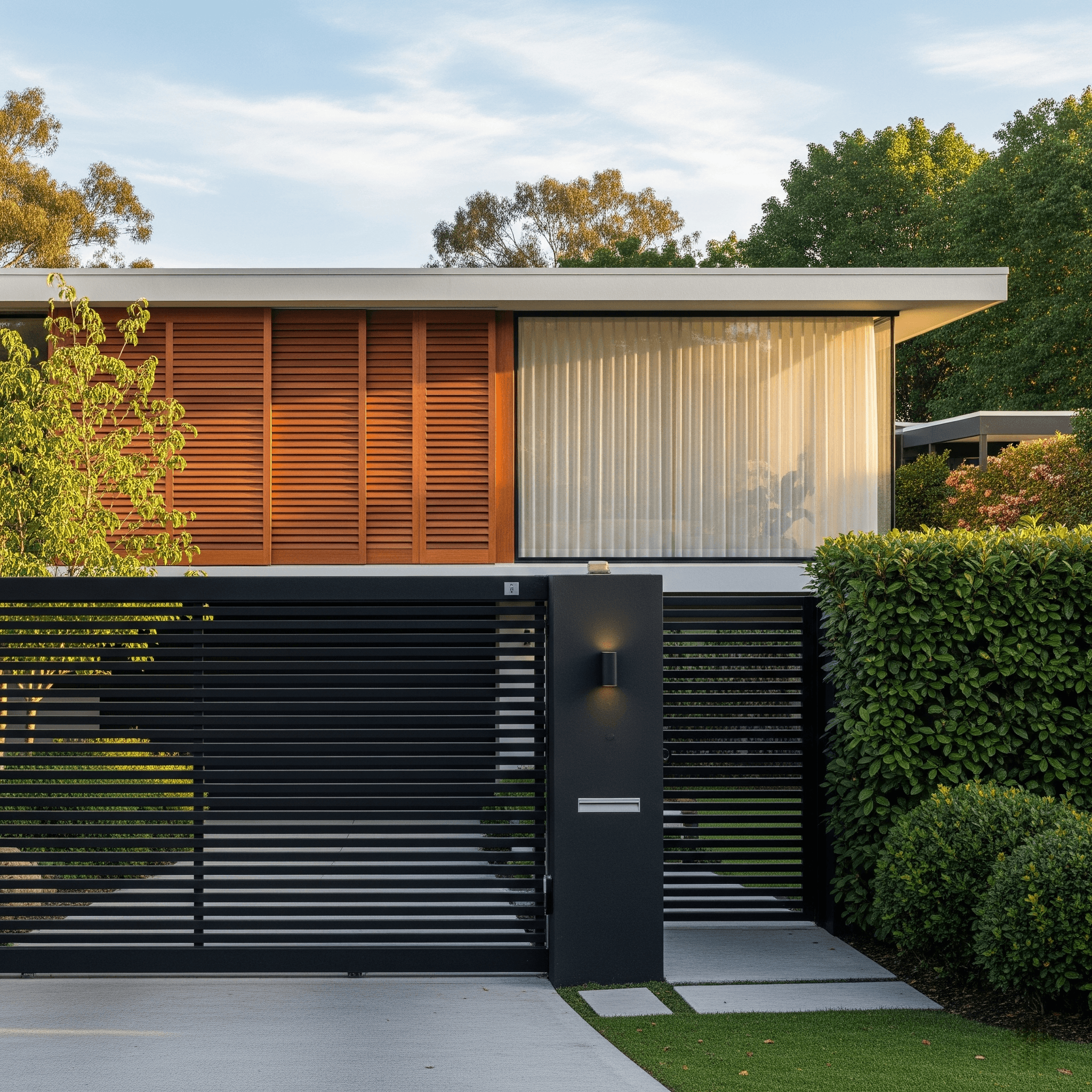
Swing gate automation is the most common configuration in residential and light commercial applications. Operators are available in articulated arm, buried (underground), and linear actuator formats, each suited to different post configurations, gate weights, and installation aesthetics.
Underground operators offer the cleanest aesthetic — the motor is entirely concealed within the gate post, leaving no visible hardware. This is the specification of choice in high-end residential projects where visual minimalism is a priority. Articulated arm operators are more accessible for maintenance and typically more cost-effective for standard installations. Linear actuators offer a robust, reliable solution for heavier gates and high-cycle applications.
The critical specification parameters for swing gate operators are: gate leaf weight, gate leaf length, daily cycle count, and whether the application requires partial or full opening positions for pedestrian access alongside vehicular passage.
Sliding Gate Motors
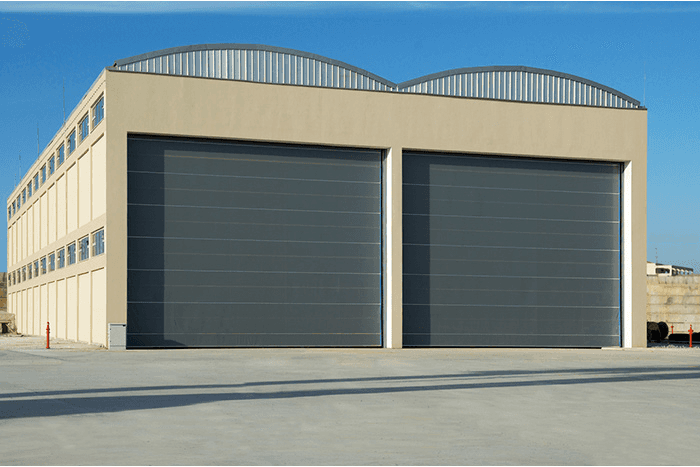
Sliding gate operators are the standard for heavy gates, large openings, and any application where the available space behind the gate prevents a swing arc. They are also the dominant configuration for industrial and logistics facilities, where gates may be very heavy, very wide, and subject to high daily cycle counts.
Rack-and-pinion drive is the standard mechanism — a toothed rack attached to the gate meshes with a pinion gear on the motor. The quality of the rack-pinion engagement, and the precision of the motor's force management, directly determines the smoothness and longevity of the system under load.
For high-traffic commercial applications, duty cycle rating is the critical specification — a motor rated for residential use (typically 30–40% duty cycle) will fail prematurely in a commercial access point that cycles dozens or hundreds of times per day. Always match duty cycle to application.
Choosing the Right Gate Motor for the Application
Application | Gate Type | Recommended Operator Type | Key Considerations |
|---|---|---|---|
Residential home | Swing, up to 3m leaf | Articulated arm or underground | Aesthetics, noise, smart integration |
High-end residential | Swing, up to 3m leaf | Underground (buried) | Visual minimalism, quiet operation |
Light commercial | Swing or sliding, medium weight | Above-ground operator | Duty cycle, access control integration |
Industrial / logistics | Sliding, heavy weight | High-duty sliding operator | Duty cycle, torque, reliability |
High-security | Any | Safety-rated, monitored | Obstacle detection, access logging, compliance |
Roller Shutter and Blind Automation
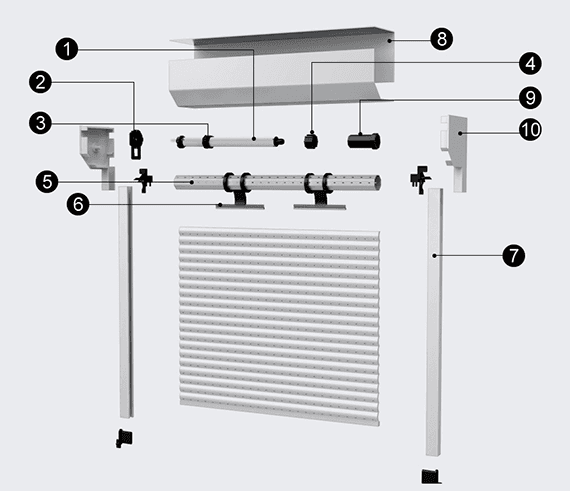
Tubular Motors — The Quiet Workhorse
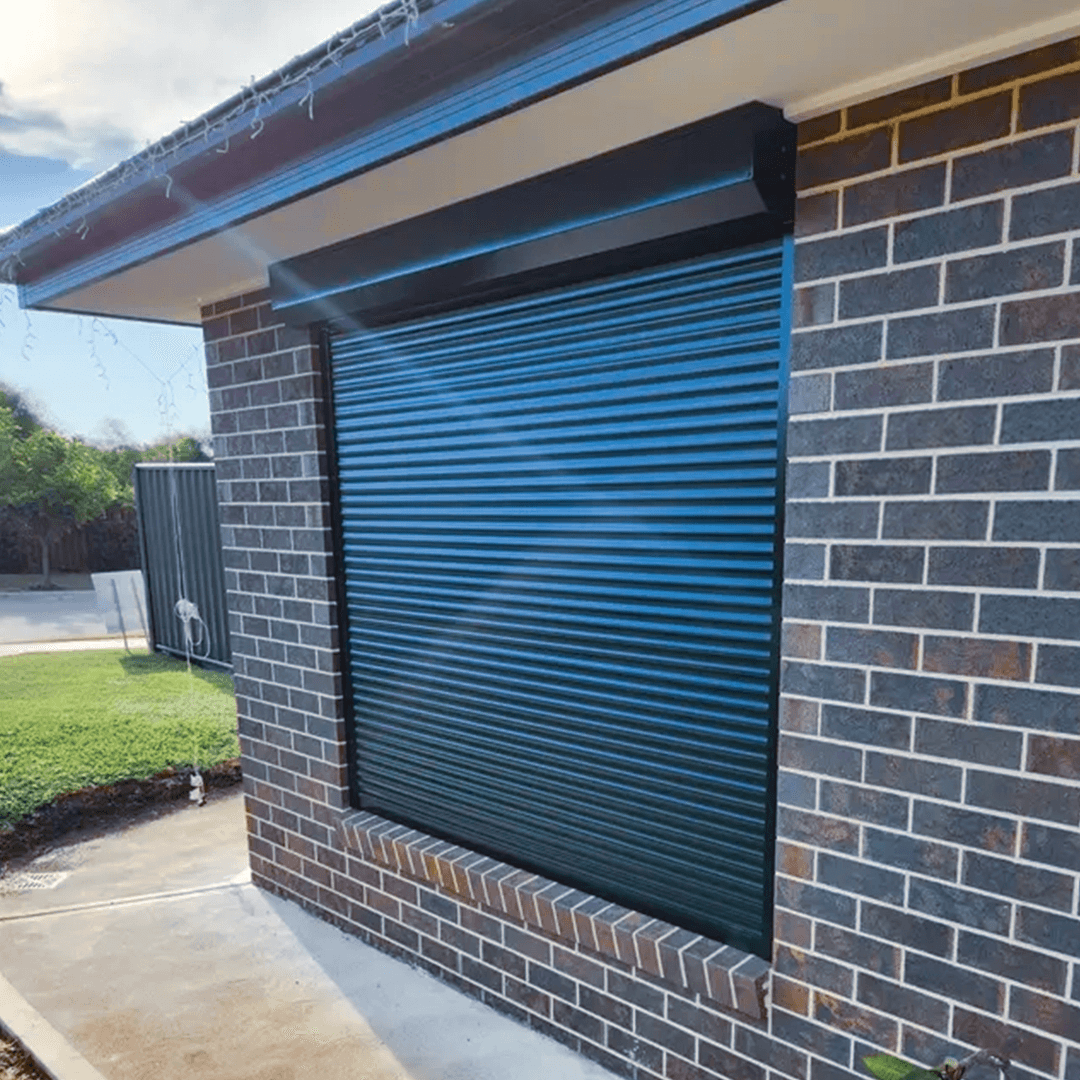
Tubular motors are the foundation of the shutter and blind automation market. Installed inside the roll of the shutter or blind barrel, they are completely concealed in operation and — in modern, quality implementations — essentially silent. The motor is rated by torque (to match the weight and size of the shutter or blind), speed (turns per minute), and control protocol.
The move from AC tubular motors to DC tubular motors has been one of the most significant developments in the segment over the past decade. DC motors offer softer start and stop behavior (eliminating the mechanical jolt of hard-start AC motors), lower energy consumption, more precise position control, and native compatibility with smart home protocols. For any project where comfort, aesthetics, and smart integration matter, DC tubular motors are the correct specification.
Commercial Shutter Drives
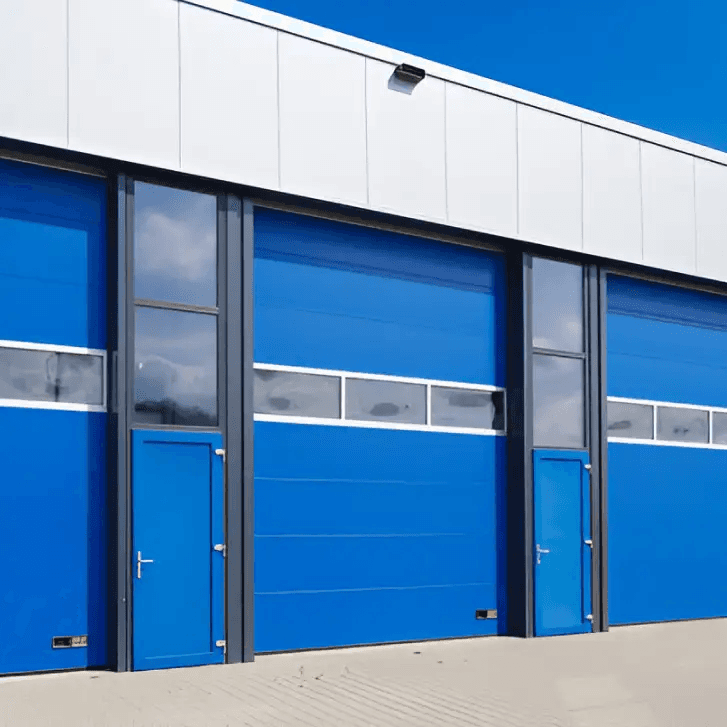
Commercial applications — shopfronts, warehouse access, car parks, service entrances — require a fundamentally different class of motor than residential applications. The load is heavier, the cycle count is higher, the duty cycle requirement is more demanding, and the consequences of failure are more significant.
Commercial shutter drives are designed around industrial motor architectures with higher torque ratings, thermal protection systems that prevent overheating under sustained duty, robust enclosures for demanding environments, and — increasingly — remote monitoring and fault reporting capabilities that allow facilities managers to identify developing issues before they become operational failures.
Integration with Building Management Systems
In commercial and hospitality settings, shutter automation rarely operates as a standalone system. It is one component of a building that also manages lighting, HVAC, access control, fire safety, and security. The value of a shutter system that integrates natively with a BMS — responding to sunlight sensors, coordinating with heating and cooling systems, closing automatically on fire alarm activation — is substantial.
KNX is the dominant BMS protocol in European commercial buildings; BACnet and Modbus are common in larger industrial and institutional facilities. Specifying shutter motors with native or gateway-supported compatibility with these protocols is standard practice in commercial project work.
Smart Automation in Practice — Real-World Applications
Residential — Convenience, Security, and Curb Appeal
In a well-designed residential automation installation, the experience is seamless. The gate opens as the homeowner's vehicle approaches, recognized by a proximity sensor or geofence-triggered smartphone app. The shutters on the south-facing facade adjust automatically through the day to manage solar gain — open in the morning, partially closed during peak afternoon heat, fully open again in the evening. The garden gate buzzer connects to a video entry system accessible from any device on the home network.
None of this requires active management. It runs in the background, responding to conditions and preferences without demanding attention. That seamlessness is the actual product being sold — the motor and the shutter are simply the infrastructure that enables it.
Commercial and Industrial — Access Control at Scale
At the commercial scale, gate and shutter automation is fundamentally about access management. Who enters, when, through which point, and with what level of authorization. Modern automation systems in commercial contexts integrate directly with access control databases — RFID, keypad, intercoms, license plate recognition — so that the gate or shutter is the physical enforcement point of a digital access policy.
For logistics and industrial facilities, reliability under high duty cycle is the overriding criterion. A gate that fails at a busy distribution center entrance creates immediate operational disruption and potential security incidents. The specification of high-duty, monitored systems with remote fault reporting is not a premium option — it is the minimum viable specification for these environments.
Hospitality and Mixed-Use Developments
Hotels, serviced apartments, and mixed-use urban developments present a particular automation challenge: they must manage access for a diverse population of residents, guests, staff, and service providers — often with different access rights, different time windows, and different levels of technical sophistication.
Automated gates and shutters in these settings must be reliable enough for continuous operation, simple enough for guests who encounter them for the first time, and flexible enough to be managed by facilities teams with varying levels of technical expertise. Central Motors' product range, with its emphasis on reliable operation and straightforward integration, is well positioned for this segment.
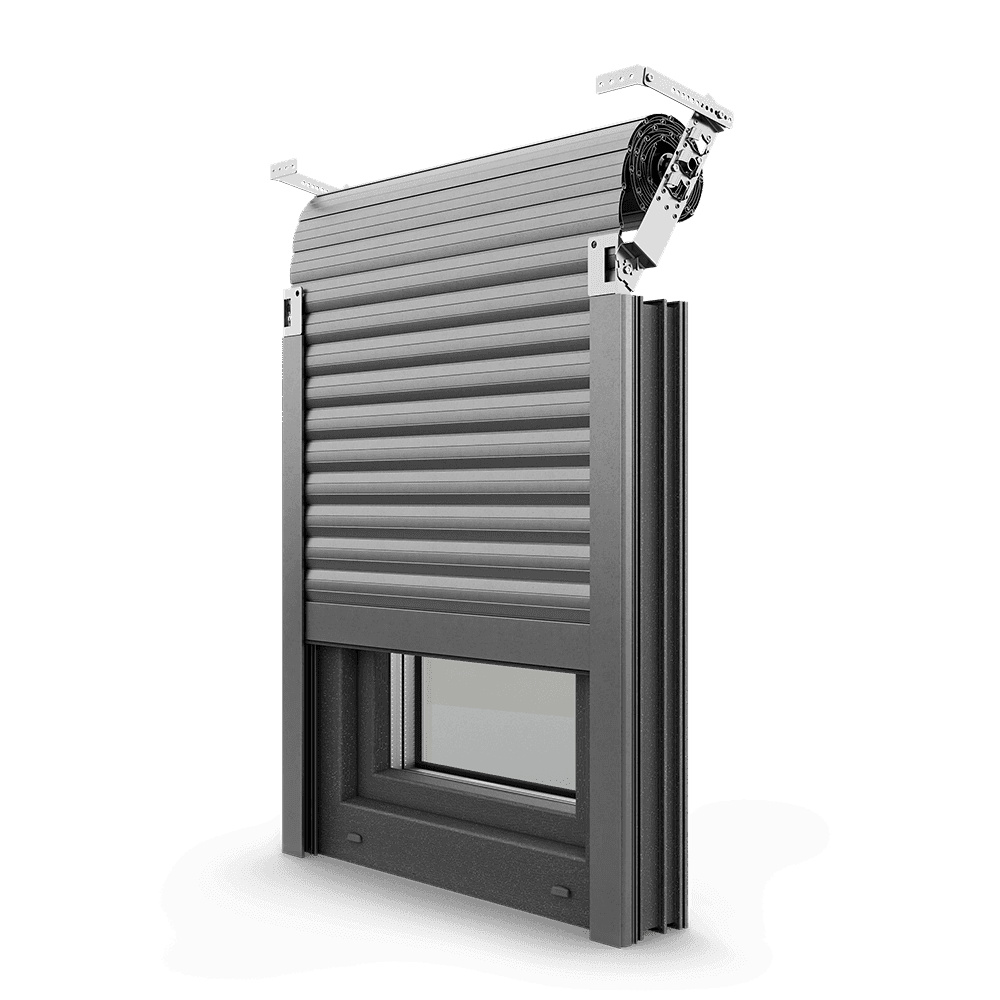
How to Specify the Right Automation System
Key Questions Before You Specify
Before selecting a gate or shutter motor, work through these questions systematically:
Application and load:
What is the gate or shutter weight, dimensions, and type?
What is the expected daily cycle count? (Residential = low; commercial = high; industrial = very high)
What are the environmental conditions? (Coastal, industrial, extreme temperatures?)
Control and integration:
Does the system need to integrate with a smart home platform? Which one?
Is BMS integration required? Which protocol (KNX, BACnet, Modbus)?
What access control systems need to connect? (Intercom, RFID, keypad, video entry?)
Safety and compliance:
What safety devices are required by regulation or client specification?
Is the installation subject to specific national or European safety standards?
What obstacle detection mechanism is appropriate for the application?
Power and energy:
What is the supply voltage and available capacity?
Is low standby consumption a specification requirement?
Is solar or battery backup operation required?
Aesthetics and acoustics:
Is visual minimalism a priority? (Buried operators, concealed motors?)
Are there acoustic requirements? (Residential bedroom shutters, quiet offices?)
Specifier and Installer Checklist
Before commissioning any gate or shutter automation installation, confirm:
Motor torque and duty cycle matched to gate/shutter weight and daily cycle count
Control board compatible with required smart home or BMS protocols
Safety devices installed and tested: photocells, safety edges, obstacle detection
Emergency manual release accessible and functional
Limit positions set accurately — hard stops protected
Remote access configured and tested end-to-end
Client handover documentation provided including manual release procedure
Maintenance schedule established and communicated to client
Frequently Asked Questions
What is the difference between a swing gate operator and a sliding gate motor?
A swing gate operator moves gate leaves in an arc — like a door opening. It requires clear space in the swing arc and is the standard configuration for most residential gates. A sliding gate motor moves the gate laterally along a track, parallel to the fence line. Sliding operators are preferred where space for a swing arc is unavailable, for heavy gates, or for high-cycle commercial applications. The two operator types are mechanically incompatible — the choice is determined by the gate design, available space, and application requirements.
How do I know if a gate motor can integrate with my smart home system?
Check the motor's control board specification for supported protocols. For consumer smart home platforms (Google Home, Alexa, Apple HomeKit), look for Wi-Fi, Z-Wave, Zigbee, or Matter compatibility — either native or through a gateway accessory. For KNX or BACnet building management systems, confirm native support or available protocol gateways. If the manufacturer's documentation does not clearly specify protocol compatibility, assume it is not supported and verify before specifying.
What is duty cycle in gate and shutter motors, and why does it matter?
Duty cycle is the proportion of time a motor can operate continuously before it needs to rest and cool down. A motor with a 30% duty cycle can run for 30 seconds out of every 100 seconds. In residential applications with a few cycles per day, duty cycle is rarely a binding constraint. In commercial or industrial applications with dozens or hundreds of cycles per day, exceeding the motor's duty cycle rating causes overheating, accelerated wear, and premature failure. Always match the motor's duty cycle rating to the expected operational demand of the application.
Are automated gates and shutters required to meet safety standards?
In most European markets, automated gates and shutters installed in professional contexts are subject to the Machinery Directive and relevant harmonized standards — EN 12453 (powered pedestrian doorsets), EN 13241 (industrial and commercial doors), and related standards covering force limits, obstacle detection, and emergency release. The specific requirements vary by application type, installation location, and whether the gate is accessible to the general public. Professional installers are responsible for ensuring compliance and should document the safety measures implemented at commissioning. Always check the applicable standards for your specific market and application.
What maintenance does an automated gate or shutter system require?
Most quality automation systems require relatively modest maintenance: periodic inspection of mechanical components (hinges, rollers, rack and pinion), cleaning and lubrication of moving parts per the manufacturer's schedule, testing of safety devices (photocells, safety edges, obstacle detection), and checking limit positions and force settings. The frequency depends on cycle count — a high-use commercial gate warrants more frequent inspection than a low-use residential installation. Many modern control systems include cycle counters that can be configured to alert when a service interval is due.
Can a gate or shutter motor be powered by solar?
Yes — solar-powered gate operators are a well-established product category, widely used in rural or remote locations where grid power is unavailable or expensive to connect. They typically combine a low-consumption motor and control board with a small solar panel and battery buffer. For shutter automation, low-consumption DC tubular motors are compatible with solar-powered installations when properly sized. The critical parameters are daily cycle count, standby consumption, available solar input, and battery capacity — these must be balanced to ensure reliable operation through periods of low solar irradiance.
Conclusion
The automation industry is not standing still. The gap between a basic motorized gate and a genuinely intelligent, integrated access system has never been wider — and the gap between a commodity motor and a well-engineered, future-ready one is growing in parallel.
For specifiers, installers, and end users making automation decisions today, the right framework is not to ask what the motor costs. It's to ask what the system costs — including installation complexity, integration capability, long-term reliability, and the manufacturer's ability to support the installation over a decade or more.
The trends are clear: smart integration, energy efficiency, enhanced safety, and seamless user experience are no longer differentiating features of premium products. They are becoming the minimum viable specification for any serious project. The manufacturers who build to this standard from the ground up — rather than retrofitting connectivity and safety onto legacy product architectures — are the ones whose products will still be specifiable, supportable, and performing well when the next wave of innovation arrives.
Central Motors' approach — engineering depth across the full application spectrum, native smart integration, genuine safety compliance, and a commitment to installer support — represents the kind of manufacturer relationship that serious automation projects deserve. Not because the brand makes bold claims, but because the engineering decisions behind the product range reflect a clear understanding of where this industry is going and what it takes to lead there.
Other Blogs