Blog
Best Gate Opener for Small Residential Entrances | China-Develop
Author
Ray
Published
Category
Sliding Gate Motor
Pick the best small gate opener by gate type, weight/width limits, power options, and safety features—plus setup tips for narrow entrances.

Author
Ray
An experienced automation specialist with a strong background in motor technology and industrial solutions. With years of expertise in central motors, tubular motors, and automation systems, the author is dedicated to sharing insights that connect engineering innovation with real-world applications. Passionate about advancing reliable, energy-efficient, and high-performance automation products for global markets.
What’s better than insider perks, pro tips, and surprises?
Sign up to get the most recent blog articles in your email every week.
Join now.
WHY I WRITE THIS
About my business
Our company’s main product lines include tubular motors, sliding gate motors, swing gate motors, roller shutter motors, and other door automation solutions, all manufactured by trusted partner factories we have worked with for many years.
Our Services
I help them with sales and export operations, while our company also provides sourcing and procurement services in China to help international clients solve supply-related challenges. If you need assistance with procurement, please feel free to contact us.
Which “small gate opener” is best?
For most homeowners with a small residential gate and limited space, the best choice is usually one of two paths:
Swing gate opener (single or dual swing) if you have enough clearance for the swing movement and the gate is light enough for the opener’s rated weight capacity.
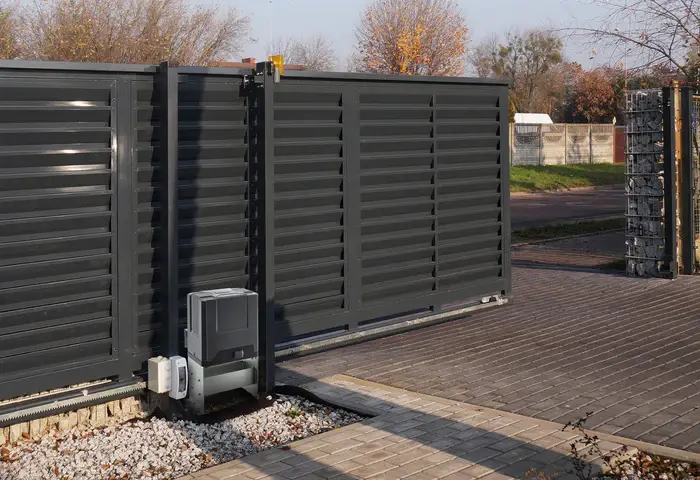
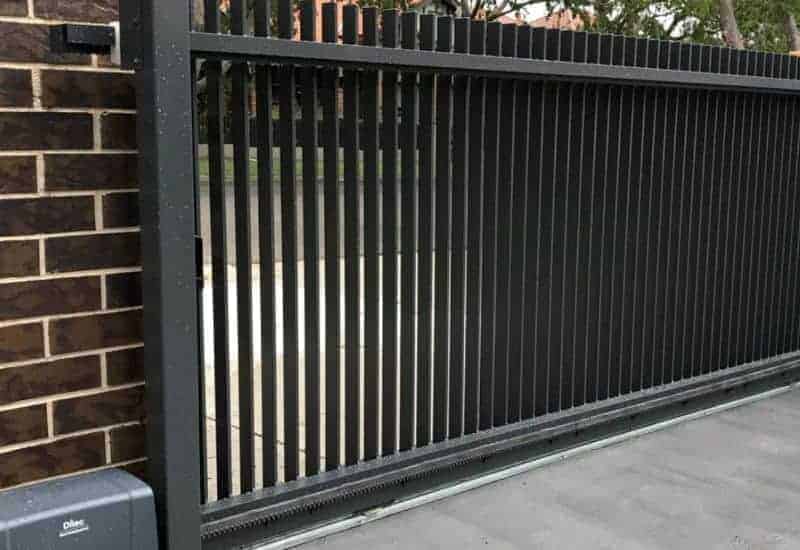
Sliding gate opener if you need to avoid a swing arc—especially useful for narrow driveway entrances where space is tight.
If you’re buying online, the decision should start with three questions:
(a) Is your gate swing or sliding? (b) What is the gate’s weight (and do you have a margin)? (c) Do you need strong safety sensors like photo eyes and anti-crush features?
Featured snippet: choose-your-type checklist
Use this checklist to pick the right gate opener for small entrances:
Gate motion: Is your gate designed to swing or slide?
Clearance: Do you have space for the swing arc (swing gates) or track/wheel space (sliding gates)?
Load: Confirm gate weight capacity and gate width capacity from the manufacturer.
Drive fit: Check torque/drive specs for a smooth start/stop (especially important for lighter gates that can still catch).
Safety: Look for anti-crush sensor and photo eye safety / safety beams.
Power: Do you have an outlet? If not, consider battery powered gate opener or solar gate opener, ideally with backup battery.
Environment: Verify the unit is an outdoor gate operator with suitable enclosure rating (and protection for weather/UV).
Control: Choose remote/keypad/Wi‑Fi/app based on who uses it daily.
What counts as a “small” residential gate opener need?
“Small gate opener” can mean different things depending on your entrance, but in practice, small gates introduce three common constraints:
Typical constraints: width, weight, and space
Gate width capacity: A smaller gate still has limits—especially for swing arc clearance and for sliding track/wheel geometry.
Gate weight capacity: “Light gate” doesn’t mean “light load for an opener.” Gate weight, stiffness, and how the gate sits on hinges/rollers change how hard the motor must work.
Installation geometry: Misalignment matters more than people think. Even a compact gate can become harder to move if it’s not level or if it rubs on posts.
The real limiting factor is often gate weight + installation geometry
Two gates with the same “width” can require very different drive effort if:
one is slightly warped,
one has worn hinges,
one has tight tolerances at the latch area,
or one catches due to ground slope.
Before choosing an opener, do a quick “manual test”:
Open/close the gate by hand.
Note any sticking points.
Check whether the gate sits level at rest.
If the gate doesn’t move smoothly manually, an opener can amplify the problem and force the system harder than expected.
Gate opener types for small entrances (and when each wins)
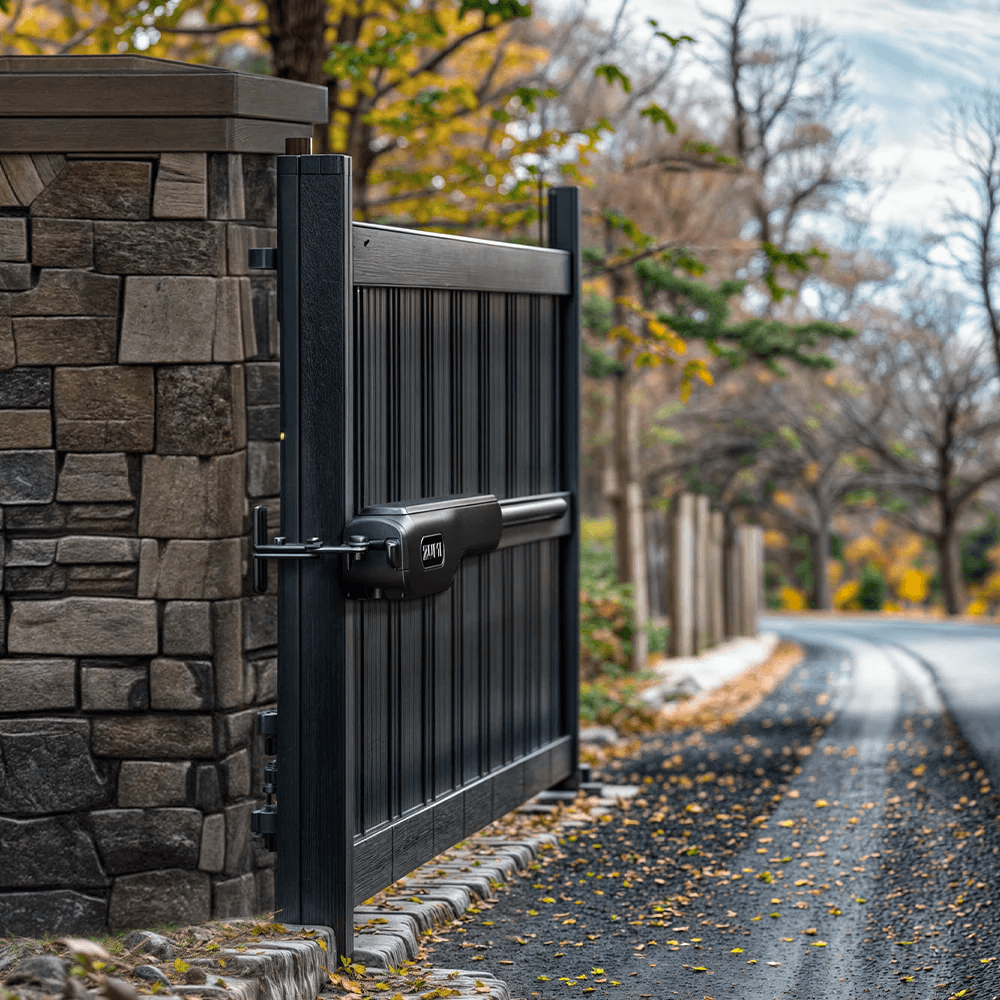
Swing gate openers (single swing)
Swing gate opener systems move the gate on hinges using an operator/actuator.
Best fit when:
you have enough side clearance for the swing arc,
the gate hinges are in good shape,
you want a straightforward setup.
Watch-outs:
If your entrance is narrow with limited space, swing motion may be inconvenient.
Wind load and gate imbalance can increase motor effort over time.
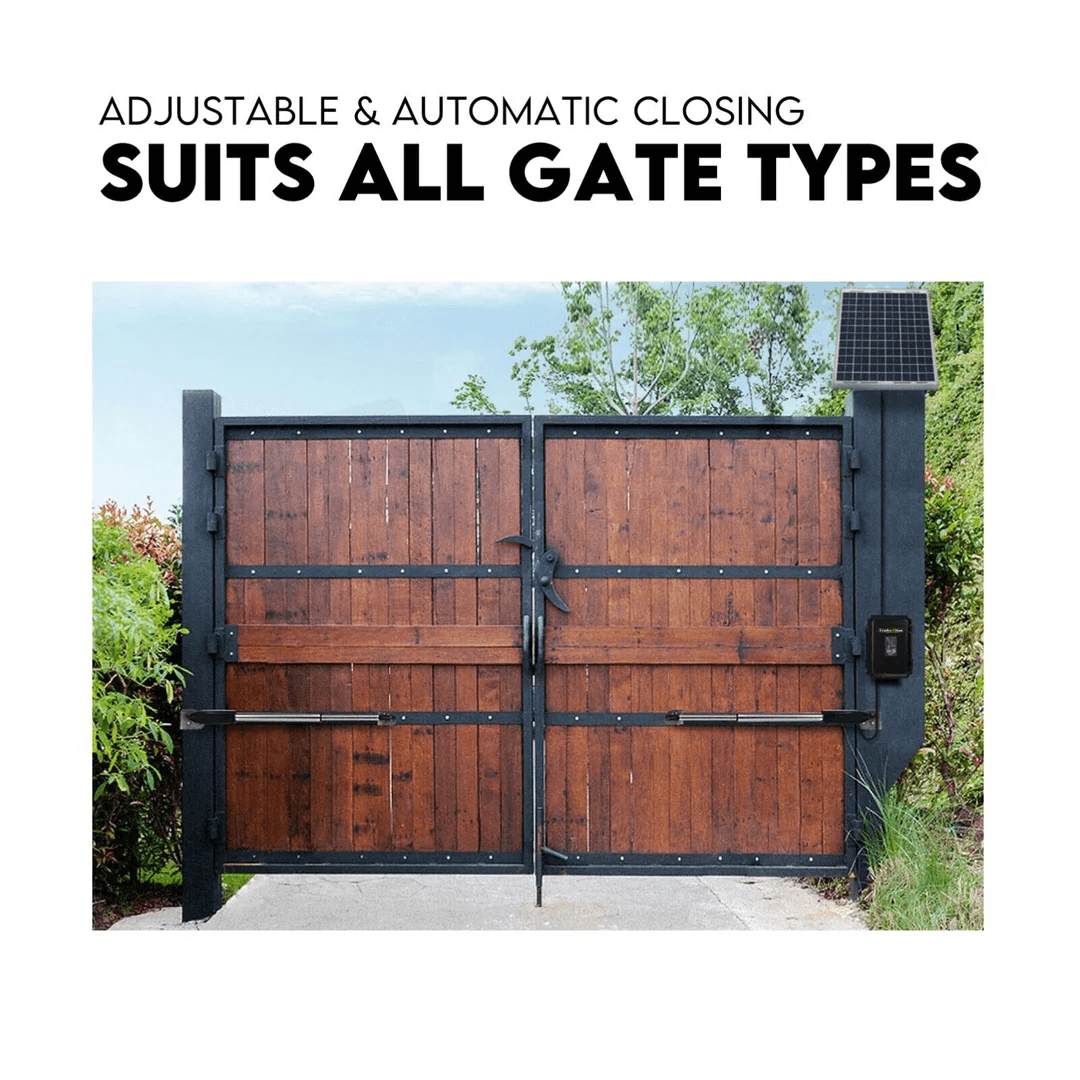
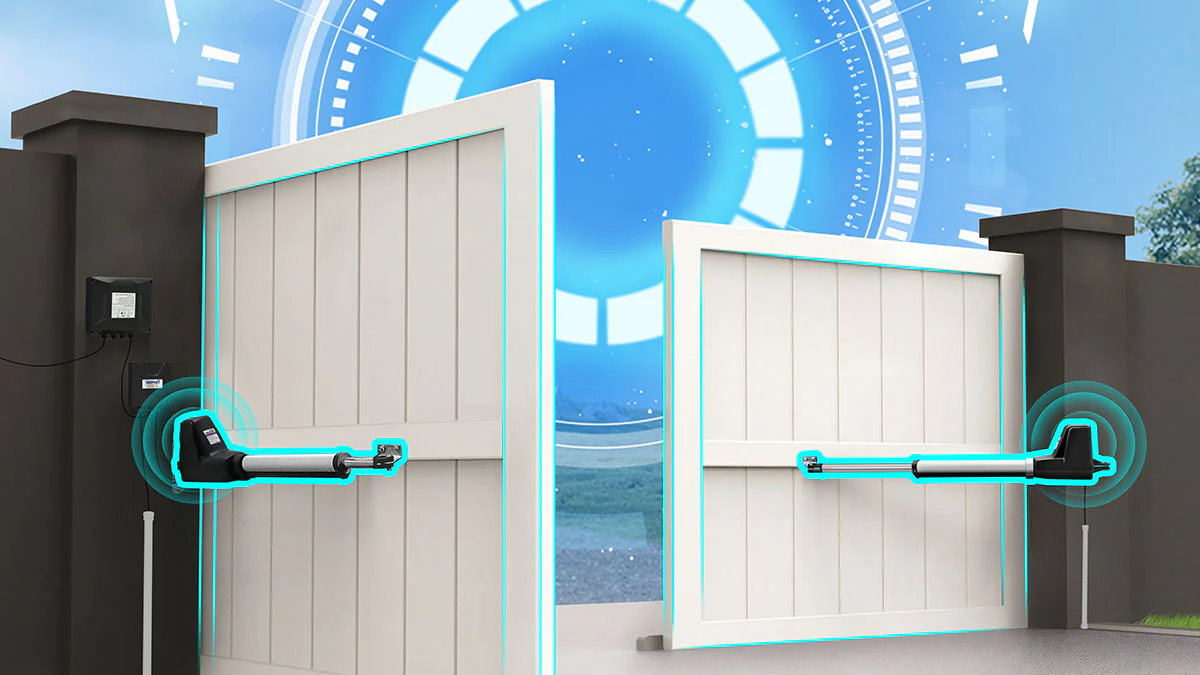
Dual swing gate openers
A dual swing gate opener typically powers two gate leaves (common in wider entrances, but can be used in smaller designs depending on your layout).
Best fit when:
you have two leaves that meet in the middle,
you want balanced movement rather than a single heavy leaf.
Watch-outs:
Two leaves mean you must consider synchronization, alignment, and latch behavior.
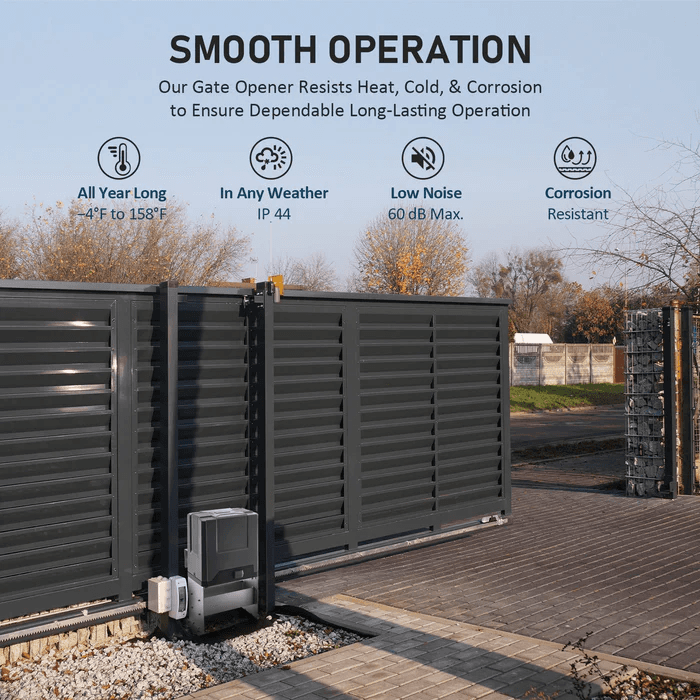
Sliding gate openers (track + wheels)
A sliding gate opener drives the gate along a track (or rail system), using wheels and a drive unit.
Best fit when:
you need to eliminate swing space (common with narrow driveway entrances),
your gate can be mounted on a stable track.
Watch-outs:
Track alignment and debris management matter. Leaves, gravel, and uneven ground can affect smooth movement.
You need a clear path for the gate to travel.
Cantilever (when there’s no track rail where you need it)
A cantilever gate opener is useful when you don’t want the gate relying on a floor track in the driveway area.
Best fit when:
you need the driveway to stay clear of a track rail,
you can support the cantilever structure properly.
Watch-outs:
Cantilever systems rely heavily on correct structural mounting and alignment. If the mounting is off, the gate can bind.
If you’re unsure whether your gate is suitable for sliding vs cantilever, it’s worth getting a quick measurements-based confirmation before buying.
How to choose by specs: width capacity, weight capacity, and torque
Small gate openers live or die on compatibility. The trick is to avoid “guessing” based on online summaries.
Gate width capacity: what to confirm for small entrances
When listings say “maximum gate width,” confirm:
whether it’s per leaf (for dual swing) or overall
whether width is measured at a certain height or configuration
whether the rating assumes a level installation
For narrow entrances, width capacity also influences how aggressively the gate can move without hitting posts or walls during travel.
Gate weight capacity: why “light gate” still needs margin
The most important spec for a small gate opener is often gate weight capacity.
Use this rule of thumb:
If the manufacturer lists a max weight, don’t operate right at that number.
Keep margin because real-world conditions (wind, friction, slight misalignment) increase load.
Also consider gate materials:
Lightweight metal can still be “hard to move” if hinges are worn.
A hollow gate frame may flex, affecting how evenly it travels.
Torque / drive output: matching the opener to gate load
Even if two openers list “similar max gate size,” they may differ in drive output (torque/speed profile). Look for:
soft start / soft stop features (reduces stress on latches and hinges)
smooth motion, especially if you expect frequent operation
If you see a system with minimal safety sensors or vague spec pages, you’re taking on risk.
Power and control options for small residential entrances
Remote, keypad, and Wi‑Fi / app control
Control options affect convenience, not just features.
Common choices:
gate opener with remote: simple and fast
keypad gate opener: convenient for guests and deliveries
Wi‑Fi gate opener / smart gate opener: app access, notifications, and integration with smart-home platforms (e.g., Alexa/Google/Home Assistant depending on the ecosystem)
For small entrances, reliability matters: an app is great, but daily usability depends on consistent connectivity and user-friendly authentication.
Solar gate opener vs battery powered gate opener
If you have no outlet, you’re likely choosing between:
solar gate opener (panel + charging system; depends on sun exposure)
battery powered gate opener (less dependent on sun, but depends on battery capacity and climate)
A practical way to decide:
If the entrance gets good sunlight and you can place/aim panels well → solar may work.
If sunlight is limited (shade from trees/buildings) → battery may be more predictable.
Backup battery: when it matters most
A gate opener with backup battery matters when you need consistent operation during:
cloudy stretches,
seasonal changes,
outages (if your system depends on grid power).
If you rely on gate access for daily routines, consider backup even if solar/battery is already planned.
Safety and compliance features you should not skip
Gate openers are mechanical systems that can create entrapment risks. That’s why safety is not optional.
Anti-crush sensor + photoelectric safety beams
Look for:
anti‑crush sensor (detects resistance during movement and stops/reverses)
photo eye safety / photoelectric safety beam (uses sensors to detect obstruction)
These features are especially important for:
families with kids/pets,
narrow driveways where vehicles/pedestrians may pass close to the gate line,
any situation with frequent use.
Entrapment protection and emergency manual release
Good safety design also includes:
entrapment protection (systems that help prevent or reduce trapped-area harm)
emergency manual disconnect / manual release (so you can operate during power failures)
Make sure you understand how manual operation works before you need it.
UL 325 / ASTM considerations (how to use standards without guesswork)
In North America, many gate openers are marketed as compliant with UL 325 safety requirements. If you’re in a different region, standards may vary.
Best practice:
Use the standards as a checklist for features and installation expectations (entrapment protection, safety sensors, proper setup).
Verify your local requirements and follow installation guidance from the manufacturer. [source needed: consult local code/standards authority]
Installation considerations that make small gate openers succeed
Clearance, alignment, and the “leveling” problem
Small gates often sit close to posts and walls. That means:
The gate must travel without rubbing.
The opener arm/operator angle must match the geometry.
Track alignment (for sliding) must be precise.
If the gate binds by hand, address that first—don’t blame the opener.
Access to power (outlet vs outletsless driveway)
Outletsless driveway setups are common with compact residential installations.
But power placement affects reliability (wire routing, weatherproof covers, battery protection).
Plan wiring routes early and protect connections from moisture.
Weatherproofing: outdoor gate operator enclosures
Because openers are exterior equipment, you should confirm:
the unit is intended as an outdoor gate operator
it has suitable enclosure rating and weather protection
cables/sensors are designed for outdoor installation
If a seller doesn’t provide enough weather/UV details, consider it a risk signal.
Quick recommendations by scenario (practical “if this, then that”)
Narrow driveway + minimal clearance
Often best: sliding gate opener
Why: it doesn’t require swing arc clearance.
Choose sliding if you can provide:
stable track mounting area,
good drainage and debris control,
enough space along the side for travel.
Small light swing gate
Often best: swing gate opener (single swing)
Choose this if:
your hinges operate smoothly,
you have room for the gate to swing open safely,
you can mount the operator with the correct travel angles.
Small sliding gate where you want zero swing arc
Often best: sliding gate opener with solid safety sensors
Prioritize:
anti-crush and photoelectric beams,
a smooth travel profile (soft start/stop).
DIY-friendly setup vs professional install
If your gate is “simple” (good hinge condition for swing, stable track for sliding), a DIY approach can be reasonable.
If your gate is misaligned, warped, or the installation requires structural work (especially cantilever), a professional can be the smarter “buy once” decision.
FAQ
1) What is the best gate opener for small residential entrances?
Usually either a swing gate opener (if you have swing clearance) or a sliding gate opener (if you need to avoid swing space). The best choice depends on your gate type, weight capacity, and safety sensor requirements.
2) How do I know what size gate opener I need?
Start with the manufacturer’s gate weight capacity and gate width capacity. Then account for installation geometry and friction—if the gate doesn’t move smoothly by hand, you may need either adjustments or a higher-spec opener.
3) Can I use a solar gate opener for a small gate?
Yes, many systems support solar/battery approaches. The key is whether your site gets enough sun and whether the system includes appropriate charging and, ideally, backup battery for consistent operation.
4) What safety features should a small gate opener have?
Look for anti-crush sensor and photo eye safety / safety beams for obstruction detection, plus entrapment protection and an emergency manual release.
5) Are dual swing gate openers better for small entrances?
They can be, depending on your layout. If you have two leaves and want balanced movement, dual swing can work well. If space is extremely tight, single swing or sliding may be easier.
6) Do I need professional installation?
You may not need it for simple, well-aligned swing/sliding setups. But if you’re dealing with structural mounting, persistent gate binding, or complex wiring, professional installation helps reduce risk and improves performance.
Conclusion: choose the opener that fits your gate—not the marketing
A small gate opener is not about being “small.” It’s about matching your gate motion type, load, and clearance while prioritizing safety sensors and reliable operation in real outdoor conditions.
Other Blogs