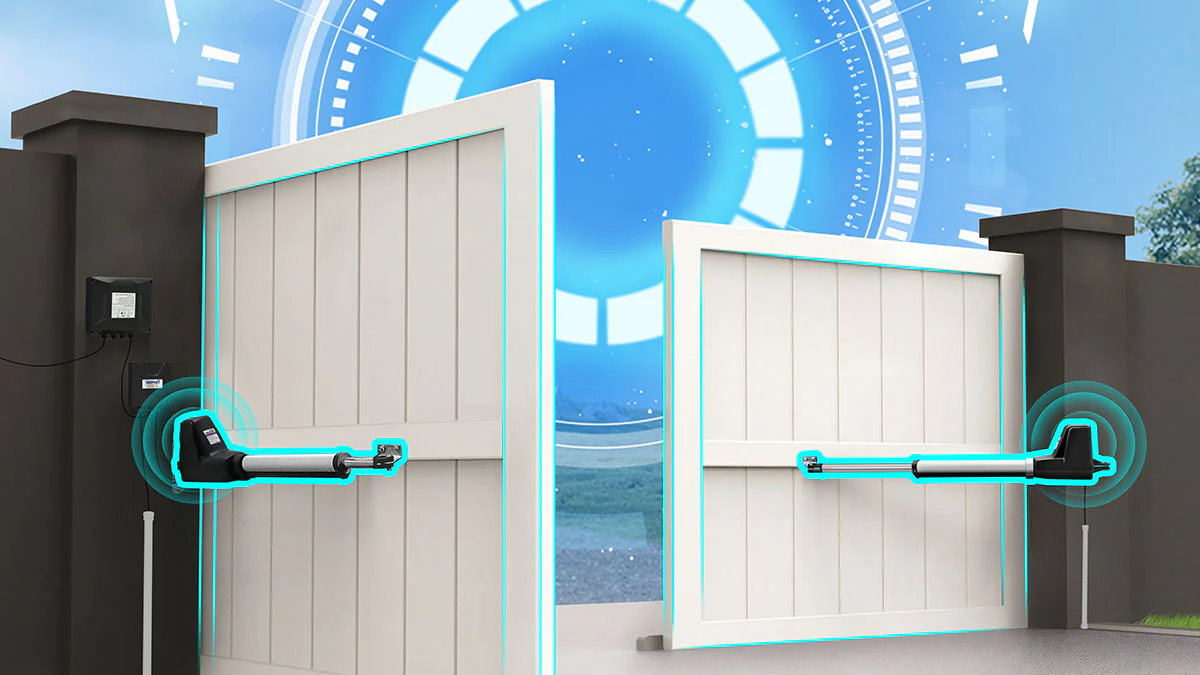
Blog
Swing vs Sliding Gate Opener: How to Choose in 2026
Author
Ray
Published
Category
Sliding Gate Motor
Compare swing and sliding gate openers by space, slope, cost, safety, and use case to choose the right automatic gate system in 2026.

Author
Ray
An experienced automation specialist with a strong background in motor technology and industrial solutions. With years of expertise in central motors, tubular motors, and automation systems, the author is dedicated to sharing insights that connect engineering innovation with real-world applications. Passionate about advancing reliable, energy-efficient, and high-performance automation products for global markets.
What’s better than insider perks, pro tips, and surprises?
Sign up to get the most recent blog articles in your email every week.
Join now.
WHY I WRITE THIS
About my business
Our company’s main product lines include tubular motors, sliding gate motors, swing gate motors, roller shutter motors, and other door automation solutions, all manufactured by trusted partner factories we have worked with for many years.
Our Services
I help them with sales and export operations, while our company also provides sourcing and procurement services in China to help international clients solve supply-related challenges. If you need assistance with procurement, please feel free to contact us.
Choosing the wrong gate opener is expensive. It can lead to poor performance, premature motor wear, difficult installation, and ongoing service problems. The good news is that the choice between a swing gate opener and a sliding gate system is usually straightforward once you evaluate the site correctly.
Here is the short answer: choose a swing gate opener if your entrance has enough inward or outward clearance, reasonably level ground, and a gate layout designed to swing freely. Choose a sliding gate opener if space is limited, the driveway is sloped, or the gate opening is wide, heavy, or exposed to wind. In most cases, property layout—not personal preference—is the deciding factor.
Key Takeaways
A swing gate opener is usually best for properties with enough swing radius and level ground.
A sliding gate motor is often better for narrow entrances, sloped driveways, and heavy-duty gates.
The most important selection factors are space clearance, driveway slope, gate weight, wind load, and duty cycle.
Swing gates are often simpler in concept, but not always easier to install if the ground is uneven.
Sliding gates need side room for travel and more structural planning, but they often perform better in demanding environments.
Safety matters: look for compliant systems with photocell sensors, obstacle detection, and auto-reverse functions.
Quick Answer: Should You Choose a Swing or Sliding Gate Opener?
If your property has enough room for the gate leaf to open in an arc, and the driveway surface is flat enough to avoid binding, a swing gate opener is often the most natural solution. It suits many homes, villas, and light commercial entrances.
If your entrance is tight, on an incline, or cannot accommodate gate swing due to walls, traffic, or property line limitations, a sliding gate opener is usually the better choice. It is especially effective for narrow driveways, steep driveways, industrial entrances, and heavy gates.
That is the core decision. Everything else—cost, speed, appearance, and controls—comes after site suitability.
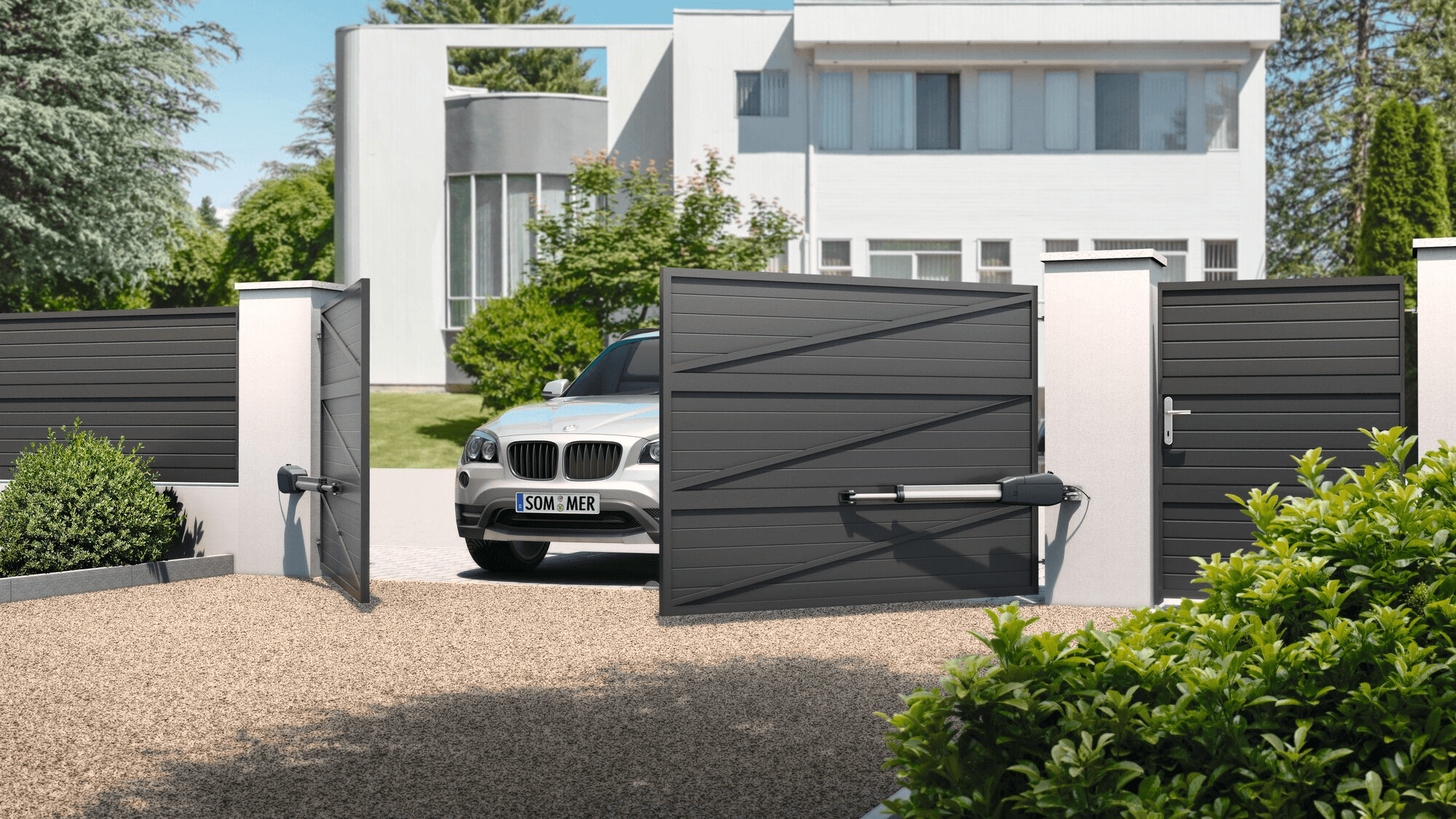
What Is a Swing Gate Opener?
A swing gate opener is a motorized system that opens and closes a gate by pivoting it on hinges. It can automate a single swing gate or a dual swing gate opener setup with two leaves opening from the center.
These systems are widely used in residential and light commercial gate automation because they work well with traditional gate designs and offer a clean, elegant appearance.
Main types of swing gate operators
There are several common swing gate motor designs:
Linear actuator (straight-arm / screw drive):
A direct push-pull mechanism. Common, cost-effective, and suitable for many standard gates.Articulated arm opener:
Uses a jointed arm, often preferred when gate posts are wide or hinge geometry is complex.Underground swing gate operator:
Installed below ground for minimal visual impact. Popular in high-end residential or architectural projects.
When a swing gate opener works best
A swing system is usually the right fit when:
the gate has enough room to swing open safely
the ground is relatively level
the gate is not excessively heavy for its hinge and operator setup
the entrance design favors a classic gate appearance
maintenance access to the posts and operator arms is straightforward
What Is a Sliding Gate Opener?
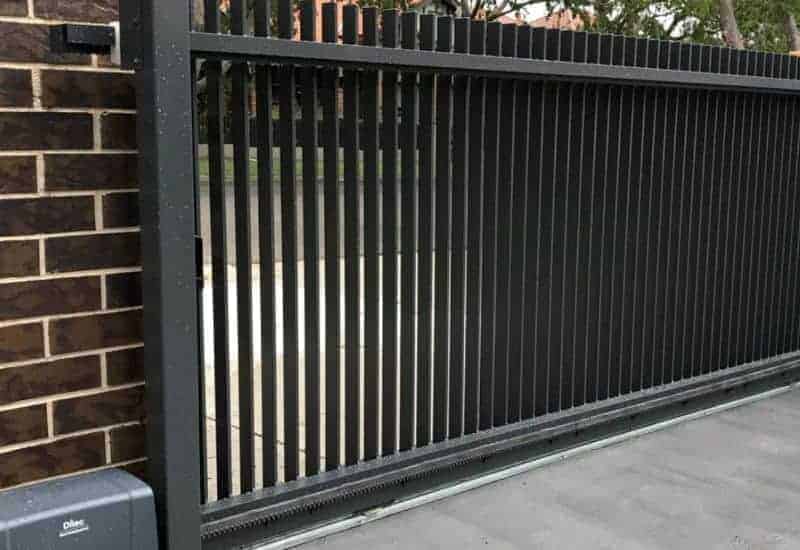
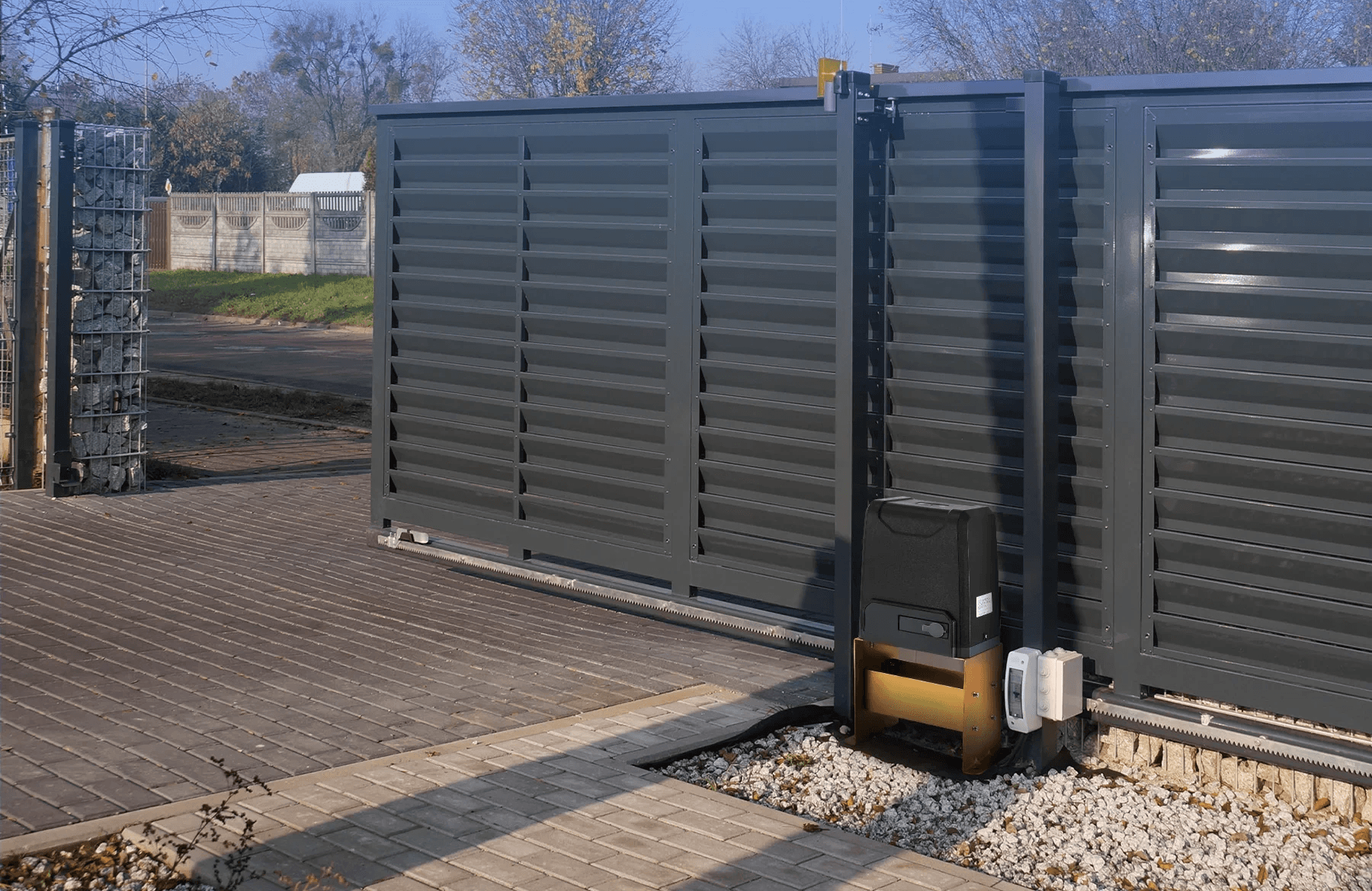
A sliding gate opener uses a motor to move the gate horizontally along a track or suspended system. Instead of swinging inward or outward, the gate slides parallel to the fence line.
A sliding system is often chosen when site conditions make swing movement impractical.
Standard tracked sliding gates vs cantilever sliding gates
There are two main sliding formats:
Tracked sliding gate:
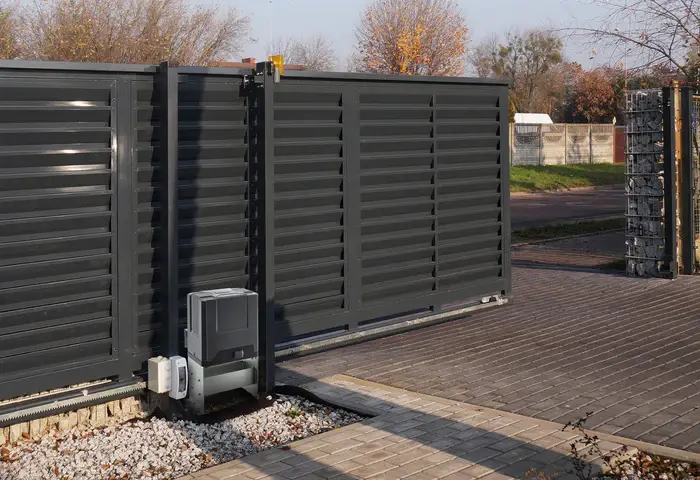
The gate rolls on wheels along a ground track. This is common and cost-effective, but the track must stay clean and properly aligned.Cantilever sliding gate opener:
The gate is suspended and slides without ground contact across the clear opening. This is ideal where snow, debris, mud, or uneven surfaces would interfere with a track.
When a sliding gate motor works best
A sliding gate motor is often the better solution when:
the driveway has a slope or incline
there is limited swing clearance
the gate is wide or heavy
wind load is a concern
the property entrance is narrow
commercial use requires higher duty cycles
Swing vs Sliding Gate: The Key Differences That Matter
Many comparison articles stop at “one swings, one slides.” That is not enough to make a good buying decision. The real differences are practical and site-specific.
Space requirements
This is the first question to answer.
A swing gate needs a clear arc to open. That means you need enough gate swing radius inside or outside the property, depending on the opening direction. Landscaping, parked vehicles, walls, and driveway slope can all create problems.
A sliding gate needs lateral travel space equal to roughly the gate opening width, sometimes more depending on gate design and counterbalance requirements. If you do not have side room along the fence line, a sliding system may not be possible.
Rule of thumb:
Choose swing if you have front-to-back clearance.
Choose sliding if you have side-to-side clearance.
Ground condition and driveway slope
This is where many projects succeed or fail.
A swing gate opener for uneven ground can be challenging. If the gate swings across a rising driveway, it may scrape the surface or require reduced opening angle. Special hinge geometry or upward-opening solutions may help, but complexity increases.
A sliding gate opener for narrow driveway or sloped entrance is often more practical because the gate does not sweep across the incline. For steep driveways, sliding is often the safer and more reliable option.
If you are asking, “What is the best gate opener for a steep driveway?” the answer is usually a sliding gate system.
Gate size, weight, and wind load
Swing gate operators put load on hinges, posts, and the motor arm as the gate opens through an arc. Large solid-panel gates can create significant wind resistance, which increases strain.
Sliding gates distribute forces differently. They are often better suited to heavy-duty gate opener applications, wide entrances, and high-wind areas, especially in industrial or coastal settings.
That does not mean swing systems cannot handle heavy gates. It means the structure, operator type, and duty cycle must be sized properly.
Installation complexity
Swing gates may look simpler, but installation depends heavily on hinge alignment, post strength, and opening geometry. A poorly aligned post can cause ongoing problems with a linear actuator or articulated arm.
Sliding gates often require more civil work:
track installation or cantilever hardware
precise motor base positioning
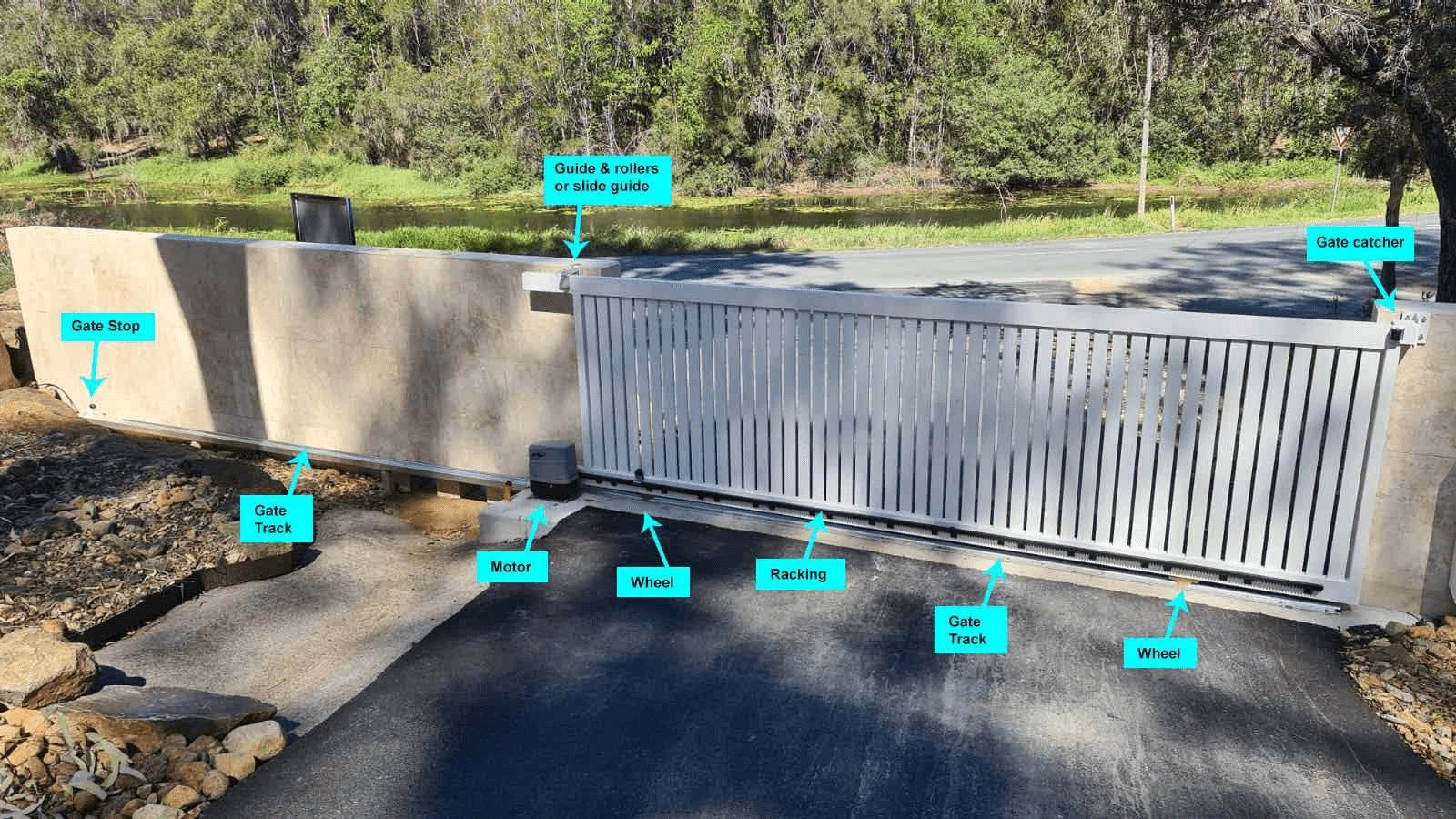
rack and pinion alignment
drainage and foundation planning
So which is easier? It depends on the site. On flat ground with standard posts, swing may be simpler. On difficult terrain, sliding may actually be the cleaner engineering solution.
Maintenance and long-term reliability
Swing gates involve hinges, arm joints, brackets, and stop points. Sliding systems involve rollers, tracks or cantilever assemblies, and a rack and pinion drive.
In dusty or icy environments, tracked sliding gates need regular cleaning. In windy environments, swing gates may experience more operational stress.
Long-term reliability depends less on gate type than on four things:
correct product sizing
proper installation
routine maintenance
suitable site conditions
Pros and Cons of Swing Gate Openers
Advantages
classic and elegant appearance
common choice for residential properties
compatible with many decorative gate styles
available in single and dual swing gate opener formats
can be paired with solar gate opener systems in low-cycle applications
Limitations
requires adequate swing clearance
less suitable for steep or uneven driveways
can be more affected by wind load on solid gates
hinges and posts must be strong and accurately aligned
If your site supports it, an automatic swing gate opener is often an excellent driveway gate opener for homes and small businesses.
Advantages and Limitations of Sliding Gate Openers
Advantages
ideal for sloped driveways and restricted spaces
strong option for heavy gates and wider openings
often preferred for commercial gate opener applications
generally better for high wind or high-traffic entrances
no swing arc interfering with vehicles or pedestrians
Limitations
requires side room for the gate to slide
tracked systems need clean, stable rail conditions
installation can be more structural and labor-intensive
cantilever designs require more gate length and hardware
For industrial or demanding entrances, a sliding gate motor is often the more robust choice.
How to Choose the Right Automatic Gate Opener
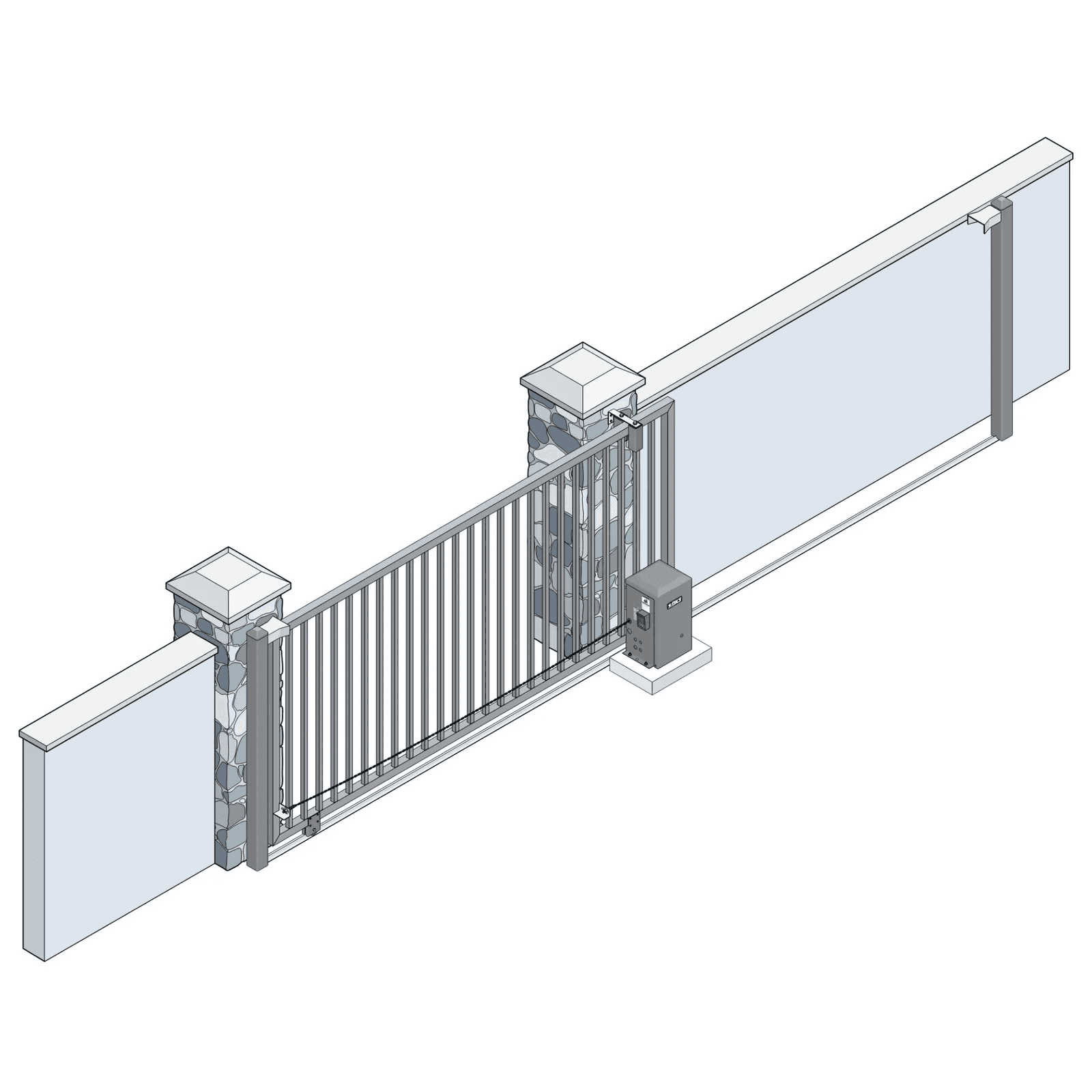
If you are wondering how to choose a gate opener, use this five-step framework.
Step 1: Measure your entrance correctly
Record:
clear opening width
gate leaf width and height
approximate gate weight
post dimensions
hinge offset
available swing radius or slide distance
Do not guess on weight. Operator selection depends heavily on gate weight capacity and leaf length.
Step 2: Check opening clearance and property line limits
Ask:
Can the gate swing inward without hitting the driveway?
Is there enough side room for sliding travel?
Does the gate encroach on a public road or sidewalk?
Will vehicles have enough turning room?
This is often the decisive step in swing gate opener vs sliding gate opener selection.
Step 3: Match the opener to duty cycle and usage
A gate at a private home may only cycle a few times a day. A commercial facility may require dozens or hundreds of cycles.
Review:
residential vs commercial rating
motor duty cycle
expected daily openings
peak traffic periods
A residential gate opener should not be installed where a commercial gate opener is required.
Step 4: Review power supply and control options
Decide whether you need:
AC mains power
battery backup
solar gate opener compatibility
remote control
keypads
intercom integration
smartphone control / WiFi gate opener
access control connectivity
This is where the broader gate automation system takes shape.
Step 5: Confirm safety and compliance requirements
Safety is not optional.
Look for:
photocell sensor / photo eye
safety sensor
obstacle detection
auto-reverse function
manual release in case of power outage
For the US market, UL 325 is a key safety standard for gate operators. In Europe, buyers should look for CE marking and compliance with relevant local directives and installation rules.
For external reference, you may want to review official materials from recognized standards bodies or industry associations such as UL or relevant EU conformity guidance pages.
Best Use Cases: Residential vs Commercial Gate Opener Selection
Best gate opener for residential driveway
For most homes, the best choice depends on layout:
Swing gate opener: best for wide entrances, flat driveways, and traditional gate aesthetics
Sliding gate opener: best for narrow driveways, inclines, and limited front clearance
A homeowner usually prioritizes convenience, appearance, quiet operation, and safety integration.
Commercial gate opener selection
Commercial and industrial sites care more about:
higher duty cycle
heavy-duty performance
larger gate sizes
access control integration
durability in harsh weather
serviceability over time
This is why sliding systems are common in factories, logistics yards, and warehouses, though heavy-duty swing systems also have their place.
Important Features to Compare Before Buying
Safety sensors and auto-reverse
Any modern electric gate opener should include or support monitored safety devices. These help prevent entrapment and reduce liability exposure.
Access control and smart connectivity
Depending on the project, you may need:
remote transmitters
keypad entry
RFID or card access
intercom connection
smartphone control
WiFi or cloud-based gate control system
Battery backup and solar compatibility
If the site has unstable grid power or remote installation conditions, battery backup is highly valuable. A solar gate opener can be effective for low-to-moderate use, especially in residential or rural settings.
US and EU Standards: What Buyers Should Know
For North America, a gate operator should be selected and installed with UL 325 compliance in mind. This affects sensor requirements, entrapment protection, and overall system configuration.
For Europe, buyers should verify CE marking and review country-specific electrical and gate safety requirements. CE marking alone is not a substitute for proper installation, but it is a baseline product conformity indicator.
If you are a distributor, installer, or project buyer sourcing internationally, always confirm:
voltage and frequency compatibility
certification scope
documentation availability
control board compliance
local installation code requirements
Common Mistakes When Choosing a Gate Opener
Choosing by price instead of site conditions
A cheaper operator that does not match the gate layout becomes more expensive very quickly.Ignoring driveway slope
This is one of the biggest reasons swing gate projects fail.Underestimating gate weight and wind load
Solid gates, long leaves, and exposed entrances need more than a basic motor.Using residential equipment for commercial traffic
Duty cycle matters.Skipping safety devices
A gate opener is a motorized moving barrier. It must be treated like one.Failing to plan access control early
Retrofits are possible, but it is better to design the gate control system from the start.
Final Decision Framework: Which Type of Gate Opener Do You Need?
If you want a simple decision model, use this:
Choose a swing gate opener if:
your driveway is level or nearly level
you have enough swing clearance
the gate is moderate in size and weight
the property style favors a traditional gate look
you want a common and practical driveway gate opener
Choose a sliding gate opener if:
the entrance is narrow
the driveway is sloped
the gate is heavy, long, or frequently used
wind exposure is high
you need a stronger commercial gate opener or heavy-duty gate opener
In short, which is better, swing or sliding gate?
Neither is universally better. The right answer depends on the site, the gate, and the level of use.
Conclusion
Choosing between a swing gate opener and a sliding gate system is not just a product decision. It is a layout, engineering, and long-term reliability decision. If your entrance has the space and geometry for it, a swing opener can be an elegant and effective solution. If the site is tight, sloped, or more demanding, a sliding gate motor is often the smarter investment.
The best gate opener is the one that matches the real conditions on site: opening clearance, gate weight, duty cycle, power supply, safety requirements, and access control needs.
If you are evaluating gate automation for a residential or commercial project, start with the site—not the catalog. That is how you avoid the wrong system and choose one that performs well for years.
For product comparisons, technical support, and gate automation solutions, visit China Develop.
FAQS
1. Which is better: swing or sliding gate?
Neither is better in every situation. A swing gate opener is better for level ground with enough clearance, while a sliding gate opener is better for narrow spaces, slopes, and heavier gates.
2. How much space does a swing gate need?
A swing gate needs enough room for the gate leaf to open in an arc. The required space depends on gate length, hinge position, and opening angle, but the full swing path must remain clear.
3. What is the best gate opener for a steep driveway?
In most cases, a sliding gate opener is the best choice for a steep driveway because it avoids the ground clearance problems that often affect swing gates.
4. Can a swing gate opener work on uneven ground?
Yes, but it depends on the amount of unevenness and the direction of swing. Uneven ground can limit opening angle or cause the gate to bind, so careful design is required.
5. Is a sliding gate opener better for commercial use?
Often yes. Sliding gate motors are commonly used in commercial and industrial settings because they handle heavy gates, frequent cycles, and limited space more effectively.
6. What safety features should an automatic gate opener have?
At minimum, look for photocell sensors, obstacle detection, auto-reverse, and a manual release function. Compliance with applicable standards such as UL 325 is also important.
Other Blogs