Blog
Swing Gate Openers vs. Slide Gate Openers: Which Is Better for Your Property?
Author
Ray
Published
Category
Guide
Compare swing and sliding gate openers by space, cost, installation, maintenance, and property type to choose the right system.

Author
Ray
An experienced automation specialist with a strong background in motor technology and industrial solutions. With years of expertise in central motors, tubular motors, and automation systems, the author is dedicated to sharing insights that connect engineering innovation with real-world applications. Passionate about advancing reliable, energy-efficient, and high-performance automation products for global markets.
What’s better than insider perks, pro tips, and surprises?
Sign up to get the most recent blog articles in your email every week.
Join now.
WHY I WRITE THIS
About my business
Our company’s main product lines include tubular motors, sliding gate motors, swing gate motors, roller shutter motors, and other door automation solutions, all manufactured by trusted partner factories we have worked with for many years.
Our Services
I help them with sales and export operations, while our company also provides sourcing and procurement services in China to help international clients solve supply-related challenges. If you need assistance with procurement, please feel free to contact us.
Choosing between a swing gate opener and a slide gate opener is not only a matter of style. It affects how your entrance operates every day, how much space you need, how much maintenance the system will require, and how well the gate performs over time.
The short answer is this: swing gate openers are often better for properties with enough clearance and relatively level ground, while slide gate openers are usually better for tight spaces, sloped driveways, wider openings, and heavier-duty use. The best option depends less on preference than on site conditions, traffic patterns, and the type of property you are securing.
Key Takeaways
Swing gate openers move a gate inward or outward on hinges; slide gate openers move a gate sideways along a track or cantilever system.
Swing gate systems are often a strong fit for homes with flat driveways and enough opening clearance.
Sliding gate systems are usually better for limited space, sloped entrances, wide openings, and higher traffic volumes.
Installation requirements differ significantly, especially when it comes to structural support, ground preparation, and operator type.
Maintenance needs are influenced by hardware quality, site cleanliness, weather exposure, and how often the gate operates.
The right choice depends on the property, not just the gate.
What Is the Difference Between Swing and Slide Gate Openers?
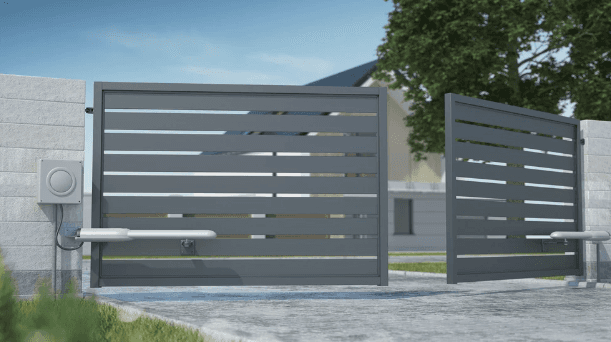
A swing gate opener automates a gate that opens like a door. The gate leaf rotates on hinges attached to a post, and the opener powers that movement through a linear arm, articulated arm, or underground motor.
A slide gate opener automates a gate that moves horizontally to one side. The opener drives the gate along a track or cantilever system using rollers and a motorized gear mechanism.
That mechanical difference changes everything else: space needs, foundation work, motor load, opening speed, hardware wear, and suitability for certain site layouts. In practical terms, this is not just a comparison between two opener models. It is a comparison between two different entrance designs.
Swing Gate Openers vs Slide Gate Openers: The Short Answer
If you want the most concise decision framework, use this:
Choose a swing gate opener if your property has enough gate swing clearance, the driveway is mostly level, and you want a classic entrance style for a home or light-use site.
Choose a slide gate opener if your property has limited front clearance, a sloped driveway, a wide opening, or higher daily usage demands.
This is the featured-snippet version of the answer, but it only works if the gate structure, support posts, motor capacity, and safety devices are properly matched to the site.
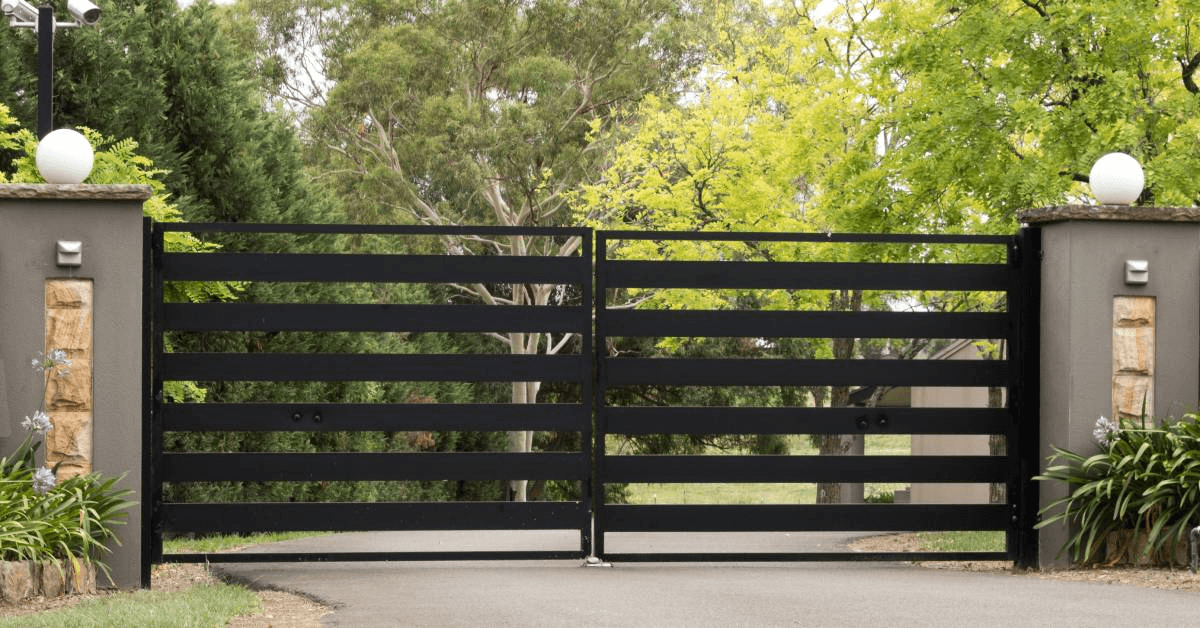
How Swing Gate Openers Work
Swing gate openers apply force to a hinged gate leaf to rotate it open and closed. The system may be installed on a single gate leaf or a double-leaf gate, depending on the opening width and design.
The most common swing gate opener types include:
Linear arm openers, which push and pull the gate directly
Articulated arm openers, which are useful where post geometry is awkward
Underground openers, which are more discreet and often chosen for architectural projects
A swing system can be elegant and effective, but it depends heavily on alignment. The gate hinges, posts, leaf weight, and swing arc all have to work together smoothly. If the gate drags, binds, or lacks proper support, even a strong opener will perform poorly.
For many residential gate opener systems, swing operators remain a popular choice because they offer a traditional appearance and straightforward automation when the driveway conditions are suitable.
How Slide Gate Openers Work
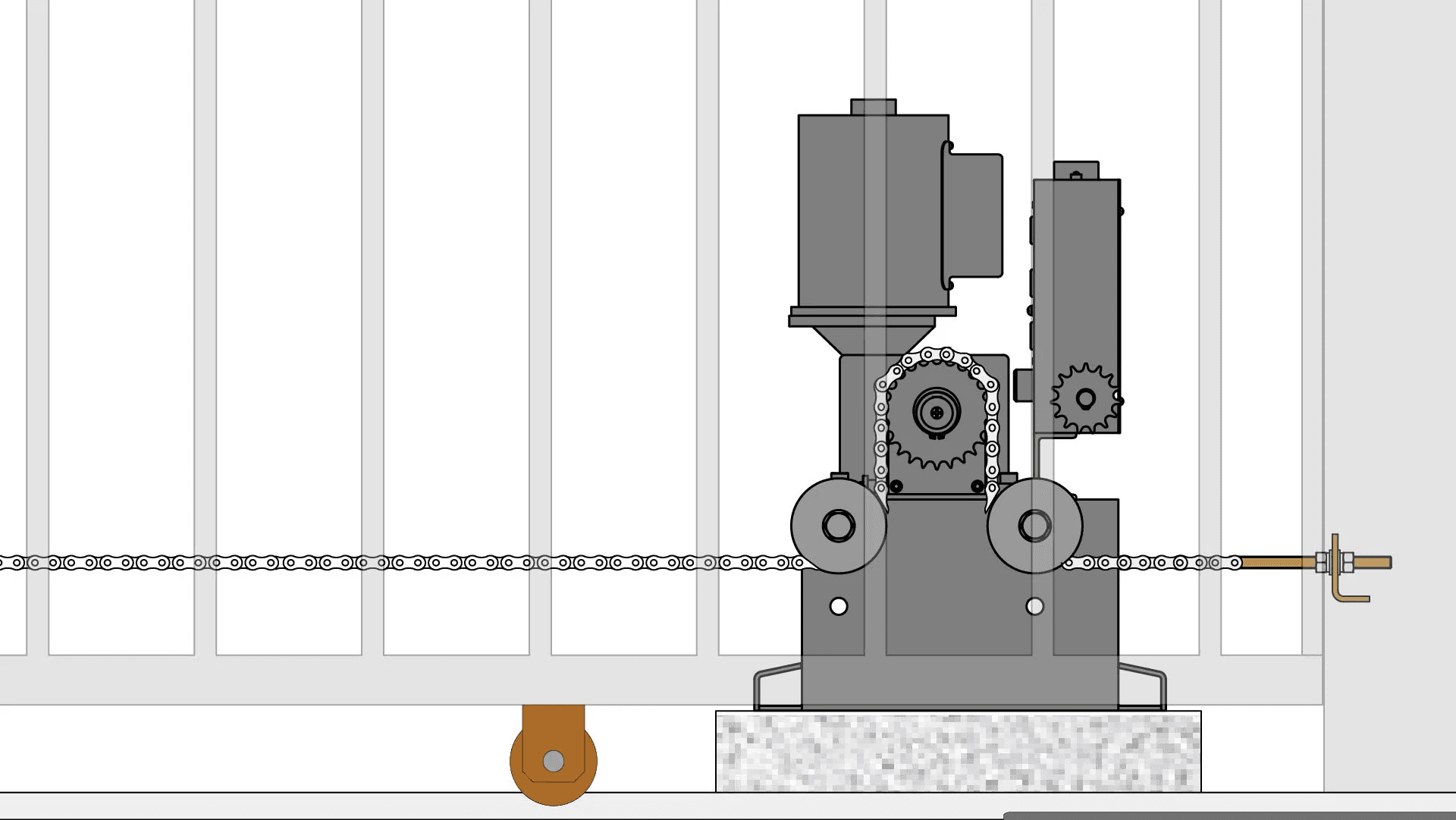
A slide gate opener moves the gate sideways rather than through an arc. Most systems use a motorized gear that engages with a rack attached to the gate. The gate then rolls along a track or operates as a cantilever system if no ground track is used across the opening.
Sliding gate systems are often selected when swing clearance is limited or when the entrance conditions make hinged operation impractical.
A typical sliding gate opener system includes:
a motor unit
gear and rack drive
track or cantilever support
guide rollers
end stops
safety devices and control board
Sliding systems are commonly used in commercial gate opener systems because they can handle wider gates, heavier leaves, and more frequent cycling. They also tend to be more practical where entrance depth is limited.
Which Is Better for Different Property Types?
There is no single winner in the swing gate opener vs sliding gate opener debate. The better choice depends on the property.
Best Gate Opener for Residential Property——CHINA-DEVELOP Manufacturer
For many homes, a swing gate opener is an excellent choice when the entrance is flat, spacious, and designed for a refined residential look. It often suits villas, private homes, and decorative driveway entrances.
However, if the property has a steep approach, limited depth, or a short driveway close to the road, a sliding gate opener may be the safer and more functional option.
Best Gate Opener for Commercial Property
Commercial and industrial sites often lean toward sliding gate systems. The reasons are practical: larger openings, higher traffic, heavier gates, and a stronger need for access efficiency. Sliding gates are often easier to scale for warehouses, logistics sites, factories, and multi-user entrances.
That said, swing systems may still work in lower-traffic commercial settings where space allows and aesthetics matter.
Space and Site Conditions: The Deciding Factors
Site conditions are often the single most important factor in a gate opener comparison.
Swing Gate vs Sliding Gate for Small Driveway
If your driveway is short or the entrance sits close to the road, a swing gate may create clearance issues. The gate needs room to open inward or outward, which can interfere with parked vehicles, landscaping, or public space.
A sliding gate opener is usually the more practical solution for small driveways because the gate moves laterally instead of consuming front or rear clearance.
Swing Gate vs Sliding Gate for Sloped Driveway
Slope is one of the biggest decision points. Swing gates can become difficult to install and operate on rising driveways because the gate arc may conflict with the ground plane. Special hinge geometry or altered swing direction can sometimes solve this, but not always elegantly.
Sliding gates usually perform better on sloped driveways because the gate does not need ground clearance across a swing arc. For this reason, when people ask about the best gate opener for a sloped driveway, the answer often leans toward a sliding system.
Width of Opening
A wide entrance may place more strain on swing gate posts and hinge geometry, especially in windy areas. Sliding gate systems often handle larger openings more effectively, provided the side run-back space is available.
Wind and Exposure
Large solid swing gates can experience more wind load because the leaf acts like a sail as it opens. In exposed sites, this matters. A sliding system may offer better operational stability depending on gate design and local conditions.
Installation Complexity and Structural Requirements
A major difference between swing gate opener installation vs sliding gate opener installation is what the site must physically support.
Swing Gate Opener Installation
Swing gate systems depend on strong posts, properly aligned hinges, and correct geometry between the opener and the gate leaf. Installation may seem simpler because no ground track is required, but precision matters. A small error in post position or leaf alignment can affect the entire operating cycle.
Sliding Gate Opener Installation
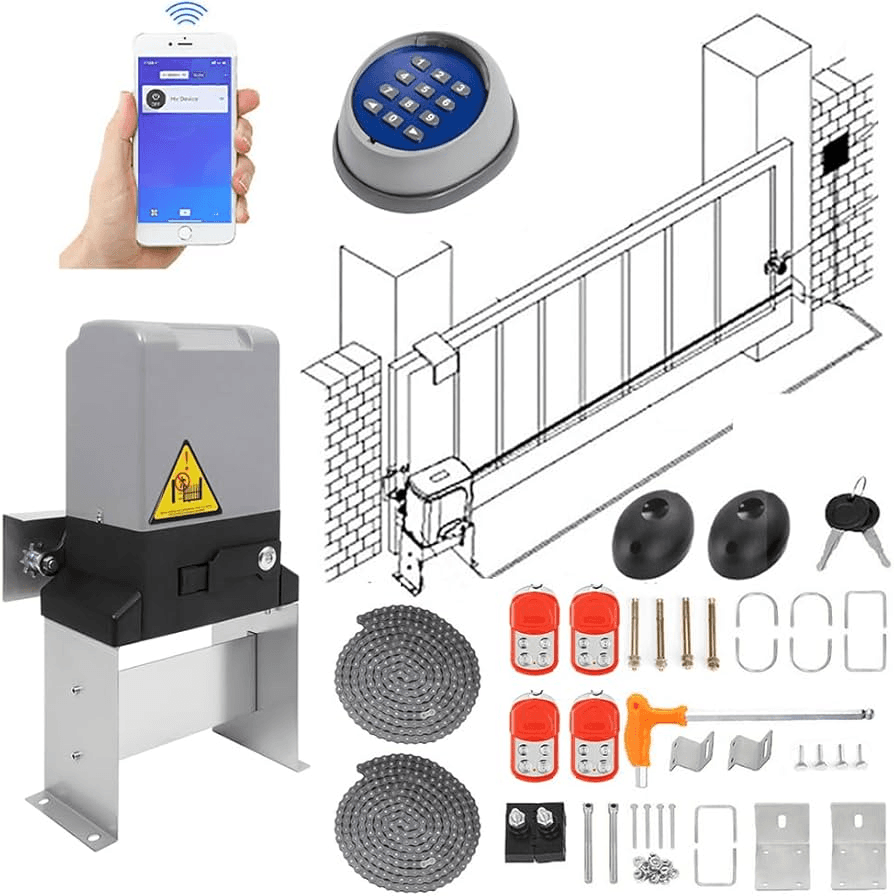
Sliding systems generally require more foundation and hardware preparation. The track, support base, motor mount, and guide system all need stable installation. If it is a cantilever gate, the structural design becomes even more important because the system carries the load without a track across the entrance.
In other words, sliding systems may look mechanically cleaner in operation, but they often ask more of the site preparation phase.
Cost Difference Between Swing and Slide Gate Openers
The cost difference between swing and slide gate openers is not only about the opener itself. It includes the gate structure, civil work, motor size, accessories, and installation labor.
In general terms:
Swing gate systems may be more economical when the site is already suitable and no special ground preparation is needed.
Sliding gate systems may cost more upfront if they require track work, concrete foundation, guide hardware, or cantilever engineering.
Heavy-duty or high-cycle applications can increase costs on either side, especially when industrial-grade motors and advanced access control are needed.
A fair comparison should include the entire system cost, not only the operator price. A lower-cost opener installed on a poor gate structure is rarely the economical choice in the long term.
Maintenance of Swing Gate Openers vs Sliding Gate Openers
Maintenance is where many buyers discover the difference between a workable system and a dependable one.
Swing Gate Maintenance
Swing systems require attention to:
hinges
alignment
motor arm joints
gate sagging
post movement
wind-related strain
When the gate is decorative and relatively light, maintenance can be manageable. But large or poorly supported swing gates place more continuous stress on hinges and posts.
Sliding Gate Maintenance
Sliding systems require attention to:
track condition
rollers or wheel assemblies
rack alignment
motor gear wear
debris accumulation
guide rollers
Track-mounted sliding gates are especially sensitive to dirt, leaves, gravel, or ice buildup. In dirty or industrial environments, that matters. Cantilever systems can reduce some of these issues, but they come with different structural demands.
The best way to evaluate maintenance of swing gate openers vs sliding gate openers is to ask: what will this site expose the system to every day? Clean residential driveways and dusty logistics yards create very different maintenance realities.
Security, Safety, and Access Control Considerations
A gate opener is not just a convenience device. It is part of a property’s access control and perimeter strategy.
Both swing and slide gate systems can support:
remotes
keypads
RFID credentials
video intercoms
GSM access
app-based opening
vehicle detection loops
So from a control perspective, both systems can be highly capable. The difference is often in how they behave under traffic load and environmental conditions.
Safety also matters. Any automatic gate should include appropriately designed safety devices such as photocells, obstacle detection, warning lights, and emergency release features. The gate should move in a predictable, controlled way and respond correctly if a person, vehicle, or obstruction is detected.
From a security standpoint, a sliding gate is often preferred for commercial use because it can be integrated into a more controlled access lane design. For homes, either system can be secure if the structure, locking logic, and access devices are chosen well.
How to Choose the Right Gate Opener for Your Property
A useful way to decide is to work through a simple property-fit checklist.
Choose a Swing Gate Opener If:
your driveway is relatively flat
you have enough swing clearance
the opening is moderate in size
the site is residential or light-use
aesthetics and traditional appearance matter
post and hinge support can be built correctly
Choose a Sliding Gate Opener If:
the driveway is short or space is limited
the site is sloped
the gate opening is wide
the gate is heavy
the system will cycle frequently
the property is commercial, industrial, or multi-user
The best answer is rarely about which opener is “better” in the abstract. It is about which opener is better for your property, your operating conditions, and your long-term maintenance expectations.
Common Mistakes Buyers Make
Many disappointing installations come down to early planning mistakes rather than product defects.
Common errors include:
choosing a swing gate where there is not enough clearance
underestimating the effect of slope
comparing operator prices without comparing full system costs
ignoring traffic volume and duty cycle
automating a poorly built gate structure
overlooking maintenance access
treating access control and safety as add-ons rather than core system requirements
A high-performing gate system starts with correct site analysis. The opener should be selected after the property is understood, not before.
Final Verdict
So, swing gate openers vs slide gate openers: which is better for your property?
For many homes with enough room and level access, a swing gate opener is a practical and visually appealing solution. For properties with tight space, sloped driveways, wide entrances, or demanding traffic conditions, a sliding gate opener is often the smarter choice.
Neither system is automatically superior. The better system is the one that matches the entrance geometry, gate weight, traffic demand, and maintenance reality of the site. When that match is right, the gate works smoothly, lasts longer, and delivers better security and convenience over time.
For property owners, developers, and specifiers, that is the real decision standard: not which gate opener sounds better on paper, but which one is better engineered for the property in front of you.
FAQ
1. Which is better: a swing gate opener or a sliding gate opener?
It depends on the property. Swing gate openers are often better for flat residential sites with enough clearance. Sliding gate openers are usually better for sloped driveways, tight spaces, and higher-traffic properties.
2. Are sliding gate openers more secure than swing gate openers?
Not automatically, but they are often preferred for commercial and controlled-access sites because they integrate well with structured entry lanes and heavy-duty access systems.
3. What costs more: a swing gate opener or a sliding gate opener?
The answer depends on the site and system design. Swing systems can be less expensive on suitable sites, while sliding systems may cost more upfront if extra foundation, track, or structural work is required.
4. Which gate opener is better for a small driveway?
A sliding gate opener is often better for a small driveway because it does not require inward or outward swing clearance.
5. Which gate opener is better for a sloped driveway?
A sliding gate opener is usually better for a sloped driveway because the gate moves sideways rather than through a swing arc that may conflict with the ground.
6. Do swing and sliding gate systems use different maintenance routines?
Yes. Swing systems typically need more attention to hinges, alignment, and arm geometry, while sliding systems often need track, roller, rack, and debris management checks.
Other Blogs