Blog
How Do Automatic Gate Systems Work? A Professional Guide
Author
Xie
Published
Category
Guide
Learn how automatic gate systems work, including motors, sensors, access control, safety devices, and swing vs sliding gate operation.

Author
Xie
An experienced automation specialist with a strong background in motor technology and industrial solutions. With years of expertise in central motors, tubular motors, and automation systems, the author is dedicated to sharing insights that connect engineering innovation with real-world applications. Passionate about advancing reliable, energy-efficient, and high-performance automation products for global markets.
What’s better than insider perks, pro tips, and surprises?
Sign up to get the most recent blog articles in your email every week.
Join now.
WHY I WRITE THIS
About my business
Our company’s main product lines include tubular motors, sliding gate motors, swing gate motors, roller shutter motors, and other door automation solutions, all manufactured by trusted partner factories we have worked with for many years.
Our Services
I help them with sales and export operations, while our company also provides sourcing and procurement services in China to help international clients solve supply-related challenges. If you need assistance with procurement, please feel free to contact us.
Automatic gate systems look simple from the outside: a gate receives a signal, opens, pauses, and closes again. In reality, the process depends on a coordinated set of mechanical parts, electrical controls, safety devices, and access technologies working together in the right sequence.
In the simplest terms, an automatic gate system works by receiving an opening command from a remote control, keypad, sensor, intercom, or access control device. That command is processed by a control board, which activates a motor to move the gate. Sensors and limit settings monitor the gate’s position and help it stop, reverse, or close safely. Whether the gate swings or slides, the principle is the same: controlled motion, monitored for safety, triggered by authorized access.
Key Takeaways
Automatic gate systems use a control board, motor, drive mechanism, and safety devices to automate gate movement.
The system starts when it receives a signal from a remote, keypad, card reader, app, or sensor.
Swing gates rotate on hinges; sliding gates move along a track or cantilever system.
Gate access control systems determine who can open the gate.
Automatic gate safety sensors help prevent collisions, entrapment, and damage.
Choosing the right system depends on gate type, usage frequency, site layout, gate weight, and required security level.
What Is an Automatic Gate System?
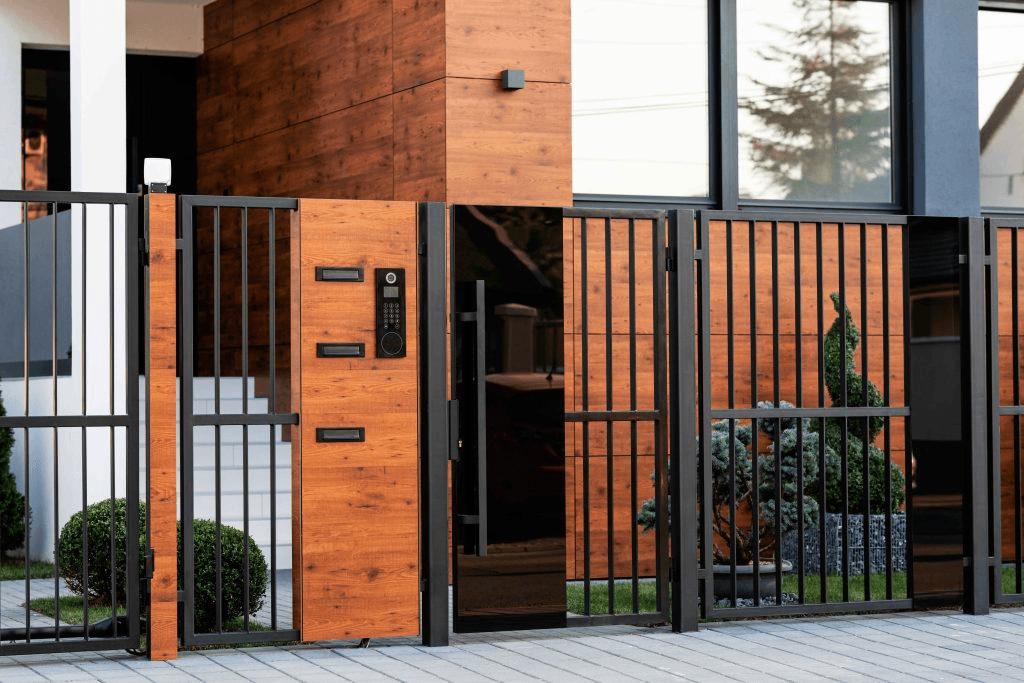
An automatic gate system is a gate fitted with powered opening and closing equipment so that it can operate without manual effort. The system may serve a residential driveway, a commercial property, a warehouse entrance, a logistics yard, or a secured industrial site.
The gate itself is only one part of the solution. A complete system usually includes the physical gate, an operator or motor, a control unit, access devices, safety equipment, and the required hardware to transfer motion from the motor to the gate.
That distinction matters. Many buyers think only in terms of the gate panel, but performance depends just as much on the quality of the automation system behind it.
How Automatic Gate Systems Work: The Short Answer
An automatic gate system works through five basic steps:
A user or device sends an opening command.
The control board verifies the signal and checks safety conditions.
The motor activates and moves the gate through a specific drive mechanism.
Sensors or limit settings tell the system when the gate has reached the open or closed position.
The gate stops, pauses if needed, and then closes automatically or waits for another command.
This sequence may sound straightforward, but each step depends on carefully matched components. If one part is undersized, poorly installed, or misaligned, the system becomes noisy, unreliable, or unsafe.
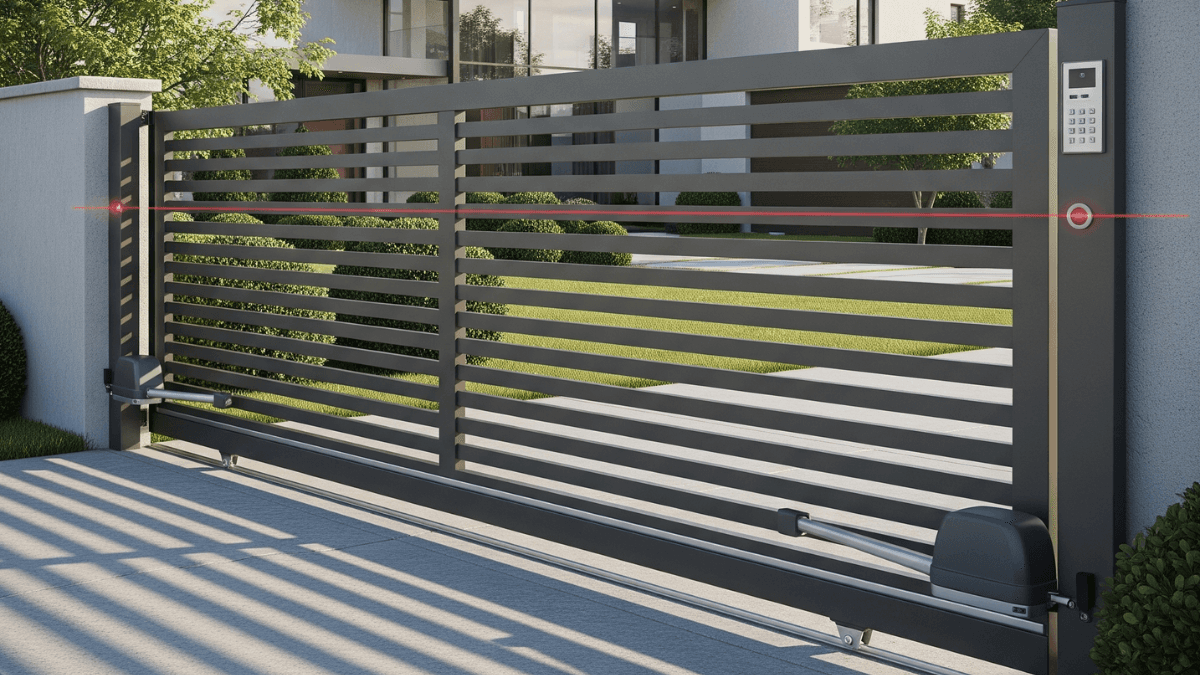
The Main Components of an Automatic Gate System
To understand how an automatic gate works, it helps to break the system into its core components.
Gate Motor
The motor is the power source that moves the gate. It converts electrical energy into controlled mechanical motion. The size and type of motor must match the gate’s weight, length, usage cycle, and opening style.
For lighter residential gates, electromechanical motors are common. For heavier or high-cycle applications, hydraulic systems may be used because they are better suited to frequent operation and demanding environments.
Control Board
The control board is the system’s brain. It receives inputs from remote controls, sensors, timers, and access control devices, then sends commands to the motor and safety features.
A good control board manages opening force, operating speed, pause time, soft start, soft stop, obstacle response, and automatic closing. In modern systems, it may also support diagnostics and integration with smart access platforms.
Drive Mechanism
The drive mechanism transfers the motor’s force to the gate.
For swing gates, that may be an articulated arm, linear actuator, or underground operator.
For sliding gates, it is often a gear motor driving a rack attached to the gate.
The efficiency of this motion depends on alignment, structural stability, and correct installation. Even a strong motor performs poorly if the gate frame is warped or the track is uneven.
Hinges, Track, and Structural Hardware
The gate’s mechanical hardware determines how smoothly it moves.
Swing gates rely on hinges, posts, and correct geometry.
Sliding gates depend on rollers, a track or cantilever support, guide rollers, and stable foundation work.
Poor mechanical preparation is one of the most common reasons an automatic gate system underperforms. Automation cannot compensate for a badly built gate.
Limit Switches or Stop Settings
The system needs to know when the gate is fully open or fully closed. That can be managed through mechanical stops, magnetic limit switches, encoder feedback, or programmed position control.
Without accurate stopping points, the gate may overrun, fail to close properly, or place strain on the motor.
Access Devices
These are the components that tell the system when to open. Common examples include:
remote transmitters
keypads
RFID card readers
telephone entry systems
video intercoms
GSM or app-based access modules
vehicle detection loops
These devices connect to the control board and act as authorized triggers.
Automatic Gate Safety Sensors
Safety devices are essential. Common safety elements include:
obstacle detection
safety edges
loop detectors
emergency release systems
warning lights
Their job is to reduce the risk of collision, entrapment, or uncontrolled operation.
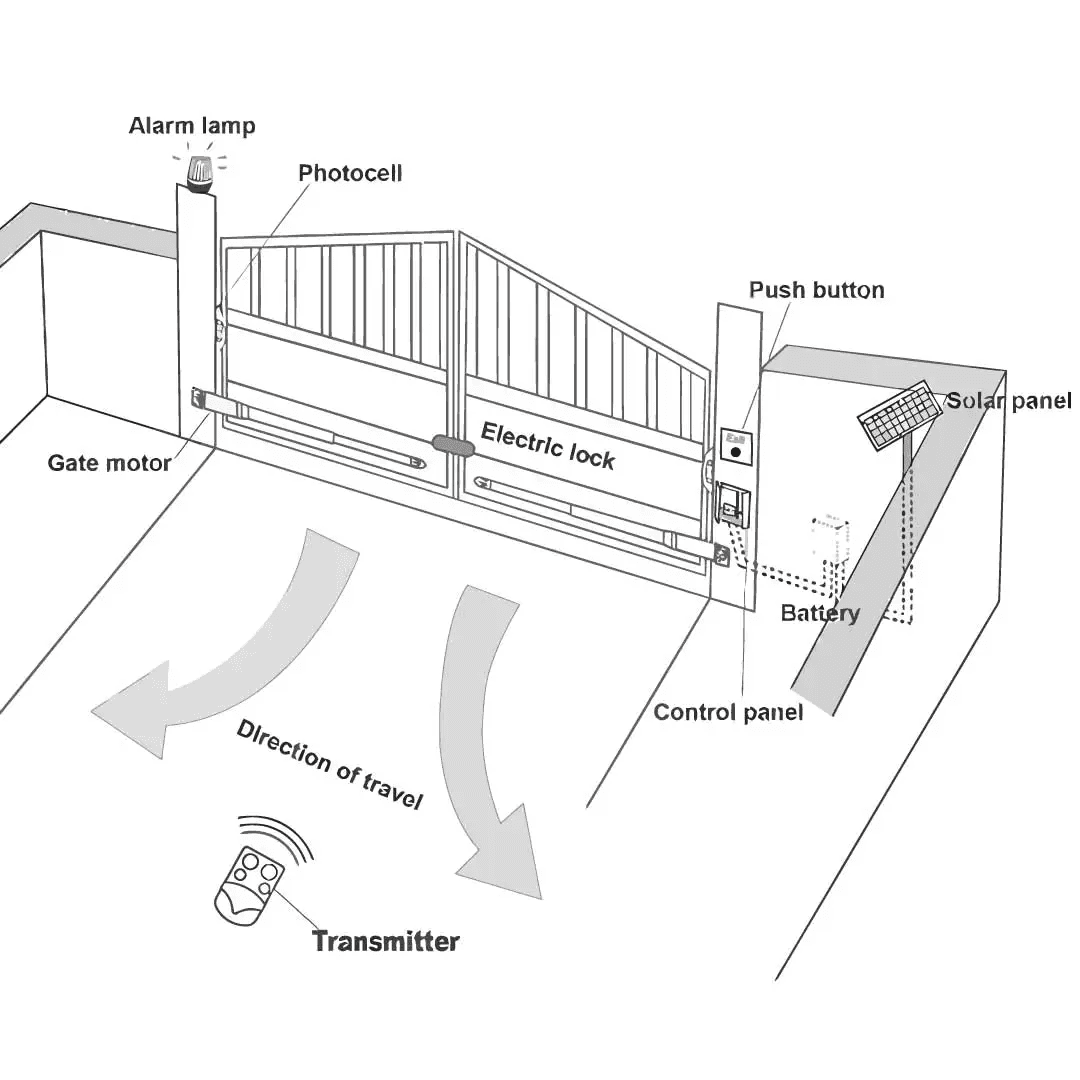
How the Opening and Closing Cycle Works
The easiest way to understand an automatic gate system is to follow one full operating cycle.
A person approaches the gate and presses a remote, enters a code, scans a credential, or triggers a connected access system. The control board receives that command and checks whether the signal is valid. At the same time, it checks whether any safety device is blocking motion.
If conditions are clear, the control board sends power to the motor. The motor then moves the gate through its drive system. As the gate travels, the system monitors force, travel distance, or position limits. Once the gate reaches the programmed open point, it stops.
Depending on settings, the gate remains open until a closing command is received or automatically closes after a delay. During closing, safety devices stay active. If the gate detects an obstacle, the system may stop or reverse.
That is the essential logic behind most automatic gate systems, whether they are installed on a private villa, apartment complex, factory entrance, or industrial yard.
Swing Gate vs Sliding Gate: How the Mechanisms Differ
One of the most important design choices is the gate type itself. Swing and sliding gates operate differently and suit different site conditions.
How Swing Gates Work
Swing gates rotate inward or outward on hinges attached to gate posts. The motor moves the gate leaf through a linear arm, articulated arm, or underground operator.
This design is often chosen for residential driveways because it looks traditional and can be visually elegant. However, it requires clearance for the gate leaf to swing through its arc. That means slope, driveway depth, and obstructions matter.
Swing gates can be single-leaf or double-leaf. Their performance depends heavily on hinge alignment, post strength, and leaf balance.
How Sliding Gates Work
Sliding gates move horizontally along a track or through a cantilever system. A sliding gate motor drives a gear that engages a rack fixed to the gate body.
This is often the better choice when there is limited inward or outward swing space, when the driveway slopes, or when the gate is large and heavy.
The mechanical components of automatic sliding gates usually include:
track or cantilever beam
rollers or wheel assemblies
guide rollers
rack and pinion drive
end stops
motor base and foundation plate
Sliding gates are often favored for commercial and industrial sites because they can handle large openings and frequent use more efficiently.
Types of Automatic Gate Openers
Not all gate openers work the same way. The best system depends on gate size, duty cycle, appearance requirements, and budget.
Electromechanical Gate Openers
These are common in residential and light commercial installations. They use an electric motor and mechanical transmission to move the gate. They are practical, widely available, and generally cost-effective.
Hydraulic Gate Openers
Hydraulic vs electromechanical gate openers is a common buying comparison. Hydraulic systems use fluid pressure to create motion and are often preferred for heavy gates or frequent operation. They can offer smoother performance and higher durability in demanding conditions, though they are typically more expensive.
Linear Arm Openers
These are commonly used on swing gates. A straight actuator pushes and pulls the gate leaf.
Articulated Arm Openers
These are also for swing gates, especially where gate posts are wide or installation geometry is awkward. The articulated arm gives more flexibility in motion.
Underground Gate Openers
These are installed below the gate hinge area, making them visually discreet. They are often selected for premium architectural projects where appearance matters.
Sliding Gate Motors
These drive a toothed rack mounted along the gate. They are standard for automatic sliding gates and are available in different load capacities.
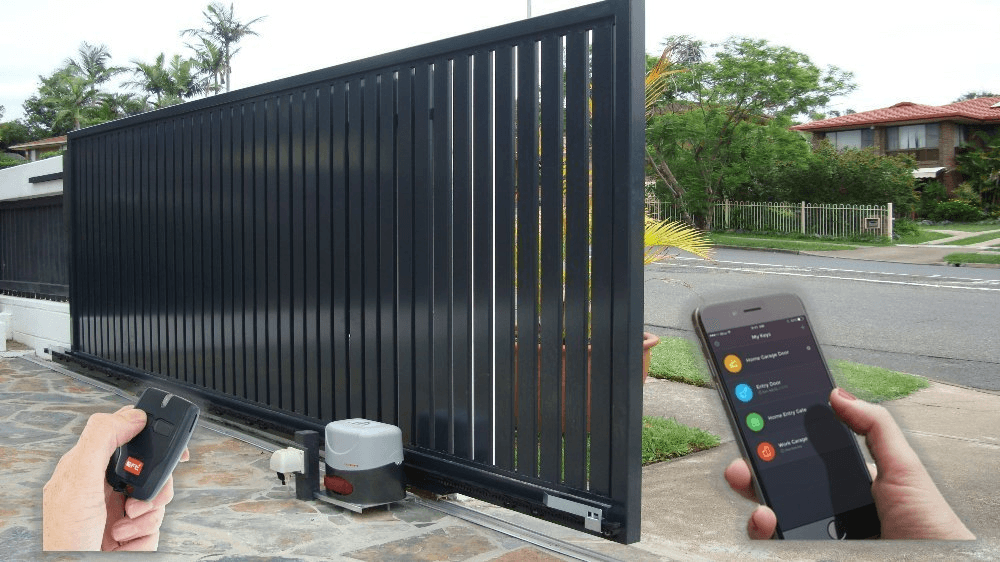
How Gate Access Control Systems Work
Gate access control systems determine who can enter and when. In many projects, this is where automation becomes true security infrastructure rather than simple convenience.
The access device sends a signal to the controller. If the credential is valid, the gate opens. If not, access is denied. More advanced systems can log entry events, restrict access by time, support multiple users, and integrate with CCTV, alarms, or building management systems.
Common access control options include:
remote fobs for residential use
keypad entry for shared sites
RFID cards for staff access
video intercoms for visitor screening
GSM modules for phone-based opening
app-controlled smart access for modern connected systems
For commercial or industrial properties, access control often matters as much as the gate hardware itself.
The Role of Automatic Gate Safety Sensors
Safety is one of the most important parts of any automatic gate system.
How does an automatic gate sensor work?
An automatic gate sensor detects the presence of a person, vehicle, or obstacle and sends a signal to the control system to stop, delay, or reverse movement. The exact method depends on the sensor type.
Photocells
Photocells create an invisible beam across the gate opening. If the beam is interrupted during movement, the system responds to avoid contact.
Obstacle Detection
Many operators monitor resistance or force. If the motor senses unusual resistance, it may stop or reverse because it interprets that resistance as an obstruction.
Safety Edges
These are pressure-sensitive edges fitted to contact points on the gate. If they are compressed, they trigger a stop or reverse signal.
Loop Detectors
Installed in the ground, these detect vehicles through changes in magnetic field. They are often used to hold the gate open while a vehicle is passing.
Good safety design is not optional. It is a core requirement in any professional gate automation project.
Common Problems and Troubleshooting Basics
Even a well-designed gate system can develop faults over time. Troubleshooting electric gate motors and controls often starts with the basics.
Common issues include:
gate does not open or close
motor runs but gate does not move properly
gate stops midway
remote works inconsistently
gate reverses unexpectedly
slow or noisy movement
Typical causes may include:
power supply issues
worn capacitors or motor faults
misaligned photocells
damaged rack or hinges
track obstructions
poorly adjusted limits
control board faults
excessive gate friction
The first rule of troubleshooting is to separate electrical issues from mechanical ones. Many “motor problems” are actually caused by drag, poor alignment, or hardware wear. A gate should move freely before automation is expected to work well.
How to Choose the Right Automatic Gate System
Choosing the right system is less about brand slogans and more about matching the equipment to real operating conditions.
Start with the gate type. Is the site better suited to swing or sliding motion? Then assess:
gate size and weight
daily usage frequency
residential or industrial duty
available opening space
wind exposure
required access control level
safety requirements
maintenance capacity
backup power needs
For a light residential driveway, an electromechanical swing gate opener may be ideal. For a high-traffic facility entrance, a sliding gate with a robust motor, loop detectors, and integrated access control may be the better engineering choice.
A professional system is never just “powerful.” It is properly sized, structurally compatible, safe, and serviceable.
Final Thoughts
Automatic gate systems work by combining controlled mechanical motion with intelligent electrical control. A command is received, the system checks access and safety conditions, the motor moves the gate, and sensors manage travel and stopping. That core logic is simple. The quality of the result depends on how well each part of the system is designed, matched, and installed.
For buyers and specifiers, the most important takeaway is this: a reliable automatic gate system is not only about the opener. It is about the entire operating system around the gate, from structure and motor selection to access control, safety sensors, and maintenance planning.
The better you understand how these systems work, the easier it becomes to choose equipment that performs well, lasts longer, and supports the level of convenience and security your project actually needs.
FAQ
1. How do automatic gate systems open and close?
They open and close when a control board receives a valid signal from a remote, keypad, sensor, or access device and then activates a motor to move the gate. Sensors and limit settings control when the gate stops or reverses.
2. What are the main components of an electric gate system?
The main components usually include the gate structure, motor or operator, control board, drive mechanism, access control device, limit settings, and safety sensors such as photocells or safety edges.
3. What is the difference between a swing gate and a sliding gate?
A swing gate opens on hinges in an arc, while a sliding gate moves sideways along a track or cantilever system. Swing gates need clearance space; sliding gates are often better for tight or sloped entrances.
4. How does an automatic gate sensor work?
An automatic gate sensor detects an obstacle, vehicle, or interruption and sends a signal to the controller. The gate may stop, stay open, or reverse depending on the sensor type and programming.
5. Which is better: hydraulic or electromechanical gate openers?
It depends on the application. Electromechanical openers are common for residential and light commercial use. Hydraulic openers are often better for heavier gates and higher duty cycles.
6. Why is my automatic gate motor running but the gate is not moving properly?
This can happen بسبب mechanical resistance, worn hardware, damaged racks, misalignment, or drive component faults. In many cases, the issue is not the motor itself but the gate’s mechanical condition.
Other Blogs