Blog
Automatic Sliding Door Opener for Pet: A Smart Convenience Guide
Author
Ray
Published
Category
Guide
Learn how an automatic sliding door opener for pets works, what to check for your sliding glass door, and how to keep it safe.

Author
Ray
An experienced automation specialist with a strong background in motor technology and industrial solutions. With years of expertise in central motors, tubular motors, and automation systems, the author is dedicated to sharing insights that connect engineering innovation with real-world applications. Passionate about advancing reliable, energy-efficient, and high-performance automation products for global markets.
What’s better than insider perks, pro tips, and surprises?
Sign up to get the most recent blog articles in your email every week.
Join now.
WHY I WRITE THIS
About my business
Our company’s main product lines include tubular motors, sliding gate motors, swing gate motors, roller shutter motors, and other door automation solutions, all manufactured by trusted partner factories we have worked with for many years.
Our Services
I help them with sales and export operations, while our company also provides sourcing and procurement services in China to help international clients solve supply-related challenges. If you need assistance with procurement, please feel free to contact us.
Key Takeaways
An automatic sliding door opener for pets lets your pet open a sliding door (or sliding glass door) hands-free—usually using a sensor (like RFID/collar tag) or controlled input.
The real difference between products is not just “smart features”—it’s pet safety, reliability, and compatibility with your door track and environment.
Choose based on your pet’s size/behavior, the trigger method (RFID vs motion), and safety behaviors (anti-entrapment, obstacle detection, fail-safe closing).
Plan for installation and setup: measuring your track, calibrating travel distance, and running a safety test before allowing normal use.
The Clear Answer—What It Is and How It Works
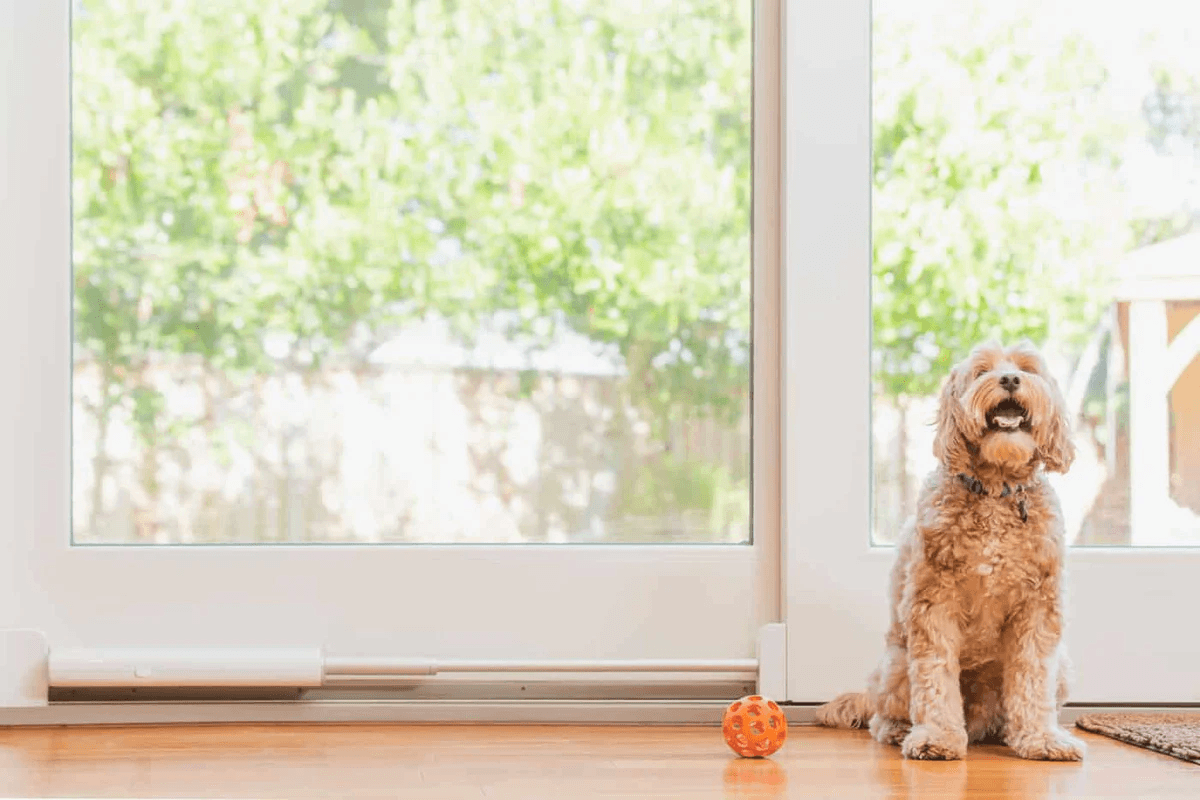
An automatic sliding door opener for pets is a motorized system designed to move your sliding door automatically when your pet is allowed to enter. In most setups, the system detects permission (for example, a collar tag/RFID, a recognized pet ID, or a controlled command) and then opens the door just enough for safe passing. When your pet is done, the system closes according to programmed logic (time delay, sensor re-check, or schedule).
In practical terms: you get hands-free pet access without leaving your sliding door open manually—while the best systems add safety controls to reduce risks like pinch points or accidental opening to unwanted visitors.
Common trigger methods
Different “smart dog door system” concepts use different triggers, and that affects reliability:
Pet ID (RFID/collar tag): The door opens only for recognized pets. This usually performs well in mixed homes.
Keypad / app / remote: Useful if you want more control, but it’s less “fully hands-free.”
Motion-based triggers: Often used for convenience, but can be more prone to false activations from people, shadows, or pets/animals outside.
Multi-factor systems: Some solutions combine an ID method with time schedules or additional conditions.
What happens when it activates
While specifics vary by brand/model, a typical cycle looks like this:
Permission check (pet ID recognized / command received)
Safety check (obstacle detection engaged, travel limits verified)
Door movement (open enough for your pet)
Monitoring (optional: wait until clear, or keep open briefly)
Close logic (close after a set time or based on sensor confirmation)
The “close logic” is important for households where pets might linger or move quickly past the opening.
Types of Automatic Solutions for Sliding Doors
Motorized sliding door opener (hands-free entry)
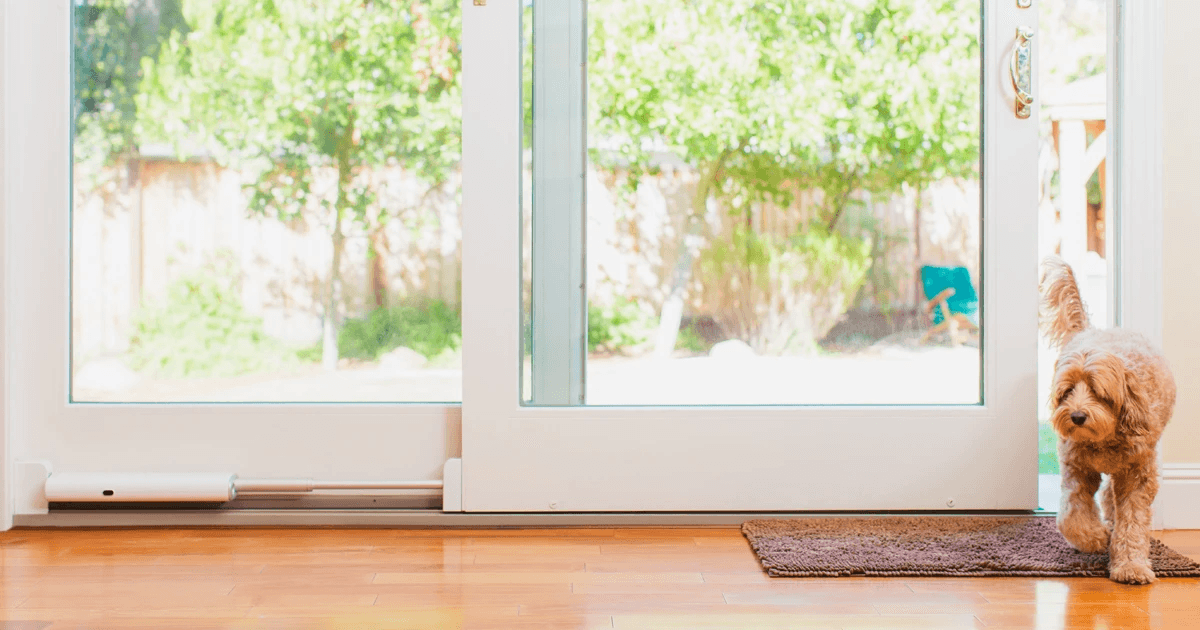
This is the solution most people mean when searching “automatic sliding door opener for pets.” The opener connects to your sliding door’s hardware so the unit can move it reliably along the track. Depending on the model, it may be designed for a specific sliding glass door style, frame thickness, or track geometry.
Strengths:
Works with your existing door setup (no separate panel cutout inside the door)
Often integrates with schedules and pet access control options
Potential tradeoffs:
Requires correct fit and calibration to avoid binding
Weather sealing depends on how your door seals already perform
“Smart dog door” vs sliding-door opener
A “smart dog door” sometimes refers to a separate door panel/door flap designed for pets. If your home already has a sliding door you want to use, a sliding-door opener may be the more direct match.
How to decide:
If you want to keep the sliding glass door as the access point → focus on sliding-door opener compatibility.
If you want a dedicated pet portal independent of the sliding track → explore smart pet doors built into a wall/entry.
Your keyword search includes automatic pet door and pet access door, so it’s normal for results to blend categories. The best approach is to confirm the product physically attaches to (or replaces) the sliding door.
Is It Safe for Dogs and Other Pets?
Safety isn’t a checkbox—it’s the main factor that separates “nice convenience” from “daily use without worry.”
Safety features you should look for
When evaluating an automatic dog door concept for a sliding glass door, prioritize features that reduce injury risk and prevent unwanted behavior:
Obstacle/anti-entrapment behavior
Look for obstacle detection or a stop/reverse behavior if something blocks the path. This matters for pets that approach quickly.Controlled travel limits
The system should open to a designed pass-through distance—enough for the pet, not so far that it creates a large gap.Fail-safe closing logic
If the system loses power or a sensor fails, the system should behave predictably (often “stay secure” or return to a safe state).Pinch-point awareness
Sliding doors inherently create pinch areas. The best systems minimize risky movement speed and provide safety checks during motion.Timeouts and mode controls
Consider “supervised mode,” time windows, or maximum open duration so the door doesn’t stay open indefinitely.
Practical note: If a product doesn’t clearly explain how it handles obstacles and safety stop behavior, treat that as a risk sign—not a minor detail.
Pet comfort matters (speed, noise, weather sealing)
Even with good safety design, pets may avoid a door that feels unpredictable.
Speed: Too fast can startle pets or increase “rush behavior.”
Noise and vibrations: Loud or vibrating motion can cause avoidance—especially for nervous dogs.
Weather sealing: If your sliding door opener is used for indoor-outdoor pet access, drafts and rain can affect comfort.
How to Choose the Right Opener for Your Pet
This is where many generic articles fail: they talk about “smart” features but not about what affects your dog’s everyday experience.
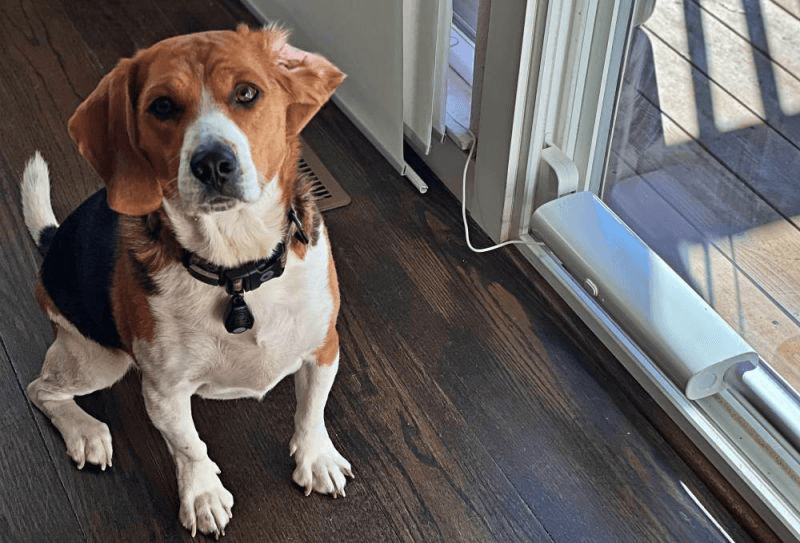
Size + weight limits (small vs large dogs)
Start with product documentation on:
pet size compatibility (height/width passage)
safe load/operation limits for the door and mechanism
travel range for your door
For large dogs, the key is not only whether they can physically pass—it’s whether they can do so without touching the door edges at awkward angles.
Sensor choice: RFID, collar tag, keypad, motion
Sensor type affects both convenience and accuracy:
RFID/collar tag (pet access control): Often the best match for reducing unwanted openings. It’s also helpful when you want the door to ignore other animals outside.
Motion sensors: Can work for some households, but you’ll need to manage sensitivity and understand what the camera/sensor can “see.” Shadows, passing cars, or a cat at the window may trigger the door.
Keypad/app: Most controlled, but less “automatic” for your pet.
If you have multiple pets or visitors, the sensor choice becomes even more important. A good smart dog door system should support reliable identification or clear scheduling logic.
Reliability: minimizing false opens
False openings are more than annoying—they can:
scare your pet
allow other animals in
create security concerns
To minimize false activations:
choose an ID-based trigger if “no strangers allowed” is important
adjust motion detection sensitivity if your system supports it
use schedules for predictable outdoor times (for example, morning/evening access)
Pet Access Control: Preventing Unwanted Entries
If you’ve ever dealt with neighborhood cats, raccoons, or curious dogs near your patio, you already know why “smart” should include control.
Multi-pet households
Look for:
multiple pet profiles/tags
the ability to add/remove tags cleanly
consistent behavior with different pet sizes and approaches
Locking schedules and “supervision mode”
Strong systems often include:
time-based rules (e.g., open only when you’re home or during set hours)
temporary lock or “do not open” mode
a way to close immediately if needed
This kind of control turns an automatic pet door into a pet convenience system rather than a security liability.
Installation on a Sliding Glass Door (What to Check First)
Compatibility determines success. Before buying, check how the system is meant to fit and operate with your specific sliding door.
Measure the track and door movement
For a sliding pet door opener, you should confirm:
track size and condition (smooth track = smoother automation)
whether the door is level and free of binding
the door travel path (how far it moves when opened/closed manually)
where the opener mechanism can safely attach
Tip: A door that is already “a little sticky” manually will often be harder for a motorized system to move smoothly and safely.
Power options and cable routing
Most systems require:
a stable power connection (wired or battery, depending on model)
safe cable routing away from foot traffic and pets
Also consider:
what happens during power outage
how the system resets after reconnecting power
DIY vs professional installation
If you’re comfortable with measuring, drilling, and aligning mechanisms, DIY may be feasible. But if your sliding door is high-value, difficult to access, or the system requires precise mounting alignment, professional installation can reduce the risk of poor travel alignment and safety issues.
A simple rule:
If the installer can’t explain alignment and safety testing clearly, you’re not getting enough support.
Setup After Installation (Calibration + Testing)
Even the best automatic sliding door opener for pets requires setup. Think of it like teaching a machine your door’s “normal behavior.”
Train your pet to use it
For most pets, a short training period prevents frustration.
A simple approach:
Keep the system in a less “automatic” mode at first (if available).
Let your pet observe and approach the doorway.
Use supervision during the first sessions.
Reward calm behavior and normal passing.
If your pet rushes, consider slowing movement (if adjustable) or using a shorter open duration.
Run a safety checklist test
Before you leave your pet alone with the door:
test open/close multiple times
verify no unusual resistance (binding)
test obstacle behavior by carefully placing a non-living object in the path (only as allowed by the manufacturer)
confirm the door closes reliably after the open cycle
check for any gaps that seem wider than necessary
If anything seems inconsistent, resolve it before normal daily use.
Quiet, Daily-Friendly Operation
A sliding-door opener needs to feel predictable. Noise and vibration can be enough for some pets to avoid using it.
Reducing noise and vibrations
You can often improve comfort by:
ensuring the sliding track is clean and properly lubricated (only use recommended lubricants)
confirming the door is aligned and not dragging
checking that the opener mechanism is firmly mounted without looseness
adjusting movement speed and timing if the system supports it
Even small calibration changes can make a big difference in whether your dog treats it as “their door” or “a scary machine.”
Maintenance and Troubleshooting
To keep an automatic pet door functional, treat it like any other moving system: it needs attention.
Common issues and fixes
Here are common categories of problems owners report with smart door mechanisms, plus how to think about them:
Door opens inconsistently
likely causes: sensor misread, sensitivity too low/high, pet approach angle, tag recognition problems
what to do: retest with controlled approach; check tag battery; verify sensor alignment
Door stops mid-travel
likely cause: obstacle detection engaged (even unintentionally), binding track, misalignment
what to do: inspect track smoothness; confirm travel limits; check mounting alignment
Door won’t close
likely cause: time logic or sensor condition not satisfied
what to do: confirm close delay settings; review safety logic in the manual
Strange noises
likely cause: loose mounting, worn components, track friction
what to do: check mounts; clean track; follow manufacturer maintenance guidance
If your system is behavior-driven (RFID/motion schedules), always troubleshoot settings first—don’t assume the motor is failing.
Best Practices for Indoor–Outdoor Pet Access
To make indoor-outdoor pet access smooth (and safe), build routines and reduce variables.
Weatherproofing considerations
Even if the opener works perfectly, your pet’s comfort depends on weather and drafts. Consider:
how your sliding door seals
whether the opener leaves larger-than-needed gaps
whether rain or wind affects your door’s performance
If your area gets heavy weather, ensure the product supports outdoor-rated operation and that the door’s seals are in good condition.
Preventing escape and “door dashing”
Some pets learn quickly and may rush through. Strategies:
use shorter open duration
consider a “close immediately after pass” setting if available
increase training and reward calm approaches
if your dog is energetic, supervise until the behavior is consistent
The goal isn’t to restrict natural movement—it’s to reduce risky, chaotic interactions with door edges.
Featured-Snippet Checklist: Before You Buy
Use this quick checklist to decide whether an automatic sliding door opener for pets will work for your specific setup:
Before purchasing, confirm:
Compatibility: The opener is designed for your sliding door type and track dimensions.
Pet fit: Your pet can pass comfortably without squeezing or touching edges.
Safety features: Obstacle/anti-entrapment behavior is clearly stated.
Trigger accuracy: Prefer pet ID (RFID/collar tag) if you want fewer false openings.
Weather readiness: Sealing and outdoor operation match your climate.
Installation support: You can mount and calibrate travel limits correctly.
Close reliability: The door closes predictably according to the safety logic.
If you can’t confidently verify these points, it’s worth reconsidering—or buying only from a vendor that provides clear technical documentation and support.
FAQ
1) How does an automatic pet door opener for a sliding glass door work?
It uses a motorized mechanism to move your sliding door when a trigger is detected—commonly a pet ID system (RFID/collar tag), a keypad/app command, or a motion trigger. Good systems also include safety logic that stops movement if an obstacle is detected and then closes the door based on a set time or sensor-confirmed conditions.
2) Are automatic sliding door openers safe for dogs?
They can be safe when they include clear safety behavior such as anti-entrapment/obstacle detection, controlled travel limits, predictable close logic, and fail-safe behavior. Always test the system under supervision before allowing unsupervised use, and choose a setup that explains safety features clearly.
3) What’s the best automatic sliding door opener for dogs?
The “best” option depends on your dog’s size, temperament, and how you want access control handled. In many households, an ID-based trigger (RFID/collar tag) reduces false openings compared with motion-only approaches—especially if you want indoor-outdoor pet access without inviting wildlife or neighbors’ pets.
4) Can an automatic dog door opener be quiet?
Many systems are designed to be discreet, but “quiet” depends on your door track condition and mounting alignment. Keeping the track smooth and ensuring stable mounting can reduce vibrations and noise. If noise is a concern, look for adjustable speed settings and clear information on operation noise levels (or video demonstrations if available).
5) Will a sliding pet door opener work for large dogs?
It can, but you must confirm three things: passage clearance (fit), the system’s safe operation limits (door hardware load and travel), and whether the open distance is large enough for comfortable entry without the dog contacting edges. Large dogs also benefit from careful calibration and shorter, more controlled open durations.
6) What is a motion sensor pet door, and is it reliable?
A motion sensor pet door opens based on detecting movement near the door. It can be convenient, but it may be less reliable in environments with shifting light, reflections, or other animals. For stronger pet safety and access control, an ID-based trigger is often more dependable.
Conclusion
An automatic sliding door opener for pets is more than a convenience upgrade—it’s a small “automation system” that affects safety, comfort, and home security. The difference between a smooth, daily experience and a frustrating one usually comes down to four practical areas: compatibility with your sliding door, pet trigger accuracy, safety behavior during motion, and how reliably the door opens and closes in real life (not just in product demos).
If you approach selection like an engineer and a pet parent—checking safety features, sensor behavior, and installation/calibration needs—you’ll be far more likely to get a smart solution your dog actually uses confidently.
Other Blogs