Blog
Industrial Sectional Door Operators: How to Choose the Right Solution for Your Facility
Author
Ray
Published
Category
Industrial Sectional Door Motor
Learn how to choose industrial sectional door operators for warehouses, factories, and commercial facilities. Compare door size, weight, duty cycle, installation, safety, and OEM requirements.


Author
Ray
An experienced automation specialist with a strong background in motor technology and industrial solutions. With years of expertise in central motors, tubular motors, and automation systems, the author is dedicated to sharing insights that connect engineering innovation with real-world applications. Passionate about advancing reliable, energy-efficient, and high-performance automation products for global markets.
What’s better than insider perks, pro tips, and surprises?
Sign up to get the most recent blog articles in your email every week.
Join now.
WHY I WRITE THIS
About my business
Our company’s main product lines include tubular motors, sliding gate motors, swing gate motors, roller shutter motors, and other door automation solutions, all manufactured by trusted partner factories we have worked with for many years.
Our Services
I help them with sales and export operations, while our company also provides sourcing and procurement services in China to help international clients solve supply-related challenges. If you need assistance with procurement, please feel free to contact us.
Industrial sectional doors are widely used in manufacturing plants, warehouses, logistics centers, workshops, distribution facilities, and other commercial buildings. These doors provide large clear openings while helping separate indoor and outdoor areas, control vehicle access, and improve operational flow.
However, choosing an industrial sectional door operator is not simply a matter of selecting a motor with enough power. The right operator depends on the door size and weight, operating frequency, installation configuration, available power supply, control requirements, safety devices, and the overall mechanical condition of the door.
For facility managers, door manufacturers, installers, distributors, and industrial equipment buyers, understanding these factors can help avoid undersized operators, unnecessary costs, and compatibility problems.
What Is an Industrial Sectional Door Operator?
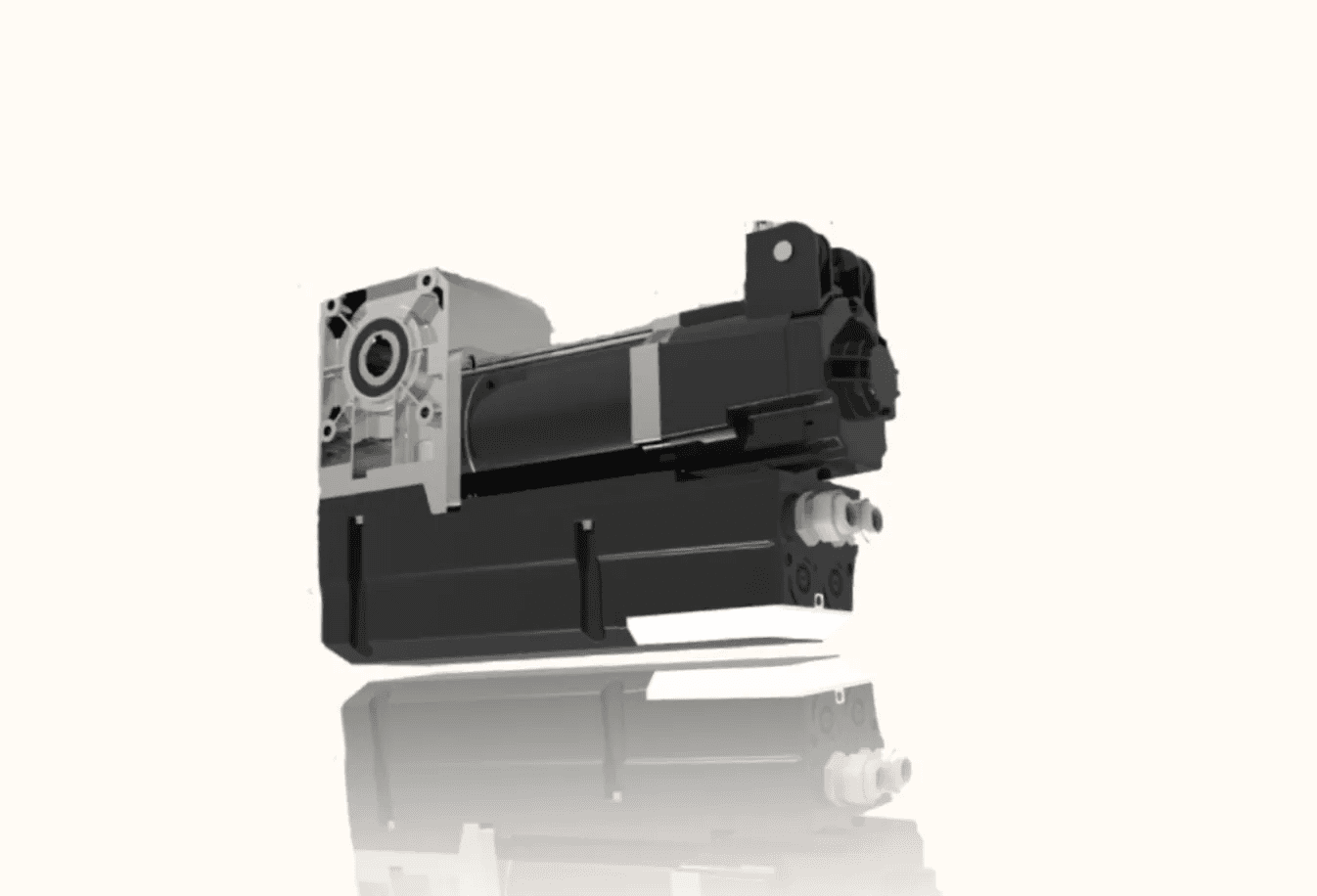
An industrial sectional door operator is a motorized system designed to open and close sectional doors used in industrial, commercial, and other demanding environments.
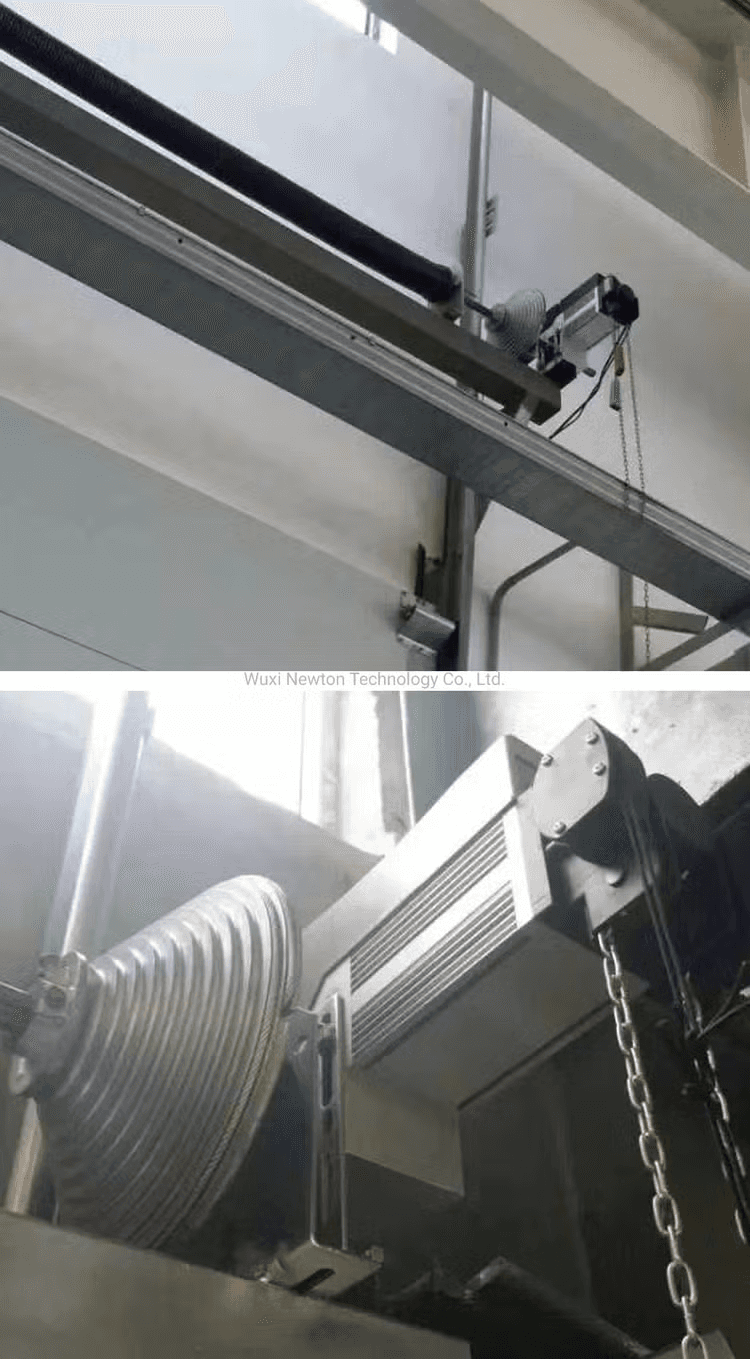
Unlike a manual door system, the operator converts electrical energy into mechanical movement and transfers torque to the door's drive mechanism. Depending on the design, the operator may be mounted directly to the door shaft or connected through a suitable transmission system.
A typical system may include:
Electric motor
Gearbox
Drive shaft or output mechanism
Control unit
Limit or position control
Push-button or wall control
Remote-control receiver
Photocells or other safety devices
Emergency or manual release mechanism
The operator itself is only one part of the complete door system. The tracks, springs, rollers, cables, shaft, and other mechanical components must also be correctly designed, installed, and maintained.
Where Are Industrial Sectional Door Operators Used?
Industrial sectional door operators are suitable for facilities where large sectional doors need reliable powered operation.
Industrial Halls
Production halls often have large doors for moving machinery, raw materials, finished products, or vehicles.
In these environments, the operator may need to accommodate:
Large door dimensions
Frequent opening and closing
Heavy door construction
Industrial control requirements
Limited operational downtime
Warehouses
Warehouse doors are frequently used by forklifts, trucks, and other material-handling equipment.
An appropriate operator can help support smooth traffic flow between storage areas, loading zones, and external access points.
Logistics and Distribution Centers
Distribution facilities can have multiple sectional doors operating throughout the day. Operator selection therefore needs to consider expected operating cycles and the facility's traffic pattern rather than door dimensions alone.
Manufacturing Facilities
Manufacturing plants may require sectional doors between production areas, workshops, storage zones, and vehicle-access areas.
Depending on the application, the operator may need to integrate with access-control systems, safety equipment, or other building controls.
Workshops and Service Buildings
Vehicle workshops, maintenance facilities, and equipment service centers commonly use sectional doors because they provide wide openings for vehicles and equipment.
How Does an Industrial Sectional Door Operator Work?
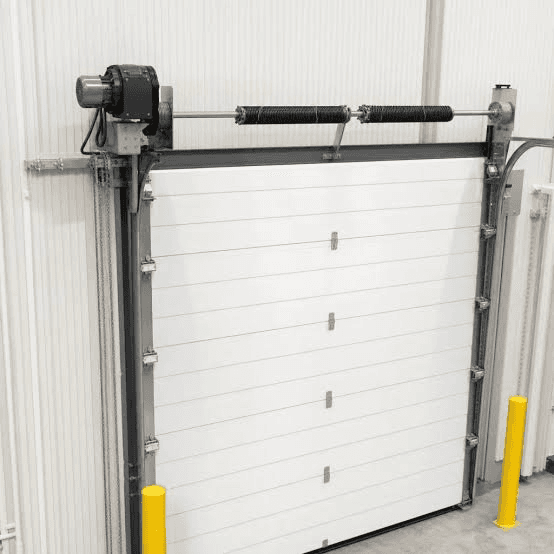
The basic operating process can be understood as:
Control Command → Control System → Motor → Gearbox → Drive Mechanism → Sectional Door
When an opening command is received, the control system activates the motor. The motor generates rotational force, which is transmitted through the gearbox and output mechanism to move the sectional door.
During closing, the same system controls the reverse movement until the door reaches its defined position or a safety device interrupts operation.
The exact mechanism varies between operator designs, so buyers should always check the manufacturer's technical documentation for compatibility with the intended door system.
What Should You Consider When Choosing an Industrial Sectional Door Operator?
Selecting an operator based only on motor power can lead to an unsuitable configuration. A more reliable selection process considers the entire door system.
Door Size
The width and height of the sectional door are basic specifications that must be established before selecting an operator.
A larger door generally creates different mechanical and operational requirements from a small commercial door. However, door area alone does not determine the required operator.
The door construction, weight, balance, lifting mechanism, and operating frequency also matter.
Door Weight
Door weight is one of the most important factors in operator selection.
Two sectional doors with identical dimensions may require different operators if their construction and weight are different.
When requesting an operator from a manufacturer, provide the approximate door weight whenever possible rather than supplying only the door dimensions.
Door Balance and Mechanical Condition
A properly balanced sectional door should move smoothly through its operating range.
The operator should not be expected to compensate for:
Damaged springs
Misaligned tracks
Excessive roller resistance
Damaged cables
Mechanical obstruction
Poor door balance
Before installing a new operator, the mechanical condition of the door should therefore be checked.
A correctly specified operator cannot solve an underlying mechanical problem with the door.
Operating Frequency
Operating frequency is particularly important in industrial applications.
A door that opens and closes several times per day has different requirements from a door used continuously throughout a busy warehouse.
When evaluating an operator, determine the expected:
Cycles per day
Cycles per hour
Operating duration
Peak traffic periods
The operator should be selected according to its intended duty requirements and manufacturer's specifications.
Available Installation Space
Installation conditions can significantly affect operator selection.
Before ordering, check:
Side room
Headroom
Shaft location
Mounting points
Door structure
Available space around the operator
A technically suitable motor may still be unsuitable if there is insufficient space for installation or maintenance.
Power Supply
The available electrical supply must match the operator's requirements.
Depending on the market and model, industrial door operators may be designed for different electrical configurations.
Buyers should confirm:
Voltage
Phase
Frequency
Motor rating
Control voltage
These details should be confirmed before production or shipment, particularly for international OEM projects.
What Types of Industrial Sectional Door Operators Are Available?
Different industrial facilities can require different operator configurations.
Side-Mounted Sectional Door Operators
Side-mounted operators are commonly used when the operator needs to be installed near the door shaft.
They can be suitable for industrial sectional doors where the available installation configuration allows direct or appropriate mechanical transmission.
Shaft-Mounted Door Operators
Shaft-mounted configurations transfer the operator's output directly through the door shaft or a compatible drive arrangement.
This can provide a compact solution for certain sectional door designs.
High-Duty Industrial Door Operators
Facilities with frequent door operation may require an operator designed for higher operating duty.
Rather than focusing only on maximum motor output, buyers should review the manufacturer's specified duty cycle, thermal characteristics, operating limits, and recommended application.
Industrial Sectional Door Operator vs. Residential Garage Door Opener
Although both systems automate overhead doors, they are not necessarily interchangeable.
Factor | Industrial Sectional Door Operator | Residential Garage Door Opener |
|---|---|---|
Typical application | Factories, warehouses, workshops | Residential garages |
Door requirements | Often larger and heavier | Usually smaller |
Operating frequency | Application-dependent, potentially high | Generally residential use |
Control integration | Often broader | Usually simpler |
Installation environment | Industrial/commercial | Residential |
Selection factors | Door weight, cycles, configuration, controls | Door size, weight, residential requirements |
The correct choice should always be based on the actual door system and operating requirements.
What Safety Features Should an Industrial Door Operator Have?
Safety should be considered as part of the complete door system rather than treated as an optional feature.
Depending on the application and applicable regulations, an industrial sectional door system may incorporate:
Photocells
Photoelectric sensors can detect an object or person in the door opening and provide a signal to the control system.
Safety Edge
A safety edge can detect contact or pressure at the door's closing edge and trigger the configured safety response.
Emergency Stop
Industrial facilities may require emergency-stop controls that allow operators to interrupt door movement quickly.
Manual Release
A manual release mechanism can allow the door to be operated manually under specified conditions, such as a power failure.
Limit and Position Control
Limit controls determine the door's operating positions and help prevent movement beyond the configured opening and closing limits.
The exact safety configuration should be selected according to the door design, application, local requirements, and operator manufacturer's specifications.
How to Select the Right Operator for Your Facility
A practical selection process can be completed in several steps.
Step 1: Measure the Door
Record:
Door width
Door height
Approximate weight
Door construction
Shaft dimensions
Step 2: Check the Door Mechanism
Inspect the:
Tracks
Rollers
Springs
Cables
Shaft
Balance
The door should operate correctly before the operator is installed.
Step 3: Estimate Operating Cycles
Determine how frequently the door will be used during normal and peak periods.
For example, a warehouse door used dozens of times per day may have different requirements from a maintenance building opened only a few times daily.
Step 4: Confirm Installation Conditions
Measure available:
Headroom
Side room
Mounting area
Shaft position
Step 5: Confirm Electrical Requirements
Provide the required:
Voltage
Phase
Frequency
Power supply configuration
Step 6: Define Control Requirements
Determine whether the door needs:
Push-button control
Remote control
Keypad access
Photocells
Safety edge
External access control
Building-management integration
Step 7: Confirm Applicable Standards and Certifications
For international projects, confirm which certifications and technical requirements apply to the destination market.
Do not assume that one certification automatically satisfies every country's requirements.
Common Problems with Industrial Sectional Door Operators
Understanding common problems can also help buyers select the correct system.
Problem | Possible Cause | What to Check |
|---|---|---|
Door does not open | Power or control problem | Power supply and control input |
Door stops during operation | Obstruction or excessive resistance | Door movement and safety devices |
Door moves unevenly | Mechanical problem | Tracks, rollers, springs, balance |
Motor becomes hot | Excessive load or operating frequency | Door resistance and duty requirements |
Door does not fully close | Position/limit setting | Limit system and door opening |
Remote control does not respond | Remote or receiver issue | Battery, receiver, signal |
Door movement is noisy | Mechanical wear or alignment issue | Gears, rollers, tracks, mounting |
These symptoms do not necessarily identify one specific fault. A qualified technician should inspect the complete system before replacing the operator.
What Should B2B Buyers Ask a Sectional Door Operator Manufacturer?
For distributors, door manufacturers, contractors, and project buyers, the right supplier evaluation goes beyond product price.
Before placing an order, consider asking the manufacturer for:
Technical datasheet
Applicable door size and weight range
Recommended operating cycles
Motor and gearbox specifications
Electrical requirements
Mounting configuration
Control-system options
Safety-device compatibility
Available certifications
Installation instructions
Spare-parts availability
Warranty terms
OEM/ODM capabilities
Production lead time
Packaging specifications
For international projects, also confirm whether the manufacturer can provide documentation required for customs, installation, certification, or local compliance.
Why Choose an OEM Sectional Door Operator Manufacturer?
OEM purchasing can be useful for distributors, garage door manufacturers, system integrators, and regional brands that need products configured for their own market.
Depending on the manufacturer, OEM services may include:
Product configuration
Brand labeling
Customized housing or appearance
Control-system configuration
Voltage customization
Packaging
User manuals
Product documentation
Accessory configuration
However, OEM capability should be evaluated based on actual engineering and manufacturing capabilities rather than simply whether a supplier accepts a custom logo.
For industrial door projects, technical compatibility should remain the first consideration.
Industrial Sectional Door Operators from CHINA-DEVELOP
For industrial sectional door projects, CHINA-DEVELOP provides motorized door solutions designed for commercial and industrial applications.
The TORQEN product range includes industrial sectional door motor solutions such as the LION35, LION50, and LION70 series. For project-based purchasing, the appropriate model should be selected according to the actual door configuration, load requirements, operating frequency, installation conditions, and control requirements.
For distributors, sectional door manufacturers, contractors, and industrial project buyers, technical information should be confirmed before ordering so that the operator configuration matches the complete door system.
Need Help Selecting an Industrial Sectional Door Operator?
Before requesting a quotation, prepare the following information:
Door width × height
Approximate door weight
Door type and construction
Shaft size
Expected cycles per day
Available power supply
Installation configuration
Destination market
Required control and safety accessories
Providing these details allows the manufacturer to evaluate the application more accurately and recommend a suitable operator configuration.
Contact CHINA-DEVELOP for an industrial sectional door operator solution tailored to your door system and project requirements.
Frequently Asked Questions
What is an industrial sectional door operator?
An industrial sectional door operator is a motorized drive system designed to automate the opening and closing of sectional doors in industrial, commercial, warehouse, and similar facilities.
How do I choose an industrial sectional door operator?
Consider the door's dimensions, weight, mechanical balance, operating frequency, installation space, power supply, control requirements, and safety configuration. The operator should be selected according to the complete door system rather than motor power alone.
Can an industrial sectional door operator be used for a warehouse?
Yes. Industrial sectional door operators are commonly used for warehouse access, loading areas, logistics facilities, and other applications where powered sectional doors are required.
What is the difference between a sectional door operator and a garage door opener?
The terminology varies by market, but industrial sectional door operators are generally selected for commercial or industrial door systems with application-specific requirements, while residential garage door openers are primarily designed for residential garage applications.
How many times can an industrial sectional door open per day?
There is no single number that applies to every operator. The appropriate operating frequency depends on the specific model's rated duty requirements and the application. Buyers should confirm the manufacturer's specifications before selecting an operator.
Can sectional door operators be customized for OEM projects?
Many manufacturers provide OEM or ODM services, which may include product configuration, branding, packaging, control options, and other project-specific requirements. The available customization depends on the manufacturer's engineering and production capabilities.
What information should I provide when requesting a quotation?
Provide the door dimensions, approximate weight, door type, shaft configuration, expected operating cycles, power supply, installation conditions, destination market, and required control or safety functions. This information helps the manufacturer evaluate the appropriate operator configuration.
Can an industrial sectional door operator work during a power failure?
Some systems can provide manual operation or an emergency-release mechanism during a power failure. The exact method depends on the operator design and installation configuration, so the manufacturer's documentation should be checked for the specific model.
Other Blogs