Blog
What Size Garage Door Opener Do I Need? 1/2 HP vs 3/4 HP vs 1 HP
Author
Ray
Published
Category
Automatic Door Opener
Learn what size garage door opener you need. Compare 1/2 HP vs 3/4 HP vs 1 HP and choose the right power for your door size, weight, and usage.

Author
Ray
An experienced automation specialist with a strong background in motor technology and industrial solutions. With years of expertise in central motors, tubular motors, and automation systems, the author is dedicated to sharing insights that connect engineering innovation with real-world applications. Passionate about advancing reliable, energy-efficient, and high-performance automation products for global markets.
What’s better than insider perks, pro tips, and surprises?
Sign up to get the most recent blog articles in your email every week.
Join now.
WHY I WRITE THIS
About my business
Our company’s main product lines include tubular motors, sliding gate motors, swing gate motors, roller shutter motors, and other door automation solutions, all manufactured by trusted partner factories we have worked with for many years.
Our Services
I help them with sales and export operations, while our company also provides sourcing and procurement services in China to help international clients solve supply-related challenges. If you need assistance with procurement, please feel free to contact us.
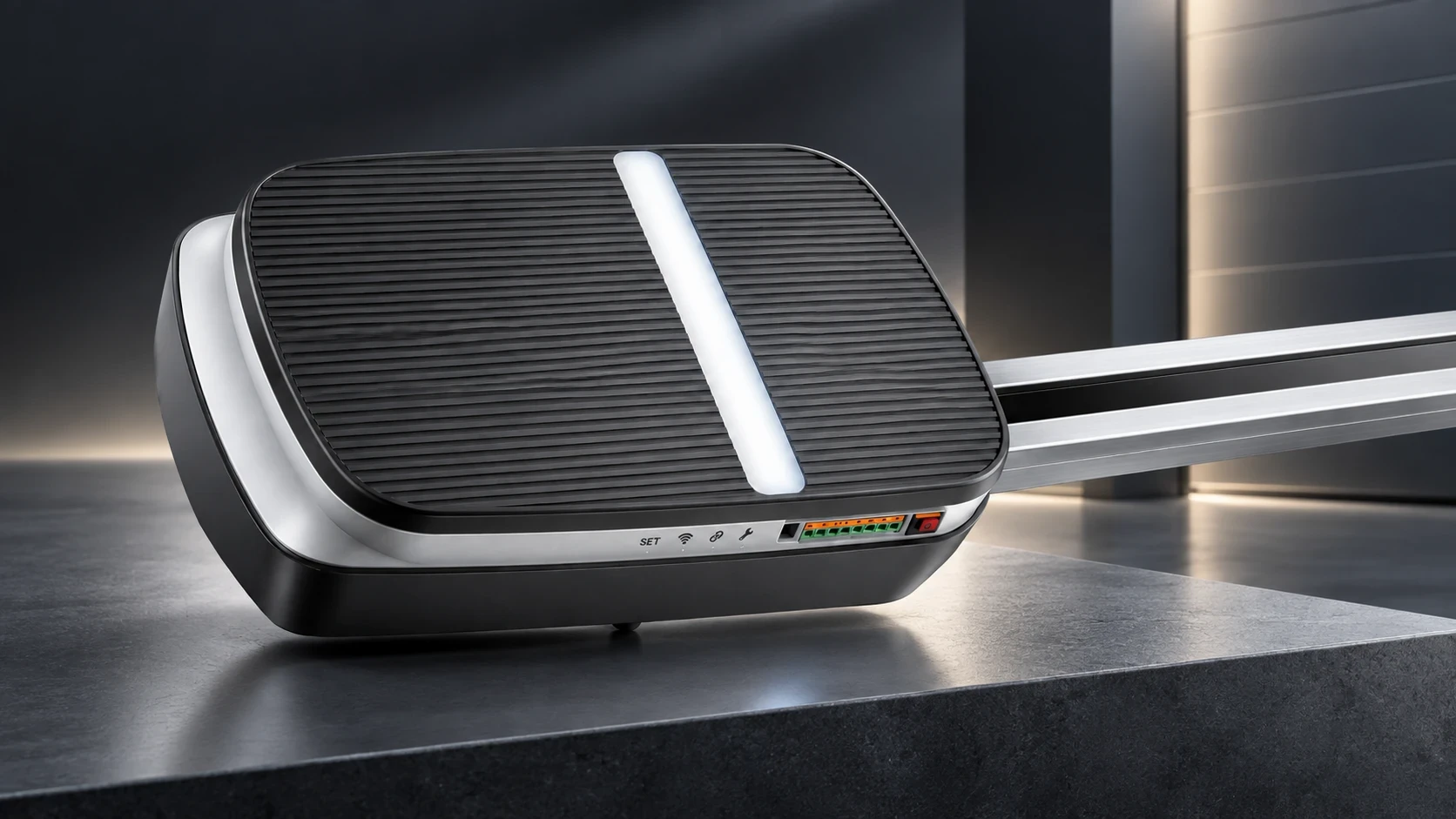
Choosing the right garage door opener is not simply a matter of buying the most powerful motor available. The correct opener should match the garage door's size, weight, construction, balance, operating frequency, and drive system.
For many residential applications, 1/2 HP, 3/4 HP, and 1 HP are the most commonly compared power classes. A 1/2 HP garage door opener is often suitable for standard residential sectional doors, while 3/4 HP provides additional lifting capacity for heavier or more frequently used doors. A 1 HP opener is generally considered for larger, heavier, or more demanding applications.
However, horsepower alone does not determine whether an opener is suitable.
A properly balanced garage door should already have most of its weight counterbalanced by the spring system. The opener is designed to move the door smoothly rather than compensate for a damaged spring or badly balanced door. DASMA specifically states that choosing a more powerful opener is not the correct solution for a garage door that feels unusually heavy.
This guide explains the differences between 1/2 HP, 3/4 HP, and 1 HP garage door openers, how to match opener power to different garage doors, and what homeowners, installers, distributors, and professional buyers should consider before making a selection.
What Size Garage Door Opener Do I Need?
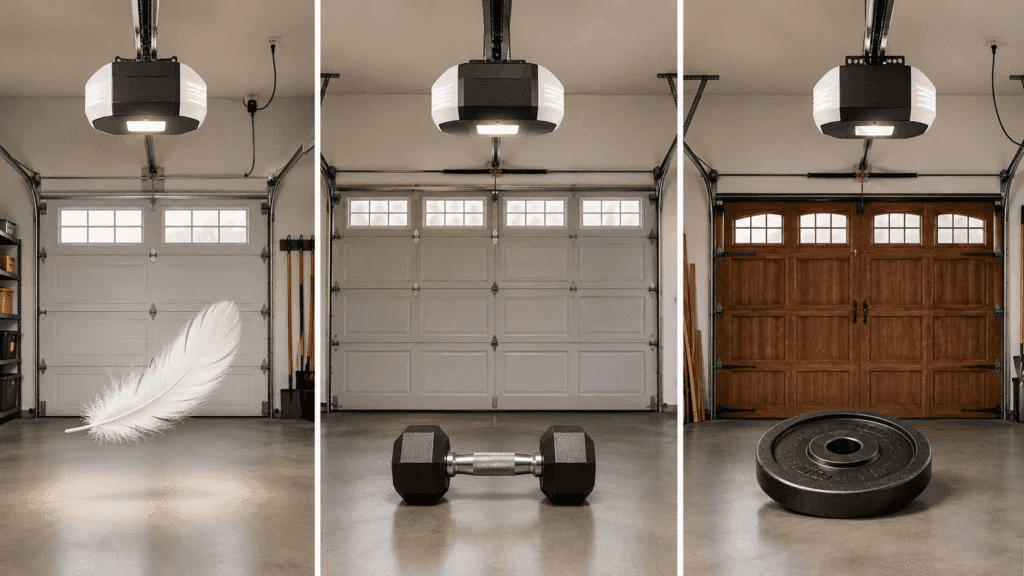
For a typical residential garage, a 1/2 HP opener is often sufficient for a properly balanced standard sectional door. A 3/4 HP opener may be preferable for heavier doors, double garage doors, insulated doors, frequent daily operation, or applications where additional operating margin is desired. A 1 HP opener is generally considered for oversized, particularly heavy, or more demanding doors.
As a general reference, The Home Depot currently associates 1/2 HP with doors up to about 350 lb, 3/4 HP with doors up to about 600 lb, and 1 HP with doors up to about 750 lb. These figures should be treated as shopping guidance rather than universal engineering limits because actual capacity varies by opener design, manufacturer, door condition, and counterbalance system.
Lowe's similarly recommends matching horsepower to both door size and weight, noting that standard doors commonly use 1/2 HP while heavier or oversized doors may require 3/4 HP or more.
The manufacturer's specifications for the specific opener should therefore always take priority over a generic horsepower chart.
Understanding Garage Door Opener Horsepower
Horsepower, commonly abbreviated as HP, is traditionally used to describe motor power. In garage door opener marketing, however, the terminology can be more complicated than it first appears.
Traditional AC garage door opener motors may be rated directly in horsepower. Many modern residential garage door openers use DC motors, and manufacturers may instead describe their performance using terms such as lifting force or horsepower equivalent.
For example, Chamberlain explains that the lifting capacity of DC motors is typically not measured directly in horsepower. Some of its products therefore use equivalent 1/2 HP, 3/4 HP, or higher lifting-force classifications to help consumers compare their performance with conventional AC systems.
This distinction matters when comparing products.
A product labeled “3/4 HP equivalent” should not automatically be interpreted as having exactly the same motor architecture or electrical output as every traditional 3/4 HP AC motor.
For practical selection, buyers should compare the complete opener specification, including rated door size or weight, drive design, motor technology, operating cycles, rail compatibility, and manufacturer's recommended application.
1/2 HP Garage Door Opener: What Is It Best For?
A 1/2 HP garage door opener is one of the most common choices for standard residential garages.
It is generally suitable for a properly balanced sectional garage door made from relatively lightweight materials such as steel or aluminum.
A typical residential single-car door does not require an extremely powerful opener when the spring and counterbalance system is working correctly.
Home Depot identifies 1/2 HP as a common choice for standard residential aluminum doors, while current Chamberlain 1/2 HP-equivalent products are also marketed for standard aluminum garage doors.
When Is 1/2 HP Usually Enough?
A 1/2 HP garage door opener is often appropriate when the door is a standard residential sectional design, the spring system is correctly balanced, the door is not unusually heavy, and opening frequency is typical for a household garage.
For many homeowners, this power level provides a good balance between performance, purchase cost, and energy use.
However, door width alone should not determine the decision.
A lightweight 16-foot steel sectional door may operate differently from a smaller but much heavier custom wood door. Insulation, glazing, reinforcement, hardware, and panel construction can significantly change the total door weight.
Is 1/2 HP Enough for a Double Garage Door?
It can be.
A common misconception is that every double garage door automatically requires 3/4 HP or 1 HP.
A properly balanced double sectional door may be compatible with a 1/2 HP opener if the opener manufacturer approves that door size and weight.
However, double-width doors tend to be heavier than single doors, so 3/4 HP is often considered when the door is insulated, reinforced, frequently operated, or constructed from heavier materials.
Instead of choosing only by width, compare the actual door specifications with the opener manufacturer's rated capacity.
3/4 HP Garage Door Opener: When Do You Need More Power?
A 3/4 HP garage door opener provides additional operating capacity compared with a typical 1/2 HP model.
This makes it attractive for heavier residential doors, larger double doors, insulated sectional doors, frequent-use garages, and households where the garage is the primary entrance.
Lowe's identifies 3/4 HP as a common choice for heavier double doors, while Chamberlain positions its 3/4 HP-equivalent lifting class for heavily used garages and homes with multiple drivers.
Why Choose 3/4 HP Instead of 1/2 HP?
The main advantage is additional operating margin.
When an opener operates within a comfortable portion of its designed capacity, it does not need to work at the upper end of its capability during every cycle.
This can be valuable for doors that are somewhat heavier, operate several times per day, or experience greater resistance due to their construction.
However, additional horsepower should not be used as a workaround for poor door balance.
If the door requires excessive force to move manually, the spring or door system should be inspected before installing a stronger opener.
Is 3/4 HP Better for Frequent Use?
For many residential applications, yes.
A garage that serves as the household's primary entrance may cycle considerably more often than a garage used only occasionally.
The opener's overall duty capability, motor design, gearbox, thermal management, and control system are important in these applications.
Horsepower is only one part of this equation.
For commercial or genuinely high-cycle use, a residential 3/4 HP opener may still not be appropriate. Commercial and industrial door operators are typically specified using additional factors such as rated torque, duty cycle, door area, operating speed, and maximum cycles.
1 HP Garage Door Opener: Who Should Choose It?
A 1 HP garage door opener provides greater lifting capability and is generally considered for larger or heavier garage doors.
Potential applications include oversized residential garage doors, heavy insulated doors, solid wood doors, large one-piece doors, or other systems where the opener manufacturer specifies greater lifting capacity.
Current Home Depot guidance suggests considering 1 HP or higher for heavier or oversized doors, while its horsepower reference chart places 1 HP in a higher door-weight category than 1/2 HP and 3/4 HP.
Does Every Heavy Door Need 1 HP?
No.
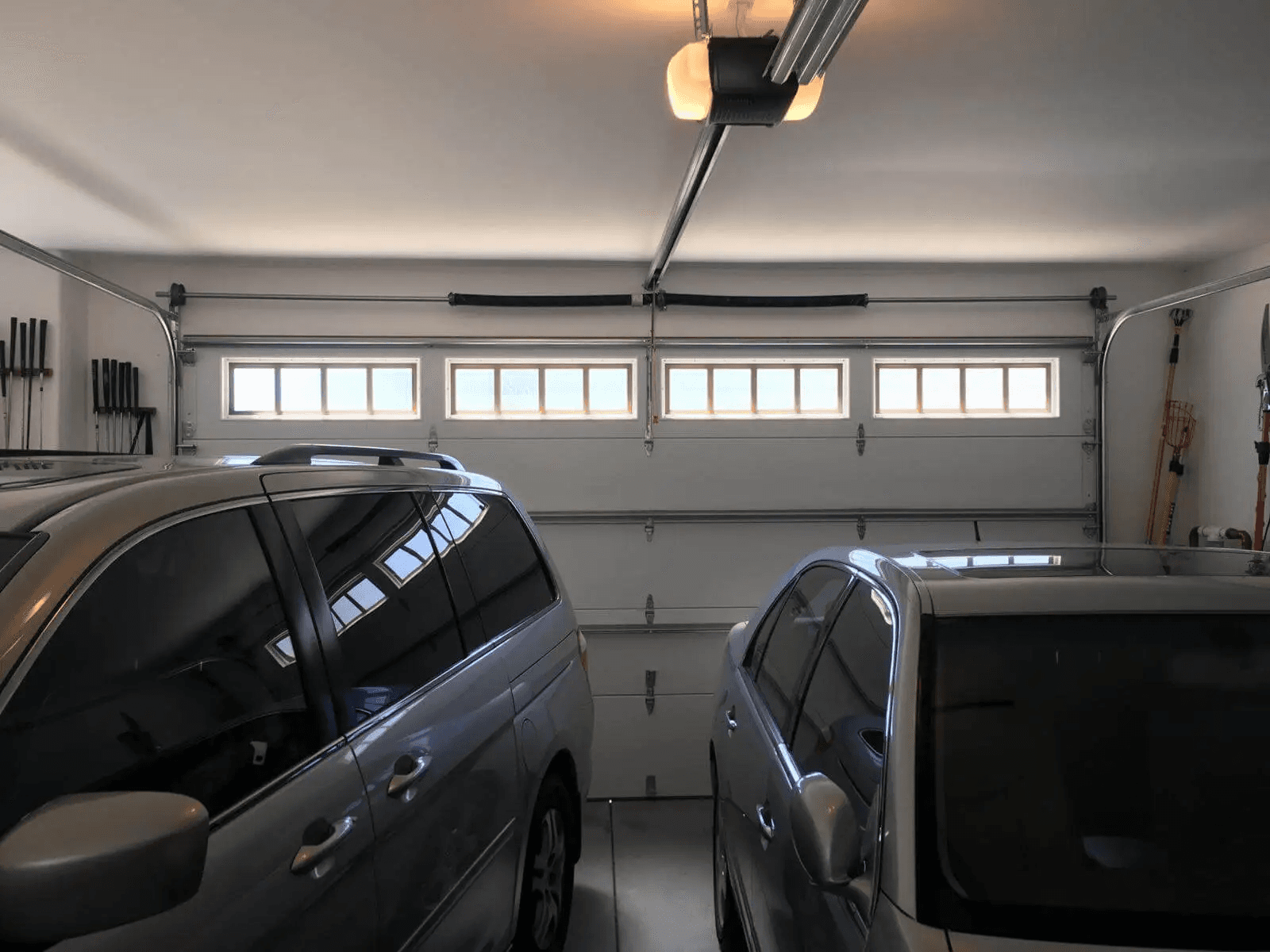
A garage door that weighs several hundred pounds does not mean the opener must directly lift several hundred pounds every time it opens.
The door's spring system is designed to counterbalance much of its weight.
DASMA explains that the purpose of garage door springs is to counteract door weight and make the door relatively easy to operate manually. If the motor operator is doing the “heavy lifting,” the door balance should be investigated.
This is one of the most important principles in garage door opener selection.
A larger motor should not be installed simply because an improperly balanced door has become difficult to lift.
Is 1 HP Too Much for a Standard Garage Door?
Not necessarily, but it may be unnecessary.
If a standard lightweight residential door works comfortably with a properly specified 1/2 HP or 3/4 HP opener, moving to 1 HP may provide little practical advantage.
A larger opener may cost more and may include capabilities that the application does not require.
The goal should be proper sizing rather than maximum sizing.
1/2 HP vs 3/4 HP vs 1 HP Garage Door Opener
The following comparison provides a practical starting point for residential applications.
Factor | 1/2 HP | 3/4 HP | 1 HP |
|---|---|---|---|
Standard residential sectional door | Excellent choice | Excellent choice | Usually more than necessary |
Standard single garage door | Commonly suitable | Suitable | Usually unnecessary |
Double garage door | Depends on weight and design | Often preferred | Suitable for heavier applications |
Insulated door | Depends on total weight | Often suitable | Suitable for very heavy doors |
Heavy wood door | May be insufficient | Depends on weight | Often considered |
Frequent residential use | Good | Very good | Very good |
Oversized residential door | Limited depending on model | Possible depending on model | Often preferred |
Initial cost | Generally lower | Medium | Generally higher |
Selection priority | Standard applications | Added capacity | Heavy or demanding applications |
This table should not replace the opener manufacturer's specifications.
Door weight, balance, dimensions, material, rail length, spring system, and the specific opener design should all be considered before choosing a model.
What Horsepower Garage Door Opener Do I Need for a Single Garage Door?
Most standard single residential garage doors can be operated by a correctly specified 1/2 HP garage door opener.
The key condition is that the door must be properly balanced and within the opener manufacturer's specified capacity.
A typical lightweight steel or aluminum sectional door usually does not require 3/4 HP or 1 HP simply because it is used every day.
A higher lifting class may still make sense when the single door is particularly tall, insulated, heavily reinforced, made from wood, or frequently operated.
The best way to choose is to identify the door's construction and approximate weight, check that it moves smoothly manually, and compare those characteristics with the opener manufacturer's specifications.
What Horsepower Garage Door Opener Do I Need for a Double Garage Door?
A double garage door requires more careful evaluation because these doors are usually wider and often heavier.
Many standard double sectional doors can operate with either a 1/2 HP or 3/4 HP opener when correctly balanced.
For heavier insulated double doors, 3/4 HP is commonly preferred because it provides additional operating capacity.
A 1 HP opener may be appropriate for particularly heavy or oversized configurations.
However, there is no universal rule that says:
“Single door = 1/2 HP.”
“Double door = 3/4 HP.”
“Heavy door = 1 HP.”
Door construction and balance matter too much for these statements to be universally correct.
Does Garage Door Weight Matter When Choosing an Opener?
Yes, but it must be understood correctly.
Door weight influences the requirements placed on the complete garage door system, but the opener should not be expected to lift the door's entire dead weight without assistance.
Garage door springs counterbalance the door so that it can move with relatively little manual effort.
This means a 400-pound garage door does not necessarily require an opener that directly produces enough force to lift 400 pounds without assistance.
If you disconnect the opener and the garage door is extremely difficult to lift manually, the first step should not be upgrading from 1/2 HP to 1 HP.
The door balance, spring condition, rollers, tracks, and mechanical system should be inspected.
DASMA specifically warns that increasing opener force or installing a more powerful opener should not be used to compensate for a door that is unbalanced or does not move smoothly.
Does Garage Door Material Affect Opener Size?
Yes, because different garage door materials and constructions can produce significantly different weights.
A basic non-insulated steel sectional door may be relatively light, while a heavily insulated steel door, solid wood door, full-view door with substantial glazing, or custom reinforced door may weigh considerably more.
Therefore, two garage doors with identical width and height may require different opener specifications.
Material should be considered together with insulation, panel thickness, reinforcement, windows, hardware, and total system weight.
This is why professional opener selection should be based on the actual door rather than dimensions alone.
Does a Higher Horsepower Garage Door Opener Last Longer?
Not automatically.
A higher-capacity motor may operate with greater performance margin in a demanding application, but garage door opener lifespan depends on many other components.
Motor design, gearbox quality, bearings, chain or belt quality, control-board reliability, thermal management, door balance, installation accuracy, operating frequency, maintenance, and environmental conditions all influence long-term reliability.
A properly selected high-quality 1/2 HP opener operating a balanced residential door may provide better long-term service than a poorly manufactured 1 HP opener.
Horsepower should therefore be viewed as one specification within a complete door automation system rather than a direct measure of product quality.
1/2 HP vs 3/4 HP: Is Bigger Always Better?
No.
If both openers are approved for the same garage door, the 3/4 HP model may provide additional capacity, but that does not automatically make it the better purchase.
For a standard lightweight residential sectional door, a reliable 1/2 HP opener may already provide everything the homeowner needs.
The decision should also consider noise, drive system, smart controls, warranty, safety features, battery backup, operating speed, product quality, and budget.
For a heavier or frequently used garage door, however, moving to 3/4 HP may be a practical choice.
The best opener is the one correctly matched to the application.
3/4 HP vs 1 HP: Which One Should You Choose?
For most standard residential doors, 3/4 HP already provides substantial operating capacity.
A 1 HP opener becomes more relevant as door size, weight, construction, or application demands increase.
For example, a large custom wood garage door may justify 1 HP where a conventional double steel sectional door may operate comfortably with 3/4 HP.
Before moving to 1 HP, check whether the additional capacity is genuinely needed.
If the opener is being selected for a commercial or industrial sectional door, horsepower alone is no longer sufficient for proper specification. Torque, output speed, duty cycle, door area, door weight, shaft design, operating frequency, and safety controls should also be considered.
Does Drive Type Affect the Horsepower You Need?
Drive type and motor power are related but should be evaluated separately.
A chain drive opener uses a metal chain to transfer movement between the motor and trolley. Chain drives are widely used because they are durable and cost-effective.
A belt drive opener uses a reinforced belt and is generally chosen when lower noise and vibration are important.
The fact that one opener uses a belt and another uses a chain does not automatically determine which requires more horsepower.
Both drive systems can be paired with different motor capacities.
The better approach is to first determine the required opener capacity and then choose a drive type based on noise, maintenance, cost, operating characteristics, and application.
For a more detailed comparison, homeowners and buyers can also refer to our Chain Drive vs Belt Drive Garage Door Opener: Which One Is Better? guide.
Does Door Balance Matter More Than Horsepower?
In many cases, yes.
A correctly balanced garage door can be moved with relatively little manual force because the spring system counterbalances much of the door weight.
An unbalanced door creates additional stress on the opener regardless of how powerful the motor is.
Installing a 1 HP opener on a door with a damaged spring does not solve the underlying mechanical problem.
It may instead place additional stress on the motor, gearbox, trolley, rail, door hardware, or other components.
Before choosing a new opener, particularly when replacing a unit that has struggled or failed prematurely, the door should be checked for smooth manual operation and correct balance.
What Other Factors Matter Besides Horsepower?
Horsepower is important, but it should never be the only specification used to select an opener.
Door Height and Rail Length
The opener rail must be compatible with the garage door height.
A motor with sufficient horsepower is still unsuitable if the rail or travel arrangement does not match the installation.
Some taller garage doors require extension kits or different rail configurations.
Operating Frequency
A household garage opened a few times per day places different demands on an opener than a shared residential garage or commercial facility cycling repeatedly throughout the day.
For higher-frequency applications, duty capability and thermal performance become increasingly important.
Noise Level
Homes with bedrooms or living spaces next to or above the garage may benefit more from a quiet belt drive and DC soft-start/soft-stop system than from simply selecting the highest horsepower available.
Safety Features
Photoelectric safety sensors, automatic reversal, emergency manual release, and reliable control logic are essential considerations.
A more powerful opener is not automatically a safer opener.
Smart Control
Wi-Fi connectivity, smartphone monitoring, remote alerts, automatic closing functions, and smart-home integration are increasingly common in residential garage door openers.
These features may influence purchasing decisions independently of motor power.
Battery Backup
Battery backup allows compatible garage door openers to operate during certain power outages.
For some homeowners and markets, this may be more valuable than upgrading from one horsepower class to another.
Product Quality
Motor specifications tell only part of the story.
Gearbox construction, rail accuracy, electronics, sensors, remote-control system, belt or chain quality, assembly consistency, and testing all influence real-world performance.
Common Mistakes When Choosing Garage Door Opener Horsepower
Choosing Based Only on Door Width
A 16-foot-wide garage door is not automatically a 3/4 HP door.
The total weight, material, insulation, balance, and manufacturer's recommendations are more useful than width alone.
Buying the Most Powerful Opener Available
More power is not always necessary.
Oversizing can increase purchase cost without delivering a meaningful advantage for a standard residential application.
Using a Bigger Motor to Compensate for a Heavy Door
This is one of the most important mistakes to avoid.
If a door suddenly feels much heavier than normal, the spring or counterbalance system may have a problem.
DASMA advises that the answer is not simply a more powerful opener.
Ignoring Door Balance
A poorly balanced door can increase wear even when the opener has substantial motor capacity.
The door system should be corrected before the opener is expected to operate it normally.
Comparing Only HP Numbers Between Brands
Not all horsepower labels mean exactly the same thing.
This is particularly relevant when comparing AC motors with modern DC openers marketed using horsepower-equivalent lifting ratings.
Ignoring Usage Frequency
A motor may have sufficient lifting force but still be inappropriate for a high-frequency application.
Duty cycle and the manufacturer's intended application should be checked where frequent operation is expected.
How to Choose the Right Garage Door Opener for Your Home
A practical selection process starts with the garage door rather than the opener.
First, identify the door size, construction, approximate weight, and whether it is properly balanced. Next, consider how frequently the door is used and whether quiet operation is important.
For a standard properly balanced residential sectional door, a 1/2 HP opener is commonly sufficient.
For a heavier double door, insulated door, or frequently used residential garage, 3/4 HP may provide a better operating margin.
For oversized or particularly heavy doors, 1 HP or a higher-capacity model may be appropriate.
Finally, verify your choice against the specific manufacturer's door-size, weight, rail, and installation requirements.
Choosing Garage Door Openers for Distributors and Professional Buyers
For distributors, installers, property developers, and OEM buyers, selecting garage door openers requires a broader approach than choosing one unit for a single home.
Different regional markets may have different garage door dimensions, construction materials, electrical supplies, usage patterns, climate conditions, noise expectations, and smart-control requirements.
A distributor may therefore need several opener configurations rather than a single horsepower option.
For example, a residential product range might include a standard-capacity opener for common sectional doors, a higher lifting class for heavier or frequently used doors, and additional configurations for premium smart or quiet applications.
Professional buyers should evaluate rated door compatibility, motor and gearbox design, drive system, voltage and frequency, rail options, remote-control system, safety sensors, operating cycles, smart functions, spare-part availability, certifications, warranty support, and OEM customization.
CHINA-DEVELOP's current garage-door automation range includes residential garage door motors as well as heavier sectional-door operator solutions, reflecting the fact that residential and industrial applications should not be selected using the same horsepower rule.
Residential vs Commercial Garage Door Opener Sizing
It is important not to apply residential 1/2 HP, 3/4 HP, and 1 HP rules directly to industrial door operators.
Residential opener selection often centers on lifting class, noise level, drive system, smart functions, and common household door sizes.
Commercial and industrial operators may instead be specified according to torque, motor power in watts or kilowatts, door area, shaft dimensions, maximum door weight, operating speed, duty cycle, voltage, environmental protection, and required cycles per hour.
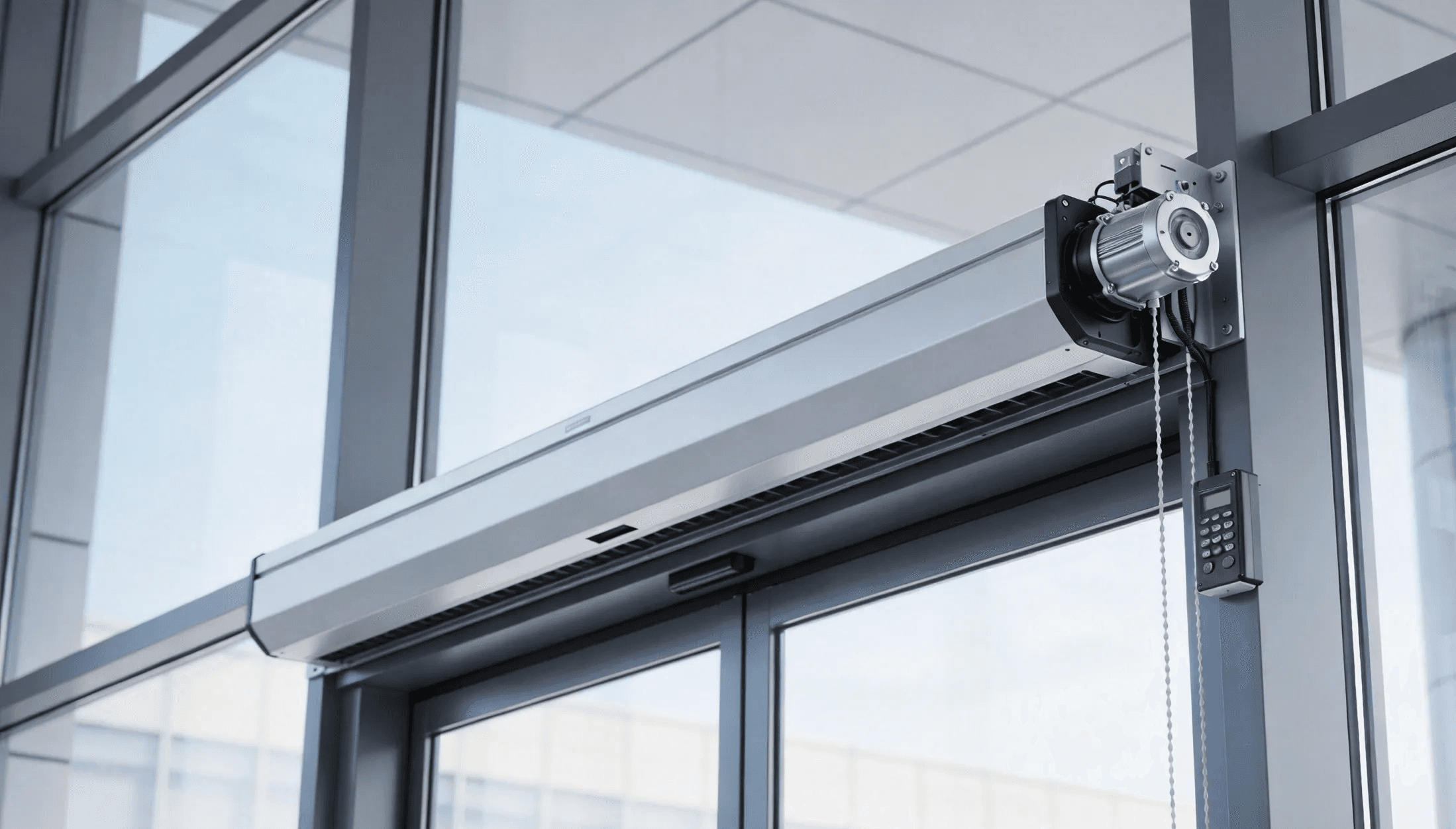
For example, China-Develop's industrial sectional door motor range includes products specified using output torque, kilowatt rating, operating speed, maximum cycles, and IP protection rather than simply residential horsepower classifications.
Buyers should therefore determine the application category before comparing opener power.
Frequently Asked Questions About Garage Door Opener Horsepower
Is 1/2 HP enough for a garage door opener?
A 1/2 HP garage door opener is sufficient for many standard residential sectional garage doors when the door is properly balanced and falls within the opener manufacturer's recommended size and weight range. Heavier, oversized, insulated, or frequently used doors may benefit from 3/4 HP or a higher-capacity opener.
Is 1/2 HP enough for a two-car garage door?
It can be. Some properly balanced lightweight double garage doors can operate with a compatible 1/2 HP opener. However, heavier double doors are commonly paired with 3/4 HP models. Door weight and manufacturer specifications are more important than simply whether the garage is designed for one or two cars.
Is 3/4 HP better than 1/2 HP for a garage door opener?
A 3/4 HP opener provides additional capacity and can be a good choice for heavier doors or frequently used garages. However, it is not automatically better for every home. A standard lightweight residential door may operate perfectly well with a properly selected 1/2 HP opener.
When do I need a 1 HP garage door opener?
A 1 HP opener is generally considered for oversized or particularly heavy garage doors and other demanding residential applications. Always check the manufacturer's rated door compatibility because horsepower alone does not determine suitability.
Can a garage door opener be too powerful?
A higher-powered opener can sometimes be used on a lighter door if the manufacturer approves the application and the system is correctly adjusted, but there may be little benefit in buying more capacity than necessary. Proper sizing, safety settings, door balance, and product compatibility are more important than simply maximizing horsepower.
What horsepower garage door opener is best for a heavy wooden door?
Heavy wood doors may require 3/4 HP, 1 HP, or another higher-capacity opener depending on their actual weight, size, balance, and construction. Because custom wood doors vary significantly, buyers should determine the door specifications and follow the opener manufacturer's recommendations rather than relying on material alone.
Does a belt drive need more horsepower than a chain drive?
Not necessarily. Belt and chain describe the drive mechanism, while horsepower describes motor or lifting capacity. Both belt-drive and chain-drive openers are available in different power classes. Choose the necessary capacity first and then select the drive system based on noise, maintenance, cost, and application.
Will a more powerful garage door opener fix a heavy door?
No. If the garage door is unusually difficult to move manually, a spring, balance, track, roller, or other mechanical problem may exist. A more powerful opener should not be used to compensate for an improperly balanced door.
How do I know how heavy my garage door is?
Door weight may be available from the garage door manufacturer based on the model, dimensions, insulation, glazing, and hardware configuration. For an existing door where the specifications are unknown, a garage door professional can evaluate the system and determine whether the door and counterbalance system are suitable for the intended opener.
Is horsepower the most important garage door opener specification?
No. Horsepower is important, but door compatibility, balance, drive type, duty requirements, safety systems, motor design, rail length, control technology, product quality, and installation are also important. Professional buyers should evaluate the complete opener system rather than comparing products based only on HP.
Final Thoughts
For most homeowners asking, “What size garage door opener do I need?”, the answer starts with the garage door rather than the motor.
A properly balanced standard residential sectional door will often work well with a 1/2 HP opener. A 3/4 HP opener provides additional operating capacity for heavier, double, insulated, or frequently used residential doors. A 1 HP opener is generally considered when the door becomes larger, heavier, or more demanding.
But horsepower should never be used to compensate for a damaged or improperly balanced garage door.
The spring and counterbalance system should allow the door to move smoothly before the opener is expected to operate it.
When comparing 1/2 HP vs 3/4 HP vs 1 HP garage door openers, consider the complete system: door weight, door size, material, balance, drive mechanism, operating frequency, noise level, safety features, smart controls, product quality, and manufacturer specifications.
For homeowners, this results in a garage door opener that is appropriately sized rather than simply oversized.
For distributors, installers, and OEM buyers, understanding these differences makes it easier to build a garage door opener range that serves multiple door types, customer segments, and international market requirements.
Looking for the Right Garage Door Opener Solution?
CHINA-DEVELOP provides garage door opener and sectional door motor solutions for residential, commercial, and professional applications. Different motor, drive, control, and automation configurations can be selected according to the garage door type, size, operating requirements, and target market.
For distributors, installers, contractors, and OEM partners, choosing the correct opener is not only about horsepower. Product compatibility, control technology, safety performance, reliability, and long-term supply support should all be considered when developing the right garage door automation solution.
Other Blogs