Blog
Automatic Door Systems for Commercial Buildings: Applications, Benefits and Selection Tips
Author
Ray
Published
Category
Automatic Door Opener
Learn how to choose automatic door systems for commercial buildings. Explore applications, door types, and key factors for reliable commercial automation solutions.

Author
Ray
An experienced automation specialist with a strong background in motor technology and industrial solutions. With years of expertise in central motors, tubular motors, and automation systems, the author is dedicated to sharing insights that connect engineering innovation with real-world applications. Passionate about advancing reliable, energy-efficient, and high-performance automation products for global markets.
What’s better than insider perks, pro tips, and surprises?
Sign up to get the most recent blog articles in your email every week.
Join now.
WHY I WRITE THIS
About my business
Our company’s main product lines include tubular motors, sliding gate motors, swing gate motors, roller shutter motors, and other door automation solutions, all manufactured by trusted partner factories we have worked with for many years.
Our Services
I help them with sales and export operations, while our company also provides sourcing and procurement services in China to help international clients solve supply-related challenges. If you need assistance with procurement, please feel free to contact us.
Introduction
Choosing an automatic door system for a commercial building requires more than selecting a door that can open and close automatically. Different commercial projects have different operational requirements, and the right solution depends on factors such as building type, entrance usage, traffic volume, and installation conditions.
A retail store, office building, hotel, and industrial facility may all require automatic door solutions, but their expectations are not the same. Some projects prioritize smooth customer flow, while others focus on access management, durability, or frequent operation capability.
For this reason, commercial businesses and project managers should evaluate automatic door systems based on the actual application rather than only considering appearance or initial cost. Understanding the relationship between building requirements and door system selection can help ensure better performance and long-term reliability.
This guide explains the key considerations when selecting automatic door systems for commercial buildings, including application requirements, door types, and important factors that influence the final decision.
Understanding Commercial Building Requirements Before Selecting an Automatic Door System
Before choosing an automatic door system, it is important to understand how the entrance will be used and what performance the project requires.
Commercial entrances often operate more frequently than residential applications, which means the automation system needs to match the expected workload. A solution designed for a small office entrance may not be suitable for a busy shopping center, while a heavy-duty system designed for industrial use may not be necessary for a low-traffic environment.
By evaluating the building type, user flow, and operating conditions in advance, businesses can avoid selecting a system that does not match their actual needs.
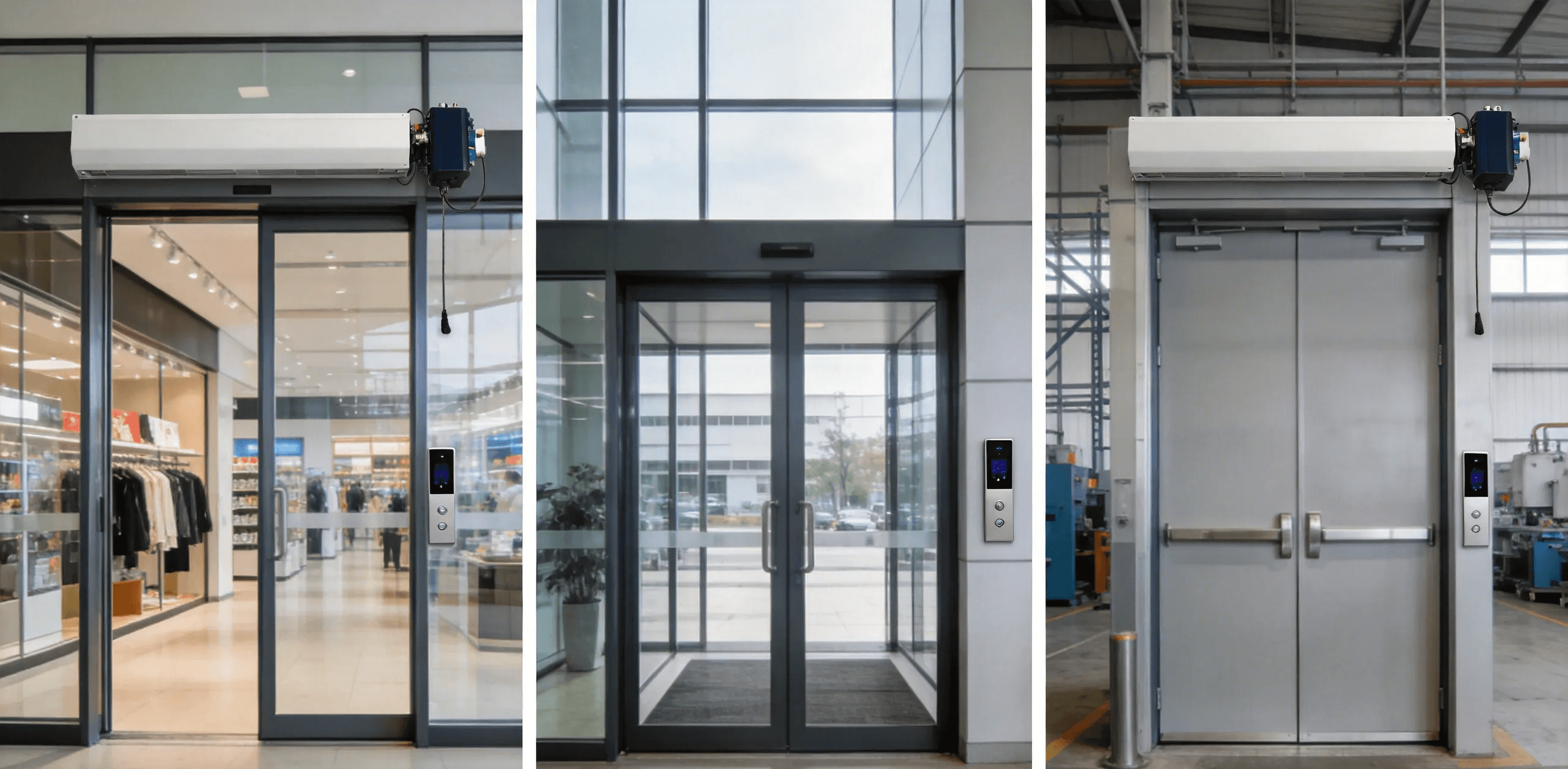
Retail Stores and Shopping Centers
Retail environments usually require automatic door systems that can support continuous customer movement throughout the day.
Because entrances directly affect customer experience, the system needs to provide smooth and reliable operation during both normal and peak business hours. A suitable solution should allow convenient access while maintaining stable performance under frequent use.
For retail projects, factors such as entrance width, expected traffic volume, and operating frequency should be considered when selecting an automatic door system. The goal is not simply faster operation, but creating a reliable entrance solution that supports daily business activities.
Office Buildings and Corporate Facilities
Office buildings often have different requirements compared with retail environments. Instead of handling constant public traffic, office entrances usually need to balance convenience with controlled access.
Automatic door systems in corporate facilities may need to work together with access management solutions to provide a more organized entry experience for employees and visitors. The selected system should match the building’s daily operation while maintaining a professional and efficient entrance environment.
When selecting an automatic door system for office applications, businesses should consider factors such as expected usage patterns, security requirements, and future integration possibilities.
Industrial and Commercial Facilities
Industrial facilities require automatic door solutions that can handle more demanding operating conditions.
Warehouses and logistics centers often involve larger entrances, heavier door structures, and frequent operation cycles. In these environments, the automation system needs to be properly matched with the door design and working requirements.
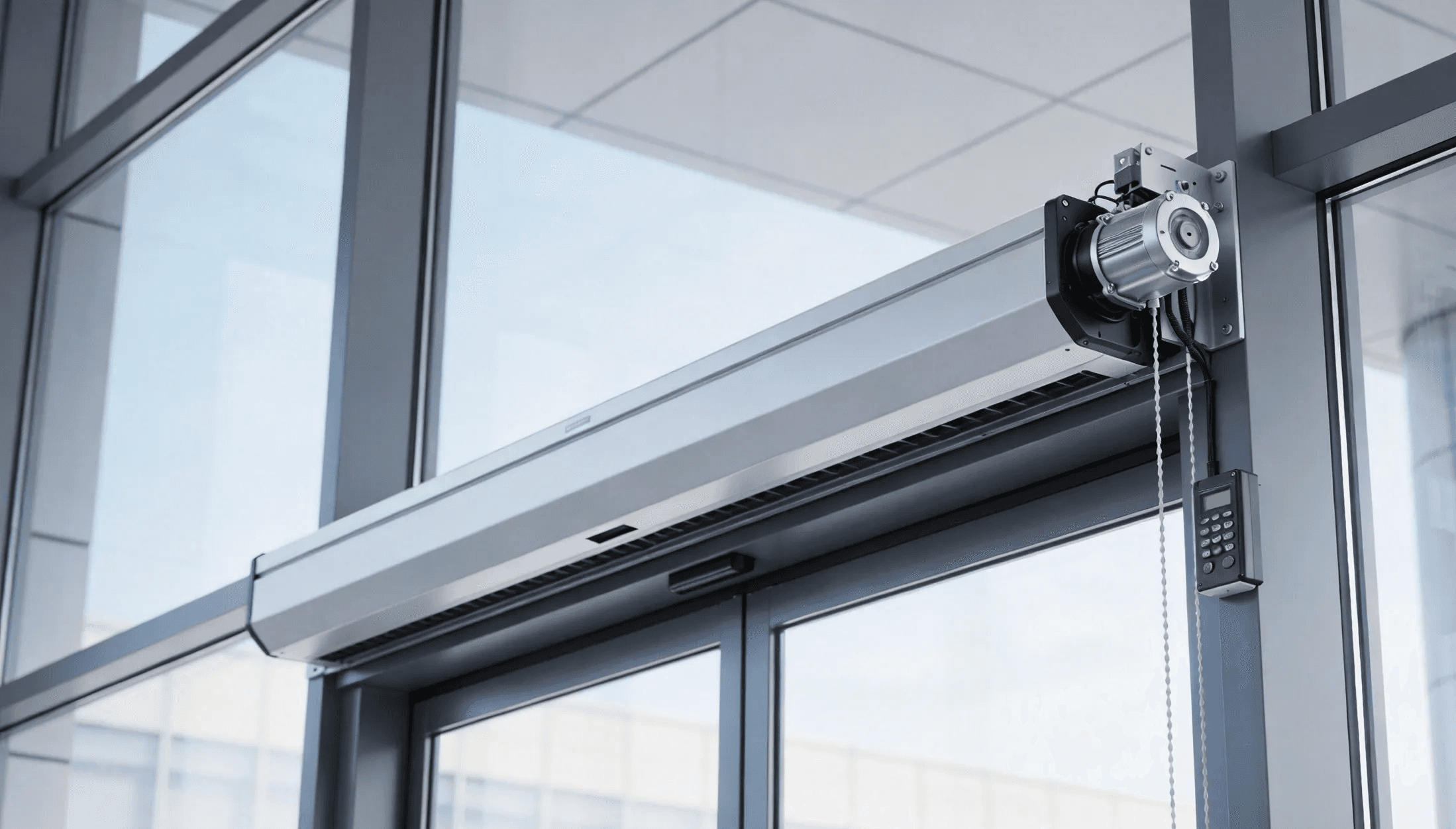
For industrial applications, selecting suitable motors and automation components is particularly important. A correctly matched system can help maintain stable operation, reduce unnecessary maintenance issues, and support continuous workflow.
Choosing the Right Automatic Door Type for Commercial Projects
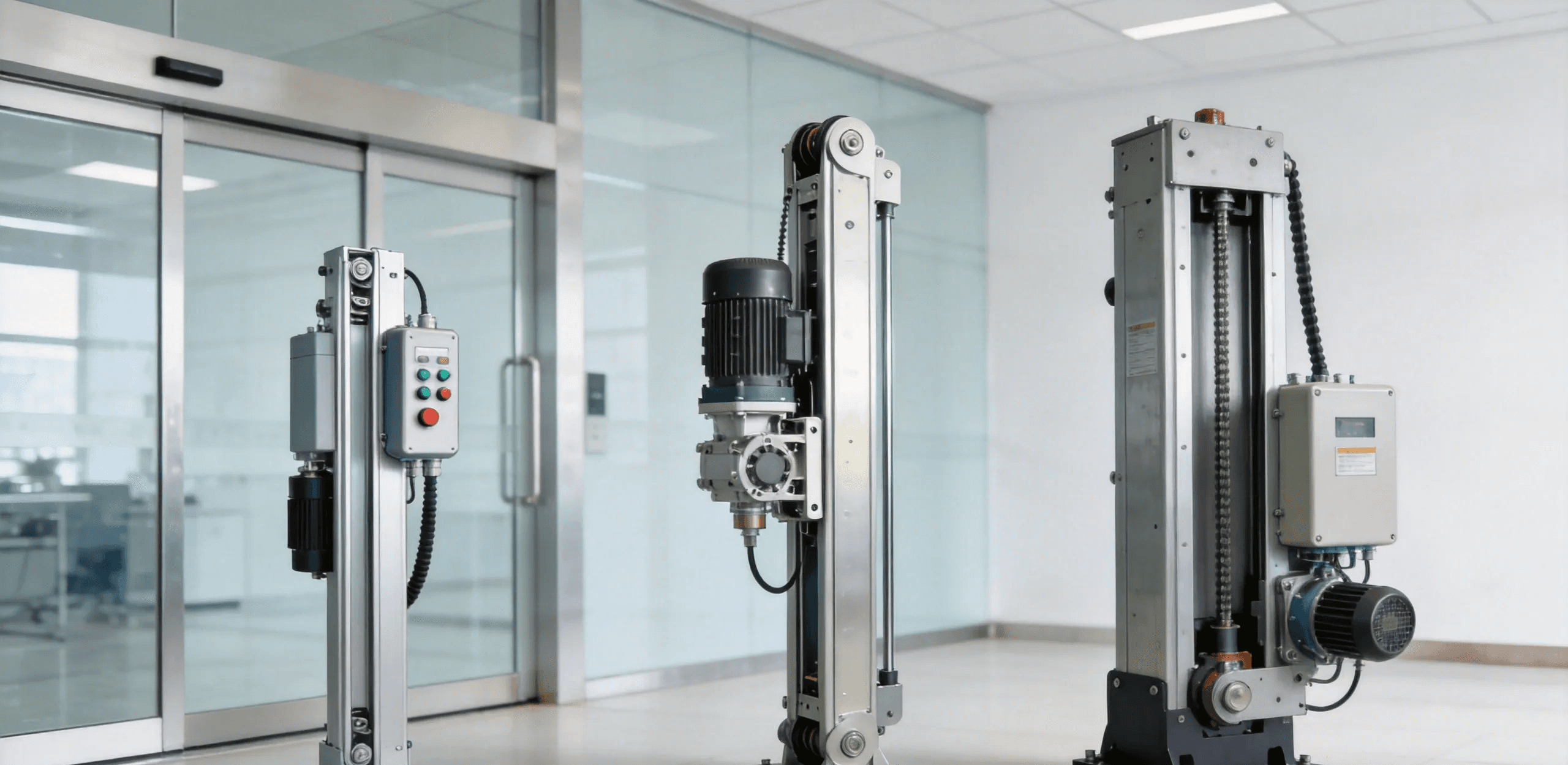
After identifying the requirements of the building, the next step is selecting an automatic door type that matches the project conditions. Different automatic door designs have different operating characteristics, and the right choice depends on factors such as available space, traffic flow, door structure, and expected usage frequency.
Instead of choosing a system based only on popularity or appearance, commercial projects should consider how the entrance will operate in real situations. A suitable automatic door solution should provide reliable performance while meeting the specific needs of the building.
Sliding Automatic Doors for High-Traffic Entrances
Sliding automatic doors are one of the most common choices for commercial buildings because they provide efficient access while supporting frequent pedestrian movement.
They are widely used in locations such as shopping centers, office buildings, hotels, and other facilities where entrances experience regular traffic. Since sliding doors open horizontally, they can provide a wider access area without requiring additional swing space, making them suitable for busy entrances.
For commercial projects, the selection of sliding automatic doors should consider factors such as entrance size, expected traffic volume, and operating cycles. A system designed for frequent daily use needs to maintain stable movement and reliable performance over time.
The automation components, including the motor and control system, should also be properly matched with the door structure. This helps ensure smoother operation and reduces unnecessary stress on the system during repeated use.
Swing Automatic Doors for Space-Limited Applications
Swing automatic doors are often used in commercial projects where traditional hinged doors need to be automated or where installation space does not support a sliding door solution.
They are commonly found in offices, healthcare facilities, and public buildings. Compared with sliding systems, swing doors require careful consideration of the surrounding space because the door panel moves through a fixed opening area.
When selecting a swing automatic door system, businesses should evaluate factors such as door weight, opening range, and user safety. The automation system needs to provide sufficient power while maintaining controlled and smooth movement.
For projects with existing swing doors or limited architectural space, this type of solution can provide automation benefits without requiring major changes to the building structure.
Industrial Automatic Doors for Warehouses and Large Facilities

Industrial automatic doors are designed for applications that require higher durability and stronger operating capability.
Warehouses, factories, and logistics facilities often use larger doors that experience frequent operation under demanding conditions. These environments require automation solutions that are selected according to door dimensions, weight, working environment, and expected workload.
Unlike standard commercial entrances, industrial applications usually place greater emphasis on system durability and long-term reliability. The motor performance and mechanical components need to be properly matched to prevent reduced efficiency or unnecessary maintenance.
Choosing the right industrial automatic door system helps businesses maintain operational continuity and improve workflow efficiency.
Matching Door Type with Project Requirements
There is no single automatic door type that works best for every commercial building. The right solution depends on the relationship between the entrance design, operating conditions, and business requirements.
A retail store may prioritize customer movement and accessibility, while an office building may focus more on controlled access and professional appearance. Industrial facilities may require stronger solutions because of heavier doors and more intensive usage.
By evaluating these differences before installation, businesses can select automatic door systems that provide better performance and greater long-term value.
Key Factors to Consider Before Selecting an Automatic Door System
Selecting the right automatic door type is only the first step. Before making a final decision, commercial projects also need to evaluate whether the selected system can meet the actual operating requirements of the building.
Factors such as traffic frequency, door specifications, installation environment, and safety requirements can directly affect system performance. Considering these factors during the selection process helps businesses choose a solution that is more reliable and suitable for long-term operation.
Evaluate Traffic Volume and Operating Frequency
The expected usage frequency is one of the most important factors when selecting an automatic door system.
A commercial entrance in a shopping center may operate continuously throughout the day, while an office building may experience higher traffic during specific periods. These different usage patterns create different requirements for system durability and operating performance.
For high-traffic applications, businesses should choose systems designed to handle frequent opening and closing cycles. Selecting a solution that matches the actual workload helps reduce unnecessary wear and supports more stable operation over time.
Match Door Specifications with Automation Performance
The relationship between the door structure and the automation system is another important consideration.
Door size, weight, and opening requirements all influence the performance needed from the motor and related components. A system that is not properly matched with the door structure may experience slower operation, unstable movement, or increased mechanical stress.
Before selecting an automatic door system, businesses should evaluate the actual door specifications and ensure that the automation components are suitable for the application. Proper matching improves operating efficiency and helps extend the service life of the system.
Consider Installation Environment and Working Conditions
The installation environment can affect the reliability of an automatic door system.
Indoor commercial entrances usually operate under relatively stable conditions, while outdoor entrances and industrial facilities may face additional challenges such as temperature changes, dust, moisture, or heavier workloads.
For this reason, businesses should consider where the system will be installed and what conditions it will experience during daily operation. Choosing components that match the environment helps maintain consistent performance and reduces potential maintenance issues.
Review Safety and Access Control Requirements

Safety is an essential consideration for commercial automatic door applications because these systems are used by employees, customers, and visitors every day.
Depending on the building type, automatic door systems may need to work with safety sensors, detection devices, or access control solutions. Public entrances with frequent pedestrian movement may require different safety considerations compared with restricted-access facilities.
Evaluating safety requirements before installation allows businesses to select a system that provides convenient access while maintaining appropriate protection for users.
Consider Future Integration Needs
Commercial buildings often change over time, and automation requirements may develop as business operations expand.
Some projects may later require additional functions such as access management, remote control, or integration with other building systems. Considering these possibilities during the initial selection process can help businesses choose solutions that remain flexible in the future.
A well-planned automatic door system should not only meet current requirements but also provide enough adaptability for future needs.
Frequently Asked Questions
Q: What should businesses consider when choosing an automatic door system?
A: Businesses should consider the building type, entrance usage, traffic volume, door structure, safety requirements, and installation environment before selecting an automatic door system.
The best solution depends on how the entrance will be used. A system designed for a retail store may not be suitable for an industrial facility, so commercial projects should focus on matching the automation solution with actual operating conditions.
Q: Which type of automatic door is best for commercial buildings?
A: The most suitable automatic door type depends on the specific application.
Sliding automatic doors are commonly used in high-traffic areas because they provide efficient pedestrian access. Swing automatic doors can be a practical choice for projects with limited space or existing hinged doors. Industrial automatic doors are designed for larger entrances and more demanding operating environments.
Businesses should evaluate their building requirements before selecting a specific solution.
Q: How do I know if an automatic door motor is suitable for my project?
A: The motor selection depends on factors such as door size, door weight, operating frequency, and application environment.
A properly matched motor helps ensure smooth operation and reduces unnecessary stress on the system. Choosing a motor without considering the actual door requirements may lead to unstable performance or increased maintenance needs.
Q: Can automatic door systems be integrated with access control solutions?
A: Yes. Many commercial automatic door systems can be integrated with access control technologies to improve entrance management.
This is especially useful for office buildings, industrial facilities, and other environments where businesses need to control access while maintaining convenient operation.
Q: How can businesses improve the reliability of automatic door systems?
A: The reliability of an automatic door system depends on selecting suitable equipment, proper installation, and regular maintenance.
Choosing a solution that matches the application requirements from the beginning can help reduce operational problems and improve long-term performance.
Conclusion
Selecting an automatic door system for a commercial building requires a balance between application requirements, system performance, and long-term reliability. Different environments have different expectations, and the right solution depends on factors such as traffic conditions, door structure, safety needs, and future integration requirements.
From retail entrances and office buildings to industrial facilities, businesses need automation solutions that match their specific operating conditions rather than relying on a one-size-fits-all approach.
With experience in gate automation and access solutions, DP Group develops a wide range of automation products, including tubular motors, sliding door motors, swing door motors, roller shutter motors, and related accessories. By combining product development, manufacturing expertise, and application knowledge, DP Group supports customers in selecting reliable automation solutions for different commercial and industrial projects.
Choosing the right automatic door system at the beginning of a project can help improve operational efficiency, reduce future maintenance challenges, and create a safer and more convenient access experience.
Other Blogs