Blog
5 Common Reasons Your Roll-Up Door Motor Keeps Overheating and How to Fix Them
Author
Ray
Published
Category
Guide
Learn why roll-up door motor overheating happens, including overload, poor ventilation, voltage issues, worn bearings, and duty cycle problems. Get practical troubleshooting and prevention tips for roller shutter doors, garage doors, and industrial door motors.

Author
Ray
An experienced automation specialist with a strong background in motor technology and industrial solutions. With years of expertise in central motors, tubular motors, and automation systems, the author is dedicated to sharing insights that connect engineering innovation with real-world applications. Passionate about advancing reliable, energy-efficient, and high-performance automation products for global markets.
What’s better than insider perks, pro tips, and surprises?
Sign up to get the most recent blog articles in your email every week.
Join now.
WHY I WRITE THIS
About my business
Our company’s main product lines include tubular motors, sliding gate motors, swing gate motors, roller shutter motors, and other door automation solutions, all manufactured by trusted partner factories we have worked with for many years.
Our Services
I help them with sales and export operations, while our company also provides sourcing and procurement services in China to help international clients solve supply-related challenges. If you need assistance with procurement, please feel free to contact us.
Introduction
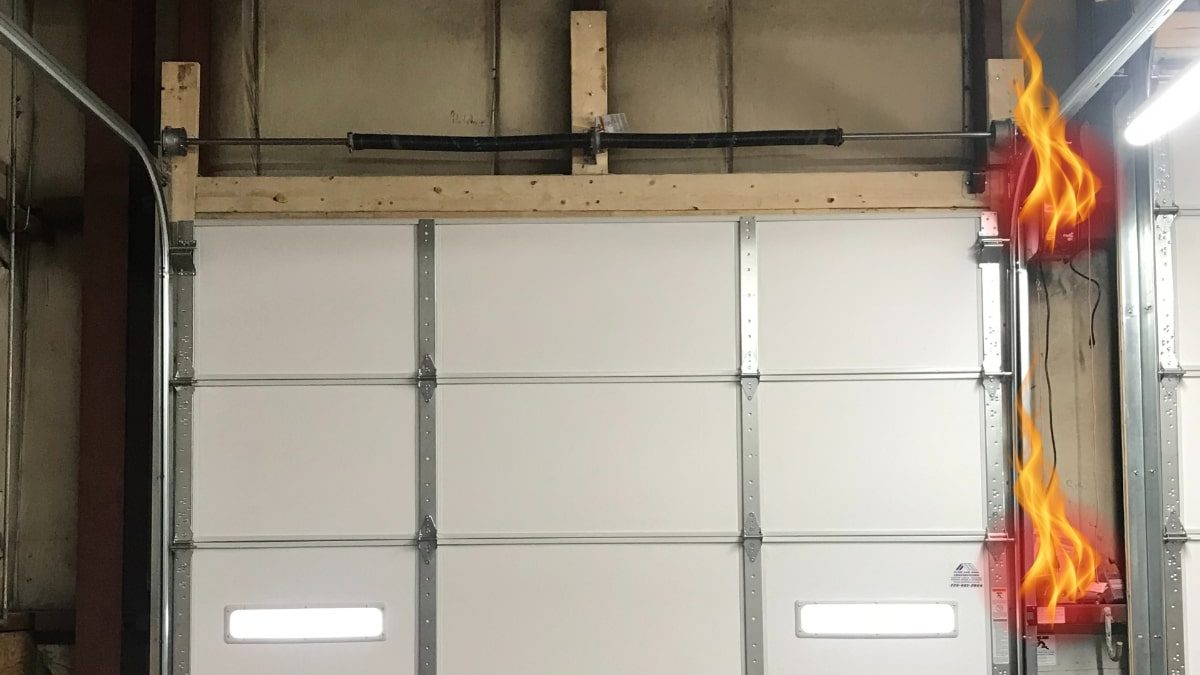
Roll-up door motor overheating is a common problem in warehouses, garages, workshops, retail stores, factories, loading bays, and industrial facilities. When a door motor becomes too hot, stops after running, trips thermal protection, or produces a burning smell, it is usually a sign that the motor is working harder than it should.
For many users, the first question is simple: why does my roll up door motor keep overheating? The answer may involve the door itself, the motor rating, the electrical supply, the duty cycle, the surrounding environment, or basic maintenance issues.
A roll-up door motor is not only responsible for lifting and lowering the door. It must also overcome friction from guide rails, shutter curtain weight, spring imbalance, gearbox resistance, and repeated daily operation. If any part of the system creates extra resistance, the motor draws more current, produces more heat, and may eventually fail.
This guide explains the 5 common reasons your roll-up door motor keeps overheating, how to troubleshoot each issue, and when it is better to repair, resize, or replace the motor. It is written for building owners, installers, maintenance teams, distributors, and B2B buyers who need practical guidance rather than vague advice.
What Roll-Up Door Motor Overheating Means
Understanding Normal Motor Heat vs Dangerous Overheating
All electric door motors generate heat during operation. A motor converts electrical energy into mechanical motion, and some energy is always lost as heat through the motor windings, bearings, gearbox, and electrical resistance.
Normal warmth is expected. Dangerous overheating happens when the motor temperature rises beyond its intended operating range or repeatedly triggers thermal overload protection.
A hot motor becomes a problem when:
The door motor stops after running for a short time
The motor housing feels excessively hot
The opener trips thermal overload protection
The motor smells like burnt insulation
The door moves slowly or unevenly
The motor hums but fails to lift the door
The same overheating problem returns after cooling down
A single overheating event may be caused by temporary overuse. Repeated overheating usually means there is a deeper issue in the door system, motor selection, power supply, or maintenance condition.
Why Thermal Overload Protection Trips
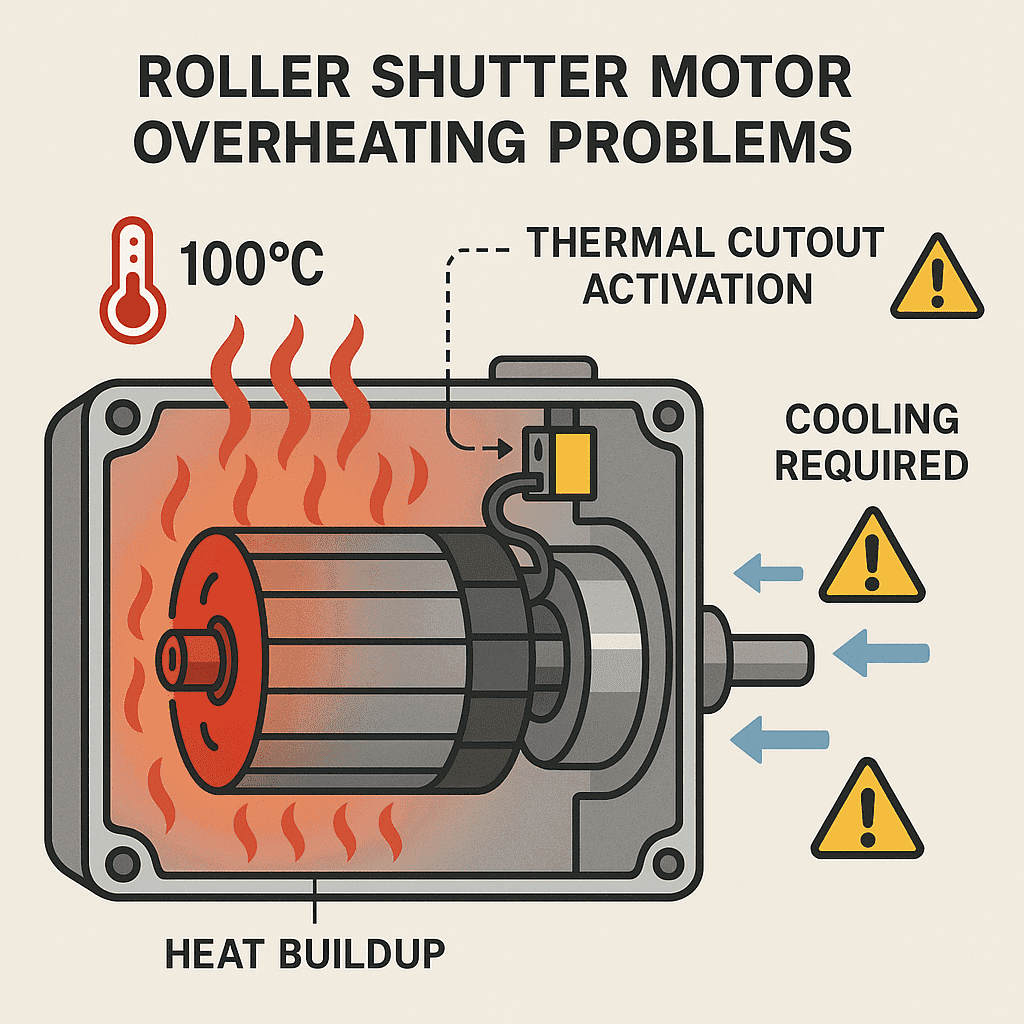
Many roll-up door motors include thermal overload protection. This safety feature disconnects the motor when internal temperature becomes too high. It helps protect the motor windings, insulation, control board, and surrounding components from damage.
However, thermal protection is not a repair solution. If the door motor thermal overload keeps tripping, the system is telling you that something is wrong.
Common triggers include excessive load, poor cooling airflow, voltage fluctuation, bearing wear, frequent operation, or a motor that is undersized for the door. Ignoring repeated trips can shorten motor life and create safety risks.
Why Overheating Shortens Motor Life
Heat is one of the biggest enemies of electric motors. High temperature accelerates insulation aging, reduces lubrication performance, increases winding resistance, and may damage capacitors or control components.
In a roll-up door system, overheating can also cause secondary problems. A weak motor may stop halfway, leaving the door unsecured. A failed opener may interrupt warehouse operations. In heavy-duty industrial doors, repeated motor failure can create costly downtime.
That is why troubleshooting should focus on the complete door system, not just the motor casing temperature.
5 Common Reasons Your Roll-Up Door Motor Keeps Overheating
1. The Motor Is Being Used Too Frequently
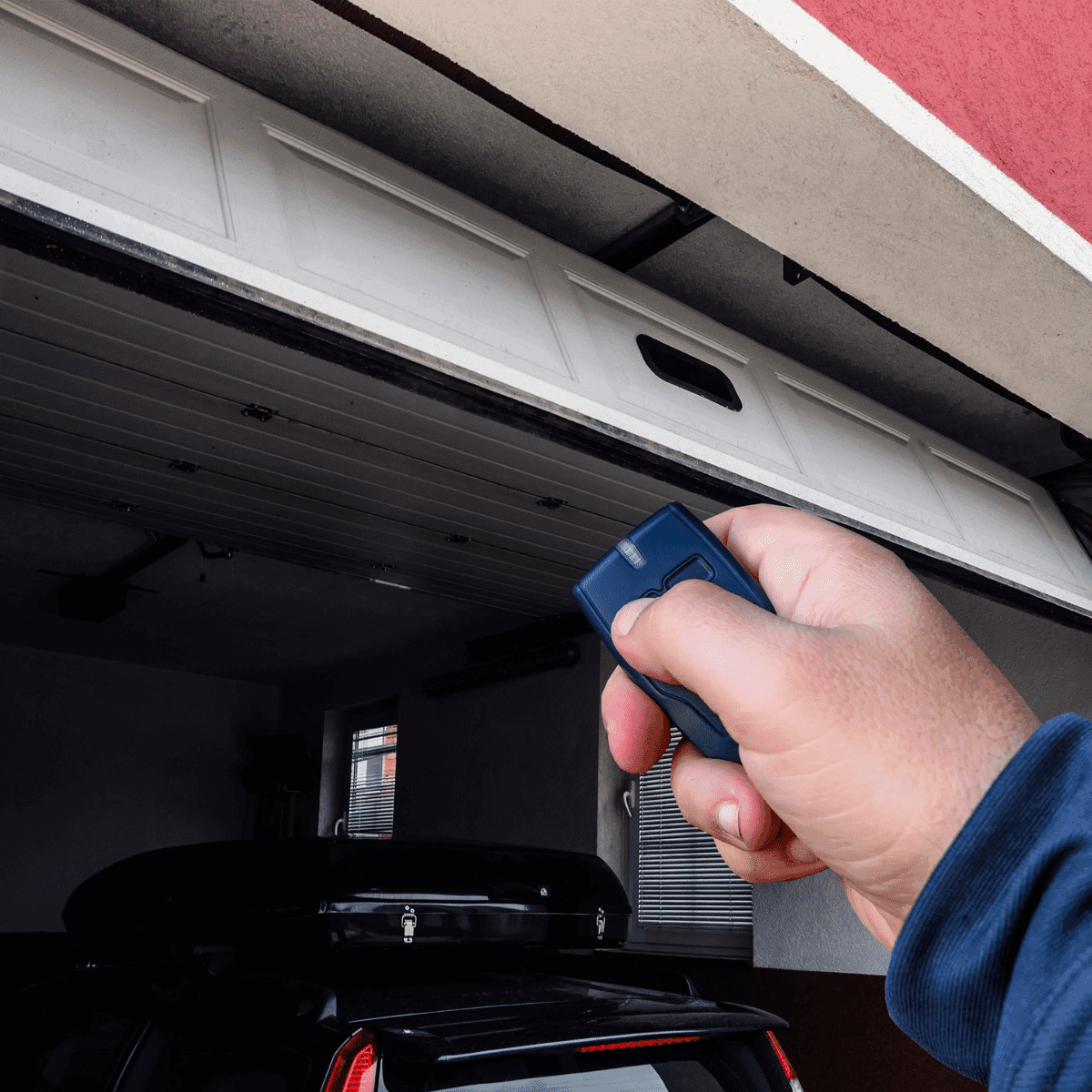
One of the most common causes of roll-up door motor overheating is excessive operation within a short period. Many residential and light commercial door motors are not designed for continuous cycling.
Every motor has a duty cycle. The duty cycle indicates how long the motor can operate and how much rest time it needs before the next cycle. If a motor designed for occasional use is installed on a busy warehouse door, it may overheat even if the door is mechanically sound.
This is common when a garage door opener overheats after repeated use or when an industrial door motor overheats during frequent operation.
Common Signs of Duty Cycle Overload
A motor may be exceeding its duty cycle if:
It works normally for the first few cycles
It stops after repeated opening and closing
It works again after cooling down
It overheats more often during busy hours
The door operates many times per hour
The opener is installed in a high-traffic area
This problem often appears in loading docks, storage facilities, parking entrances, fire stations, workshops, and commercial shutters.
How to Fix Duty Cycle Overheating
The first step is to reduce unnecessary operation. If the motor only overheats after repeated cycles, allow the unit to cool and review the daily usage pattern.
For long-term reliability, match the motor to the application. A standard garage door opener may be acceptable for occasional residential use, but it is not suitable for frequent industrial operation. A high-cycle or heavy-duty roller shutter motor may be required.
If the motor is used in a commercial or industrial setting, check the product specifications for rated duty cycle, torque, load capacity, and recommended application type.
2. The Door Is Too Heavy or Mechanically Binding
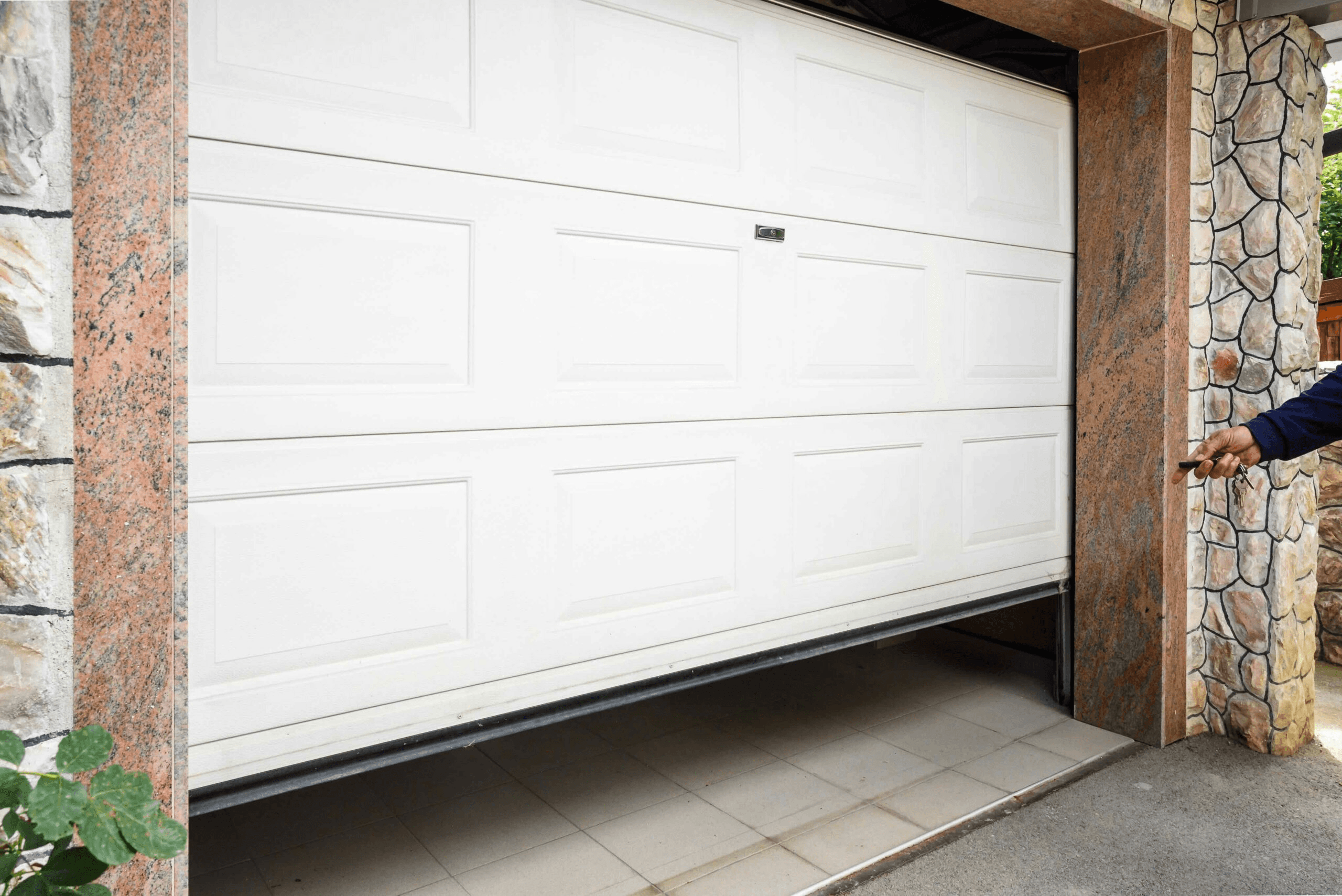
A roll-up door motor is designed to move a door within a specific weight and load range. If the shutter curtain is too heavy, poorly balanced, damaged, or physically restricted, the motor must work harder than intended.
This leads to higher current draw, more heat, slower movement, and eventually motor overheating.
This is a major cause of roller shutter motor overheating under heavy load.
Mechanical Problems That Increase Motor Load
Common mechanical causes include:
Bent or damaged guide rails
Shutter curtain rubbing against tracks
Broken or misaligned slats
Worn rollers or hinges
Poor spring balance
Debris inside door tracks
Rust or corrosion on moving parts
A damaged shaft or drum
Incorrect motor torque selection
Door weight exceeding motor load capacity
A door motor is not supposed to force a damaged door to move. If the door itself is binding, even a strong motor may overheat.
How to Know If a Door Motor Is Overloaded
A motor may be overloaded if the door moves slowly, stops halfway, hums under load, or becomes hot after a short cycle. Another sign is that the door feels difficult to move manually when disconnected from the opener.
For safe diagnosis, trained technicians often check the door balance, track alignment, curtain movement, shaft condition, and current draw under operation.
If the door is too heavy for the installed motor, replacing electrical parts will not solve the issue. The correct fix is to repair the mechanical resistance or upgrade to a motor with suitable torque and duty rating.
3. Poor Ventilation or Dust Is Trapping Heat
Motors need cooling airflow. If the motor is installed in a tight enclosure, covered by dust, blocked by objects, or exposed to poor airflow, heat cannot escape efficiently.
This is especially common in warehouses, factories, workshops, and industrial environments where dust, debris, oil mist, and airborne particles can build up around equipment.
Poor airflow may turn a normally warm motor into an overheated door opener motor.
Ventilation Problems to Check
Cooling problems may be caused by:
Blocked ventilation openings
Dust buildup on motor housing
Damaged or broken cooling fan
Motor installed too close to a wall
Poor airflow around the operator
Enclosed motor space without heat release
High ambient temperature
Direct sunlight or hot ceiling areas
Debris around control panels or motor covers
Even if the motor is correctly sized, poor ventilation can raise the operating temperature beyond safe limits.
How to Improve Cooling Airflow
Start with simple cleaning. Remove dust, cobwebs, packaging material, and debris around the motor housing. Make sure ventilation openings are not blocked.
If the motor is installed in an industrial facility, include it in the regular maintenance schedule. Inspect cooling fins, fans, covers, and nearby obstructions.
If the operating environment is hot or dusty, consider a motor and control system designed for harsher conditions. Industrial door motor overheating is often not caused by one failure, but by a combination of heavy use, poor airflow, and environmental heat.
4. Electrical Problems Are Increasing Motor Temperature
Electrical issues can make a roll-up door motor overheat even when the door moves smoothly. A motor depends on stable voltage, proper wiring, correct phase supply, and healthy control components.
When voltage is too low, unbalanced, unstable, or interrupted, the motor may draw excessive current. More current means more heat.
Electrical problems are especially important in three-phase industrial door motors, but they can also affect single-phase garage door openers and commercial shutter operators.
Electrical Causes of Door Motor Overheating
Common electrical causes include:
Low voltage
Voltage fluctuation
Voltage imbalance
Phase loss
Loose wiring connections
Undersized wiring
Faulty control board
Failed start capacitor
Failed run capacitor
Incorrect motor wiring
Poor grounding
Overload relay problems
Harmonic distortion from control equipment
Capacitor failure is common in single-phase motors. If the start capacitor or run capacitor becomes weak, the motor may struggle to start, hum, run inefficiently, or overheat.
Why Low Voltage Can Overheat a Motor
Low voltage may sound harmless, but it can be dangerous for motors. When voltage drops, the motor may draw more current to produce the required torque. This extra current increases winding temperature and may trip thermal protection.
In commercial buildings, voltage issues may happen when multiple large loads operate at the same time. In industrial facilities, long cable runs, poor connections, or power quality issues can also contribute to overheating.
Electrical troubleshooting should be done by a qualified technician. Testing may include checking supply voltage, current draw, capacitor condition, phase balance, wiring terminals, overload settings, and control panel operation.
5. Worn Bearings, Gearbox Friction, or Lack of Maintenance
A roll-up door motor can also overheat because internal or external mechanical parts are wearing out. Bearings, gears, shafts, chains, sprockets, and drive components all create friction when they degrade.
Friction converts mechanical energy into heat. The more resistance in the system, the harder the motor works.
This is why roller shutter motor maintenance is not optional for commercial and industrial doors. A motor may fail early simply because the door system was never cleaned, lubricated, adjusted, or inspected.
Mechanical Wear Symptoms
You may have bearing wear, gearbox friction, or drive problems if:
The motor makes grinding or squealing noise
The door jerks during movement
The motor vibrates more than usual
The shutter moves unevenly
The gearbox feels hot
The door requires more force to move
The opener sounds louder than before
The motor overheats even under normal use
Noise and heat together are warning signs. They often indicate that parts are rubbing, misaligned, or losing lubrication.
Maintenance Fixes That Reduce Heat
A proper maintenance routine should inspect both the motor and the door system. Cleaning the motor while ignoring the guide rails may not solve the root problem.
Maintenance should include track cleaning, guide rail inspection, fastener tightening, lubrication where appropriate, checking bearings, verifying limit switch settings, testing manual movement, and inspecting the control panel.
If the gearbox or bearing system is already damaged, maintenance may not be enough. Replacement parts or a new motor may be required.
Troubleshooting Roll-Up Door Motor Overheating Step by Step
Quick Safety Checks Before Diagnosis
Before troubleshooting, stop operating the door if the motor is extremely hot, smells burnt, hums without movement, or trips protection repeatedly. Do not keep pressing the remote control or wall switch.
Repeated operation can worsen winding damage, overload the control board, or create mechanical hazards.
Use this basic checklist before deeper inspection:
Allow the motor to cool completely
Disconnect power before touching components
Do not bypass thermal overload protection
Do not force the shutter open or closed
Keep people away from a stuck door
Contact a qualified technician for electrical testing
Ordered Troubleshooting Process
Use the following process to diagnose how to fix an overheating roll up door motor:
Stop using the door and let the motor cool.
A hot motor needs time to reset thermal protection and prevent further damage.Check whether the door is mechanically stuck.
Look for bent tracks, damaged slats, debris, or visible rubbing.Test manual movement if the system allows it.
A door that is difficult to move manually may be overloading the motor.Inspect ventilation and remove dust.
Clear blocked openings, covers, fans, and surrounding obstructions.Review operation frequency.
Count how many times the door opens and closes per hour during peak use.Check voltage and electrical connections.
Have a qualified technician test voltage, current draw, phase condition, and wiring.Inspect capacitors and control components.
Weak capacitors, faulty control boards, or incorrect overload settings may cause overheating.Compare motor rating with door requirements.
Check torque, load capacity, door size, duty cycle, and application type.Inspect bearings, gearbox, chain, and shaft.
Mechanical friction often causes heat even when electrical parts are working.Decide whether to repair, resize, or replace the motor.
If overheating returns after basic fixes, the installed motor may not match the application.
What Not to Do
Do not assume the motor is the only problem. In many cases, the motor is overheating because the door system is creating excessive resistance.
Also avoid replacing the motor with the same model before confirming why the old motor overheated. If the root cause is overload, poor balance, or high-cycle use, the new motor may fail again.
Comparison Table: Symptoms, Causes, and Fixes
Symptom | Likely Cause | What to Check | Practical Fix |
|---|---|---|---|
Motor gets hot after repeated cycles | Duty cycle exceeded | Daily operation frequency | Use a higher-duty motor or reduce cycle frequency |
Motor hums but door does not move | Overload, capacitor failure, mechanical binding | Door movement, capacitor, wiring | Repair door resistance or replace failed capacitor |
Door stops halfway | Thermal overload, limit switch issue, obstruction | Tracks, limits, motor heat | Remove obstruction, reset limits, inspect motor load |
Motor overheats under heavy load | Door too heavy or motor undersized | Door weight, torque rating | Upgrade motor or repair door balance |
Motor case feels hot in dusty area | Poor ventilation | Cooling openings, fan, dust buildup | Clean motor area and improve airflow |
Motor trips protection frequently | Electrical or mechanical overload | Current draw, voltage, gearbox | Diagnose supply and mechanical system |
Door moves slowly | Low voltage, worn parts, friction | Voltage, bearings, guide rails | Correct power issue and service moving parts |
Burning smell | Winding insulation or electrical damage | Motor windings, control board | Stop operation and replace damaged components |
Loud grinding noise | Bearing or gearbox wear | Bearings, gears, shaft | Replace worn mechanical parts |
Overheating returns after repair | Wrong motor selection | Duty cycle, load, environment | Choose a better-suited door motor |
This table helps separate symptoms from root causes. A hot motor is only the result. The real issue is usually load, airflow, electrical condition, mechanical friction, or application mismatch.
How to Prevent Door Motor Overheating
Build a Preventive Maintenance Routine
Preventing electric door motor overheating is easier and cheaper than repairing a failed motor. Maintenance is especially important for commercial shutters, warehouse doors, and industrial roller shutter doors.
A practical roller shutter motor maintenance plan should include:
Clean guide rails and door tracks regularly
Remove dust from motor housing and ventilation openings
Inspect shutter curtain alignment
Check for bent slats or rubbing parts
Test manual door movement
Lubricate approved moving components
Inspect chains, sprockets, bearings, and shafts
Check control panel wiring and overload protection
Verify limit switch operation
Record unusual noise, heat, or vibration
The goal is to reduce resistance before it becomes a motor failure.
Match Motor Type to Application
Different door applications require different motor types. A small garage door opener is not the same as a heavy-duty industrial roller shutter motor.
For roll-up doors, common motor types include tubular motors, side motors, central motors, chain drive operators, and industrial door operators. Each has different strengths.
A tubular motor may be suitable for compact roller shutters and lighter applications. A side motor is often preferred for heavier rolling doors or industrial shutters. A central motor may be used for certain rolling shutter systems where central mounting is preferred.
Use the Right Motor Rating
Motor selection should consider:
Door height and width
Shutter curtain weight
Shaft size
Required torque
Daily operation frequency
Opening speed requirement
Indoor or outdoor installation
Ambient temperature
Wind exposure
Control system requirements
Manual release requirements
Safety accessories
Power supply type
If the motor is undersized, it may work for a short time but overheat under real operating conditions.
When to Repair vs Replace an Overheating Roll-Up Door Motor
When Repair May Be Enough
Repair may be reasonable when the overheating cause is external or minor. For example, cleaning blocked ventilation, replacing a capacitor, correcting limit settings, clearing a jammed track, or adjusting the door balance may solve the issue.
Repair is often enough when:
The motor is still relatively new
Overheating happened only once
The door was temporarily obstructed
A capacitor or relay failed
The motor cools normally and passes testing
The door load is within motor rating
In these cases, proper diagnosis can prevent unnecessary replacement.
When Replacement Is the Smarter Choice
Replacement is usually better when the motor is repeatedly overheating, undersized, outdated, noisy, or damaged internally.
Consider replacing the motor when:
Thermal overload keeps tripping
The motor smells burnt
The windings are damaged
The gearbox is worn out
The motor cannot handle daily usage
Repair cost is too high
The same problem returns after service
The door has been upgraded to a heavier shutter
The application requires a higher-duty motor
For industrial doors, downtime can cost more than the motor itself. In that case, upgrading to a better-suited motor may be more economical than repeated repairs.
Choosing a Motor for Heavy-Duty Roll-Up Doors
For heavy doors or frequent operation, buyers should look beyond basic horsepower or power rating. Torque, duty cycle, gearbox strength, thermal protection, control compatibility, and after-sales support matter just as much.
A strong motor with poor control compatibility may still cause problems. A cheap motor with weak gears may overheat quickly in a warehouse environment. A motor without clear technical documentation can make installation and troubleshooting harder.
For B2B buyers, the best motor for heavy-duty roll up doors is usually the one that matches the full system, not just the lowest price.
Buying Considerations for B2B Door Motor Projects
What Distributors and Installers Should Evaluate
Door installers, importers, and distributors need reliable products because their customers judge them by long-term performance. An overheating motor can create warranty claims, service calls, and customer dissatisfaction.
When sourcing motors, evaluate:
Product range
Motor torque options
Load capacity
Duty cycle rating
Thermal overload protection
Control panel compatibility
Limit switch accuracy
Remote control and receiver options
Spare parts availability
Installation documentation
Packaging quality
OEM or private label support
Technical communication
Export experience
A reliable door automation motor supplier should help buyers select the right motor, not simply sell one model for every door.
Where CHINA-DEVELOP Fits
For distributors, installers, and project contractors, supplier selection can reduce many overheating risks before installation begins. CHINA-DEVELOP provides door automation products such as roller shutter motors, tubular motors, side motors, sliding gate motors, garage door openers, and related access control accessories for residential, commercial, and industrial applications.
This type of product range is useful when buyers need to compare motor options for different door sizes, usage frequencies, and installation environments.
Common Mistakes That Make Roll-Up Door Motors Overheat
Mistake 1: Replacing the Motor Without Fixing the Door
If the door is bent, unbalanced, or binding, a new motor may overheat just like the old one. Always inspect the door system before replacement.
Mistake 2: Ignoring Duty Cycle
A motor designed for occasional use may not survive a high-traffic warehouse entrance. Duty cycle is critical for commercial and industrial applications.
Mistake 3: Overlooking Voltage Problems
Low voltage, voltage imbalance, phase loss, or loose wiring can cause heat even when the motor is properly sized.
Mistake 4: Blocking Ventilation
Dust, covers, tight walls, and poor airflow trap heat. A clean motor still needs space to breathe.
Mistake 5: Skipping Preventive Maintenance
Many roller shutter motor problems begin as small friction issues. Regular maintenance prevents small resistance from becoming major overheating.
Mistake 6: Choosing Based Only on Price
A cheaper motor may cost more if it causes downtime, early failure, service calls, or customer complaints.
FAQ
Why does my roll-up door motor keep overheating?
A roll-up door motor may keep overheating because of excessive operation, an overloaded door, poor ventilation, voltage issues, worn bearings, gearbox friction, or an undersized motor. If the problem repeats, inspect both the motor and the door system.
How do I fix an overheating roll up door motor?
Stop using the door, let the motor cool, check for mechanical binding, clean ventilation openings, inspect tracks and shutter curtain, test voltage, check capacitors and control components, and confirm the motor is properly sized for the door.
Why does my roller shutter motor stop after opening?
A roller shutter motor may stop after opening because thermal overload protection has tripped. This can happen when the motor overheats due to heavy load, frequent operation, low voltage, poor airflow, or mechanical resistance.
Can a heavy roller shutter cause motor overheating?
Yes. If the shutter curtain is too heavy or the door is poorly balanced, the motor must work harder. This increases current draw and heat. A motor with insufficient torque may overheat frequently.
How long should I let a hot door motor cool down?
Cooling time depends on motor size, ambient temperature, and overheating severity. In general, stop operation until the motor has cooled fully and the cause has been inspected. Do not keep cycling a motor that repeatedly trips thermal protection.
Can low voltage make a door motor overheat?
Yes. Low voltage can force the motor to draw more current to produce torque. Higher current increases winding temperature and may trip thermal overload protection.
What does motor thermal overload tripping mean?
Thermal overload tripping means the motor or protection device has detected excessive heat or current. It is a warning that the motor is under stress. Repeated trips should never be ignored.
When should I replace an overheating roller shutter motor?
Replace the motor if it repeatedly overheats, smells burnt, has damaged windings, makes grinding noise, cannot handle the door load, or is not rated for the required duty cycle.
What type of motor is best for industrial roll-up doors?
Industrial roll-up doors usually need a motor with suitable torque, stronger gearbox design, higher duty cycle, thermal protection, and compatibility with control panels and safety accessories. Side motors or industrial door operators are often used for heavier applications.
How can I prevent roller shutter motor overheating?
Prevent overheating by maintaining the door, cleaning tracks, improving ventilation, checking voltage, avoiding excessive cycling, selecting the correct motor size, and inspecting bearings, gearbox parts, guide rails, and control components regularly.
Conclusion
Roll-up door motor overheating is usually not caused by one simple issue. It may come from excessive operation, an overloaded door, poor ventilation, electrical problems, mechanical friction, or incorrect motor selection.
The key is to diagnose the complete system. A motor that gets hot and stops working may be protecting itself from damage, but repeated overheating means the door, power supply, environment, or motor rating needs attention.
For residential doors, the solution may be as simple as reducing repeated operation, cleaning tracks, or replacing a capacitor. For warehouses, commercial shutters, and industrial doors, the solution may require a higher-duty motor, better maintenance program, improved ventilation, or a complete review of the door automation system.
By understanding the real causes of roll-up door motor overheating, users can reduce downtime, protect equipment, improve safety, and extend motor service life.
CTA Closing
If your roll-up door motor keeps overheating or your project requires a more reliable motor for frequent operation, heavy shutters, or commercial door automation, work with a supplier that understands motor sizing, duty cycle, load capacity, and real application conditions.
CHINA-DEVELOP supports B2B buyers with roller shutter motors, tubular motors, side motors, garage door openers, and door automation accessories for residential, commercial, and industrial projects. Explore suitable motor solutions before overheating becomes a costly failure.
Other Blogs