Blog
Roller Shutter Door Motor Manufacturer in China | CHINA-DEVELOP
Author
Ray
Published
Category
Guide
Looking for a reliable roller shutter door motor manufacturer in China? Learn how to choose the right motor type, torque, safety features, and OEM supplier with CHINA-DEVELOP.


Author
Ray
An experienced automation specialist with a strong background in motor technology and industrial solutions. With years of expertise in central motors, tubular motors, and automation systems, the author is dedicated to sharing insights that connect engineering innovation with real-world applications. Passionate about advancing reliable, energy-efficient, and high-performance automation products for global markets.
What’s better than insider perks, pro tips, and surprises?
Sign up to get the most recent blog articles in your email every week.
Join now.
WHY I WRITE THIS
About my business
Our company’s main product lines include tubular motors, sliding gate motors, swing gate motors, roller shutter motors, and other door automation solutions, all manufactured by trusted partner factories we have worked with for many years.
Our Services
I help them with sales and export operations, while our company also provides sourcing and procurement services in China to help international clients solve supply-related challenges. If you need assistance with procurement, please feel free to contact us.
Choosing the right roller shutter door motor is one of the most important decisions in any rolling door automation project. Whether the application is a garage door, shopfront shutter, warehouse entrance, industrial rolling shutter, or fire-rated security door, the motor directly affects safety, lifting performance, service life, and user experience.
For global buyers, finding a reliable roller shutter door motor manufacturer in China is not only about price. It is about choosing a factory that understands torque requirements, curtain weight, voltage options, control systems, installation conditions, and long-term maintenance.
CHINA-DEVELOP provides roller shutter motor solutions for buyers who need stable performance, practical product selection, and manufacturer-level support. This guide explains how roller shutter door motors work, which motor types are available, how to compare specifications, and what to check before choosing a China-based supplier.
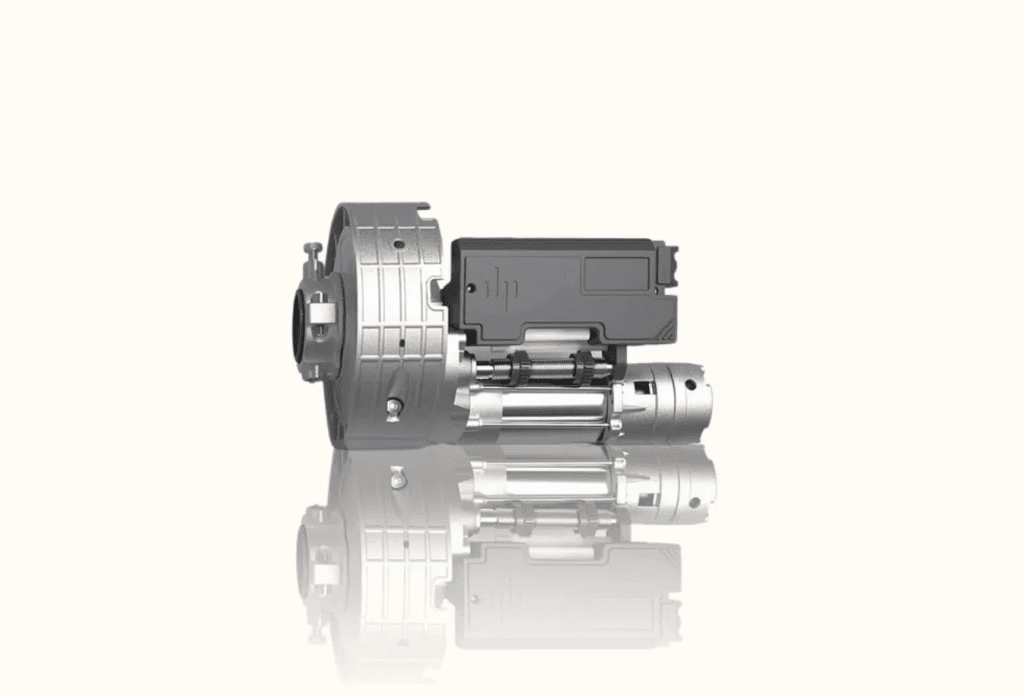
What Is a Roller Shutter Door Motor?
A roller shutter door motor is an electric operator designed to lift and lower a rolling shutter curtain automatically. Instead of opening the shutter manually, the motor drives the roller tube, shaft, or chain system so the door can move smoothly with a wall switch, control box, remote transmitter, or automation system.
In simple terms, the motor converts electrical energy into mechanical rotation. That rotation turns the drive shaft or roller tube, allowing the shutter curtain to wind upward or unwind downward.
How a Roller Shutter Motor Works
Most roller shutter systems include several core components:
Motor unit for generating rotational force
Drive shaft or roller tube for transmitting movement
Shutter curtain made from slats or panels
Control box or receiver for signal processing
Limit switch for stopping the door at correct open and close positions
Manual release or manual override for emergency operation
Brake system for holding the door safely in position
The motor must provide enough torque to lift the shutter curtain under real working conditions. If the motor is undersized, it may overheat, stop halfway, make noise, or fail prematurely. If it is oversized without proper control, the system may become less efficient and more costly than necessary.
Where Roller Shutter Door Motors Are Used
A roller shutter opener motor is widely used in residential, commercial, and industrial projects. Common applications include garage roller shutter doors, retail shopfront shutters, factory doors, logistics centers, loading bays, parking garages, banks, shopping malls, workshops, chemical plants, and warehouses.
For light-duty doors, a compact electric roller shutter motor may be enough. For large steel shutters, high-frequency industrial doors, or security shutters, buyers often need a heavy duty roller shutter motor with stronger lifting capacity, durable braking, and stable control performance.
Main Types of Roller Shutter Door Motors
Different roller shutter systems require different motor structures. A professional roller shutter door motor manufacturer should be able to help buyers select the correct motor based on the door size, curtain weight, installation space, voltage, duty cycle, and safety requirements.
Tubular Motor for Roller Shutter Doors
A tubular motor is installed inside the roller tube. It is compact, quiet, and commonly used for smaller roller shutters, window shutters, garage doors, and light commercial applications.
Tubular motors are popular because they save space and create a clean installation appearance. They are suitable when the shutter curtain is relatively light and the door does not require extremely high lifting force.
However, tubular motors are not always the best choice for heavy industrial roller shutters. When the curtain weight is high or the door is used frequently, buyers may need a side motor, central motor, or chain drive system.
Central Motor for Rolling Shutter Doors
A central motor is commonly installed in the center of the shutter shaft or rolling system. It is often used for rolling shutter doors where balanced operation and reliable torque transmission are required.
This type of motor can be a practical option for commercial rolling doors, storefront shutters, and medium-duty applications. A roller shutter central motor may also include an electronic brake, manual release, and limit switch system, depending on the model.
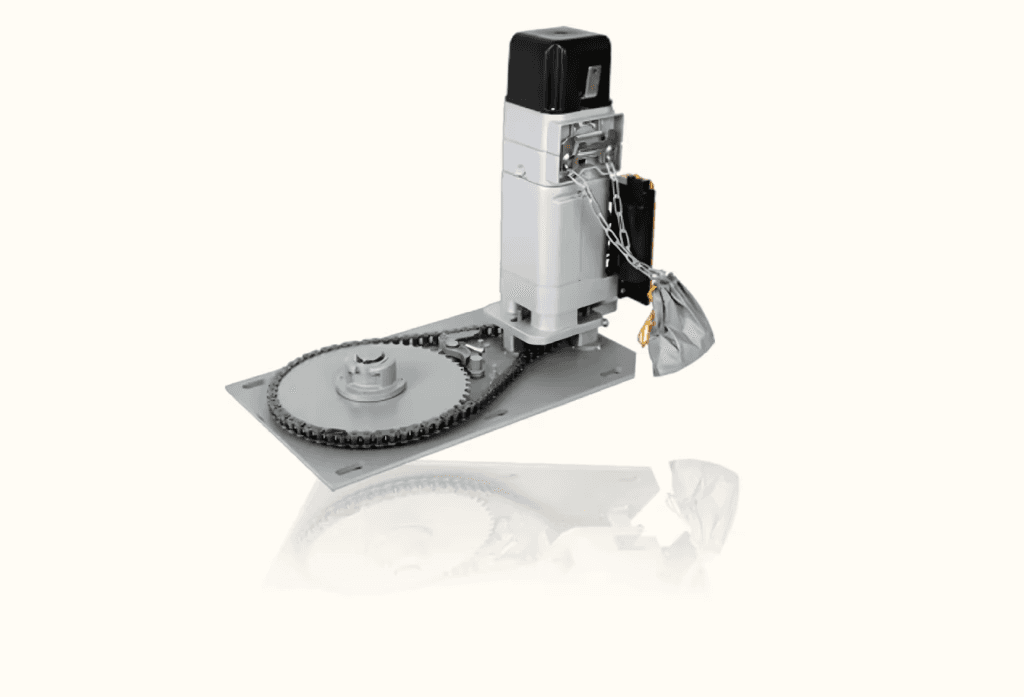
Side Motor for Roller Shutter Doors
A side-mounted motor is installed on one side of the shutter shaft. It is often used for larger commercial and industrial roller shutter doors where higher torque and stronger lifting capacity are needed.
Side motors are common in warehouses, factories, workshops, and loading bay doors. They are easier to access for maintenance compared with motors hidden inside the tube. For heavy doors, a side motor can provide stronger performance and better heat dissipation.
Chain Motor for Heavy-Duty Roller Shutters
A chain motor uses a chain drive mechanism to move the shutter system. It is suitable for heavy duty roller shutter motor applications, especially where the door is large, frequently operated, or exposed to demanding working conditions.
Compared with a tubular motor, a chain drive system is usually more robust. It may be selected for industrial rolling shutter doors, large warehouse shutters, or security shutters that require high lifting force and reliable emergency operation.
AC vs DC Roller Shutter Motor: Which Is Better?
One of the most common buyer questions is whether to choose an AC roller shutter motor or a DC roller shutter motor. The answer depends on the application, power supply, door size, and control requirements.
AC Roller Shutter Motor
An AC roller shutter motor is commonly used in commercial and industrial applications where stable mains power is available. It is suitable for many 220V, 230V, 110V, or three-phase power environments depending on the destination market.
AC motors are often chosen for:
Commercial rolling doors
Industrial roller shutters
Warehouse doors
Shopfront shutters
Heavy duty applications
Projects requiring strong and stable lifting power
For international buyers, voltage and frequency must be confirmed before ordering. A motor designed for one market may not be suitable for another market without the correct voltage and electrical configuration.
DC Roller Shutter Motor
A DC roller shutter motor is often used where low-voltage operation, battery backup, or smart control compatibility is important. A 24V DC roller shutter motor may be suitable for smaller shutters, residential doors, or systems that require emergency operation during power failure.
DC motors can be useful in automation systems where safety, backup power, and flexible control are priorities. However, for large industrial rolling shutters, buyers must carefully check torque, duty cycle, and battery capacity before selecting a DC solution.
AC vs DC Selection Guide
Factor | AC Roller Shutter Motor | DC Roller Shutter Motor |
|---|---|---|
Best For | Commercial and industrial doors | Smaller doors, backup systems, smart control |
Power Source | Mains electricity | Low-voltage supply or battery backup |
Lifting Capacity | Often stronger for heavy doors | Depends on motor size and system design |
Emergency Use | Manual release usually required | Can support battery backup |
Common Applications | Warehouse, factory, shopfront shutter | Garage, residential shutter, smart automation |
Buyer Checkpoint | Voltage, frequency, phase, torque | Battery capacity, control system, load rating |
For many B2B projects, AC motors remain a common choice for strength and reliability. DC motors are valuable where backup power and low-voltage control are key requirements.
How to Choose a Roller Shutter Door Motor
A good selection process starts with the door, not the motor. Before asking for a quotation, buyers should collect technical details about the shutter system. This helps the manufacturer recommend the correct motor instead of guessing based only on door size.
Key Parameters Buyers Should Confirm
The most important specifications include door weight, curtain material, door width and height, roller tube diameter, opening frequency, power supply, and control method.
For industrial doors, buyers should also consider wind load, installation space, environmental conditions, and whether the door requires fire-rated, explosion-proof, or emergency operation features.
A practical motor selection checklist includes:
Door width and height
Shutter curtain material and weight
Roller tube or shaft diameter
Required lifting capacity
Opening and closing frequency
Voltage and frequency
Indoor or outdoor installation
Control method, such as wall switch or remote control
Manual release or manual override requirement
Limit switch and braking system
Safety features such as overload protection
Certification or compliance requirements for the target market
How to Select Roller Shutter Motor Torque
Torque is one of the most important technical factors. It is usually measured in Nm. In general, heavier curtains and larger roller diameters require higher torque.
A simple selection principle is:
Calculate or estimate the shutter curtain weight.
Confirm the roller tube or shaft diameter.
Consider friction, wind resistance, and real installation conditions.
Add a reasonable safety margin.
Choose a motor with suitable torque and duty cycle.
Confirm the braking system and limit switch accuracy.
Test the motor under real load before bulk installation.
This process is especially important for 600kg roller shutter motors, 800kg roller shutter motors, 1000kg rolling shutter motors, 1500kg heavy duty roller shutter motors, and 2000kg industrial rolling shutter motors. The higher the load, the more important it becomes to verify the full system design.
Common Mistakes When Choosing a Motor
Many motor failures are not caused by the motor alone. They are caused by poor selection, poor installation, or mismatch between the motor and door system.
Common mistakes include choosing only by price, ignoring curtain weight, selecting the wrong voltage, overlooking duty cycle, installing the motor without proper alignment, and failing to adjust the limit switch correctly.
Another common mistake is using a light-duty garage roller shutter motor for a heavy industrial door. This may work temporarily, but it often leads to overheating, noise, short service life, and safety risks.
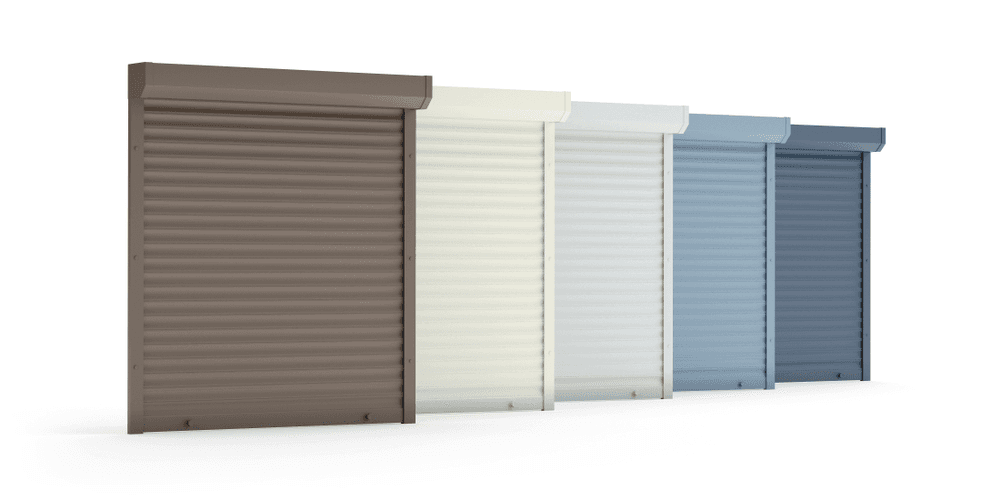
Key Features of a Reliable Roller Shutter Door Motor
A high-quality roller shutter door motor should not only open and close the door. It should also operate safely, stop accurately, resist overload, and support emergency use when needed.
Remote Control and Automation Compatibility
A roller shutter motor with remote control allows users to operate the door conveniently from a distance. This is common in garage doors, storefront shutters, and commercial rolling doors.
For more advanced projects, the motor may connect with an automation system, access control system, receiver, remote transmitter, or smart controller. Buyers should confirm control compatibility before placing an order.
Manual Release and Emergency Operation
A roller shutter motor with manual release is important in case of power failure or emergency. Manual override allows users to open or close the shutter manually when electricity is unavailable.
For commercial and industrial projects, emergency operation is not optional. It can affect safety, access, and business continuity.
Limit Switch and Position Control
A roller shutter motor with limit switch stops the door at the correct upper and lower positions. Accurate limit adjustment prevents the shutter from over-traveling, damaging the curtain, or stressing the motor.
Limit switch adjustment should be checked during installation and maintenance. If the roller shutter motor stops halfway or does not stop at the correct position, the limit switch may need inspection.
Braking and Overload Protection
An electronic brake or mechanical braking system helps hold the shutter in position. This is especially important for heavy doors.
Overload protection and thermal protection can help reduce damage when the motor is under excessive load or operating too frequently. Buyers should ask the manufacturer about braking design, duty cycle, and safety protection before selecting a model.
Applications of Roller Shutter Door Motors
A roller shutter door motor can be used in many different environments, but each application has different performance requirements. Matching the motor to the use case is essential for long-term reliability.
Garage Roller Shutter Motor
A garage roller shutter motor usually prioritizes quiet operation, compact structure, remote control, and convenient daily use. Residential and small commercial garage doors may use tubular motors, central motors, or compact operators depending on the design.
Buyers should consider backup access, manual release, safety stop functions, and compatibility with remote transmitters.
Commercial Roller Shutter Motor
Commercial roller shutter motors are widely used for shopfront shutters, mall entrances, bank security shutters, and storefront doors. These doors often require smooth operation, reliable locking, accurate limit control, and frequent daily use.
For retail environments, noise level and appearance may also matter. The motor should provide dependable automation without disrupting the storefront design.
Industrial Roller Shutter Motor
An industrial roller shutter motor is built for demanding environments such as factories, warehouses, logistics centers, workshops, and loading bays. These doors are often larger and heavier than standard commercial shutters.
Industrial applications may require:
Higher torque output
Stronger braking system
Heavy duty gear motor design
More durable control box
Manual override for emergency access
Higher duty cycle
Better resistance to dust, vibration, and outdoor conditions
Fire Rated and Explosion Proof Roller Shutter Motor
A fire rated roller shutter motor or fireproof roller shutter motor is used in doors designed to help separate fire zones and support building safety strategies. These systems may be used with fire-rated shutters, smoke curtains, or emergency control systems.
An explosion proof roller shutter motor may be required in hazardous environments such as chemical plants, gas stations, fuel storage areas, or industrial sites where explosive gas or dust may be present.
For these applications, buyers must not choose a standard motor casually. They should confirm the complete door system requirements, local safety codes, control logic, and documentation before purchasing.
How to Evaluate a Roller Shutter Door Motor Manufacturer in China
Finding the best roller shutter door motor manufacturer in China requires more than comparing unit prices. A reliable supplier should help buyers reduce technical risk, improve installation success, and support long-term supply.
Product Range and Technical Matching
A strong manufacturer should offer multiple motor types, such as tubular motor, central motor, side motor, chain motor, AC roller shutter motor, DC roller shutter motor, and heavy duty roller shutter motor options.
This matters because one motor type cannot fit every door. A supplier with a limited product range may recommend what they have, not what your project truly needs.
OEM and ODM Capability
For importers, distributors, and door manufacturers, OEM and ODM support can be important. An OEM roller shutter door motor manufacturer may help with private labeling, packaging, specification adjustment, documentation, and model selection.
A custom roller shutter motor manufacturer may support different voltage configurations, control accessories, cable options, branding, or application-specific requirements.
Before confirming an OEM order, buyers should ask about minimum order quantity, sample process, lead time, testing standards, packaging, warranty terms, and after-sales communication.
Quality Control and Documentation
A reliable roller shutter motor supplier in China should have a clear quality control process. Buyers should ask how the factory checks motor performance, load capacity, braking, noise, limit switch operation, insulation, and packaging before shipment.
Important documents may include product specifications, installation instructions, wiring diagrams, test reports, certificates, and compliance documents required for the destination market.
Do not rely only on product photos. Ask for technical datasheets and confirm whether the supplier understands your door system.
Communication and Engineering Support
A good China factory direct roller shutter motor supplier should be able to answer technical questions clearly. If the supplier cannot explain torque, voltage, installation method, control box wiring, or manual release operation, the buyer may face problems after delivery.
Professional communication is especially important for industrial door projects, OEM cooperation, and wholesale roller shutter door motor orders from China.
Why Choose CHINA-DEVELOP as Your Roller Shutter Motor Supplier
CHINA-DEVELOP focuses on roller shutter automation solutions for buyers who need practical product selection, stable motor performance, and manufacturer-level support.
Instead of only selling a motor model, CHINA-DEVELOP helps buyers evaluate application conditions, door weight, installation requirements, and control needs. This is important for importers, contractors, door manufacturers, and distributors who want to reduce selection mistakes before mass orders.
Practical Support for Different Projects
CHINA-DEVELOP can support buyers looking for roller shutter motors for garage doors, commercial rolling doors, industrial roller shutters, warehouse doors, shopfront shutters, and heavy duty security doors.
For buyers comparing tubular motor vs side motor for roller shutter systems, central motor vs tubular motor, or AC vs DC roller shutter motor, CHINA-DEVELOP can help identify which solution better fits the door structure and usage frequency.
Suitable for B2B Buyers
CHINA-DEVELOP is a practical choice for:
Door manufacturers needing stable motor supply
Importers looking for a reliable roller shutter motor supplier in China
Contractors working on commercial or industrial door projects
Distributors seeking wholesale roller shutter door motors from China
OEM buyers needing branding, packaging, or specification support
Project buyers comparing factory-direct motor solutions
For every project, the buyer should provide door size, curtain weight, voltage requirement, application environment, and expected operating frequency. With this information, CHINA-DEVELOP can recommend a more suitable motor configuration.
Roller Shutter Door Motor Selection Table
The following table gives a practical overview of common motor choices. Final selection should always be confirmed according to actual door weight, curtain material, tube diameter, voltage, and installation conditions.
Motor Type | Best Application | Main Advantages | Buyer Considerations |
Tubular Motor | Garage doors, window shutters, light commercial shutters | Compact, clean appearance, quiet operation | Not ideal for very heavy doors |
Central Motor | Medium-duty rolling shutters, commercial doors | Balanced structure, practical for many shutter systems | Confirm torque and brake design |
Side Motor | Warehouses, factories, larger commercial shutters | Stronger lifting capacity, easier maintenance access | Requires side installation space |
Chain Motor | Heavy industrial doors, high-load shutters | Durable, strong torque, suitable for heavy duty use | More mechanical components to maintain |
AC Motor | Commercial and industrial projects | Stable power, strong lifting performance | Confirm voltage, frequency, and phase |
DC Motor | Smaller doors, backup power systems, smart control | Low-voltage operation, battery backup option | Check battery capacity and load rating |
Fire Rated Motor | Fire-rated shutters and smoke control systems | Supports safety-focused door systems | Must match project safety requirements |
Explosion Proof Motor | Chemical plants, gas stations, hazardous areas | Designed for special-risk environments | Requires strict compliance verification |
This comparison shows why motor selection must be based on application, not just price. A garage door motor, commercial rolling shutter motor, and industrial heavy duty roller shutter motor may look similar from the outside, but their working requirements can be very different.
Common Problems and Prevention Tips
Even a high-quality roller shutter door motor can fail if it is selected or installed incorrectly. Understanding common issues helps buyers reduce after-sales problems.
Roller Shutter Motor Not Working
If a roller shutter motor is not working, possible causes include power failure, damaged control box, remote receiver issue, wiring problem, thermal protection, or motor overload.
Before replacing the motor, check whether the power supply is stable, the control signal is working, and the door curtain is not jammed.
Roller Shutter Motor Stops Halfway
If the motor stops halfway, the cause may be overload, incorrect limit switch adjustment, overheating, friction in the door track, or a motor that is too small for the shutter weight.
For heavy doors, this problem often indicates poor motor selection or mechanical resistance in the shutter system.
Roller Shutter Motor Makes Noise
Noise may come from poor alignment, worn bearings, loose brackets, chain tension issues, or friction between the shutter curtain and guide rails.
A motorized shutter system should be inspected as a complete system, not only as a motor unit. The roller tube, drive shaft, side plate, guide rail, and curtain condition can all affect noise.
Maintenance Tips
To improve service life, users should regularly inspect the motor, curtain, guide rails, control box, limit switch, manual release, and braking system.
A practical maintenance routine includes checking the door balance, cleaning guide rails, listening for unusual noise, testing the manual override, and confirming that the door stops correctly at both limits.
Buyer’s Checklist Before Requesting a Quotation
Before contacting a roller shutter door motor manufacturer in China, prepare the following information. This helps the supplier recommend the right product faster and more accurately.
Confirm the door width and height.
Estimate or calculate the shutter curtain weight.
Identify the curtain material, such as steel, aluminum, or insulated slats.
Measure or confirm the roller tube or shaft diameter.
Define the application, such as garage, shopfront, warehouse, or factory door.
Confirm the required voltage and frequency.
Estimate daily opening and closing frequency.
Decide whether remote control, wall switch, or smart control is needed.
Confirm whether manual release or emergency operation is required.
Ask whether special requirements apply, such as fire-rated or explosion-proof use.
Request product specifications, wiring diagram, installation guide, and packaging details.
Confirm sample availability, lead time, warranty, and after-sales support.
This process helps buyers avoid mismatched models and improves communication with the supplier.
FAQ: Roller Shutter Door Motor Manufacturer in China
What is a roller shutter door motor?
A roller shutter door motor is an electric operator that opens and closes a rolling shutter door by driving the shaft, roller tube, or chain system. It replaces manual lifting and allows the door to be controlled by switch, remote control, control box, or automation system.
What type of motor is used for a roller shutter door?
Common types include tubular motors, central motors, side-mounted motors, chain motors, AC roller shutter motors, and DC roller shutter motors. The right type depends on door weight, size, installation space, usage frequency, and application environment.
How do I choose the right roller shutter motor?
To choose the right roller shutter motor, confirm the door size, curtain weight, tube diameter, voltage, operating frequency, control method, and safety requirements. For heavy doors, torque, braking, duty cycle, and manual release are especially important.
What is the difference between a tubular motor and a side motor?
A tubular motor is installed inside the roller tube and is often used for smaller or lighter shutters. A side motor is installed on the side of the door and is usually better for larger commercial or industrial rolling shutter doors that require higher torque.
What is the difference between an AC and DC roller shutter motor?
An AC roller shutter motor is commonly used for commercial and industrial doors with mains power. A DC roller shutter motor is often used for smaller doors, low-voltage systems, or applications requiring battery backup.
What motor is suitable for heavy industrial roller shutters?
Heavy industrial roller shutters usually require a side motor, chain motor, or heavy duty gear motor with sufficient torque, reliable braking, manual override, and a suitable duty cycle. The motor must be selected according to actual door weight and operating frequency.
Can CHINA-DEVELOP provide OEM roller shutter door motors?
CHINA-DEVELOP can support B2B buyers looking for roller shutter motor solutions, including project selection support and OEM-oriented cooperation. Buyers should provide technical requirements, branding needs, target market, and order quantity for evaluation.
What information should I provide before requesting a quotation?
You should provide door width, door height, curtain weight, material, roller tube diameter, voltage, frequency, daily usage frequency, control method, application environment, and any special requirements such as manual release, fire-rated use, or explosion-proof design.
Why does a roller shutter motor stop halfway?
A roller shutter motor may stop halfway because of overload, overheating, incorrect limit switch adjustment, power issues, door track friction, or an undersized motor. The full door system should be inspected before replacing the motor.
How long does a roller shutter motor last?
Service life depends on motor quality, load matching, installation accuracy, usage frequency, maintenance, and working environment. Correct motor selection and regular inspection can significantly improve long-term performance.
Conclusion
A roller shutter door motor is a critical component in any motorized shutter system. It affects lifting capacity, safety, convenience, noise level, reliability, and long-term maintenance cost. For buyers sourcing from China, choosing the right manufacturer is just as important as choosing the right motor model.
The best roller shutter door motor manufacturer in China should understand different motor types, torque selection, voltage requirements, control systems, installation conditions, and application-specific safety needs. Whether you need a garage roller shutter motor, commercial rolling shutter motor, industrial roller shutter motor, fire rated roller shutter motor, or heavy duty roller shutter motor, proper selection will help prevent performance problems and reduce after-sales risk.
CHINA-DEVELOP supports buyers with practical roller shutter motor solutions for B2B projects, OEM orders, wholesale supply, and industrial door automation applications.
CTA Closing
Need help choosing the right roller shutter door motor for your project?
Contact CHINA-DEVELOP to share your door size, curtain weight, voltage requirement, application environment, and control needs. Our team will help you evaluate the suitable roller shutter motor solution for your garage door, commercial rolling shutter, warehouse door, industrial shutter, or OEM supply project.
Send your inquiry to CHINA-DEVELOP today and get professional support for your next roller shutter door motor order.
Other Blogs