Blog
What Type of Motor Is Used for a Roller Shutter Door? Types Explained
Author
Ray
Published
Category
Roller Shutter Motor
What type of motor is used for a roller shutter door, the different types of roller shutter motors, and how to choose the best motor for residential, commercial, and industrial use.


Author
Ray
An experienced automation specialist with a strong background in motor technology and industrial solutions. With years of expertise in central motors, tubular motors, and automation systems, the author is dedicated to sharing insights that connect engineering innovation with real-world applications. Passionate about advancing reliable, energy-efficient, and high-performance automation products for global markets.
What’s better than insider perks, pro tips, and surprises?
Sign up to get the most recent blog articles in your email every week.
Join now.
WHY I WRITE THIS
About my business
Our company’s main product lines include tubular motors, sliding gate motors, swing gate motors, roller shutter motors, and other door automation solutions, all manufactured by trusted partner factories we have worked with for many years.
Our Services
I help them with sales and export operations, while our company also provides sourcing and procurement services in China to help international clients solve supply-related challenges. If you need assistance with procurement, please feel free to contact us.
If you are asking what type of motor is used for a roller shutter door, the short answer is this: most roller shutter doors use an electric motor for roller shutter door operation, and the most common options are tubular motors, central motors, and side-mounted or shaft-mounted motors, depending on the size, weight, usage frequency, and installation environment. Tubular motors are common in compact and lighter systems, while larger commercial roller shutter motor and industrial roller shutter motor setups often use more heavy-duty drive systems.
For buyers, installers, and specifiers, understanding roller shutter motor types is important because the right choice affects reliability, clearance requirements, lifting capacity, control options, and long-term maintenance. A motor that works well for a small storefront shutter may not be suitable for a large warehouse opening or a high-cycle industrial installation. That is why choosing the best motor for roller shutter door use is less about one universal product and more about matching the motor design to the actual application.
Key Takeaways
The most common roller shutter motor options are tubular, central, and side- or shaft-mounted motors.
A tubular motor for roller shutter systems is installed inside the roller tube and is often chosen where compact size and limited headroom matter.
A central motor for roller shutter systems is typically mounted in the middle of the shaft and is widely used for medium-duty shutters with spring-assisted operation.
A heavier-duty industrial roller shutter motor is often side-mounted or shaft-mounted for larger or more demanding doors.
The best choice depends on shutter weight, shaft size, cycle frequency, torque requirement, and available installation space.
What Is a Roller Shutter Motor?
A roller shutter motor is the drive unit that raises and lowers a rolling shutter curtain by turning the shaft or tube the curtain wraps around. In motorized systems, the door can be operated by wall switch, remote control, or automation controls, depending on the motor and control package. Somfy describes roller shutter automation as a system in which the motor is integrated into the roller tube and can be controlled by wired or remote devices, while Nice similarly positions shutter motors as solutions tailored to different opening sizes and shutter constructions.
What Type of Motor Is Used for a Roller Shutter Door?
The answer depends on the door class, but in practice there are three main categories of different types of roller shutter motors used today.
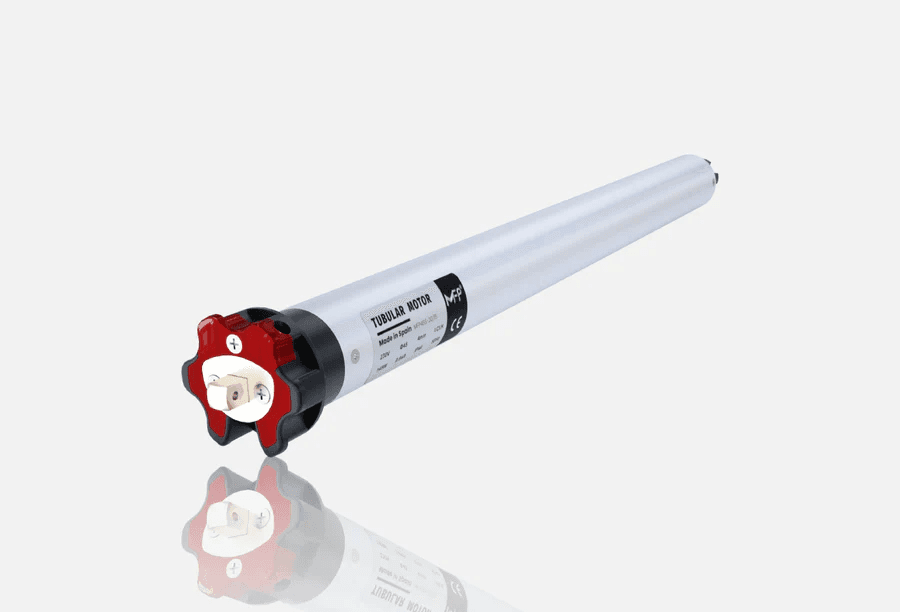
1. Tubular Motor for Roller Shutter
A tubular motor for roller shutter applications is installed inside the roller tube. This is one of the most common motor formats for compact rolling shutters because it saves space and keeps the motor protected inside the tube. Somfy explicitly notes that its tubular motor is integrated into the cylinder around which the roller shutter is wound, and Cookson notes that concealed tubular motors are especially useful where headroom is tight and a compact design is needed.
A tubular motor is often the right fit when:
the shutter is relatively compact
appearance matters
header space is limited
the application is residential or light commercial
quieter and cleaner integration is preferred
For many smaller openings, this is the default answer to what type of motor is used for a roller shutter door.
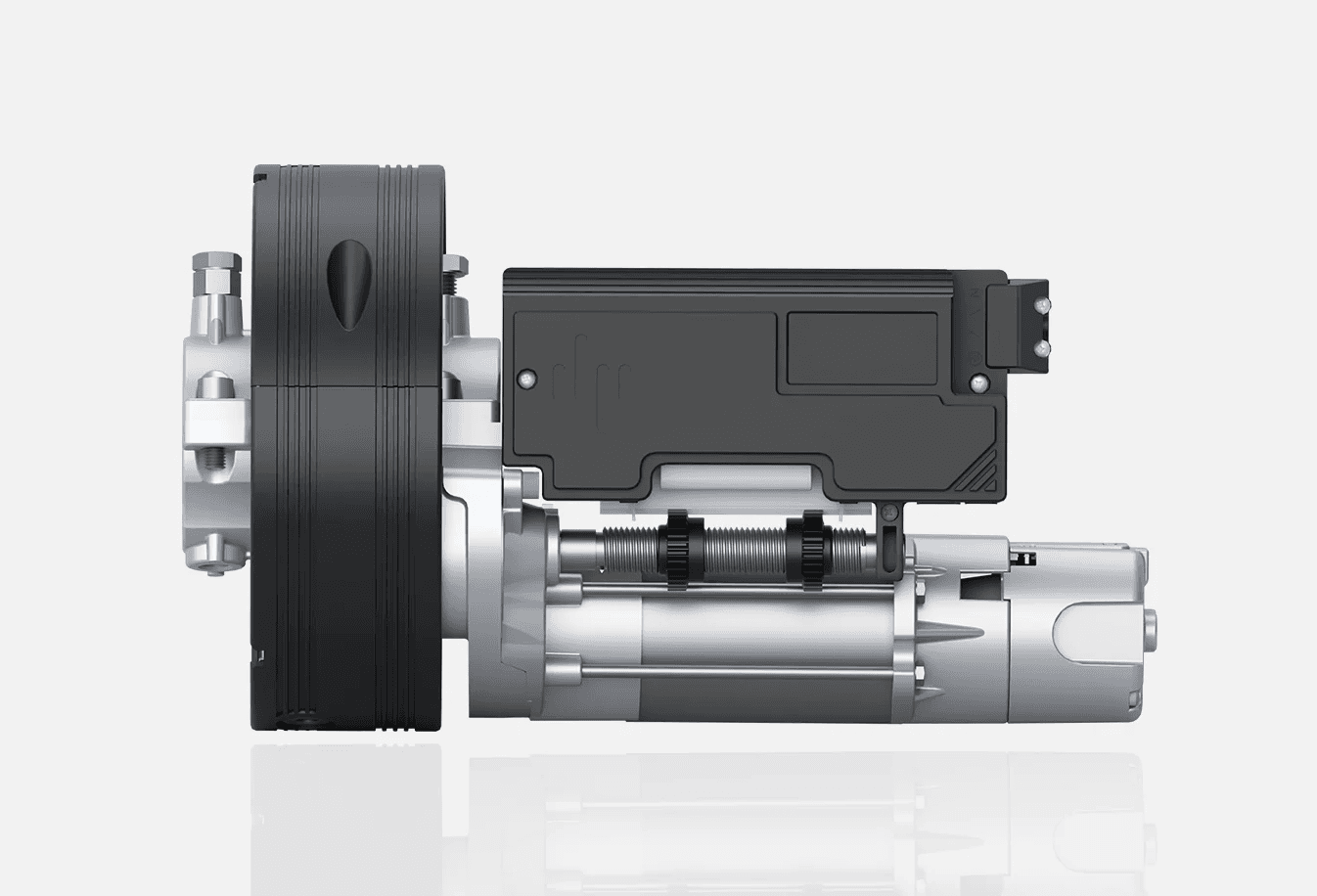
2. Central Motor for Roller Shutter
A central motor for roller shutter systems is mounted in the middle of the shaft and is commonly used in rolling shutters with spring-assisted mechanisms. Industry sources describing central motors position them as a common and economical way to drive shopfront, garage, and medium-duty rolling shutters, especially where the shutter weight and operating frequency sit between light residential and heavy industrial needs.
A central motor is often selected when:
the door uses springs on the shaft
medium-duty use is expected
the project needs a practical balance of cost and performance
the opening is larger than a typical small domestic shutter
For many installers, central motor for roller shutter systems remain a popular option in retail, garage, and medium-duty commercial settings.
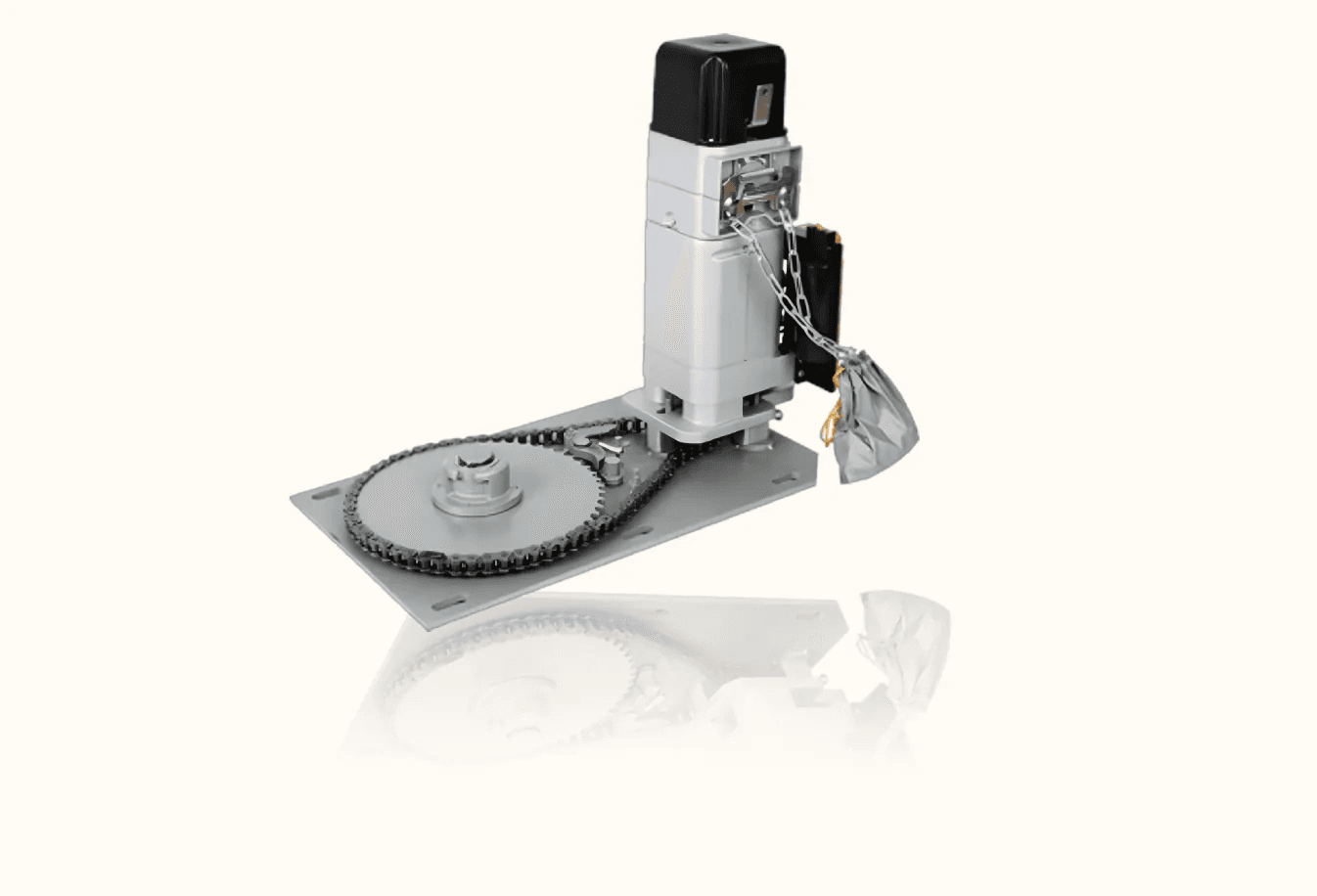
3. Side-Mounted or Shaft-Mounted Motors
For larger doors, higher loads, and higher duty cycles, a commercial roller shutter motor or industrial roller shutter motor is often mounted at the side of the shaft or directly on the door shaft. GfA describes shaft-mounted drives for applications including roller shutters and rolling grilles, and these systems are typically used when the installation demands higher torque, integrated safety functions, or more robust industrial performance.
A side-mounted or shaft-mounted motor is usually preferred when:
the shutter is large or heavy
frequent daily cycling is expected
the site is commercial or industrial
safety braking or anti-fallback protection is required
the system needs higher torque than a compact tubular solution can easily provide
This is often the most suitable industrial roller shutter motor configuration for warehouses, logistics sites, factories, and large commercial premises.
Different Types of Roller Shutter Motors Compared
When people search for different types of roller shutter motors, they are usually trying to understand which motor suits which use case. The comparison below makes that clearer.
Motor Type | Typical Position | Best Suited For | Main Strength |
|---|---|---|---|
Tubular motor | Inside the roller tube | Residential and light commercial shutters | Compact design, clean installation, limited headroom suitability |
Central motor | Middle of the shaft | Medium-duty shopfronts, garages, spring-assisted shutters | Economical and practical for medium-duty use |
Side- or shaft-mounted motor | Side of shaft or directly on shaft | Commercial and industrial doors | Higher torque, heavier load capacity, robust operation |
This simple framework is a better way to understand roller shutter motor types than treating all motors as interchangeable. The right solution depends on scale, duty cycle, and structural layout.

How to Choose the Best Motor for Roller Shutter Door Applications
If you want to choose the best motor for roller shutter door projects, start with the engineering factors rather than the motor label alone.
Door Size and Weight
Motor selection should be matched to the shutter’s weight, height, and shaft size. Somfy’s selection guidance and Nice’s installation materials both emphasize choosing the motor according to torque, dimensions, and operating characteristics rather than simply choosing by name or appearance.
Frequency of Use
A door that opens a few times a day does not need the same motor strategy as a shutter in a busy loading bay. In high-cycle environments, a dedicated commercial roller shutter motor or industrial roller shutter motor is generally more appropriate than a basic compact motor.
Available Space
Where header clearance is limited, a tubular motor for roller shutter systems can be a strong option because the motor sits inside the tube and reduces the external footprint of the drive assembly. Cookson specifically highlights this advantage for compact roll-up installations.
Control and Automation Needs
Some projects need only a wall switch. Others require remotes, automation timers, or integration with safety devices and building controls. Somfy notes that roller shutters can be operated by wired controls, remote commands, or automated systems, which means the control ecosystem should be considered together with the motor itself.
Safety Requirements
On heavier installations, safety devices such as anti-fallback protection and suitable controls become more important. GfA’s shaft-mounted solutions explicitly reference anti-fallback applications for roller shutters and related door types, which is especially relevant in heavier-duty environments.
Which Motor Is Best for Residential, Commercial, and Industrial Use?
For most residential shutters, the best answer is usually a tubular motor for roller shutter systems because they are compact, discreet, and well suited to lighter or smaller openings. For medium-duty storefronts and garages, a central motor for roller shutter systems may offer a practical balance between performance and cost. For high-load, high-cycle, or large-format doors, a dedicated commercial roller shutter motor or industrial roller shutter motor is generally the better fit.
So, if someone asks again, what type of motor is used for a roller shutter door, the most accurate professional answer is: it depends on the shutter’s size, shaft design, and duty cycle, but the main families are tubular, central, and side- or shaft-mounted motors.
Common Mistakes When Choosing a Roller Shutter Motor
One common mistake is assuming that any electric motor for roller shutter door use will fit any shutter. In reality, motor torque, shaft compatibility, safety features, and duty rating must all line up with the actual installation. Nice warns against installing a motor with torque characteristics that do not suit the shutter, which is a useful reminder that oversimplified sizing can cause problems.
Another mistake is choosing by price alone. A low-cost solution may be perfectly fine for a light-duty shutter, but it may not deliver the performance or durability needed in a busy commercial or industrial environment. That is why understanding different types of roller shutter motors is so important at the buying stage.
Final Thoughts
Understanding what type of motor is used for a roller shutter door is the first step toward choosing the right shutter system. In most cases, the decision comes down to three core roller shutter motor types: tubular motors for compact and light-duty use, central motors for medium-duty shaft-based systems, and side- or shaft-mounted drives for demanding commercial and industrial applications.
If your goal is to choose the best motor for roller shutter door performance, focus on door weight, shaft design, cycle frequency, space constraints, and safety requirements. That approach is far more reliable than choosing by product label alone, and it produces content that is also much more aligned with how real buyers search and decide.
FAQ
What type of motor is used for a roller shutter door?
The most common answers are tubular motors, central motors, and side- or shaft-mounted motors. The right type depends on the shutter’s size, weight, and use frequency.
What are the different types of roller shutter motors?
The main different types of roller shutter motors are tubular motors, central motors, and side- or shaft-mounted motors used in heavier commercial and industrial systems.
What is a tubular motor for roller shutter use?
A tubular motor for roller shutter use is a motor installed inside the roller tube. It is often used when the project needs a compact and discreet design.
What is a central motor for roller shutter systems?
A central motor for roller shutter systems is mounted in the middle of the shaft and is often used in medium-duty rolling shutters, especially spring-assisted designs.
What is the best motor for roller shutter door applications?
The best motor for roller shutter door installations depends on the application. Tubular motors are often best for compact residential shutters, while shaft-mounted or side-mounted motors are usually better for large commercial and industrial doors.
Other Blogs