Blog
Tubular Motor vs Chain Motor for Roller Shutters: Which One Is Better?
Author
Ray
Published
Category
Tubular Motor
Compare tubular motor vs chain motor for roller shutters by load capacity, noise, installation space, maintenance, and ideal applications.


Author
Ray
An experienced automation specialist with a strong background in motor technology and industrial solutions. With years of expertise in central motors, tubular motors, and automation systems, the author is dedicated to sharing insights that connect engineering innovation with real-world applications. Passionate about advancing reliable, energy-efficient, and high-performance automation products for global markets.
What’s better than insider perks, pro tips, and surprises?
Sign up to get the most recent blog articles in your email every week.
Join now.
WHY I WRITE THIS
About my business
Our company’s main product lines include tubular motors, sliding gate motors, swing gate motors, roller shutter motors, and other door automation solutions, all manufactured by trusted partner factories we have worked with for many years.
Our Services
I help them with sales and export operations, while our company also provides sourcing and procurement services in China to help international clients solve supply-related challenges. If you need assistance with procurement, please feel free to contact us.
For most residential and light commercial roller shutters, a tubular motor is usually the better choice because it is compact, mounted inside the roller tube, quieter in operation, and easier to integrate with remote or smart controls. For larger, heavier, or more industrial roller shutters, a chain motor is often the better fit because chain-drive systems are commonly used where higher load demands and more robust door-duty requirements matter more than appearance or compact packaging. Public guides from roller shutter and door suppliers consistently describe tube motors as internal, space-saving systems and chain-drive systems as a standard option for heavier commercial and industrial doors.
Key Takeaways
A tubular roller shutter motor is typically installed inside the roller tube, which makes it compact and visually discreet.
Chain-drive systems are commonly used on heavier roller shutter doors and industrial applications where larger loads are expected.
Tubular motors are often favored for quieter operation and easier integration with remote and smart controls.
The best motor is not chosen by motor type alone. The right decision depends on shutter weight, tube size, installation space, usage frequency, and control requirements.
If the shutter is especially heavy or the site is industrial, a chain motor is often the safer comparison point; if the project prioritizes compact design and lower noise, tubular usually wins.
The short answer: which motor is better?
There is no universal winner, but there is a practical one for each job.
If you are specifying a shutter for a home, storefront, kiosk, or light commercial opening, a tubular motor is usually better because it keeps the drive system hidden inside the tube, reduces visual clutter, and supports a cleaner finished installation. Public guides repeatedly describe tubular systems as compact, space-saving, and suitable for residential and commercial shutters.
If you are dealing with a large steel shutter, a warehouse opening, or a heavy-duty industrial door, a chain motor is often better because chain-drive systems are widely associated with heavier shutters and more demanding operating environments. Samson Doors, for example, lists chain drive as one of the main motor systems used for electric roller shutter doors, alongside tube motor drive and direct drive, in industrial door contexts.
What is a tubular motor?
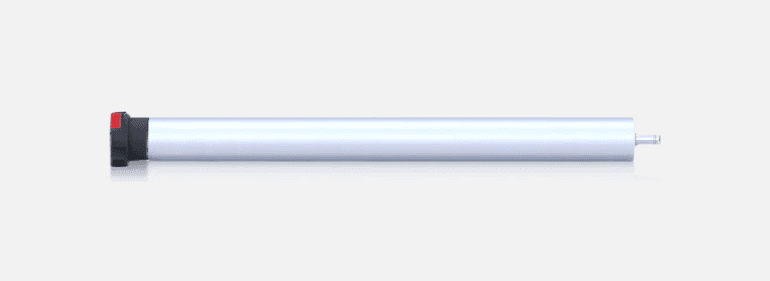
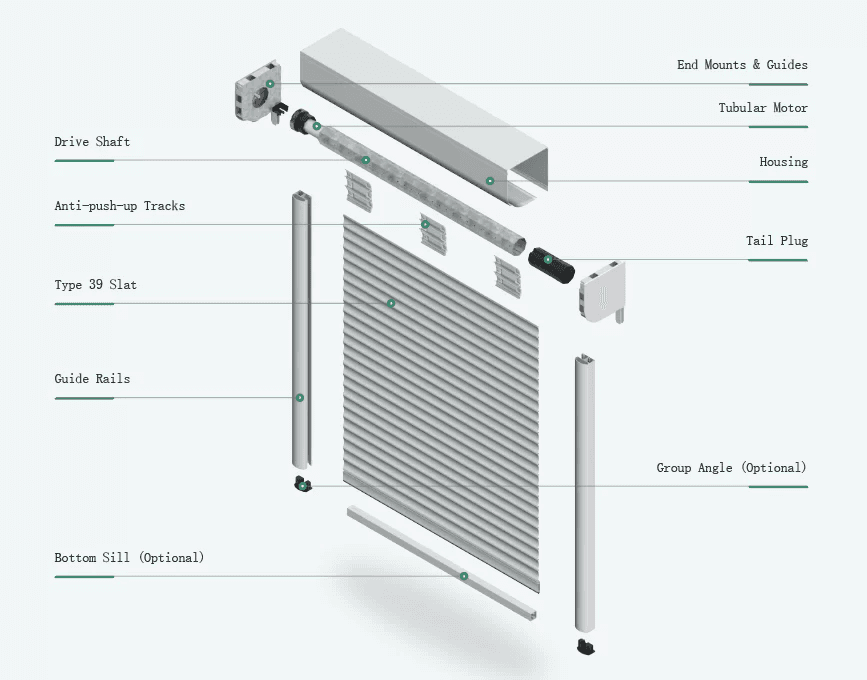
A tubular motor is a motor designed to fit inside the roller tube of a shutter. That internal mounting position is its defining advantage. Because the motor sits within the tube, it offers a more compact and concealed installation than externally mounted systems. Security Direct and other current guides describe tubular motors as sleek, efficient, and compact, specifically because they fit inside the roller tube.
In buying terms, this usually translates into four benefits:
cleaner appearance
better space efficiency
quieter operation
easier integration with remote or smart controls
Those strengths explain why tubular motors are so commonly recommended for modern residential and light commercial roller shutter projects.
What is a chain motor?
A chain motor, often described as a chain-drive motor or side motor, drives the shutter through an external side-mounted mechanism rather than placing the motor inside the roller tube. Current comparison pages position chain motors as the more obvious choice for heavier shutters and industrial doors, where the system can prioritize load handling and serviceability over compact appearance.
This makes chain motors relevant when the project involves:
larger shutter curtains
heavier door materials
industrial or warehouse use
higher-load openings where motor placement outside the tube is acceptable
That does not automatically make chain motors “better.” It makes them better for a different class of job.
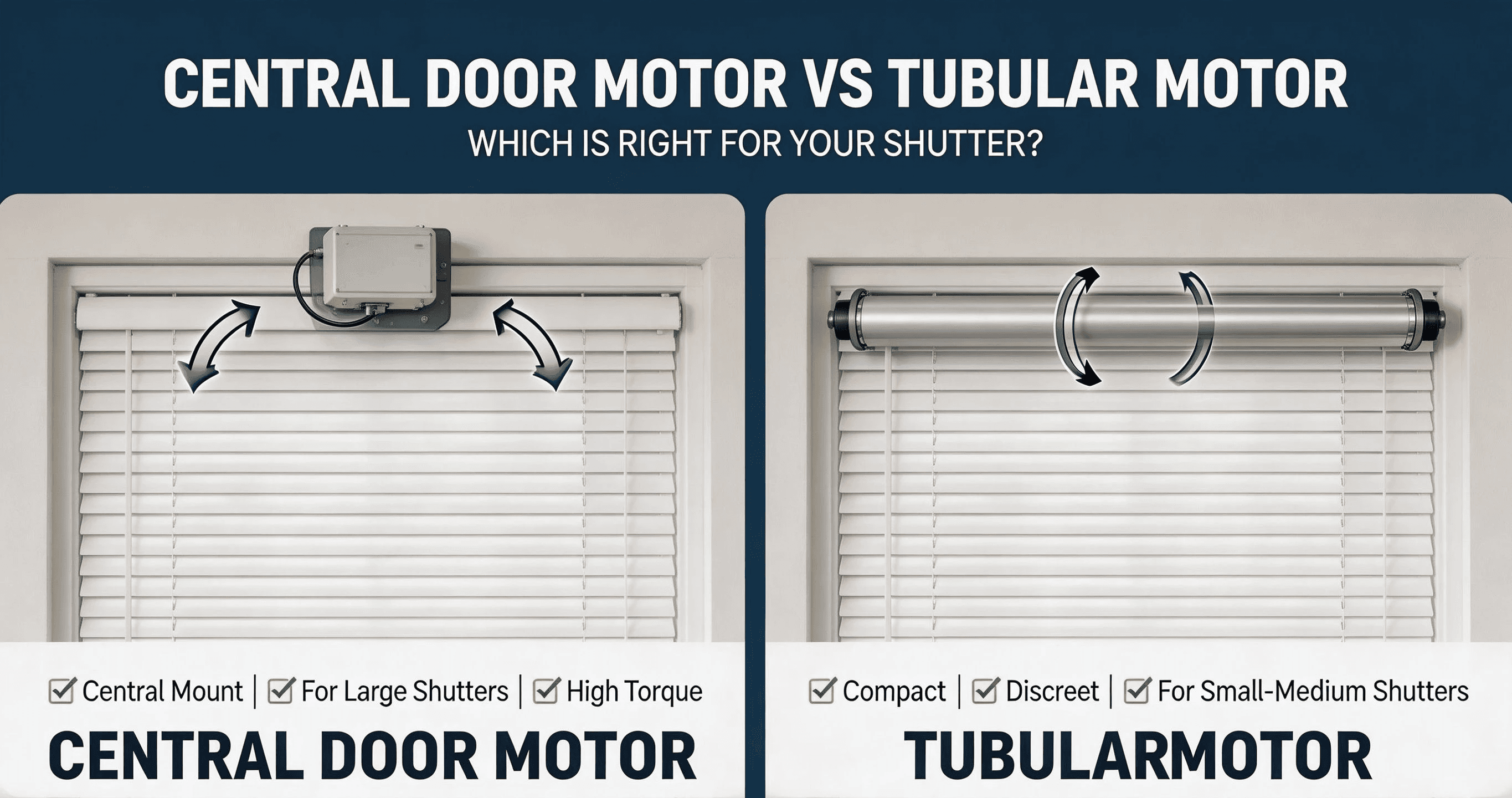
Tubular motor vs chain motor: side-by-side comparison
Installation position and space requirements
This is one of the clearest differences.
A tubular motor is installed inside the roller tube, which helps save space and produce a more discreet finished system. Multiple public guides describe this internal mounting arrangement as one of the core advantages of tubular motors.
A chain motor is typically mounted externally on the side of the shutter assembly. That means it generally requires more installation space and creates a more visible drive setup. Comparison guides position this as normal for commercial and industrial systems where compact appearance matters less.
If space is tight or aesthetics matter, tubular usually has the edge.
Load capacity and shutter size
This is where chain motors often become more competitive.
Public comparisons and industrial-door guides repeatedly place chain motors in the heavier-duty category, while tubular motors are more commonly discussed in residential, retail, and light commercial contexts. One current comparison page goes so far as to frame tubular motors as suitable up to medium weights and chain motors as the choice for substantially heavier shutters, though exact limits vary by model and manufacturer.
That said, tubular motors are not limited to very small shutters. Product-selection resources from Somfy and SIMU show that tubular motor sizing depends on torque, tube diameter, and shutter characteristics rather than on a simplistic “small only” rule.
So the correct takeaway is this: chain motors are often preferred for heavier shutters, but tubular motors can still handle serious work when properly specified.
Noise and user experience
Noise is often a decisive factor, especially in residential and storefront environments.
Current public guides consistently describe tubular motors as quiet or smoother-running solutions, which is one reason they are favored in homes and customer-facing spaces.
Chain motors are generally not marketed on quietness. Their value proposition is more about heavy-duty performance and suitability for larger doors. If the shutter is close to living areas, offices, or customer spaces, this difference can matter a lot.
Control options and automation
Tubular motors are often more closely associated with remote control, smart integration, and compact automation packages. Public guides from residential and tubular-motor-focused sources highlight compatibility with remote systems, smartphone control, and, in some cases, voice-assistant ecosystems.
Chain motors can also be automated, but they are more often discussed in practical operational terms than as smart-home products. If your project values control flexibility and a modern user experience, tubular systems usually have the stronger story.
Maintenance and service access
Chain motors can be easier to access because the drive mechanism is externally mounted. That can be an advantage in industrial environments where technicians need straightforward service access. This is a logical inference from the external mounting style described in comparison guides, rather than a universal rule for all brands.
Tubular motors are more integrated into the tube assembly. That is great for appearance and protection, but it can make service access more involved depending on the installation.
In other words, tubular tends to win on packaging; chain may win on exposed serviceability.
When a tubular roller shutter motor is the better choice
A tubular motor is usually the better choice when your priorities are:
a compact motor hidden inside the tube
lower operating noise
a cleaner architectural finish
remote or smart control integration
residential, retail, kiosk, or light commercial usage
That recommendation is well aligned with current public guidance, which repeatedly positions tubular motors as the preferred solution for residential and modern light commercial projects.
This is especially true when the shutter is visible to users, customers, or homeowners. In that setting, the reduced visual bulk and smoother user experience of a tubular system are usually worth more than the raw-duty advantages of a chain motor.
When a chain motor is the better choice
A chain motor is usually the better choice when your priorities are:
handling heavier shutter curtains
serving industrial or warehouse environments
prioritizing robust side-drive performance over compact appearance
working on larger openings where a heavier-duty drive architecture is appropriate
Current industrial-door guides place chain drive alongside direct drive as core motor-system categories for roller doors in heavier-duty settings, which is why chain motors remain relevant even as tubular systems expand.
If the site is a factory, loading bay, warehouse, or another high-duty commercial environment, chain drive often becomes the more natural starting point.
The five questions buyers should ask before choosing
A good motor decision usually comes down to five questions.
1. How heavy is the shutter?
This is the first filter. Motor choice should always begin with shutter weight and required torque. Somfy and SIMU selection documents both emphasize matching torque and tube configuration to shutter characteristics.
2. What is the roller tube size?
Tubular motors must match the tube correctly. Tube diameter compatibility is a practical selection issue, not a minor detail. Public selection charts and buyer guides reinforce this point.
3. Is the environment residential, retail, or industrial?
Application context matters. Quietness and aesthetics are far more important in a home or storefront than in a loading dock. Public guides split these use cases clearly.
4. How often will the shutter cycle?
Duty cycle affects motor suitability. Product-selection overviews list usage frequency as one of the important factors in choosing a roller shutter motor.
5. Do you need smart or remote control?
If remote convenience, automation, or smart integration is important, tubular motors often present a more natural fit in current product ecosystems.
Common mistakes when comparing roller shutter motors
The biggest mistake is treating motor type as the only decision factor.
Other common mistakes include:
choosing by price before checking shutter weight
ignoring tube compatibility
assuming every tubular motor is only for small shutters
assuming every chain motor is automatically better for every commercial job
overlooking noise, control method, and service access
comparing motor types without comparing torque class and duty expectations
These are the kinds of errors that lead to poor fit, not just poor performance.
Final verdict
If the question is “Which one is better?” the most honest answer is this:
A tubular motor is usually better for residential and light commercial roller shutters because it is compact, quieter, visually cleaner, and easier to integrate with modern controls. A chain motor is usually better for heavier, larger, and more industrial roller shutters where load handling and rugged side-drive performance matter more than discreet packaging. That conclusion is consistent with current public roller shutter and industrial door guidance.
For most U.S. buyers in the tubular roller shutter motor market, the better question is not “Which motor is best in general?” It is “Which motor is best for this shutter, this site, and this usage profile?” Once you answer that, the right motor type becomes much easier to specify.
A soft next step for China-Develop would be to guide readers toward a specification-based inquiry: shutter weight, tube size, opening width, usage frequency, and control preference. That keeps the article useful while naturally moving the reader toward a real buying decision.
FAQ
1. What is the difference between a tubular motor and a chain motor for roller shutters?
A tubular motor fits inside the roller tube and is typically chosen for compact, quieter, and more discreet installations. A chain motor uses an external side-drive setup and is more commonly associated with heavier commercial or industrial shutters.
2. Which is better for heavy roller shutters: tubular motor or chain motor?
For very heavy shutters, a chain motor is often the more common choice in public industrial-door guidance. However, properly specified tubular motors can also handle substantial loads, so the final decision should still be based on torque, tube size, and shutter weight.
3. Are tubular roller shutter motors quieter than chain motors?
Public guides consistently market tubular motors as quieter and smoother-running, especially for residential and retail use. Chain motors are generally chosen more for duty and load than for low-noise performance.
4. Can a tubular motor be used for commercial roller shutters?
Yes. Public guides describe tubular motors as suitable for residential, commercial, and some industrial settings, provided the correct torque and configuration are selected.
5. What should I check before choosing a roller shutter motor?
At minimum, check shutter weight, tube diameter, usage frequency, installation space, and control requirements. Public selection guides repeatedly emphasize torque, tube compatibility, and shutter characteristics.
6. Are chain motors easier to maintain than tubular motors?
Because chain motors are typically externally mounted, they may be easier to access for service in some installations. That is a practical inference from current comparison guides, but serviceability still depends on the specific motor design and installation layout.
Other Blogs