Blog
Garage Door Opener Troubleshooting: 10 Common Problems and Solutions
Author
Ray
Published
Category
Guide
Troubleshoot 10 common garage door opener problems, including sensor issues, remote failures, noisy operation, partial movement, and closing problems.

Author
Ray
An experienced automation specialist with a strong background in motor technology and industrial solutions. With years of expertise in central motors, tubular motors, and automation systems, the author is dedicated to sharing insights that connect engineering innovation with real-world applications. Passionate about advancing reliable, energy-efficient, and high-performance automation products for global markets.
What’s better than insider perks, pro tips, and surprises?
Sign up to get the most recent blog articles in your email every week.
Join now.
WHY I WRITE THIS
About my business
Our company’s main product lines include tubular motors, sliding gate motors, swing gate motors, roller shutter motors, and other door automation solutions, all manufactured by trusted partner factories we have worked with for many years.
Our Services
I help them with sales and export operations, while our company also provides sourcing and procurement services in China to help international clients solve supply-related challenges. If you need assistance with procurement, please feel free to contact us.
A garage door opener that suddenly stops working can be frustrating, but the opener itself is not always the source of the problem. A blocked safety sensor, weak remote battery, incorrect travel setting, unbalanced garage door, damaged spring, electrical issue, or worn drive component can all produce similar symptoms.
The most effective approach to garage door opener troubleshooting is to identify the symptom first and then determine whether the problem comes from the opener, the garage door, or the control and safety system.
This guide covers 10 common garage door opener problems, their likely causes, practical checks homeowners can perform, and situations where professional service is the safer choice.
Before Troubleshooting: Is the Problem the Door or the Opener?
Before replacing parts or changing opener settings, determine whether the garage door itself moves correctly.
With the garage door closed, disconnect the opener using the emergency release according to the manufacturer's instructions. Carefully operate the door manually. It should move relatively smoothly without requiring excessive force.
A properly balanced garage door should also remain reasonably stable when partially opened. If the door feels unusually heavy, binds along the tracks, drops rapidly, or rises unexpectedly, the problem may involve the door's spring or counterbalance system rather than the garage door opener.
This distinction is important. DASMA specifically notes that installing a more powerful opener is not the correct solution for a door that feels excessively heavy. Openers are designed to operate properly balanced garage doors.
Springs, cables, bottom brackets, and related counterbalance components can be under extremely high tension and should not be adjusted by inexperienced homeowners. If the door is difficult to operate manually or there is visible spring or cable damage, stop troubleshooting the opener and contact a trained garage door technician.
1. Garage Door Opener Does Not Respond at All
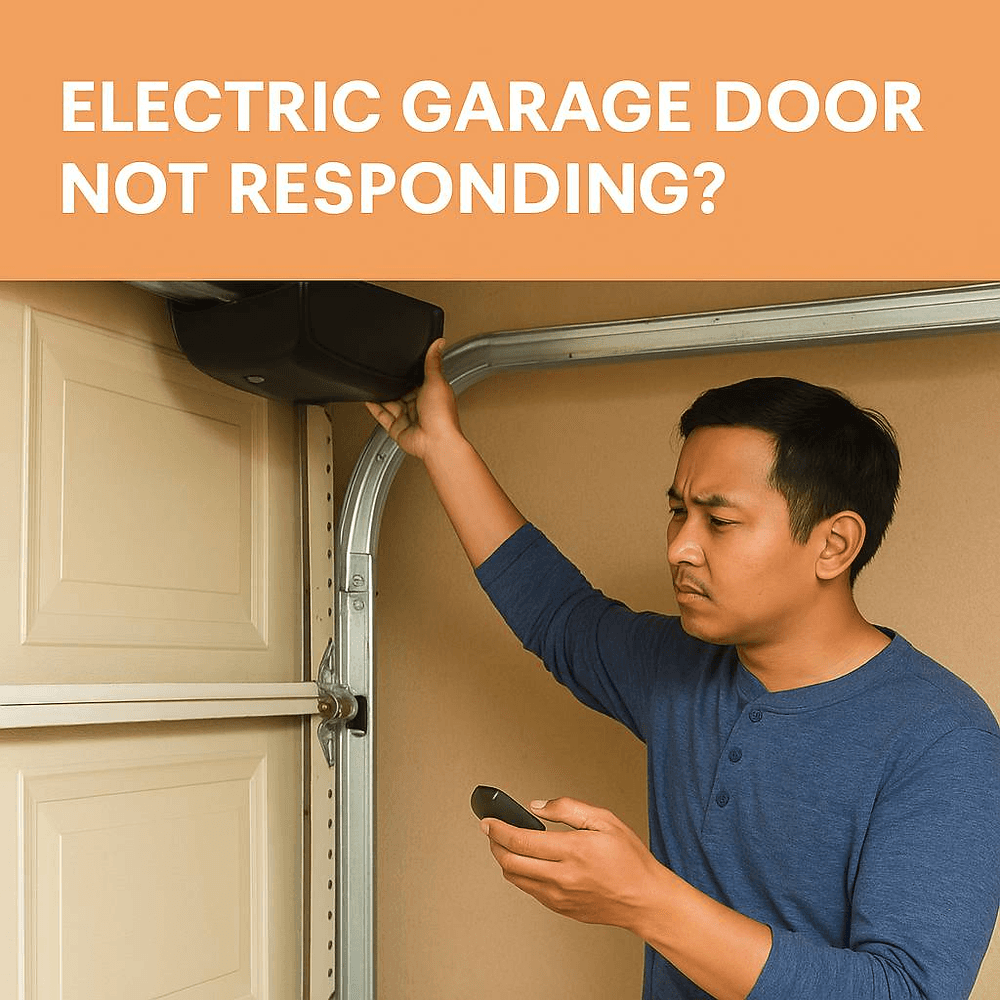
One of the most common complaints is a garage door opener that appears completely dead. Pressing the remote control or wall button produces no movement, sound, or lighting.
The first thing to check is the power supply.
Verify that the opener is plugged into a working electrical outlet and check whether a circuit breaker or GFCI outlet has tripped. If another electrical device works from the same outlet, the problem is more likely to be inside the opener or its control system.
If the wall control works but the remote does not, the opener itself probably still has power and the problem is more likely related to the remote control.
If neither the wall control nor the remote works despite confirmed power, possible causes include damaged control wiring, a failed power supply, a defective logic board, or another internal electrical problem.
Some modern openers include diagnostic LEDs or display codes. These should be interpreted according to the manual for the specific model because diagnostic codes are not universal across manufacturers.
If basic power checks do not identify the problem, internal electrical diagnosis should normally be left to a qualified technician.
2. Garage Door Opener Has Power but Won't Open the Door
If the opener lights turn on or the motor responds but the garage door does not open, start by checking whether the door is mechanically free to move.
The door may be locked manually, obstructed, frozen to the floor, or experiencing a track, roller, spring, or cable problem.
A broken garage door spring is particularly important to recognize. The opener may still attempt to operate, but the door can become far too heavy for the motor to lift safely.
Do not repeatedly press the opener button when the motor is clearly struggling. Doing so can place unnecessary load on the motor, gearbox, trolley, chain, belt, or other drive components.
Disconnect the opener only when it is safe to do so and test the door manually. LiftMaster troubleshooting guidance similarly recommends manually checking the door when an opener strains, hums without movement, or stops after only a short distance. A door that is binding or unbalanced should be serviced by a trained door systems technician.
If the door moves freely by hand but the opener cannot move it, the problem may be related to the drive mechanism, trolley, gearbox, motor, travel system, or internal control components.
3. Garage Door Opens but Won't Close
A garage door that opens normally but refuses to close often points toward the safety system.
Modern residential garage door openers commonly use photoelectric safety sensors positioned near the bottom of the opening. One sensor transmits a beam while the opposite sensor receives it. If the beam is interrupted or the system detects a sensor problem, the opener may prevent normal closing.
Check the area between the sensors for boxes, tools, leaves, bicycles, dirt, spider webs, or other objects. Then inspect the sensor lenses and make sure both sensors remain securely mounted and face each other correctly.
Misalignment is common because sensors can be bumped during cleaning, storage, or movement around the garage.
Chamberlain identifies misaligned, obstructed, disconnected, or damaged safety sensors as common reasons an opener will not close normally. Direct sunlight can also interfere with some photoelectric sensors.
If the sensors appear correctly aligned but the door still will not close, inspect the visible low-voltage sensor wiring for obvious damage. Do not bypass or permanently disable the safety system to restore operation.
In the United States, automatic residential garage door operators are subject to the federal safety requirements of 16 CFR Part 1211, and entrapment protection is a critical part of those requirements.
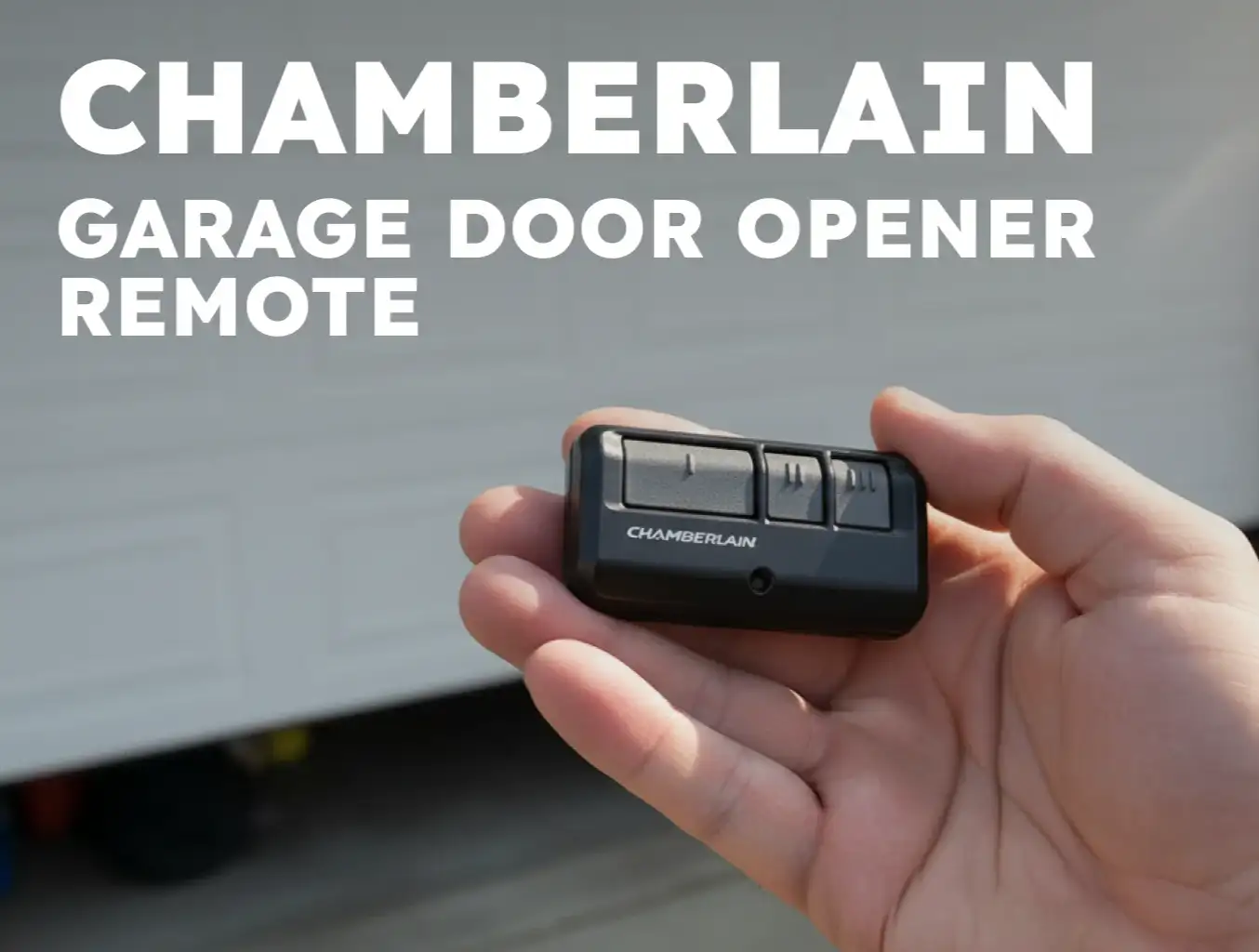
4. Garage Door Opener Remote Is Not Working
When the wall control operates the garage door normally but the handheld remote does not, the problem is usually limited to the remote-control system rather than the main opener mechanism.
Start with the remote battery. A weak or discharged battery is one of the simplest and most common causes of remote-control failure.
If replacing the battery does not help, check whether the remote needs to be reprogrammed. This can happen after certain power interruptions, control-board replacements, resets, or other system changes.
Also check whether the opener has a lock or vacation function. On some systems, enabling the lock feature disables handheld remotes while allowing operation from the wall-mounted control. Chamberlain specifically identifies the LOCK function as one possible reason remote transmitters stop operating while the wall control continues to work.
If only one remote fails, the remote itself may be defective. If every remote suddenly stops working while the wall control remains normal, investigate the opener's receiver, programming, lock setting, or possible radio-frequency interference.
Always use the programming procedure specified for your model rather than following a generic sequence, because button layouts and pairing procedures vary between manufacturers.
5. Garage Door Safety Sensors Are Not Working
Safety sensor problems are among the most important garage door opener issues because they directly affect safe closing operation.
Typical symptoms include a door that refuses to close, reverses immediately, closes only under certain control conditions, or displays a warning light or diagnostic code.
First make sure both sensors are mounted securely and are not physically damaged. Clean the lenses carefully and confirm that nothing blocks the beam.
Then inspect the sensor indicators. Depending on the opener model, a steady, flashing, or unlit LED may indicate different conditions. Always consult the product manual because LED meanings vary.
Sensor wiring can also create problems. Loose connections, damaged wires, staples that have pierced a wire, or wiring shorts can prevent the opener from receiving a valid sensor signal. LiftMaster diagnostic documentation lists disconnected wiring, shorted wiring, obstruction, and sensor misalignment among possible causes of closing faults.
Do not solve a recurring sensor fault by permanently bypassing the sensors.
UL 325 addresses entrapment hazards associated with automatic door and gate operators, and proper installation and maintenance of protective devices are important parts of safe system operation.
6. Garage Door Opener Light Is Blinking
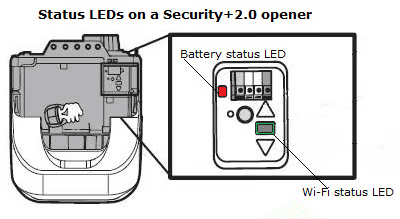
A blinking opener light is often a diagnostic signal rather than a failed light bulb.
Depending on the manufacturer and model, flashing lights may indicate a safety sensor problem, control setting, wiring fault, travel error, motor condition, or another diagnostic event.
For example, certain Chamberlain models use a series of opener-light flashes to indicate problems with the safety reversing sensors, while other products use LEDs or arrows on the motor unit to communicate diagnostic codes.
Because the meaning of a flashing light is model-specific, avoid assuming that a particular number of flashes has the same meaning on every opener.
Record the number and pattern of flashes, locate the model number on the opener, and consult the corresponding owner's manual.
If the flashing accompanies a door that will not close, checking sensor alignment and obstruction is a reasonable first step. If it occurs alongside motor, wiring, or position-control faults, professional diagnosis may be necessary.
7. Garage Door Opener Clicks or Hums but the Door Does Not Move
A clicking or humming sound tells you that at least part of the opener is responding, but the mechanical system is not successfully moving the door.
Possible causes include a jammed door, broken spring, engaged door lock, damaged trolley, worn gear system, failed motor, or obstruction in the rail.
Start by checking the garage door rather than immediately assuming the motor has failed.
With the door closed and the system safely disconnected, operate the door manually. If it is extremely heavy or difficult to move, stop and have the door system inspected.
LiftMaster documentation notes that a motor that hums briefly without movement can be associated with a binding door, obstruction, broken spring, locked door, or motor-related problem.
If the door operates smoothly by hand but the opener continues to click or hum without moving the trolley, the opener's motor, gearbox, drive assembly, logic board, or travel system may require inspection.
Repeatedly activating a stalled opener is not a useful troubleshooting method and can place additional stress on components.
8. Garage Door Opens or Closes Partway and Then Stops
A garage door that moves several inches or several feet before stopping can have either mechanical or opener-related problems.
First look for anything that could restrict movement along the tracks. Check for damaged rollers, debris, bent track sections, ice near the bottom of the door, or other physical obstructions.
Next test the door manually.
If the door becomes noticeably harder to move at a particular point, the door system may require mechanical service.
If the door moves smoothly by hand, the opener's travel settings, position-detection system, force settings, or electronic controls may need attention.
Travel settings tell the opener where the fully open and fully closed positions are located. Incorrect settings can prevent the door from completing its movement or can interfere with proper safety reversal operation. Chamberlain specifically cautions that incorrect travel or force adjustment can affect the safety reversal system and that safety testing should be performed after adjustments.
Do not simply increase the opener's force to overcome a sticking or poorly balanced door. Excessive force can mask a mechanical problem and compromise safe operation.
9. Garage Door Opener Is Making Unusual Noise
Some operating noise is normal, particularly with chain drive garage door openers. However, grinding, scraping, rattling, popping, or suddenly increased vibration can indicate a developing problem.
Listen carefully to determine where the noise originates.
Noise near the motor unit may be related to the gearbox, motor bearings, mounting hardware, or internal drive components. Noise along the rail may indicate chain or belt tension, trolley movement, alignment, or lubrication issues. Noise from the door itself may come from rollers, hinges, tracks, springs, or other door hardware.
A garage door opener should also be mounted securely. Loose supports or poor alignment can transfer vibration into the garage structure and make a normally functioning opener sound much louder.
If the system uses a chain drive, follow the manufacturer's maintenance instructions rather than applying excessive lubricant or making major tension adjustments without guidance.
If unusual noise appears together with slow operation, door imbalance, overheating, intermittent stopping, or visible wear, the system should be inspected before the problem becomes more serious.
10. Garage Door Opener Works Intermittently
An opener that works normally one day and fails the next can be more difficult to diagnose than a completely failed system.
Intermittent problems can originate from the remote control, electrical supply, wiring, safety sensors, control board, motor protection, position system, or environmental interference.
Start by identifying a pattern.
Does the problem happen only with the remote? Does the wall control always work? Does it occur after several consecutive opening cycles? Does sunlight hit one safety sensor at a certain time of day? Does the opener stop only when the garage is especially hot or cold?
These details can narrow the cause significantly.
If remote operation is inconsistent but the wall button always works, investigate the remote battery, receiver, programming, or radio interference.
If both controls fail intermittently, the problem may be related to electrical connections, the logic board, motor protection, or another internal component.
If closing problems occur only during certain times of day, sunlight interference with a photoelectric sensor is also worth checking. Chamberlain acknowledges direct sunlight as one possible source of safety-sensor interference.
Recurring intermittent faults are often easier for a technician to diagnose when the homeowner records exactly what happens, including warning lights, sounds, weather conditions, and which controls still operate.
How to Tell Whether the Problem Is the Garage Door or the Opener
This is one of the most useful troubleshooting steps.
When it is safe to do so, close the garage door and use the emergency release mechanism according to the manufacturer's instructions. Then carefully operate the door manually.
If the door moves smoothly and remains reasonably balanced, the opener or its control system becomes a more likely source of the problem.
If the door feels very heavy, binds, falls, rises unexpectedly, or cannot move smoothly through its normal travel, the garage door itself should be inspected first.
The opener is designed to move a properly functioning door. It should not be used to compensate for broken springs, binding tracks, damaged rollers, or an incorrectly balanced door. DASMA specifically warns against increasing opener force to compensate for a door that is not balanced or does not move smoothly.
When Should You Stop Troubleshooting and Call a Professional?
Basic checks such as replacing a remote battery, cleaning sensor lenses, removing an obstruction, checking power, or consulting the owner's manual are reasonable for many homeowners.
Other problems require more caution.
Stop operating the system if you see a broken spring, damaged cable, loose bottom bracket, severely bent track, unusually heavy door, damaged structural mounting, burning smell, exposed electrical components, or a safety reversing system that does not function correctly.
Garage door springs and related counterbalance components store significant mechanical energy. DASMA advises that springs, cables, supports, bottom brackets, and similar high-tension components should be handled by trained door-system technicians.
Safety should take priority over restoring automatic operation quickly.
How to Test the Garage Door Opener Safety Reversal System
Regular safety testing is an important part of garage door opener maintenance.
CPSC recommends testing the reversing system and states that an opener that does not properly reverse should be disconnected until it is adjusted, repaired, or replaced. CPSC guidance describes testing contact reversal using a 2x4 laid flat in the door's path.
DASMA similarly recommends monthly inspection and testing of the garage door and opener system. Its maintenance guidance includes checking the photoelectric sensors and testing contact reversal with a 2x4 laid flat beneath the door.
Always follow the owner's manual for the specific opener because setup and test procedures can vary.
If the opener fails a required safety test, do not continue normal automatic operation until the system has been properly inspected and corrected.
Repair or Replace: When Is a New Garage Door Opener the Better Choice?
Not every garage door opener problem requires replacement.
A weak remote battery, sensor alignment problem, damaged remote, minor wiring issue, or serviceable drive component may be relatively straightforward to correct.
Replacement becomes more reasonable when the opener suffers repeated failures, major motor or control-board problems, unavailable replacement parts, outdated safety technology, or when repair costs begin approaching the value of a modern replacement.
Older openers that lack appropriate automatic reversing and entrapment protection deserve particular attention. CPSC advises replacing older non-reversing automatic garage door openers with models that meet current safety requirements.
A replacement can also provide an opportunity to upgrade features such as quieter belt drive operation, battery backup, improved lighting, wireless controls, smartphone connectivity, or other smart functions.
When comparing replacement options, consider the door type, size, balance, required lifting performance, operating frequency, drive system, noise requirements, safety features, and compatibility rather than selecting solely by motor rating or price.
Why Garage Door Opener Quality Affects Long-Term Reliability
Troubleshooting also demonstrates why two garage door openers with similar specifications can perform differently over time.
Motor design affects operating stability and heat generation. Gearbox quality influences noise and mechanical wear. Chain or belt quality affects drive consistency. Rail alignment influences trolley movement. Control-board quality affects communication and motor control, while reliable safety sensors are essential for correct closing operation.
Assembly consistency is equally important.
Loose electrical connections, inconsistent drive tension, poor component alignment, inadequate testing, or variations between production batches can eventually appear as intermittent faults, excess noise, inaccurate travel, or premature component failure.
For distributors, installers, and OEM buyers, these issues create costs beyond the value of the opener itself. A product failure may result in warranty claims, technician visits, replacement parts, customer complaints, and reputational damage.
This is why garage door opener manufacturers should evaluate complete-system reliability rather than focusing only on individual specifications.
How to Prevent Common Garage Door Opener Problems
Preventive maintenance is usually easier than troubleshooting an unexpected failure.
Periodically inspect the door, opener, rollers, tracks, hinges, wiring, sensors, and mounting hardware for visible changes or damage. Keep the sensor lenses clean and the sensor path unobstructed. Test the door's manual movement and balance according to the manufacturer's instructions.
The opener's safety reversal and photoelectric protection should also be tested regularly.
DASMA recommends making inspection and testing of the garage door and opener system part of a monthly routine.
When lubrication is required, use the product and locations recommended by the door or opener manufacturer. Do not assume every track, belt, or internal component should be lubricated.
Most importantly, unusual changes in sound, movement, balance, closing behavior, or safety-system performance should be investigated early rather than ignored until the system stops working completely.
Frequently Asked Questions About Garage Door Opener Troubleshooting
Why does my garage door opener have power but not open the door?
The opener may be receiving electricity while a mechanical problem prevents the door from moving. Possible causes include a locked or obstructed door, damaged spring, binding track, trolley problem, drive-system failure, or motor issue. Disconnect the opener only when safe and check whether the garage door moves smoothly by hand. If the door is unusually heavy, do not continue operating the opener.
Why does my garage door open but refuse to close?
Safety sensor problems are one of the most common causes. Check whether the sensor path is blocked, the lenses are dirty, the sensors have become misaligned, or visible wiring is damaged. Travel settings or mechanical door problems can also prevent normal closing.
Why does my garage door opener only work from the wall button?
If the wall control works normally but the remote does not, check the remote battery, programming, and any lock or vacation function on the opener. If several remotes stop working simultaneously, the problem may involve the opener's receiver or control system.
Why does my garage door opener click but not move?
A click indicates that part of the control system is responding, but the door or opener may be mechanically unable to move. Check whether the garage door is locked, obstructed, binding, or unusually heavy. If the door moves freely manually, the opener's trolley, drive system, gearbox, motor, or control board may need inspection.
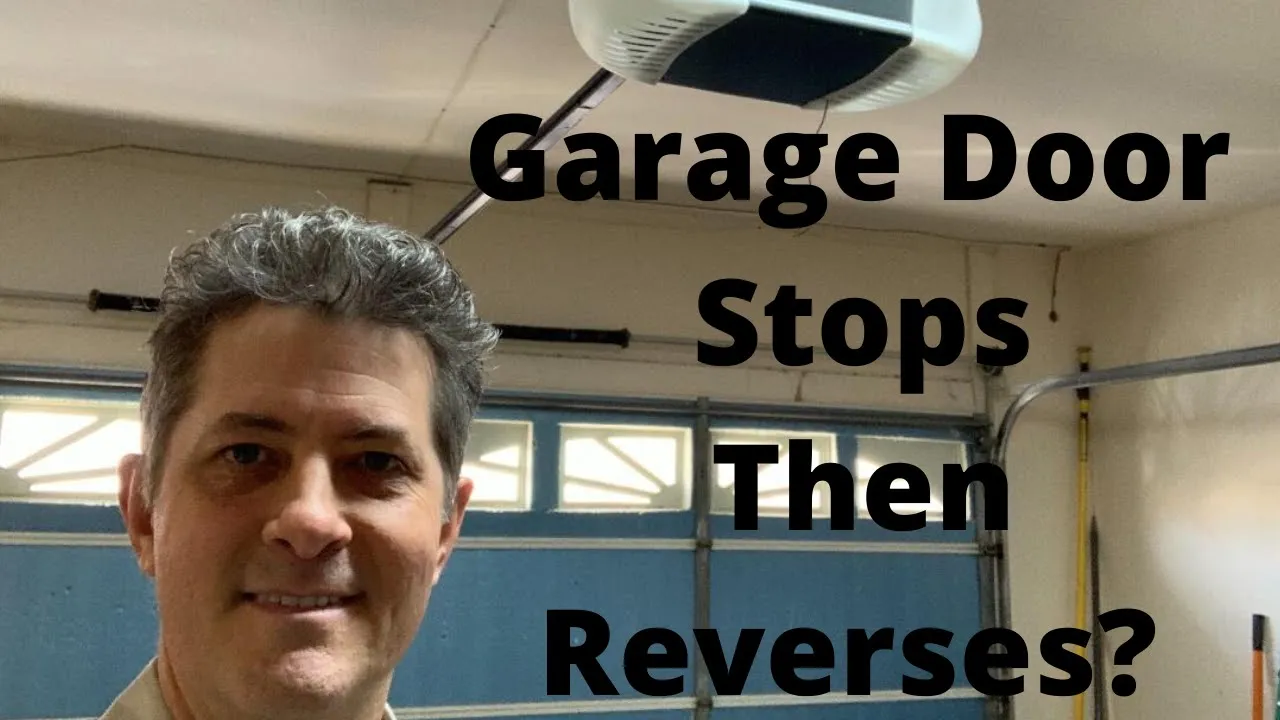
Why does my garage door go down and then come back up?
The opener may be detecting an obstruction or encountering excessive resistance. Sensor problems, incorrect travel settings, a binding door, an obstruction at the floor, or incorrect force settings can all contribute. Do not increase force simply to make the door close if the door is not moving smoothly.
Why does my garage door stop halfway?
A door that stops partway may have an obstruction, track or roller problem, door-balance issue, incorrect travel setting, or opener control problem. Checking manual door movement can help determine whether the problem is mechanical or related to the opener.
Can I keep using a garage door opener if the safety sensors are not working?
A defective or bypassed safety system can create a serious entrapment hazard. Safety devices should not be permanently disabled to keep the opener operating. If cleaning, alignment, and basic wiring checks do not solve the problem, the system should be inspected and repaired before normal automatic closing resumes.
Should I replace my garage door opener if it frequently needs repair?
Frequent failures can indicate that replacement is becoming more practical, especially when major electronic or mechanical components are involved, replacement parts are difficult to obtain, or the unit lacks modern safety features. Compare the repair cost and expected reliability with the cost and benefits of a new opener.
Final Thoughts
Garage door opener troubleshooting becomes much easier when the problem is approached systematically.
Start with the simplest possibilities such as power, remote batteries, obstructions, sensor alignment, and control settings. Then determine whether the garage door moves correctly without the opener. This single check can prevent homeowners from replacing a perfectly functional opener when the actual problem is a spring, track, roller, or door-balance issue.
Problems involving springs, cables, significant door imbalance, internal electrical components, or failed safety systems should be handled by qualified professionals.
For distributors, installers, contractors, and OEM buyers, recurring troubleshooting problems also highlight the importance of product design and manufacturing quality. Reliable motors, drive components, control boards, sensors, assembly processes, and product testing all contribute to lower failure rates and more consistent long-term performance.
A well-designed garage door opener should not only open and close a door. It should provide dependable operation, predictable safety performance, and a product platform that installers and customers can rely on over the long term.
Looking for Reliable Garage Door Opener Solutions?
CHINA-DEVELOP provides garage door opener and automation solutions for distributors, installers, contractors, and OEM partners. From different drive systems and control options to customized product configurations, the right solution should be selected according to the garage door, application, target market, and performance requirements.
Explore our garage door opener solutions or contact our team to discuss specifications, OEM requirements, and project needs.
Other Blogs