Blog
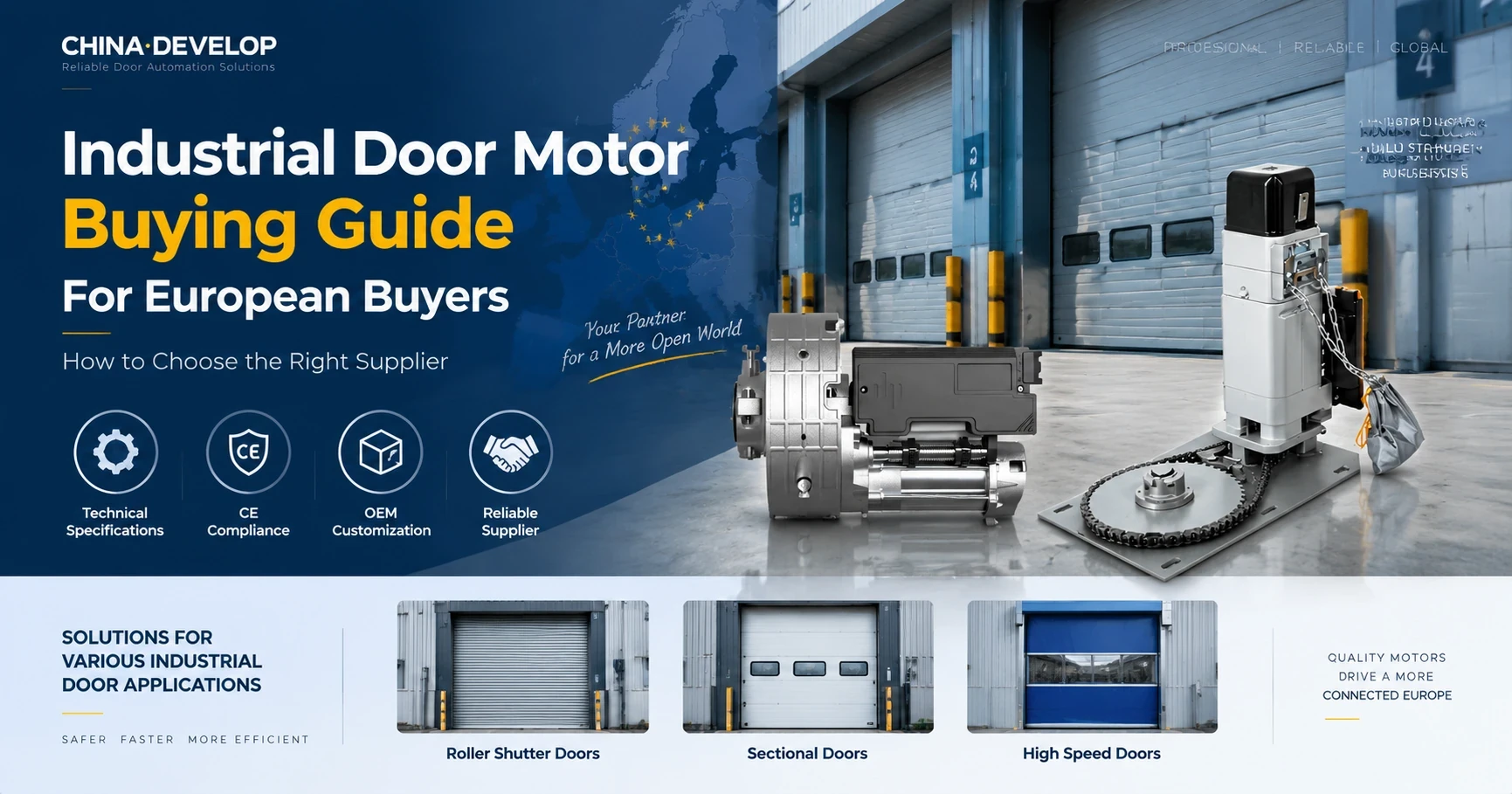
Industrial Door Motor Buying Guide for European Buyers: How to Choose the Right Supplier
Author
Ray
Published
Category
Guide
A complete industrial door motor buying guide for European buyers. Learn about torque, CE requirements, duty cycle, IP rating, OEM options and supplier selection.

Author
Ray
An experienced automation specialist with a strong background in motor technology and industrial solutions. With years of expertise in central motors, tubular motors, and automation systems, the author is dedicated to sharing insights that connect engineering innovation with real-world applications. Passionate about advancing reliable, energy-efficient, and high-performance automation products for global markets.
What’s better than insider perks, pro tips, and surprises?
Sign up to get the most recent blog articles in your email every week.
Join now.
WHY I WRITE THIS
About my business
Our company’s main product lines include tubular motors, sliding gate motors, swing gate motors, roller shutter motors, and other door automation solutions, all manufactured by trusted partner factories we have worked with for many years.
Our Services
I help them with sales and export operations, while our company also provides sourcing and procurement services in China to help international clients solve supply-related challenges. If you need assistance with procurement, please feel free to contact us.
What European Buyers Should Consider Before Purchasing Industrial Door Motors
For European door manufacturers, distributors, installers, and automation companies, purchasing an industrial door motor is not simply a matter of comparing prices.
The motor is one of the most important components in an automated door system. Its performance directly affects:
door reliability
operating efficiency
safety
maintenance requirements
customer satisfaction
long-term operating costs
A poorly selected motor can create problems such as:
insufficient lifting force
overheating during frequent operation
premature gearbox wear
installation difficulties
increased service costs
unexpected downtime
For professional European buyers, supplier selection should be based on a complete evaluation process rather than product price alone.
Important purchasing factors include:
output torque
motor compatibility
duty cycle
voltage requirements
safety documentation
environmental protection
OEM capability
production reliability
technical support
A professional industrial door motor supplier should provide more than a motor unit. The supplier should understand the complete door system and recommend a solution based on the actual application.
Understanding Different Industrial Door Motor Applications
Industrial door motors are used across many commercial and industrial environments.
Although different door systems may look similar from the outside, their mechanical requirements can be very different.
A correct motor selection depends on:
door structure
operating frequency
load characteristics
installation environment
control requirements
The main industrial door motor applications include:
roller shutter doors
sectional doors
high speed doors
industrial access systems
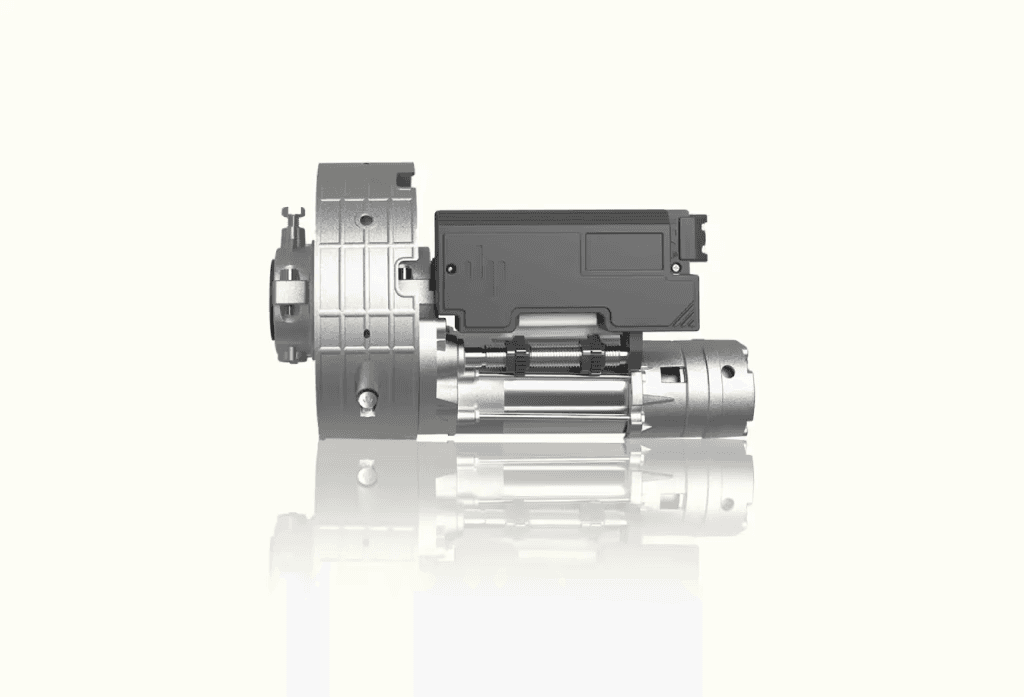
Roller Shutter Motors: Applications and Key Selection Factors
Roller shutter motors are commonly used in:
commercial shutters
warehouses
factories
retail security shutters
industrial rolling doors
parking facilities
A roller shutter motor rotates the shutter barrel or shaft, allowing the curtain to roll upward or downward.
The main technical parameters buyers should evaluate include:
Output Torque
Output torque (Nm) determines the rotational force available at the motor shaft.
The required torque depends on:
curtain weight
barrel diameter
shaft size
friction resistance
gearbox efficiency
A motor with insufficient torque may cause:
slow opening speed
incomplete travel
motor overheating
reduced service life
Shaft Compatibility
Different roller shutter systems use different shaft sizes and mounting arrangements.
Before ordering, buyers should confirm:
shaft diameter
mounting method
coupling design
installation position
A motor with the correct torque but incorrect mechanical compatibility may still fail during installation.
Manual Override Capability
For commercial and industrial applications, emergency operation is an important consideration.
Manual override systems allow operation during:
power failure
maintenance
control system problems
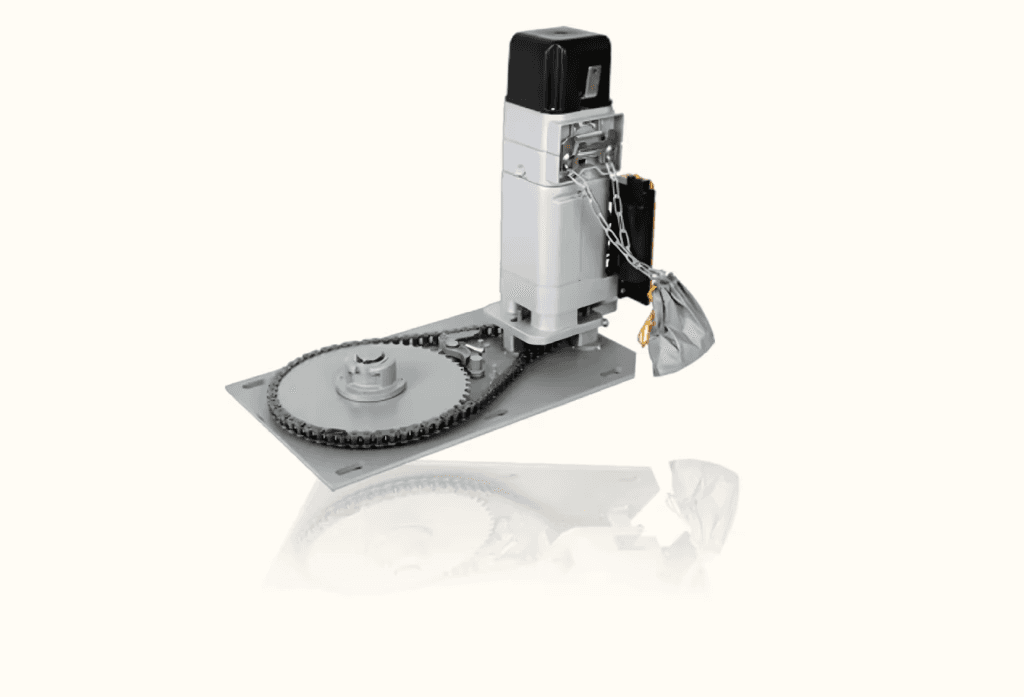
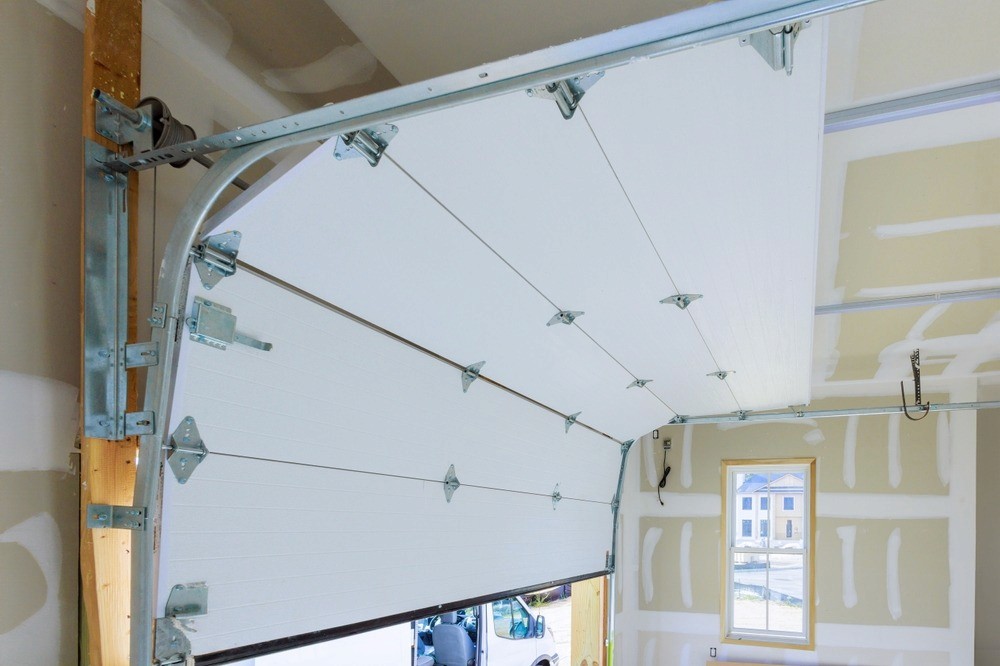
Sectional Door Motors: Torque Balance and System Compatibility
Sectional doors are widely used in:
factories
warehouses
logistics centers
commercial buildings
industrial facilities
Unlike roller shutters, sectional doors usually operate with a spring-balanced system.
The motor does not directly lift the entire door weight.
Instead, it provides additional torque required to overcome:
friction
spring imbalance
mechanical resistance
acceleration forces
This means sectional door motor selection requires understanding the complete mechanical system.
Important factors include:
door size
spring condition
shaft torque
operating cycles
opening speed
safety requirements
A common mistake is selecting a sectional door motor only according to door weight.
A properly balanced large sectional door may require less motor torque than a smaller door with poor mechanical balance.
High Speed Door Motors: Requirements for High-Cycle Applications
High speed doors are designed for applications requiring rapid opening and closing.
They are commonly used in:
food processing facilities
cold storage
automotive manufacturing
logistics centers
clean production areas
Unlike standard industrial doors, high speed doors require motors designed for:
frequent cycles
fast acceleration
precise positioning
reliable control
Important specifications include:
high cycle capability
encoder feedback
accurate limit control
fast response
thermal protection
A standard industrial motor may not be suitable for high speed door applications because the operating frequency and mechanical demands are significantly different.
How to Select the Correct Industrial Door Motor Torque
Why Output Torque (Nm) Matters More Than Motor Power
One of the most common mistakes in industrial door motor purchasing is selecting a motor only according to wattage.
Motor power (W) and output torque (Nm) describe different performance characteristics.
Power indicates the rate of energy consumption.
Torque indicates the rotational force available to move the door system.
For industrial doors, output torque is usually the more important selection parameter.
The basic relationship is:
Torque = Force × Radius
For a roller shutter system, required torque depends on:
curtain weight
barrel diameter
winding radius
mechanical efficiency
friction losses
safety margin
A professional supplier should calculate the application requirements instead of simply recommending a motor based on power rating.
Why Door Weight Alone Cannot Determine Motor Selection
Many buyers ask:
“Which motor do I need for a 500 kg shutter?”
However, door weight alone is not enough information.
Two doors with identical weight may require completely different motors.
For example:
Door A
500 kg curtain
smaller barrel diameter
lower winding radius
Door B
500 kg curtain
larger barrel diameter
higher winding radius
Although the curtain weight is the same, Door B may require higher torque because the motor must generate more rotational force.
Other factors affecting torque include:
bearing resistance
guide friction
installation condition
gearbox efficiency
operating frequency
Therefore, professional motor selection must evaluate the complete mechanical system.
How Barrel Diameter Affects Motor Torque Requirements
For roller shutter applications, barrel diameter is one of the most important mechanical factors.
The basic principle is:
Larger radius = Higher torque requirement
When the shutter curtain winds around a larger barrel, the motor must generate more rotational force to produce the same lifting effect.
This is why experienced suppliers ask customers for:
shutter weight
barrel diameter
shaft dimensions
curtain material
before recommending a motor.
A supplier that only asks for door weight may not be considering the complete engineering requirements.
Rated Torque vs Maximum Torque: Understanding Motor Specifications
Industrial door motors often provide two torque specifications:
rated torque
maximum torque
Understanding the difference helps buyers select the correct product.
Rated Torque
Rated torque refers to the torque available during normal continuous operation.
It is the most important value for daily use.
A motor operating in:
warehouses
factories
logistics facilities
should be selected based on whether its rated torque matches the actual application.
Maximum Torque
Maximum torque refers to short-term peak capability.
It may support:
startup conditions
acceleration
temporary resistance
However, selecting a motor only because it has a higher maximum torque is not recommended.
The correct motor should provide a balance between:
torque
speed
duty cycle
thermal protection
mechanical compatibility
Other Blogs