Blog
How Garage Door Openers Are Manufactured: A Complete Production Guide
Author
Ray
Published
Category
Guide
Learn how garage door openers are manufactured, from motor and rail production to control boards, safety testing, quality control, and OEM customization.


Author
Ray
An experienced automation specialist with a strong background in motor technology and industrial solutions. With years of expertise in central motors, tubular motors, and automation systems, the author is dedicated to sharing insights that connect engineering innovation with real-world applications. Passionate about advancing reliable, energy-efficient, and high-performance automation products for global markets.
What’s better than insider perks, pro tips, and surprises?
Sign up to get the most recent blog articles in your email every week.
Join now.
WHY I WRITE THIS
About my business
Our company’s main product lines include tubular motors, sliding gate motors, swing gate motors, roller shutter motors, and other door automation solutions, all manufactured by trusted partner factories we have worked with for many years.
Our Services
I help them with sales and export operations, while our company also provides sourcing and procurement services in China to help international clients solve supply-related challenges. If you need assistance with procurement, please feel free to contact us.
Garage door openers may look relatively simple from the outside, but producing a reliable unit requires coordination between mechanical engineering, motor technology, electronic control systems, safety devices, software, assembly, and quality testing.
For distributors, importers, garage door installers, and private-label brands, understanding the garage door opener manufacturing process can make supplier evaluation much easier. Two products may have similar housings and specifications but perform very differently after thousands of opening and closing cycles.
This guide explains how garage door openers are typically manufactured, which components matter most, how quality control is performed, and what buyers should check when evaluating a garage door opener manufacturer.

How Are Garage Door Openers Manufactured?
Garage door opener production normally begins long before the final assembly line. Manufacturers first determine the target application, door size, lifting requirements, drive system, motor specifications, safety functions, control technology, and target market.
The complete production process typically includes product engineering, component sourcing or manufacturing, motor and gearbox preparation, rail and drive system production, electronic control assembly, safety device integration, final assembly, programming, functional testing, and packaging.
The exact process varies between manufacturers. Some factories manufacture motors, rails, control boards, and plastic housings internally, while others specialize in final engineering and assembly and source certain components from qualified suppliers.
For buyers, therefore, the important question is not simply whether every component is produced inside one factory. More important is whether the manufacturer has effective supplier control, engineering capability, traceability, testing procedures, and consistent quality standards.
Main Components of a Garage Door Opener
Before looking at the manufacturing process, it is useful to understand the main systems inside a typical garage door opener.
A residential opener generally contains a motor, reduction gearbox, drive rail, trolley or carriage, chain or belt drive mechanism, control board, power supply, housing, remote receiver, limit or position control system, wall control, emergency release mechanism, and safety sensors.
Modern models may also include Wi-Fi connectivity, smartphone control, battery backup, LED lighting, rolling-code remote technology, automatic locking, motion detection, and other smart-home functions.
Although these components work together as one product, each has different manufacturing and testing requirements.
Step 1: Product Design and Engineering
Garage door opener manufacturing begins with product design.
Engineers first define the intended application. A lightweight residential sectional door has different requirements from a large double garage door or a high-frequency commercial door.
Important design considerations include lifting capacity, opening speed, motor output, operating noise, drive type, duty cycle, rail length, electrical input, safety functions, control logic, remote-control range, installation requirements, and environmental conditions.
The engineering team must also consider the regulatory requirements of the destination market during product development rather than attempting to address compliance only after production has started.
For example, automatic residential garage door operators sold in the United States are subject to the federal safety requirements of 16 CFR Part 1211. The U.S. Consumer Product Safety Commission states that these products must comply with this mandatory federal consumer product safety standard.
This is why experienced manufacturers normally design safety functions, control logic, sensor interfaces, and mechanical protection into the product from the engineering stage.
Step 2: Component Sourcing and Incoming Inspection
Once the design has been confirmed, the manufacturer prepares the required materials and components.
Depending on the production model, components such as motors, bearings, gears, chains, reinforced belts, electronic components, sensors, connectors, power supplies, fasteners, plastic housings, and remote-control parts may be manufactured internally or purchased from specialized suppliers.
Incoming material quality is important because even a well-designed garage door opener can suffer from premature failure if low-quality components are used.
Professional factories normally establish incoming quality control procedures to check dimensions, materials, electrical specifications, appearance, supplier batch information, and other critical characteristics before components are released to production.
Supplier consistency is particularly important for motors, gear systems, electronic components, belts, chains, bearings, and safety sensors because variation in these parts can directly affect noise, service life, lifting performance, and reliability.
Step 3: Motor and Gearbox Preparation
The motor is one of the most important components in a garage door opener.
Depending on the model, manufacturers may use AC or DC motor systems. Modern residential products increasingly use control systems designed to provide smoother acceleration, controlled stopping, quieter operation, and additional smart functions.
The motor usually works together with a reduction gearbox. The gearbox converts motor speed into the torque required to move the garage door.
During production, the motor and gearbox assembly must be checked for correct alignment, gear engagement, lubrication, vibration, current consumption, and operating noise.
A motor should not be evaluated only by its advertised power. The actual performance of an opener depends on the complete combination of motor, gearbox, drive mechanism, control system, garage door balance, and application conditions.
For B2B buyers, this is an important distinction. Comparing products only by a horsepower number or marketing specification does not provide a complete picture of product quality.
Step 4: Rail and Drive System Manufacturing
The rail transfers movement from the motor unit to the garage door.
Depending on the opener design, rails may be produced from formed steel or other suitable structural materials. During production, rail sections must maintain correct dimensions and alignment so that the trolley can travel smoothly.
Cutting, forming, punching, joining, and surface treatment must be controlled carefully. Poor rail alignment can increase resistance, operating noise, vibration, and long-term wear.
The drive mechanism is then installed into or alongside the rail.
Chain Drive Production
A chain drive garage door opener uses a metal chain to transfer motor movement to the trolley.
During assembly, chain alignment and tension are important. Excessive tension can increase component wear, while insufficient tension may create noise or inconsistent operation.
Chain drive systems are widely used because of their proven mechanical design, strength, and cost effectiveness.
Belt Drive Production
A belt drive opener uses a reinforced belt rather than a metal chain.
The belt must maintain sufficient tensile strength while operating smoothly around the drive components. Belt material quality and dimensional consistency have a major influence on noise, vibration, and service life.
Because belt drive systems are commonly marketed for quiet residential applications, manufacturers may pay particular attention to motor vibration, gear noise, rail alignment, and belt movement during production.
Step 5: Electronic Control Board Assembly
The control board acts as the brain of a modern garage door opener.
It receives signals from remote controls, wall switches, safety sensors, travel-position systems, and smart-home devices. It then controls motor operation according to programmed logic.
A typical control system may include a microcontroller, power management components, relay or motor-control circuitry, radio-frequency communication components, sensor interfaces, memory, and protection circuitry.
Depending on the manufacturer, printed circuit boards may be produced by a specialized electronics supplier or assembled on an in-house SMT production line.
After assembly, the board should be inspected and functionally tested. Manufacturers may check power input, communication, motor control, sensor signals, remote reception, protective functions, and programmed operating logic.
For smart garage door openers, firmware and connectivity testing become increasingly important because product reliability depends on both mechanical and electronic performance.
Step 6: Remote Controls and Smart Functions Are Integrated
Remote control is a standard feature of most modern garage door openers.
During production, transmitters and receivers must be paired or configured to communicate correctly. Manufacturers also need to verify signal stability and basic operating functions.
More advanced products may incorporate Wi-Fi, smartphone applications, timers, access-control functions, or smart-home integration.
These functions introduce additional requirements for both product design and safety.
UL Solutions notes that requirements for residential door operators include provisions related to accessories capable of closing a garage door through timers, smartphone applications, or similar devices, including control-function requirements and warning alerts before movement.
For manufacturers targeting connected-home markets, electronic engineering and software validation are therefore becoming just as important as traditional mechanical manufacturing.
Step 7: Safety Sensors Are Installed and Tested
Safety protection is one of the most critical parts of garage door opener manufacturing.
A moving garage door can create an entrapment hazard if the control system cannot detect an obstruction or respond correctly.
Modern residential systems commonly use photoelectric sensors positioned near the bottom of the door opening. These sensors communicate with the opener and help prevent the door from closing when an obstruction is detected.
The safety system must work together with the control board and reversal logic rather than functioning as an isolated accessory.
UL 325 addresses hazards including entrapment, electric shock, fire, and other safety risks associated with door and gate operator systems. UL Solutions also notes that the standard addresses product construction, testing, manufacturing, and installation requirements.
During production and final testing, manufacturers therefore need to confirm that safety inputs are correctly recognized and that the opener responds as designed.
Step 8: Final Mechanical Assembly
After the major components are prepared, the opener enters final assembly.
The motor, gearbox, control board, power components, lighting system, housing, drive interface, wiring, connectors, and other parts are assembled into the main opener unit.
The rail, trolley, emergency-release mechanism, drive system, sensors, remote controls, wall controls, and installation accessories may then be combined into the complete product package.
Assembly quality is important even when individual components have already passed inspection.
Incorrect wire routing, loose fasteners, poor connector engagement, gearbox alignment problems, missing lubrication, or assembly variation can affect the final product.
This is why production-line inspection should take place throughout assembly rather than relying only on a final test.
Step 9: Programming and Calibration
Modern garage door openers require more than mechanical assembly.
The controller may need firmware programming, model configuration, remote-control setup, travel logic, motor parameters, and safety functions before the finished product is ready.
Some models use electronic position detection or travel-learning functions that allow the opener to determine opening and closing positions after installation.
The factory should verify that the control system responds correctly to inputs and behaves consistently under normal and abnormal operating conditions.
For OEM products, this stage may also include software configuration for different markets, remote-control systems, accessory compatibility, or smart features.
Garage Door Opener Quality Control Process
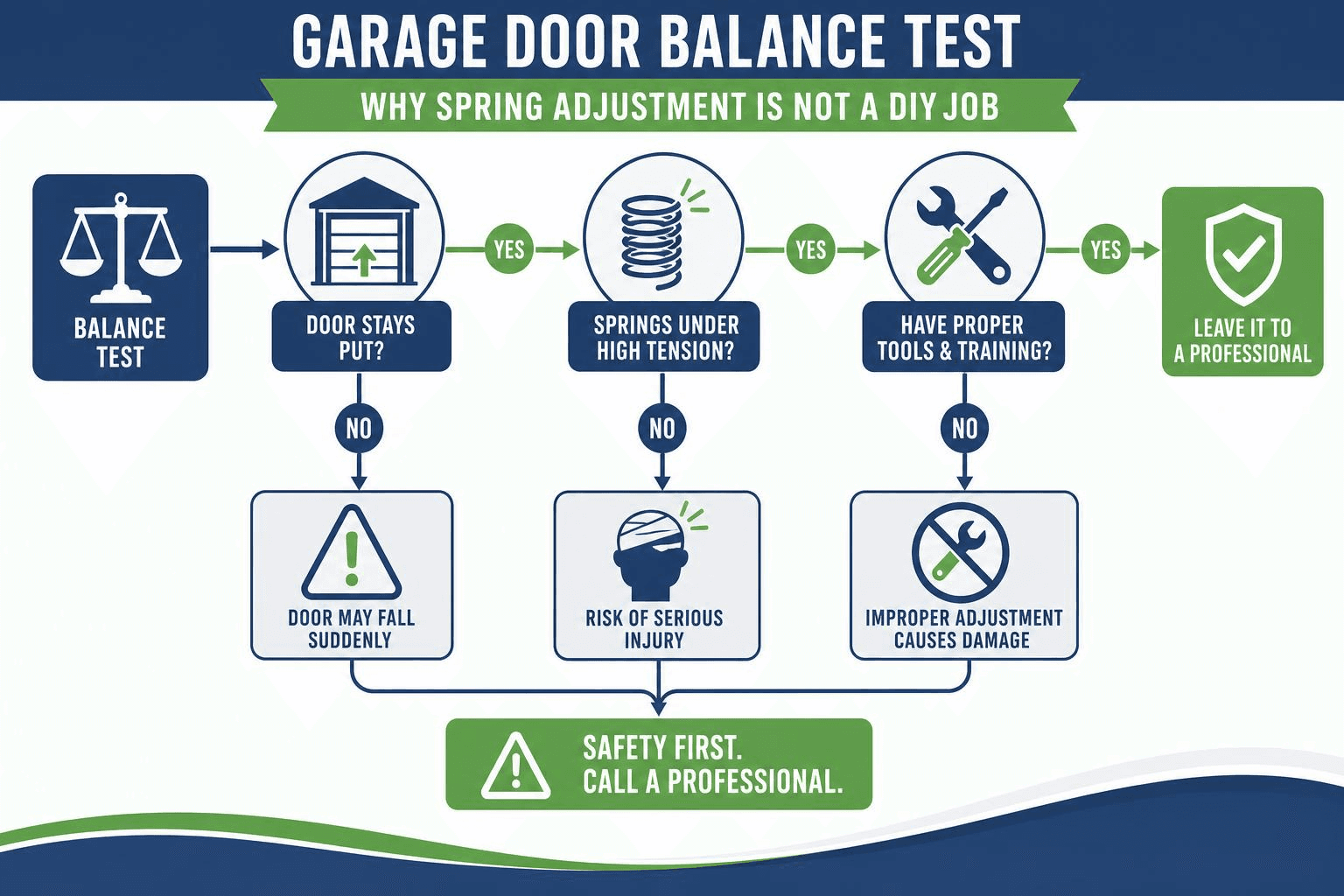
Quality control should take place throughout garage door opener production rather than only after the product has been assembled.
A well-managed production system usually includes incoming inspection, process inspection, finished-product testing, and outgoing quality control.
Incoming inspection focuses on components and raw materials. Process inspection checks assembly quality while the product moves through production. Finished-product testing verifies that the completed opener performs correctly. Outgoing inspection confirms that products, accessories, labels, manuals, and packaging meet order requirements before shipment.
Traceability is also valuable for B2B customers. Batch records, component information, production dates, inspection results, and serial-number systems can help manufacturers investigate quality issues more efficiently.

What Tests Should a Garage Door Opener Pass?
Testing requirements vary according to product design, target market, factory standards, and applicable certification requirements. However, several types of testing are especially important.
Functional Opening and Closing Test
The opener should complete opening and closing commands correctly and consistently.
Manufacturers verify motor response, trolley movement, stopping behavior, control functions, and interaction between mechanical and electronic systems.
Load Performance Test
Load testing helps determine whether the opener can operate reliably within its designed application range.
The test can reveal problems with motor output, gear performance, drive components, excessive current, or thermal behavior.
Safety Reversal Test
The safety system should respond correctly when an obstruction or specified safety condition is detected.
For products intended for regulated markets, this function must be evaluated according to the applicable requirements rather than only through an informal factory demonstration.
Safety Sensor Test
Photoelectric sensors and their control-board interfaces should be tested to confirm correct detection and response.
A sensor that works intermittently can create both safety problems and customer complaints.
Noise and Vibration Test
Noise is an important purchasing factor, particularly for residential belt drive garage door openers.
Manufacturers can evaluate motor noise, gearbox noise, vibration, rail movement, chain or belt operation, and housing resonance to identify abnormal units.
Electrical Performance Test
Electrical testing can include operating current, standby consumption, voltage behavior, insulation-related checks, and other measurements appropriate to the product design and market requirements.
Cycle and Durability Testing
Long-term cycle testing is particularly useful during product development, validation, component qualification, and production quality monitoring.
Repeated opening and closing cycles can reveal problems that may not appear during a short functional test, including gear wear, motor heating, belt deterioration, chain wear, bearing problems, or electronic failures.
Factories should be able to explain how their durability testing is performed rather than simply stating that a product has been “life tested.”
From Testing to Certification
Factory quality testing and independent product certification are related but they are not the same thing.
Internal testing helps manufacturers control consistency and detect defects. Certification evaluates products against applicable external requirements for a particular market.
For the United States, automatic residential garage door operators are subject to the mandatory federal safety standard in 16 CFR Part 1211. UL 325 is also a central standard in North American door and gate operator safety and is used for certification of relevant products.
Certification requirements vary by destination market, product configuration, voltage, wireless functions, and application. Buyers should therefore verify the actual certification of the specific model they intend to purchase instead of assuming that every product from a certified manufacturer carries the same approvals.
Why Manufacturing Quality Matters
A garage door opener may operate several times every day for many years. Small differences in component quality or assembly can therefore become significant over time.
Poor gear alignment may create noise. An inconsistent motor may run hotter. Low-quality electronic components can increase failure rates. Poorly controlled belts or chains can affect movement. Weak sensor performance can cause operational and safety problems.
For distributors and installers, these failures create costs beyond the value of the opener itself.
A failed product may lead to warranty replacement, technician visits, customer complaints, spare-part costs, and damage to the distributor's reputation.
This is why B2B buyers should consider total product reliability rather than focusing exclusively on the initial factory price.
What Should Buyers Check When Evaluating a Garage Door Opener Factory?
A serious supplier evaluation should go beyond asking for a price list.
Buyers should understand whether the manufacturer has its own engineering team, what parts are made internally, which critical components are sourced, how suppliers are qualified, how production batches are controlled, and what testing is performed before shipment.
Production capacity should also be considered in relation to consistency. A factory capable of producing a large quantity is useful only if quality remains stable as volume increases.
Buyers should also ask how the manufacturer handles warranty claims, spare parts, technical documentation, firmware changes, discontinued components, and product upgrades.
For overseas importers, packaging engineering, labeling accuracy, documentation, lead-time control, and communication can be just as important as the assembly process itself.
OEM Garage Door Opener Manufacturing
OEM and private-label manufacturing allow distributors, garage door companies, retailers, and regional brands to sell garage door openers under their own brand.
Depending on the manufacturer's capability and order volume, customization may involve branding, housing appearance, remote-control design, packaging, instruction manuals, labels, rail lengths, motor specifications, accessories, control functions, smart features, and market-specific configurations.
However, buyers should distinguish between simple branding and genuine product development.
Adding a logo to an existing opener is relatively straightforward. Changing motor performance, control logic, safety functions, wireless systems, or structural components may require engineering validation and could affect certification.
A capable OEM garage door opener manufacturer should be able to explain clearly which modifications are cosmetic, which require engineering work, and which may require additional testing or certification.
How to Compare Garage Door Opener Manufacturers
When comparing suppliers, buyers should avoid evaluating manufacturers solely on unit price.
A more meaningful comparison considers product engineering, component specifications, production control, testing capability, certifications, warranty policy, customization support, lead time, spare-part availability, and long-term production stability.
Requesting samples is useful, but a sample alone cannot prove production consistency.
For larger orders, buyers may also review factory audit information, quality procedures, test equipment, production records, component suppliers, packaging standards, and batch inspection practices.
A reliable garage door opener supplier should be able to provide clear technical information rather than relying only on marketing claims.
Frequently Asked Questions About Garage Door Opener Manufacturing
What are the main components used to manufacture a garage door opener?
A typical garage door opener contains a motor, gearbox, rail, trolley, chain or belt drive, control board, power system, remote receiver, housing, safety sensors, emergency release mechanism, and control accessories. Smart models may also include Wi-Fi modules, battery backup, LED lighting, smartphone connectivity, and additional security functions.
Are all garage door opener components manufactured in the same factory?
Not necessarily. Some manufacturers have highly integrated production facilities, while others source specialized motors, electronic components, sensors, belts, bearings, or other parts from qualified suppliers. Supplier management, inspection, engineering control, and traceability are more important than simply claiming that every component is made in-house.
How are garage door openers tested before shipment?
Manufacturers may perform functional operation tests, safety checks, sensor tests, motor and electrical tests, noise evaluation, load testing, and final appearance inspection. Longer cycle and durability tests are generally used during development, validation, qualification, or production monitoring rather than being performed for the full life-cycle duration on every finished unit.
What is the difference between factory testing and certification?
Factory testing is performed by the manufacturer to control product quality and consistency. Certification involves evaluation against defined external standards or regulatory requirements. A product passing a factory functional test does not automatically mean that it is certified for every market.
Can garage door openers be customized for OEM brands?
Yes. OEM garage door opener manufacturers may offer customized branding, packaging, manuals, remotes, accessories, housing designs, technical specifications, and smart functions. The level of customization depends on project volume and engineering requirements, and major technical changes may require additional testing or certification.
What should importers ask a garage door opener manufacturer before placing an order?
Importers should ask about product specifications, manufacturing capacity, critical component suppliers, quality-control procedures, applicable certifications, sample testing, warranty terms, spare-part support, OEM capability, production lead times, packaging, and shipment inspection. These factors provide a more complete picture of supplier reliability than price alone.
Final Thoughts
Garage door opener manufacturing combines mechanical engineering, motor technology, electronics, software, safety systems, assembly, and quality control.
A reliable product is not created by one component or one production step. Performance depends on how the entire system is designed, manufactured, assembled, programmed, and tested.
For homeowners, these manufacturing details help explain why two visually similar garage door openers can differ significantly in noise, reliability, and service life.
For distributors, importers, installers, and private-label brands, understanding the production process provides an even greater advantage. It allows buyers to evaluate suppliers based on engineering capability, production control, quality testing, compliance, OEM support, and long-term reliability rather than simply comparing quotations.
When choosing a garage door opener manufacturer, the goal should not be to find only the lowest factory price. The better objective is to find a manufacturing partner capable of delivering consistent products, clear technical support, dependable quality, and solutions suited to the requirements of your target market.
Other Blogs