Blog
Sliding Gate Opener: Complete Guide to Types, Parts, Installation, and Selection
Author
Ray
Published
Category
Guide
Discover how to choose the best sliding gate opener for residential or commercial gates. Learn about gate types, electric gate parts, installation tips, maintenance, and buying advice.

Author
Ray
An experienced automation specialist with a strong background in motor technology and industrial solutions. With years of expertise in central motors, tubular motors, and automation systems, the author is dedicated to sharing insights that connect engineering innovation with real-world applications. Passionate about advancing reliable, energy-efficient, and high-performance automation products for global markets.
What’s better than insider perks, pro tips, and surprises?
Sign up to get the most recent blog articles in your email every week.
Join now.
WHY I WRITE THIS
About my business
Our company’s main product lines include tubular motors, sliding gate motors, swing gate motors, roller shutter motors, and other door automation solutions, all manufactured by trusted partner factories we have worked with for many years.
Our Services
I help them with sales and export operations, while our company also provides sourcing and procurement services in China to help international clients solve supply-related challenges. If you need assistance with procurement, please feel free to contact us.
A sliding gate opener is one of the most practical automation solutions for residential, commercial, and industrial entrances. It improves convenience, strengthens access control, and helps create a more professional and secure property entrance. Whether the gate protects a private home, a warehouse, a factory, or a community entrance, the right opener can make daily operation smoother and safer.
But choosing the correct sliding gate opener is not just about buying the most powerful motor. The best system depends on gate weight, gate length, frequency of use, installation environment, available power supply, safety requirements, and the type of access control you want to use. A poorly matched opener can lead to noisy operation, frequent breakdowns, weak performance, or even damage to the gate structure itself.
This guide explains everything you need to know about sliding gate openers: how they work, the main types available, the essential parts, how to choose the right model, how installation is typically done, and what to consider for long-term maintenance. If you are planning a new project or upgrading an existing gate, this is the foundation you need before making a decision.
What Is a Sliding Gate Opener?
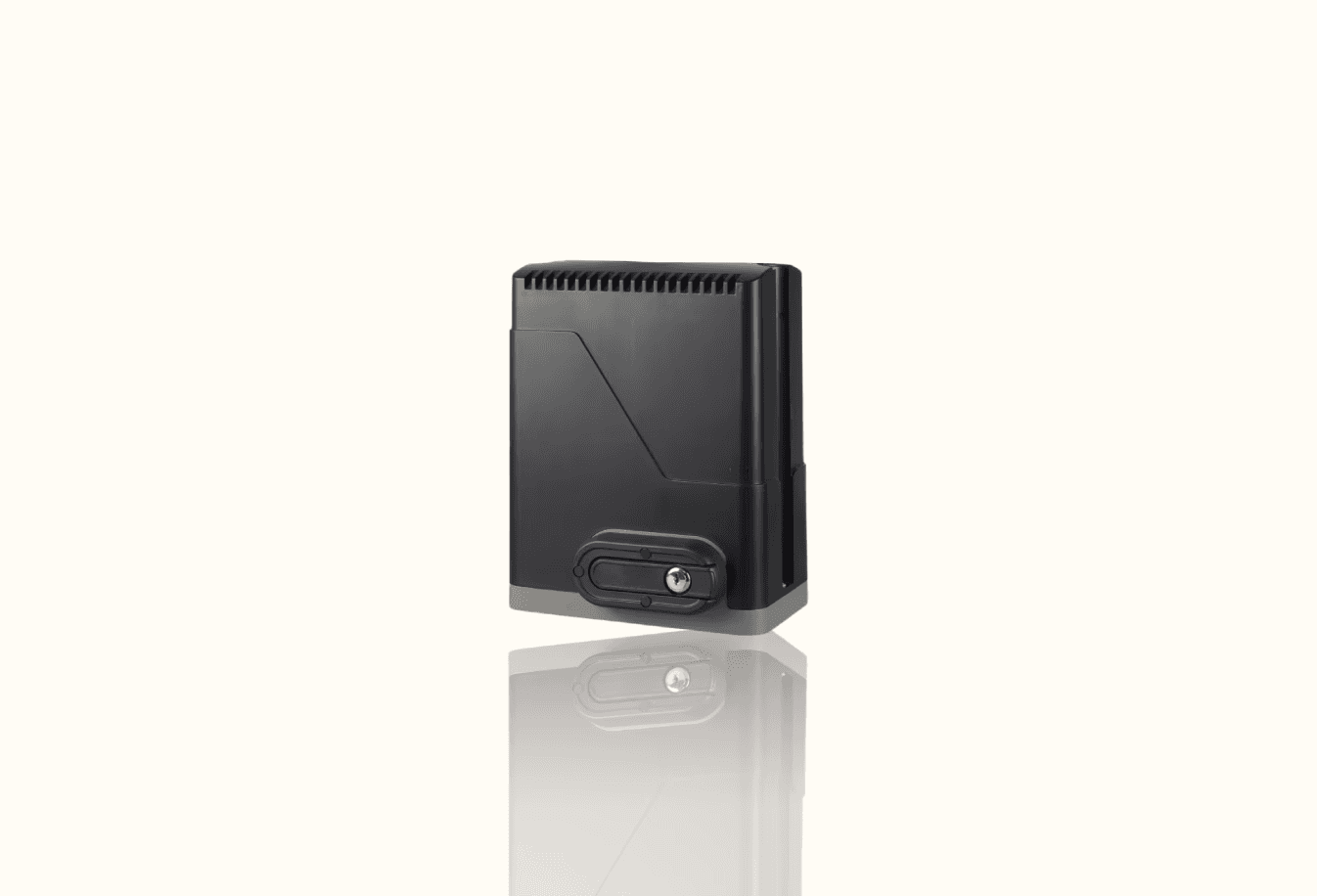
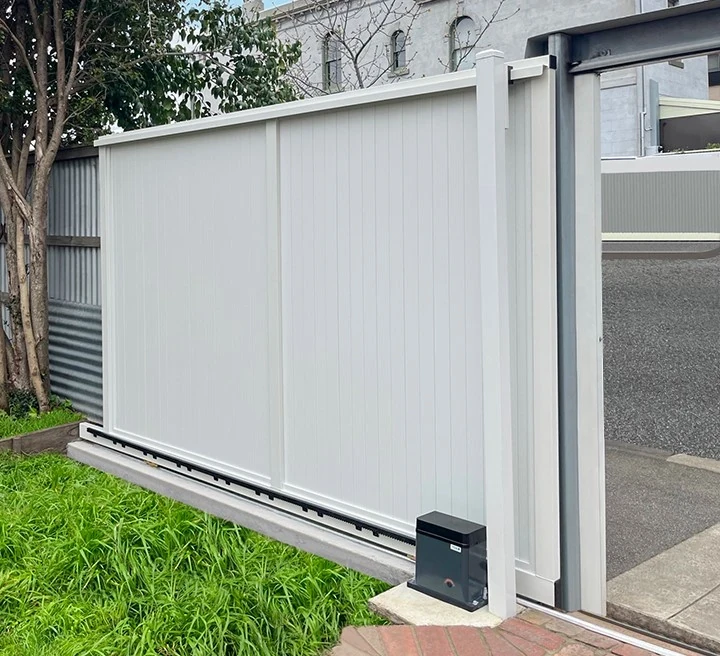
A sliding gate opener is an automated motor system designed to open and close a gate that moves horizontally along a track or cantilever structure. Instead of swinging inward or outward like a traditional gate, a sliding gate moves sideways. This makes it especially useful in locations where space is limited or where a large swing radius would be inconvenient.
The system typically consists of a motor, a gear or chain mechanism, a control board, a rack or drive interface fixed to the gate, and safety accessories such as photocells, warning lights, and remote controls. When activated by a remote, keypad, sensor, or access system, the motor drives the gate along its horizontal path until it reaches the open or closed position.
Sliding gate openers are commonly used for:
Residential driveways
Industrial entrances
Warehouse gates
Apartment and community access points
Farm and ranch entrances
Commercial parking areas
Private estates and office complexes
The main reason many people choose a sliding gate system is simple: it combines security with efficient use of space. A sliding gate does not require room to swing open, which is a major advantage in narrow driveways, sloped properties, or high-traffic areas.
How a Sliding Gate Opener Works
Although the mechanism may look complex from the outside, the basic operating principle is straightforward.
When a user presses a remote or triggers the access system, the control board sends power to the motor. The motor then rotates a drive gear, sprocket, or gear rack engagement system. This movement transfers force to the gate, causing it to slide along the track or guide system. Limit switches or magnetic sensors tell the controller when the gate has reached the fully open or closed position, and the motor stops automatically.
Most modern systems include soft start and soft stop functions. These features reduce sudden impact at the beginning and end of movement, which helps lower wear and improve comfort. Some systems also include obstacle detection, reversing the gate if resistance or an obstruction is detected.
In more advanced setups, the gate opener can be connected to:
Keypads
RFID readers
Intercom systems
Loop detectors
Smart home controllers
License plate recognition systems
App-based access control
This makes the sliding gate opener part of a larger access management solution, not just a motor.
Main Types of Sliding Gate Openers
Not all sliding gate openers are the same. The right choice depends on the environment, expected workload, and gate structure. Below are the major categories you should understand before selecting a system.
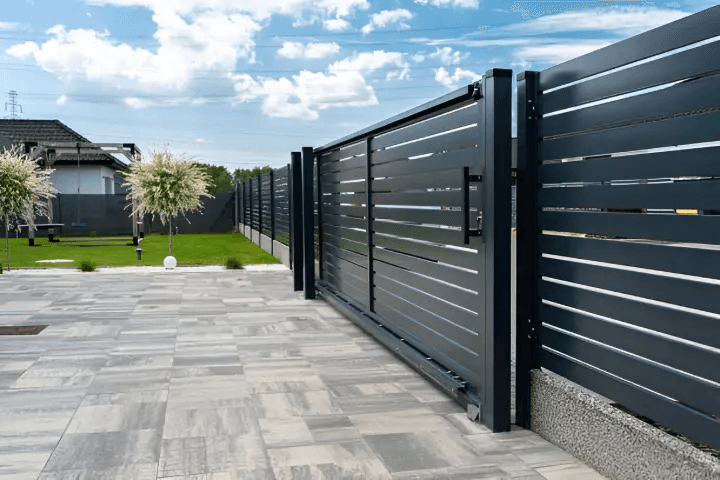
1. Residential Sliding Gate Openers
These are designed for homes, villas, and private entrances. They are usually built for lighter duty cycles and lower traffic frequency. A residential unit is ideal when the gate opens and closes only a limited number of times per day.
Typical characteristics:
Compact size
Lower noise
Moderate motor power
Easy remote control use
Simplified installation
Good balance between performance and cost
Residential systems are often the best choice for homeowners who want convenience and security without needing industrial-grade hardware.
2. Commercial Sliding Gate Openers
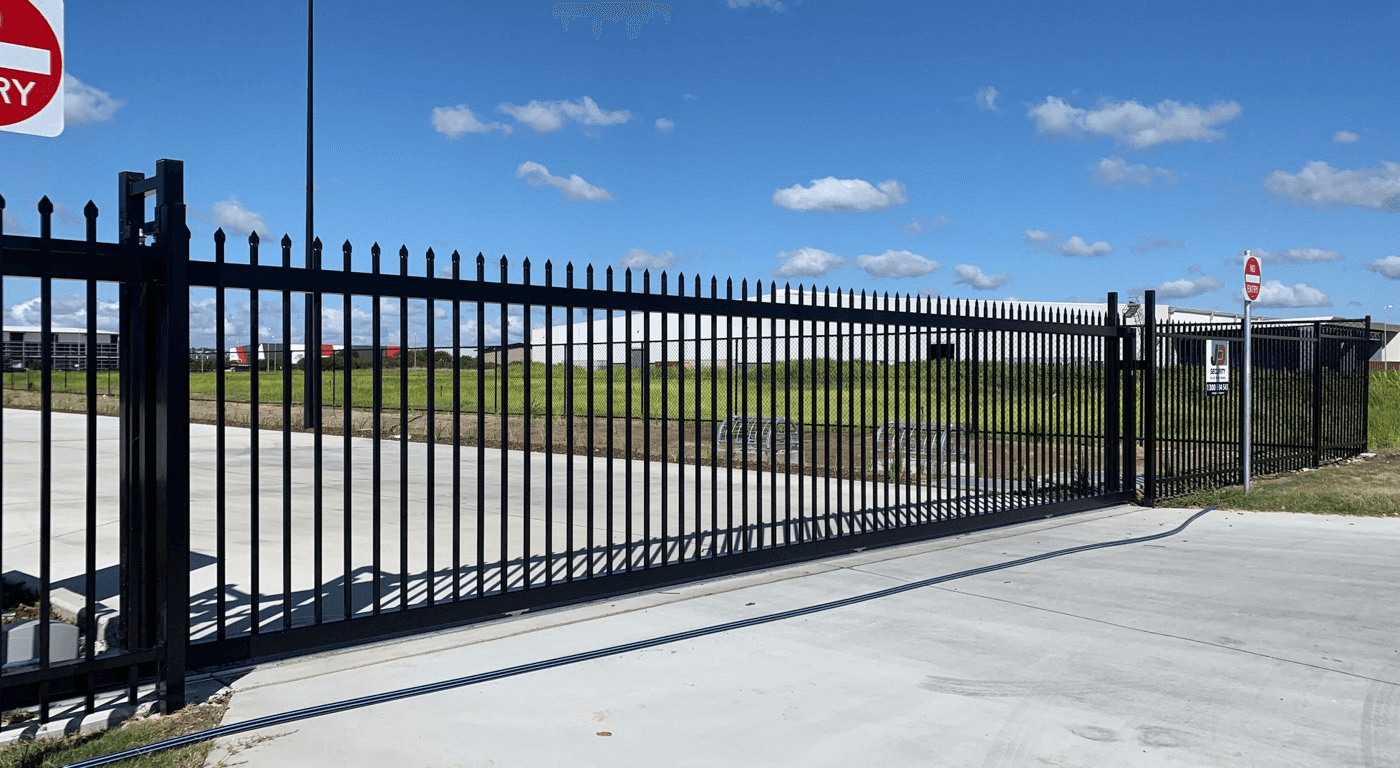
Commercial openers are designed for higher usage and more demanding conditions. They are commonly installed at business properties, parking areas, retail entrances, and shared access points.
Typical characteristics:
Stronger motor output
Higher duty cycle
Better resistance to frequent operation
Enhanced safety features
More durable components
Often compatible with advanced access control systems
These systems are suitable when the gate is used many times per day and reliability is more important than low upfront cost.
3. Industrial Sliding Gate Openers
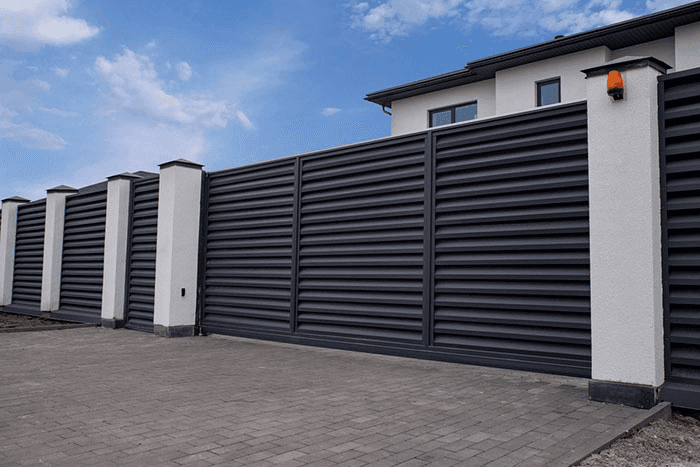
Industrial models are built for heavy gates and continuous or near-continuous operation. These systems are often used at factories, logistics sites, secure facilities, and large compounds.
Typical characteristics:
High torque
Heavy-duty gear reduction
Strong structural components
Advanced protection against overheating
Reliable performance under harsh conditions
Ability to drive large or heavy gates
Industrial systems are generally more expensive, but they are necessary when the gate is oversized or the workload is intense.
4. Low Voltage Sliding Gate Openers
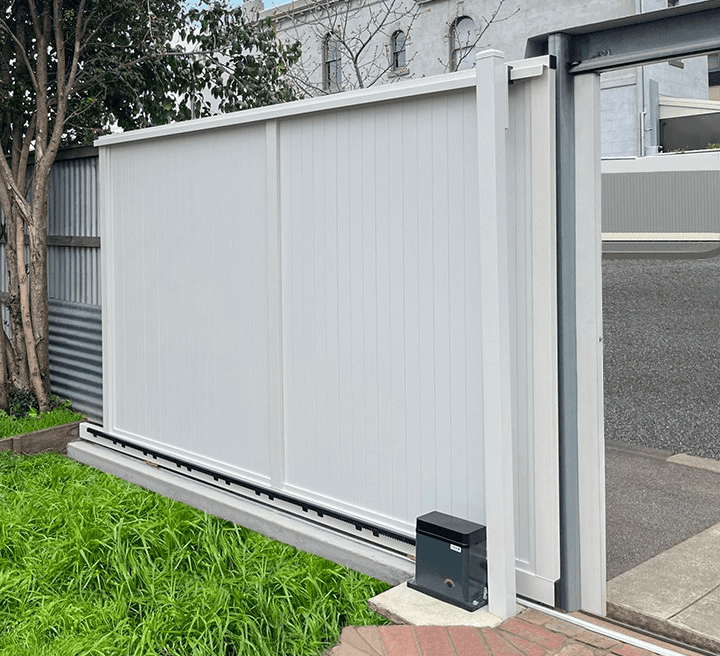
Some systems operate on low-voltage DC power rather than AC. These are often chosen for safety, energy efficiency, or solar-compatible applications. Low-voltage units can be especially useful in remote areas where power supply is unstable or where solar integration is preferred.
Advantages may include:
Better energy efficiency
Battery backup compatibility
Safer low-voltage operation
Potential solar power support
5. Chain-Driven or Rack-Driven Systems
Sliding gate openers are also classified by how motion is transferred.
A rack-driven system uses a toothed rack fixed to the gate, which meshes with the motor gear. This is a very common design in modern sliding gate systems because it is durable and precise.
A chain-driven system uses a chain mechanism to move the gate. It is often used in heavier or longer gate setups, especially where the gate structure requires a different motion transfer style.
Each design has benefits, and the right choice depends on gate type, installation conditions, and maintenance preferences.
Essential Parts of a Sliding Gate Opener System
Understanding the parts of the system is important because many performance issues come from incorrect matching or poor installation rather than motor failure itself. A complete sliding gate opener is made up of several key components working together.
1. Motor Unit
The motor is the heart of the system. It provides the mechanical force needed to move the gate. Motor power should match the gate’s weight, length, and usage frequency. A weak motor will struggle, while an oversized motor may be unnecessary and more expensive than needed.
2. Control Board
The control board is the electronic brain of the opener. It manages motor movement, receiver signals, timing, safety logic, and limit switch responses. Advanced boards can also manage soft start, soft stop, auto-close timing, and accessory integration.
3. Gear Rack or Drive Mechanism
In many sliding systems, a rack is mounted along the gate edge. The motor gear engages with this rack to move the gate. This component must be installed with correct alignment to ensure smooth and quiet operation.
4. Limit Switches or Sensors
Limit switches tell the system when the gate has fully opened or closed. Without them, the gate would keep moving until stopped manually or until the motor reaches an unsafe condition. Some systems use mechanical limit switches; others use magnetic sensors.
5. Remote Controls
Remote controls are the most common user interface. They allow fast and convenient gate operation from a vehicle or nearby location. Depending on the system, remotes may support single-button control, multi-channel control, or multiple users.
6. Safety Photocells
Photocells are an essential safety feature. They detect if a person, vehicle, or object is in the gate’s path. If the beam is interrupted, the gate can stop or reverse to prevent injury or damage.
7. Warning Light
A warning light alerts nearby people that the gate is moving. This is especially useful in parking lots, industrial sites, and busy entrances where visibility and safety are important.
8. Manual Release Key
Most good sliding gate openers include a manual release mechanism. In case of power loss or emergency, the gate can be disengaged and operated by hand.
9. Track or Guide System
A sliding gate needs a properly aligned track or guiding structure. In track-based gates, rollers follow the track. In cantilever systems, the gate is supported without a ground track, which is useful where debris, snow, or uneven ground would affect operation.
10. Power Supply and Backup Battery
The opener needs a reliable power source. Some systems also support backup batteries to keep the gate operational during outages. This is particularly important for security and continuous access.
11. Access Control Accessories
Depending on the application, the opener can be connected to:
Keypads
Intercoms
Card readers
RFID systems
Vehicle loops
Smart apps
GSM modules
These accessories make the system more flexible and suitable for different security levels.
How to Choose the Right Sliding Gate Opener
Selecting the right opener is one of the most important steps in the process. The best system is not always the most powerful one. It is the system that fits your gate and usage conditions.
1. Match the Motor to the Gate Weight
Gate weight is one of the first things to consider. A gate that is too heavy for the motor will create strain, reduce lifespan, and increase failure risk. Always check the maximum rated gate weight and choose a motor with adequate margin.
A practical rule is to avoid selecting a motor that works at its absolute limit. Real-world conditions such as wind resistance, friction, and uneven track alignment all add load. Choosing a system with some reserve capacity improves reliability.
2. Consider Gate Length
Longer gates can create more resistance and require additional force to start and stop movement. Even if a gate is not especially heavy, a long structure may still need a stronger opener due to inertia and structural flex.
3. Evaluate Duty Cycle
Duty cycle refers to how often the opener can operate without overheating or excessive wear. A residential system may be suitable for a few openings each day, while a commercial or industrial site may need a much higher duty cycle.
If the gate will be used frequently throughout the day, choose a more robust system with better thermal protection and stronger internal components.
4. Check the Power Supply
Some openers run on AC power, while others use DC. Some are battery-backed. Some can be integrated with solar power. Make sure the available power infrastructure at the site supports the opener you choose.
5. Think About Noise
For residential settings, quiet operation matters. A quiet opener is more comfortable for the homeowner and less disruptive to neighbors. Gear quality, motor design, and proper installation all affect noise level.
6. Review Safety Features
Safety should never be treated as optional. Important features include:
Photocells
Obstacle detection
Manual release
Soft start and stop
Warning light compatibility
Auto-stop or auto-reverse logic
In family homes, schools, commercial sites, and public-access environments, these features are especially important.
7. Check Compatibility With Access Systems
If you want keypad entry, app control, RFID, or intercom integration, make sure the opener’s control board supports those accessories. Not every unit offers the same expansion capability.
8. Consider Environmental Conditions
Outdoor gate systems are exposed to heat, rain, dust, humidity, snow, and debris. If the installation site is harsh, choose a unit with strong weather resistance, corrosion protection, and robust mechanical design.
9. Plan for Maintenance
A system that is easy to service is more practical in the long term. Look for openers with accessible parts, clear wiring layout, and replaceable components.
Sliding Gate Opener for Different Gate Types
The type of gate matters as much as the motor itself. A gate opener must match the structural design of the gate.
Steel Sliding Gates
Steel gates are strong and durable, but they may also be heavy. They often require more torque and stronger mounting hardware. These are common in commercial and industrial settings.
Aluminum Sliding Gates
Aluminum gates are lighter and more corrosion-resistant. They may work well with smaller openers, especially in residential applications.
Wooden Sliding Gates
Wood gates can look attractive, but they may be affected by moisture, warping, and changing weight distribution. A wood gate should be properly reinforced before automation.
Cantilever Gates
Cantilever sliding gates do not run on a ground track. Instead, they are supported from the side. This is useful in areas where track maintenance would be difficult. However, the opener must still be selected correctly based on total load and gate balance.
Track Sliding Gates
Track gates move along a physical track on the ground. They are common and effective, but the track must be kept clean and aligned. Debris, ice, or damage can affect performance.
Installation Overview: How a Sliding Gate Opener Is Typically Installed
Installation quality has a huge effect on performance. Even a good opener will underperform if alignment, mounting, or wiring is done poorly. The following is a general overview of the installation process. Exact steps vary by brand and gate type, so manufacturer instructions should always be followed.
Step 1: Inspect the Gate and Site
Before installation, evaluate the gate structure, track condition, support posts, clearance, and available power source. The gate should move smoothly by hand before motorization. If it binds, drags, or sags, those issues should be fixed first.
Step 2: Prepare the Mounting Base
The motor is usually mounted on a concrete or steel base. This base must be level, stable, and positioned correctly relative to the gate rack. Poor foundation work can cause alignment problems and premature wear.
Step 3: Install the Motor Unit
The opener is fixed in place according to the manufacturer’s dimensions. It must be anchored securely so vibration does not loosen the assembly over time.
Step 4: Attach the Gear Rack
A gear rack is mounted on the gate and aligned with the motor gear. The spacing must be consistent so the teeth mesh properly without binding or excessive gap. This is one of the most critical parts of installation.
Step 5: Set the Limit Positions
Limit switches or sensors are adjusted to define the fully open and fully closed positions. If these are set incorrectly, the gate may stop too early, open too far, or strike a physical obstruction.
Step 6: Wire the System
The motor, control board, safety devices, warning light, and accessories are wired according to the system diagram. If accessory wiring is incorrect, safety functions may fail or the opener may not operate properly.
Step 7: Install Safety Devices
Photocells should be placed at a height and position that properly protects the gate path. Warning lights should be visible. Any additional safety systems should be tested before final commissioning.
Step 8: Test Manual and Automatic Operation
Once installed, the system should be tested several times under normal conditions. Test opening, closing, stop functions, reverse functions, remote operation, and emergency release operation.
Step 9: Adjust Speed and Force Settings
Some control boards allow adjustment of speed, acceleration, deceleration, and force. These settings should be tuned carefully. Too much force can be unsafe; too little can cause failure to move the gate reliably.
Step 10: Train the User
The final step is user education. The operator should know how to use the remote, how to release the gate manually, what the warning lights mean, and what to do if the gate stops unexpectedly.
Common Installation Mistakes to Avoid
A surprising number of sliding gate problems come from installation errors rather than product defects. Avoid these common mistakes:
Poor Gate Alignment
If the gate does not move smoothly by hand, automation will not fix the problem. The opener will simply amplify the issue.
Incorrect Rack Position
If the rack is too high, too low, or uneven, the gear mesh will be noisy and unstable.
Weak Foundation
A poorly anchored motor base can shift over time, causing misalignment and wear.
Ignoring Gate Balance
A gate that is warped, overloaded, or poorly supported will place uneven stress on the opener.
Overlooking Safety Accessories
Skipping photocells or warning devices can create safety and liability issues.
Undersized Power Supply
An unstable power source can cause intermittent performance problems, especially at startup.
No Maintenance Plan
Even a perfect installation needs inspection and periodic maintenance.
Maintenance Tips for Long-Term Performance
Proper maintenance extends the life of the system and reduces service problems.
Keep the Track Clean
Dirt, stones, leaves, ice, and debris can interfere with smooth movement. Regular cleaning helps reduce strain.
Inspect the Gear Rack
Check for wear, looseness, or damaged teeth. If the rack is not properly secured, the gate may skip or jerk.
Lubricate Where Appropriate
Follow manufacturer instructions regarding lubrication. Some systems require limited lubrication, while others should remain relatively dry depending on the components used.
Check Fasteners
Vibration and repeated motion can loosen bolts, brackets, and mounting hardware over time.
Test Safety Functions
Photocells, stop functions, and reversing behavior should be checked regularly.
Monitor Motor Behavior
If the motor becomes louder, hotter, or slower than usual, investigate early. These are often signs of rising friction or internal wear.
Protect the Control Box
Ensure that electrical enclosures remain sealed and protected from moisture.
Replace Worn Parts Early
Waiting until a failure occurs often causes additional damage. Preventive replacement is usually cheaper than emergency repair.
Troubleshooting Common Problems
Even well-installed systems can experience issues. Here are some of the most common problems and what they usually indicate.
Gate Does Not Move
Possible causes include power failure, control board issues, blown fuse, manual release mode, or obstruction in the track.
Gate Moves Slowly
This may indicate insufficient motor power, low voltage, friction in the gate path, or mechanical wear.
Gate Stops Midway
This can be caused by limit switch problems, obstacle detection, control board faults, or excessive resistance.
Remote Does Not Work
Possible causes include battery failure, receiver issues, programming errors, or signal interference.
Gate Reverses Unexpectedly
This often points to photocell interference, obstacle detection activation, or incorrect force settings.
Noise During Operation
Noise usually suggests poor rack alignment, worn gears, loose components, or gate friction.
Gate Shifts or Jumps
This may indicate alignment issues, damaged track elements, or unstable mounting.
Sliding Gate Opener vs Swing Gate Opener
Many buyers compare sliding and swing gate systems before making a choice. Each has advantages.
Sliding Gate Advantages
Saves space
Suitable for narrow driveways
Better for sloped areas
Good for large or heavy gates
Often more secure in certain layouts
Swing Gate Advantages
Simpler structure
Traditional appearance
Easier in some residential settings
Can be less expensive in smaller systems
Which Is Better?
It depends on the site. Sliding gates are usually better where space is tight or where the gate is large. Swing gates are often simpler for open, level properties with enough clearance.
Where Sliding Gate Openers Create the Most Value
Sliding gate automation is especially valuable in sites where security, convenience, and traffic control matter. Common use cases include:
Homes with limited driveway space
Apartment complexes with controlled access
Warehouses requiring vehicle management
Factories needing secure entry
Farms and private land entrances
Commercial parking facilities
Industrial yards and logistics areas
In all these settings, automation reduces the need for manual gate operation and improves the overall access experience.
What to Ask Before Buying a Sliding Gate Opener
Before placing an order, ask these practical questions:
What is the gate weight and length?
How many times per day will the gate operate?
Is the gate track-based or cantilever?
Is the location residential, commercial, or industrial?
What power supply is available?
What safety accessories are required?
Do I need remote, keypad, intercom, or app access?
Is battery backup necessary?
What maintenance support will be available?
Are spare parts easy to obtain?
These questions help narrow the field and reduce the chance of selecting the wrong product.
A Simple Selection Framework
If you want a fast way to choose the right opener, use this logic:
Choose a residential system if:
The gate is lightweight or moderate
The site has low traffic
Quiet operation matters
Budget is a concern
Choose a commercial system if:
The gate opens frequently
More durability is required
Multiple users need access
Safety and reliability are important
Choose an industrial system if:
The gate is heavy or oversized
The gate is used continuously
The environment is demanding
Access failure would be costly
Choose a low-voltage or solar-ready system if:
Power supply is unstable
Energy efficiency matters
The site is remote
Battery backup is important
FAQ
What is the difference between a sliding gate opener and a gate motor?
A gate motor is the driving component, while a sliding gate opener refers to the complete automated system that includes the motor, control board, safety devices, and operating accessories.
Can a sliding gate opener work on a heavy gate?
Yes, but the opener must be rated for the gate’s actual weight and usage level. Heavy gates need stronger motors and solid structural support.
Are safety photocells necessary?
They are strongly recommended. They help prevent accidents and protect people, vehicles, and property.
How long does a sliding gate opener last?
Lifespan depends on build quality, installation quality, usage frequency, and maintenance. A well-chosen and well-maintained system can provide many years of service.
Can a sliding gate opener be added to an existing gate?
Yes, in many cases. The gate must first be structurally sound, properly aligned, and suitable for automation.
Is professional installation required?
Some experienced technicians can install a system successfully, but professional installation is often the best choice, especially for commercial or industrial applications.
What is the most important factor when choosing a gate opener?
Gate weight and usage frequency are usually the two most important starting points. After that, safety, power supply, and accessory needs should be reviewed.
Conclusion
A sliding gate opener is more than a convenience upgrade. It is a core part of modern access control, combining security, efficiency, and daily usability. The right system should be matched carefully to the gate’s weight, length, structure, and usage environment. It should also be supported by a proper installation, safety accessories, and a realistic maintenance plan.
When chosen well, a sliding gate opener delivers smooth operation, dependable access, and a much better user experience for years. When chosen poorly, it can become a source of recurring trouble and unnecessary cost. That is why it is worth taking the time to evaluate the gate type, the workload, the control options, and the installation conditions before making a purchase.
For any project, the winning formula is the same: choose the right motor size, install it correctly, include safety devices, and maintain it regularly. Do that, and your sliding gate system will perform exactly as it should.
Other Blogs