Blog
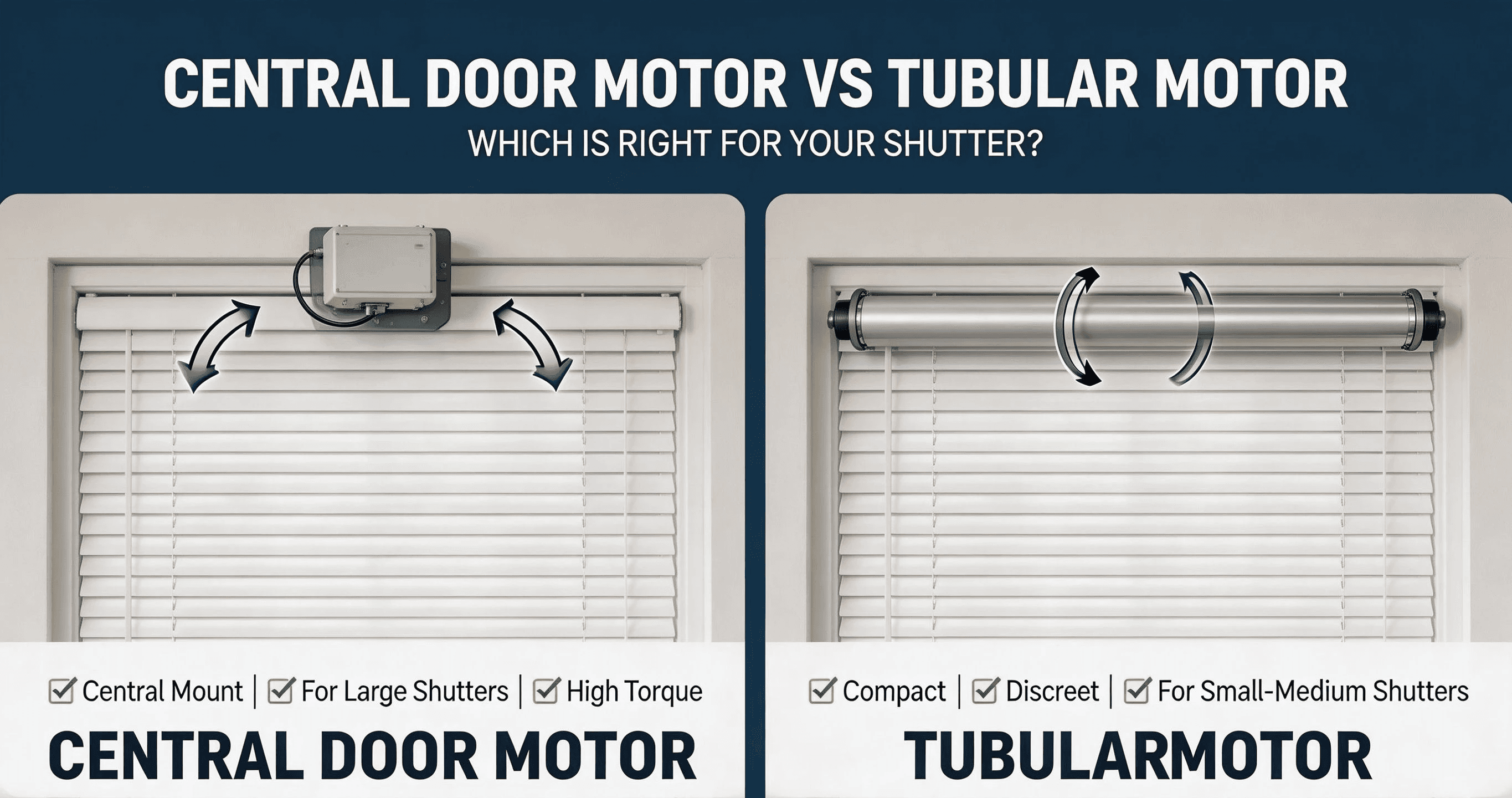
Central Door Motor vs Tubular Motor: Which Is Right for Your Shutter?
Author
Ray
Published
Category
Tubular Motor
Central door motor or tubular motor — which is right for your rolling shutter? Discover the key differences, pros and cons, and expert tips to help you choose the perfect motor for any application.

Author
Ray
An experienced automation specialist with a strong background in motor technology and industrial solutions. With years of expertise in central motors, tubular motors, and automation systems, the author is dedicated to sharing insights that connect engineering innovation with real-world applications. Passionate about advancing reliable, energy-efficient, and high-performance automation products for global markets.
What’s better than insider perks, pro tips, and surprises?
Sign up to get the most recent blog articles in your email every week.
Join now.
WHY I WRITE THIS
About my business
Our company’s main product lines include tubular motors, sliding gate motors, swing gate motors, roller shutter motors, and other door automation solutions, all manufactured by trusted partner factories we have worked with for many years.
Our Services
I help them with sales and export operations, while our company also provides sourcing and procurement services in China to help international clients solve supply-related challenges. If you need assistance with procurement, please feel free to contact us.
Introduction
When it comes to automating your rolling shutters, the motor you choose can make or break your entire experience. Whether you're upgrading a residential garage door, securing a commercial storefront, or automating industrial shutters, the decision between a central door motor and a tubular motor is one of the most critical choices you'll face.
Both motor types are widely used across different applications, yet they function differently, install differently, and perform differently depending on the environment and shutter specifications. Homeowners, facility managers, and contractors often find themselves confused about which system is better suited to their needs — and understandably so. The technical terminology alone can be overwhelming.
This guide is designed to cut through the complexity. By the end of this article, you'll have a thorough understanding of how each motor type works, where each one excels, what limitations each carries, and precisely which scenarios call for which solution. We'll also walk you through key selection factors including torque requirements, installation complexity, noise levels, cost, and long-term maintenance — so you can make a confident, well-informed decision.
Let's start from the beginning.
What Is a Tubular Motor?
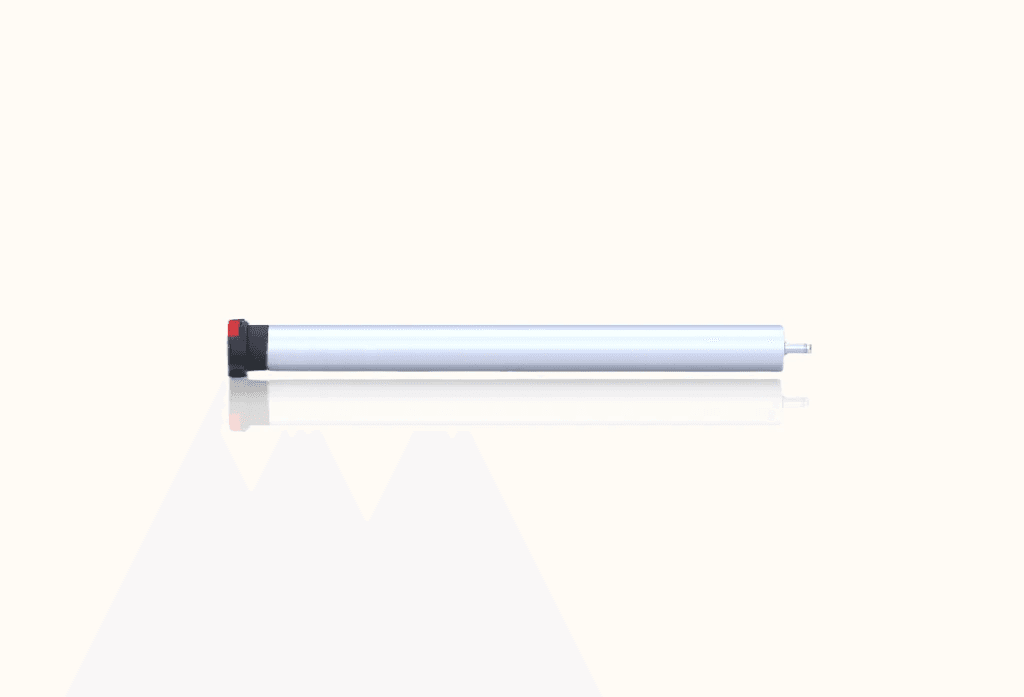
A tubular motor, also commonly referred to as a roller shutter tubular motor or a barrel motor, is a compact, self-contained electric motor that fits directly inside the rolling tube (barrel) of the shutter. Because the entire motor assembly is enclosed within the tube, it remains hidden from view once installed — making it one of the most aesthetically clean solutions available for shutter automation.
How Tubular Motors Work
Tubular motors operate on a relatively straightforward mechanical principle. The motor unit, which typically includes the motor itself, a gear reduction mechanism, and limit switch controls, is inserted into the hollow shaft of the shutter tube. When activated, the motor rotates the tube, which in turn winds or unwinds the shutter curtain. The limit switches — either mechanical or electronic — tell the motor when to stop at the fully open and fully closed positions.
Most tubular motors are powered by a standard single-phase AC power supply (typically 220–240V in Europe and parts of Asia, or 110V in North America), though DC-powered and battery-operated variants are increasingly available for solar or backup applications.
Common Sizes and Torque Ratings
Tubular motors come in a wide range of torque ratings, typically measured in Newton-meters (Nm). Common residential-grade tubular motors range from 10 Nm to 50 Nm, while heavier commercial units can reach 100 Nm or beyond. The tube diameter compatibility also varies — standard sizes include 40mm, 45mm, 50mm, 58mm, 60mm, and 78mm tubes — so matching the motor to the correct tube size is essential.
Typical Applications of Tubular Motors
Residential roller shutters on windows and doors
Light commercial shop fronts
Awnings and exterior blinds
Interior roller blinds
Small to medium-sized garage doors
Pergola roof systems
What Is a Central Door Motor?
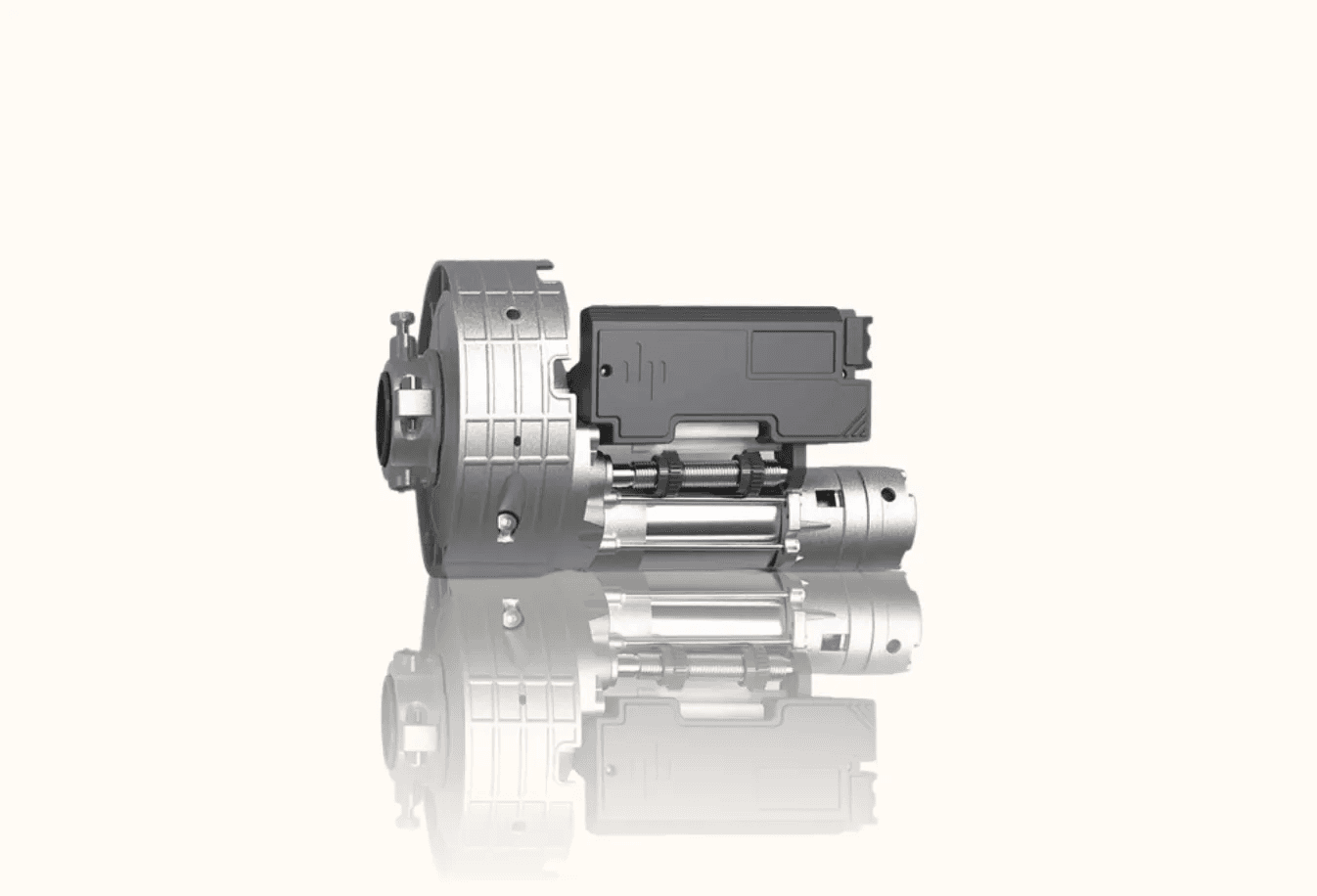
A central door motor — also known as a side motor, external shutter motor, or lateral motor — is mounted externally to the shutter system, typically on the side wall bracket or within the shutter housing box. Unlike the tubular motor, which sits inside the barrel, the central door motor sits outside the tube and drives the shutter through a chain, belt, or direct gear coupling connected to the barrel shaft.
How Central Door Motors Work
Central door motors are externally connected to the rolling shutter's shaft. The motor drives rotation via a coupling mechanism — this could be a chain drive, a direct gear adapter, or a shaft coupling depending on the model. The motor is usually mounted on a side bracket at one end of the shutter axle, with the other end supported by a bearing plate.
Central motors can be configured for either right-hand or left-hand mounting and often come with external limit switch mechanisms that can be more easily accessed and adjusted than those in tubular motors. Because the motor is external and accessible, servicing and replacement are considerably more straightforward.
Power Ratings and Torque Capacity
Central door motors are built for heavy-duty applications. Their torque output typically starts where tubular motors leave off — from 50 Nm to well over 500 Nm — making them the go-to choice for large, heavy shutters. They are available in single-phase and three-phase variants, with three-phase models being standard in industrial environments due to their superior power and efficiency at high loads.
Typical Applications of Central Door Motors
Large commercial rolling doors
Industrial warehouse shutters
Fire-rated shutters
Security grilles for banks and retail chains
High-cycle commercial doors
Large garage doors in commercial complexes
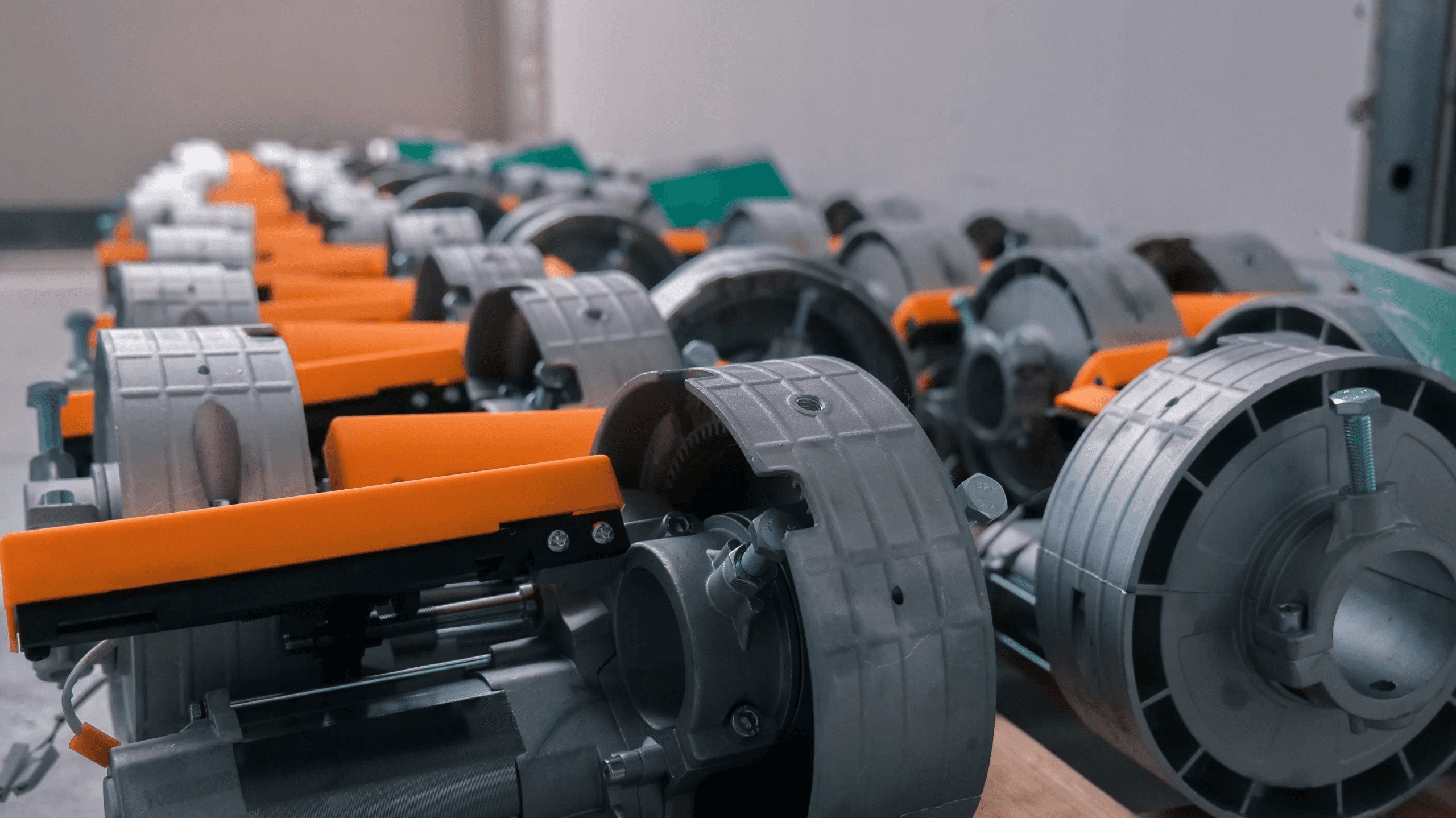
Key Differences: Central Door Motor vs Tubular Motor
Understanding the fundamental differences between these two motor types is essential before making a purchasing decision. Let's examine the major comparison points in detail.
1. Installation Location and Visibility
The most immediately apparent difference is where each motor is positioned.
Tubular motors are inserted inside the rolling tube, completely hidden from view. This makes them ideal for installations where aesthetics matter — residential windows, storefronts with visible shutter boxes, or any application where a clean, uncluttered look is desired.
Central door motors are mounted externally on the side of the shutter assembly. While they are often housed within the shutter box or casing, they are externally visible components. This is perfectly acceptable in industrial settings or where maintenance accessibility is prioritized over aesthetics.
Winner for aesthetics: Tubular Motor
Winner for accessibility: Central Door Motor
2. Torque Capacity and Shutter Size
This is perhaps the most decisive factor in choosing between the two.
Tubular motors are limited by their physical size, which is constrained by the inner diameter of the shutter tube. Even the largest tubular motors top out around 100–150 Nm for specialist heavy-duty versions. This makes them suitable for shutters up to a certain weight and size.
Central door motors, being externally mounted and not constrained by tube dimensions, can deliver enormous torque outputs — sometimes exceeding 1000 Nm in industrial variants. They can handle very wide, very heavy shutters with ease.
Rule of thumb: If your shutter exceeds approximately 10–12 square meters in area or the curtain weight exceeds 100 kg, a central door motor is almost certainly the better choice.
Winner for heavy-duty applications: Central Door Motor
Winner for light to medium duty: Tubular Motor
3. Installation Complexity
Tubular motor installation requires the motor to be carefully inserted into the tube, secured with a crown and plug system, and wired through the shutter box. While this sounds straightforward, it does require correct sizing and tube compatibility. For someone experienced with shutter systems, installation is manageable; for a first-time installer, it can be tricky.
Central door motor installation involves mounting a bracket to the wall or side panel, attaching the motor via the coupling to the shutter shaft, and then wiring the motor and control panel. It is generally considered more involved and is almost always a professional installation job, particularly for commercial-grade systems.
Winner for DIY-friendly installation: Tubular Motor
Winner for professional commercial setup: Central Door Motor (more robust, adaptable)
4. Noise Levels
Noise is a significant concern, especially for residential applications.
Tubular motors are generally quieter because the motor is encased within the tube, which acts as a partial sound damper. Modern tubular motors with advanced gear systems can operate at very low noise levels — some premium models run virtually silently.
Central door motors tend to produce more operational noise due to their external mounting, coupling mechanisms, and often higher power output. For large industrial doors, this is rarely a concern. However, for a ground-floor apartment or a quiet retail environment, this could be a drawback.
Winner for quiet operation: Tubular Motor
5. Maintenance and Serviceability
Tubular motors are harder to service because the motor is sealed inside the tube. In the event of a motor failure, the entire motor unit typically needs to be removed and replaced, which means partially dismantling the shutter system. Most tubular motors are essentially sealed units and not designed for field repair.
Central door motors are externally accessible, making inspection, lubrication, adjustment, and even component-level repair much more practical. Limit switch adjustments — which are commonly needed over the life of a shutter system — are far easier on external central motors.
Winner for ease of maintenance: Central Door Motor
6. Cost Comparison
Tubular motors at the residential and light commercial level are generally more affordable, with entry-level units available for relatively modest prices. However, costs rise as torque ratings increase, and specialty high-torque tubular motors become expensive quickly.
Central door motors tend to have a higher upfront cost, both for the motor unit itself and for the installation labor involved. However, when dealing with heavy-duty commercial shutters, the central motor system often represents better long-term value because of its durability, maintainability, and ability to handle demanding usage cycles.
Winner for budget-conscious residential use: Tubular Motor
Winner for long-term commercial value: Central Door Motor
7. Smart Home and Automation Integration
Both motor types are increasingly available with smart features, but there are some differences in the ecosystem.
Tubular motors from leading brands like Somfy, Nice, and Roltek are widely integrated with home automation systems. They are commonly compatible with radio frequency (RF) remote controls, Z-Wave, Zigbee, and proprietary smart home platforms. Many modern tubular motors come with built-in radio receivers and can be controlled via smartphone apps.
Central door motors are more commonly integrated with industrial control systems, access control panels, and commercial building management systems (BMS). While residential RF-compatible central motors exist, they are less common than their tubular counterparts in the smart home space.
Winner for smart home integration: Tubular Motor
Winner for commercial/industrial control systems: Central Door Motor

How to Choose the Right Motor: Decision Framework
Now that we've compared the two motor types across key dimensions, let's build a practical decision framework that you can apply directly to your specific situation.
Step 1: Determine Your Shutter Size and Weight
Start by measuring your shutter's width and height, and estimate the curtain weight. If possible, ask your shutter supplier for the specifications. As a general guide:
Shutter Area | Curtain Weight | Recommended Motor Type |
|---|---|---|
Up to 8 m² | Up to 60 kg | Tubular Motor |
8–14 m² | 60–120 kg | High-torque Tubular or Central |
Above 14 m² | Above 120 kg | Central Door Motor |
Step 2: Assess Your Installation Environment
Residential home, apartment, or light retail: Tubular motor is almost always the preferred choice due to its aesthetics, quiet operation, and smart home compatibility.
Commercial storefront or medium-duty business premises: Consider a high-torque tubular motor or entry-level central motor depending on shutter size.
Industrial warehouse, loading dock, or heavy commercial facility: Central door motor is the clear choice.
Step 3: Consider Your Access to Professional Installation
If you're a competent DIY installer or work with a qualified electrician, a tubular motor can be a feasible self-install project. Central door motors for commercial applications almost always require professional installation and should not be approached as a DIY task due to the electrical and mechanical complexity involved.
Step 4: Factor in Long-Term Usage Cycle
How many times per day will the shutter be operated?
Low cycle (1–5 times per day): Either motor type is suitable.
Medium cycle (5–20 times per day): Choose a motor rated for continuous or frequent duty.
High cycle (20+ times per day): Central door motors are generally better suited to high-cycle commercial environments, as they are built for sustained heavy use and are easier to service when wear does occur.
Step 5: Set Your Budget and Total Cost of Ownership
Don't just look at the upfront price. Factor in:
Cost of the motor unit
Installation labor costs
Expected lifespan
Replacement or repair costs over time
Energy consumption
A cheaper tubular motor that fails prematurely in a demanding commercial environment may cost more over five years than a robust central door motor that's well-maintained and easily serviced.
Special Considerations
Fire-Rated Shutters
Fire-rated shutters have specific requirements that must be met regardless of personal preference. Most fire shutter systems use central door motors equipped with fusible links, thermal fuses, or fail-safe mechanisms that allow the shutter to descend automatically in the event of a fire. Always verify compliance with local fire safety regulations before specifying a motor for fire-rated shutter applications.
Battery Backup and Power Failure
Both motor types are available with battery backup options, but the implementation differs. Many tubular motors designed for residential use now include integrated battery packs — some models even have built-in solar charging capability. For central door motors in commercial settings, battery backup is typically handled via an external uninterruptible power supply (UPS) or dedicated backup panel.
Wind Resistance and Weather Sealing
In coastal or high-wind environments, motor selection should account for the additional loads placed on the shutter system during adverse weather. Central door motors, with their higher torque ratings and more robust mechanical connections, generally perform better under high wind-load conditions. Tubular motors in exposed locations should be specified at a generous torque margin above the calculated load.
Three-Phase Power Availability
In purely residential settings, three-phase power is almost never available, which limits motor choice to single-phase units. Industrial and commercial properties typically have three-phase supply, enabling the use of three-phase central door motors that offer superior efficiency, smoother operation, and higher power output.
Top Brands and What They Offer
Tubular Motor Brands
China-Develop — A professional Chinese manufacturer specializing in tubular motors, central motors, and intelligent drive systems for roller shutters, awnings, screens, and smart automation applications. Develop offers a wide range of residential and commercial tubular motors with strong OEM/ODM capabilities, competitive pricing, and expanding global market presence.
Somfy — A market leader in tubular motors, offering an extensive range from basic residential models to high-torque commercial units. Their io-homecontrol and RTS radio technologies are industry standards for smart home integration.
Nice — An Italian brand with a strong reputation for innovation and reliability. Nice tubular motors are widely used across European residential and commercial markets.
Elero — A German brand known for precision engineering and high-quality limit switch mechanisms in both tubular and central motor configurations.
Cherubini — Another well-regarded Italian manufacturer offering both tubular and external motors with good smart home compatibility.
Central Door Motor Brands
China-Develop — Manufactures industrial central motors and rolling door automation systems designed for commercial shutters, warehouses, factories, and heavy-duty applications. Develop focuses on durable motor structures, stable torque performance, and customized automation solutions for global distributors and OEM clients.
Came — An Italian giant in gate and shutter automation, offering a comprehensive range of central door motors for commercial and industrial applications.
BFT — Known for robust commercial door operators and central motor systems, widely used in industrial facilities across Europe.
Ditec — Specializes in industrial door automation, offering central motor systems rated for very high cycle counts and heavy shutter weights.
Hörmann — A German company with an extensive range of door operators including central motor systems for industrial roller doors.
Installation Tips for Each Motor Type
Installing a Tubular Motor: Key Steps
Select the correct motor size — match the motor's outer diameter to your tube's inner diameter. Common mistakes here lead to loose fitting or inability to insert the motor.
Check torque requirements — calculate the required torque based on shutter weight and friction losses, then add a 30–40% safety margin.
Mount the crown and plug correctly — the crown (adapter that connects motor to tube) and the plug (opposite end support) must be properly positioned before sliding the motor in.
Set limit switches before installation — for mechanical limit switch motors, pre-setting limits is easier before the motor is inside the tube.
Secure electrical connections — route the power cable carefully and ensure proper strain relief to prevent damage over time.
Installing a Central Door Motor: Key Steps
Choose correct mounting position — determine right-hand or left-hand mounting based on your shutter installation and available wall space.
Ensure shaft compatibility — the motor coupling must match the shutter shaft dimensions precisely.
Align the motor carefully — misalignment between the motor and shaft is a common cause of premature wear and noise.
Set limit switches with the shutter in place — external limit switches are adjusted after installation with the shutter assembled and operating.
Verify all safety features — for commercial installations, test emergency stop, obstacle detection, and any fire-safety or fail-safe mechanisms before commissioning.
Frequently Asked Questions
Can I replace a tubular motor with a central door motor?
Yes, it's technically possible, but it requires additional brackets, wall space, and electrical work. It's generally done when a tubular motor proves insufficient for the application — such as when a shutter is replaced with a larger or heavier model. Consult a professional before attempting this conversion.
How do I know if my shutter needs a new motor?
Common signs include the shutter moving slower than usual, unusual grinding or humming noises, the shutter stopping mid-travel, or the motor running without moving the shutter (which may indicate a coupling failure in a central motor system).
Are solar-powered tubular motors a viable option?
Yes, for low-cycle residential shutters in sunny climates, solar-powered tubular motors — combined with a battery pack — are increasingly viable and offer complete independence from the grid. They are not appropriate for high-cycle or heavy-duty commercial applications.
What is the average lifespan of each motor type?
Well-maintained tubular motors in residential applications can last 10–15 years or more. Central door motors in commercial settings, with regular servicing, can last 15–25 years. High cycle count applications will see faster wear regardless of motor type.
Do both motors work with remote controls?
Most modern motors of both types support remote control operation. Tubular motors more commonly support consumer-grade RF remotes and smartphone integration. Central door motors often use industrial-grade controls but can be paired with push-button panels, key switches, loop detectors, or access control systems.
Summary: Which Motor Is Right for You?
Let's bring it all together with a clear summary:
Choose a Tubular Motor if:
Your shutter is small to medium in size (up to approximately 10–12 m²)
Aesthetics and concealment are important to you
You're in a residential or light commercial setting
Quiet operation is a priority
Smart home integration matters to you
You want simpler, potentially DIY installation
Choose a Central Door Motor if:
Your shutter is large, wide, or heavy (above 100 kg curtain weight)
You're in a commercial or industrial environment
High-cycle operation is required (frequent daily use)
Ease of servicing and long-term maintenance is important
You need three-phase power compatibility
Fire-rated or safety-critical applications are involved
Conclusion
The debate between a central door motor and a tubular motor ultimately comes down to matching the right technology to the right application. There is no universally superior option — each motor type is engineered for a specific range of use cases, and using the wrong type for your situation will lead to frustration, premature failures, and unnecessary costs.
Tubular motors shine in residential and light commercial environments where aesthetics, quiet operation, and smart home integration are priorities. Central door motors dominate the commercial and industrial space where raw power, durability, and serviceability are non-negotiable.
By carefully assessing your shutter's dimensions, weight, environment, usage cycle, and budget — using the decision framework outlined in this guide — you can confidently choose the motor that will serve you reliably for years to come.
If you're still unsure after working through these factors, don't hesitate to consult a qualified shutter automation specialist. A few minutes of professional advice can save you significant time and money in the long run.
Other Blogs