Blog
Tubular Motor vs Synchronous Motor: Which Is Better for Roller Shutters?
Author
Ray
Published
Category
Guide
Choosing between a tubular motor and a synchronous motor for roller shutters? This expert guide compares torque, installation, smart home compatibility, noise, durability, and cost — so you can make the right decision with confidence.


Author
Ray
An experienced automation specialist with a strong background in motor technology and industrial solutions. With years of expertise in central motors, tubular motors, and automation systems, the author is dedicated to sharing insights that connect engineering innovation with real-world applications. Passionate about advancing reliable, energy-efficient, and high-performance automation products for global markets.
What’s better than insider perks, pro tips, and surprises?
Sign up to get the most recent blog articles in your email every week.
Join now.
WHY I WRITE THIS
About my business
Our company’s main product lines include tubular motors, sliding gate motors, swing gate motors, roller shutter motors, and other door automation solutions, all manufactured by trusted partner factories we have worked with for many years.
Our Services
I help them with sales and export operations, while our company also provides sourcing and procurement services in China to help international clients solve supply-related challenges. If you need assistance with procurement, please feel free to contact us.
If you are planning to motorize your roller shutters, the choice of drive motor will define everything — how quietly your shutters operate, how reliably they perform over a decade, and how seamlessly they integrate with your smart home system.
The two most frequently compared options are the tubular motor and the synchronous motor. Both are capable of driving roller shutters. Both have genuine technical merit. But they are engineered for fundamentally different use cases, and choosing the wrong one for your application can result in costly underperformance, premature failure, or a complete system redesign.
This guide delivers a complete, technically grounded comparison between tubular and synchronous motors for roller shutter applications — covering how each motor works, where each genuinely excels, what the common installation mistakes look like, and exactly which scenarios justify each technology.
What Is a Tubular Motor and How Does It Work in a Roller Shutter System?
Understanding the tubular motor begins with its defining design feature: the motor lives inside the shutter tube itself.
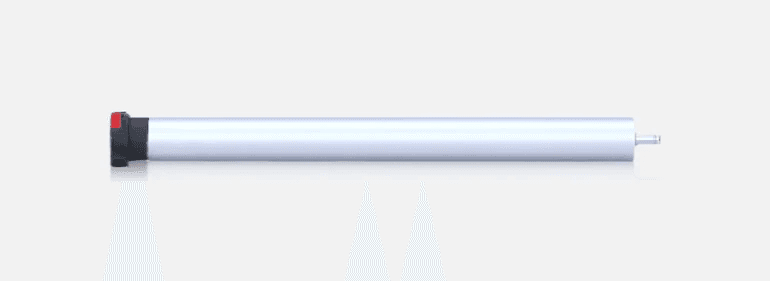
The Internal Architecture of a Tubular Motor
A tubular motor is a self-contained cylindrical unit — motor windings, planetary gearbox, braking mechanism, and limit switch assembly — all sealed within a metal housing engineered to slide into the hollow aluminum barrel of a roller shutter.
The key components include:
AC or DC motor core: Drives the gearbox at high speed with low torque input
Planetary gearbox: Reduces rotational speed while multiplying torque output — typically achieving gear ratios between 30:1 and 80:1
Integrated braking system: Engages instantly when power is cut, preventing the shutter from free-falling due to gravity
Crown adapter set: The end fittings that grip the interior of the roller tube, transferring rotational force to the barrel
Limit switch assembly: Mechanical or electronic stops that define the precise upper and lower travel positions
When current is applied, the motor drives the gearbox, which rotates the crown adapters, which turn the shutter tube, which winds the curtain upward. Reverse the polarity or switch the relay, and the curtain descends at a controlled rate.
Torque Ratings and Shutter Weight Capacity
Tubular motors are rated in Newton-metres (Nm), which expresses their rotational force at the crown output. Standard residential models typically span 6 Nm to 40 Nm, while commercial and industrial-grade tubular motors extend from 50 Nm to 120 Nm or beyond.
As a practical reference point:
A lightweight aluminum slat shutter (width up to 2.5m) typically requires 10–15 Nm
A foam-filled aluminum security shutter (width 3–4m) typically requires 20–30 Nm
A heavy perforated steel or dual-wall shutter for commercial storefronts may require 40–80 Nm
Selecting the correct Nm rating is one of the most critical steps in system design. An undersized tubular motor will overheat on thermal protection repeatedly and fail prematurely. An oversized motor is wasteful in cost but will never damage the shutter.
Electronic vs. Mechanical Limit Switches: Which Should You Choose?
This is a distinction that significantly affects user experience and long-term reliability.
Mechanical limit switches use rotating adjustment discs inside the motor housing. An installer uses a screwdriver to manually set the upper and lower stop points during commissioning. They are reliable, proven over decades, and work without any external controller. The trade-off is that re-adjustment requires physical access to the motor — awkward once the shutter box is enclosed.
Electronic limit switches use pulse counting or encoder technology to track the tube's rotational position digitally. Limits are set via remote control, typically in under two minutes, without touching the motor. Many modern electronic tubular motors allow re-programming at any time from the remote — a significant convenience advantage during the life of the installation.
For new installations, electronic limit switch motors are the preferred choice for both installers and end users.
What Is a Synchronous Motor and Where Does It Fit in Shutter Applications?
The Operating Principle of a Synchronous Motor
A synchronous motor is an AC motor whose rotor speed is locked in precise synchronization with the frequency of the power supply. At 50 Hz with a given pole configuration, a synchronous motor will always rotate at exactly the same RPM — it cannot deviate from this speed as long as it stays within its torque capacity.
This constant-speed characteristic is a genuine engineering advantage in applications that demand precise, repeatable rotational velocity — such as clock mechanisms, timing devices, conveyor synchronization systems, and certain laboratory instruments.
In the context of roller shutters, synchronous motors are typically small, externally mounted units connected to the shutter's drive shaft through a gearbox or chain-and-sprocket drive system.
How Synchronous Motors Are Installed on Roller Shutters
Unlike tubular motors, synchronous motors do not fit inside the shutter barrel. They are bolted externally — either to the side bracket of the shutter housing, to the adjacent wall, or to a dedicated motor bracket — with a drive connection linking the motor output shaft to the end of the shutter tube.
This external mounting approach requires:
A larger headbox or shutter box to accommodate the motor and drive hardware
External limit switches or position sensors wired into the control circuit
A visible motor housing on one side of the shutter installation
In practice, this means synchronous motor installations are inherently bulkier and more complex than equivalent tubular motor systems.
Where Synchronous Motors Genuinely Perform Well
To be fair and technically accurate: synchronous motors have real strengths in specific contexts.
Their constant speed characteristic makes them ideal for multi-shutter synchronization in commercial installations where all shutters must travel at precisely the same rate
They can be highly energy-efficient at low loads
In legacy commercial installations, synchronous side-drive systems have operated reliably for 20+ years with periodic maintenance
For very large-format shutters (wide commercial frontages over 6–8 meters), external side-drive systems using synchronous or three-phase motors remain common in the industry
The key point is that these advantages are largely irrelevant for standard residential roller shutter applications.
Tubular Motor vs Synchronous Motor: A Direct Performance Comparison
Torque, Speed, and Lifting Capacity
Performance Factor | Tubular Motor | Synchronous Motor |
|---|---|---|
Typical Torque Range | 6 Nm – 120+ Nm | 2 Nm – 25 Nm (small units) |
Residential Suitability | Excellent | Limited |
Heavy Commercial Suitability | Excellent (high-torque models) | Moderate (larger external units) |
Speed Consistency | Variable (load-dependent) | Constant (frequency-locked) |
Overload Protection | Thermal cutout (integrated) | Requires external protection |
Starting Torque | High | Low to moderate |
Curtain Weight Capacity | Up to several hundred kg | Generally under 80 kg (small units) |
For the overwhelming majority of residential and light commercial shutter applications, tubular motors deliver superior torque density — more lifting power in a smaller, cleaner package.
Installation Complexity and Space Requirements
This is perhaps the most operationally significant difference between the two technologies.
Tubular motor installation process:
Select the motor with the correct torque rating and crown adapter size
Insert the motor into the shutter tube from the open end
Secure the motor head bracket to the side support
Connect the power cable (standard 3-core electrical cable)
Program upper and lower limit positions
Test full travel and obstacle detection
The entire installation — for an experienced installer — typically takes 30 to 60 minutes per shutter.
Synchronous motor installation process:
Mount the motor bracket to the wall or shutter side plate
Align the motor shaft with the shutter tube axis
Install the drive coupling or chain-and-sprocket assembly
Wire the motor with correct rotation direction switching
Install and wire external upper and lower limit switches
Install any required capacitors for motor starting
Set limit switch positions mechanically
Test operation and fine-tune limits
The synchronous motor installation is measurably more complex, involves more components, and creates more potential failure points over the system's lifetime.
Winner: Tubular Motor — significantly simpler installation with a cleaner finished result.
Noise Level and Operational Comfort
Noise is a quality-of-life factor that is frequently underweighted in technical comparisons but matters enormously to end users — especially for bedroom shutters or office environments.
Modern tubular motors from premium manufacturers such as Somfy, Nice, and Elero operate at noise levels between 35 dB and 48 dB (A-weighted). The motor's position inside the rubber-dampened tube naturally attenuates vibration transmission to the shutter box structure. Vibration-dampening crown adapters further reduce structure-borne noise.
Synchronous motors are inherently smooth runners at their fixed speed. The motor itself may be very quiet. However, external gearing, drive chains, or belt systems introduce their own noise signatures — particularly as components wear over time. Gear lash and chain slap can become noticeable after several years of operation.
Verdict: Both technologies can achieve quiet operation when well-designed and properly installed. For residential comfort, premium tubular motors with anti-vibration mounting represent the gold standard.
Smart Home Integration and Automation Compatibility
The smart home automation sector has transformed expectations around motorized window coverings. Homeowners now expect their roller shutters to respond to voice commands, integrate with home automation platforms, follow sunrise and sunset schedules, and react to wind sensors or rain detectors.
Tubular motors have fully embraced this ecosystem. The following wireless communication technologies are natively available in tubular motor form factors:
Somfy RTS (Radio Technology Somfy): 433.42 MHz proprietary protocol, compatible with Somfy ecosystem and many third-party hubs
Nice P1 Bus: Wired bus protocol enabling multi-motor coordination and advanced automation
Zigbee 3.0: Open standard protocol compatible with SmartThings, Home Assistant, and many commercial hubs
Z-Wave: Mesh network protocol popular in North American smart home installations
WiFi (2.4 GHz): Direct app control without requiring a hub — popular for retrofit installations
io-homecontrol: Two-way communication protocol enabling confirmed feedback on shutter position
Synchronous motors have no native smart home communication capability. Achieving automation requires installing external smart relay modules, motorized contactors, or third-party smart switches in the wiring circuit. While technically achievable, this adds cost, installation complexity, and potential compatibility issues.
For any installation where smart home integration is a current or future requirement, the tubular motor is the unambiguous choice.
Durability, Reliability, and Expected Service Life
Tubular motors are sealed, IP44 to IP65 rated units (depending on model) that protect all internal components from dust and moisture ingress. The integrated thermal overload protection prevents motor burnout during prolonged operation. Under normal residential usage — typically 4 to 8 operating cycles per day — a quality tubular motor from a reputable manufacturer is designed for a service life of 15 to 25 years.
Brands like Somfy publish cycle life ratings of 100,000 full cycles for their premium residential tubular motor lines. At 6 cycles per day, that represents over 45 years of theoretical mechanical life.
Synchronous motors in external configurations are more exposed to environmental conditions. Gear trains and chain drives require periodic lubrication to maintain efficiency and reduce wear. The external installation also exposes drive components to thermal cycling, moisture, and physical contact. Service life is highly variable — well-maintained commercial synchronous drive systems can last decades, but neglected installations deteriorate significantly faster.
Winner: Tubular Motor — for sealed, maintenance-free reliability in residential environments.
Common Mistakes When Choosing and Installing Roller Shutter Motors
Even experienced installers make avoidable errors. Understanding these mistakes helps you specify and commission a motorized shutter system that will perform reliably from day one.
Mistake 1: Undersizing Motor Torque
This is the single most common and damaging error. Many buyers select a tubular motor based on price alone, choosing the lowest torque rating available. When the actual shutter weight — including the full curtain, bottom bar, and counterbalancing spring tension — exceeds the motor's capacity, the motor operates at continuous overload, thermal cutouts trip repeatedly, and internal components wear prematurely.
Always calculate the required torque before selecting a motor. Most manufacturers provide torque calculation tools based on shutter width, height, slat type, and guide rail friction.
Mistake 2: Ignoring Crown Adapter Compatibility
Tubular motors come in standard diameter sizes — most commonly 45mm, 58mm, and 76mm outer diameters — and require crown adapters matched to the inner diameter of the specific shutter tube being used. Installing a motor with incompatible crowns results in slipping, vibration, and eventual crown failure.
Always verify tube inner diameter and confirm crown adapter compatibility before ordering.
Mistake 3: Incorrect Limit Switch Programming
Incorrectly set limits cause the motor to drive the curtain past its mechanical end stop, generating excessive force against the guide rail or the floor bracket. Over time, this damages both the curtain and the motor's internal gearbox.
Take time during commissioning to program limits carefully, test full travel multiple times, and verify that the curtain stops cleanly at both ends without mechanical impact.
Mistake 4: Choosing a Synchronous Motor for a Heavy Residential Shutter
This mistake is particularly common among DIY installers sourcing components online. Small synchronous motors are inexpensive and easy to find, which makes them tempting for budget installations. But if the shutter curtain weighs more than the motor's rated capacity, the result is a motor that overheats, a shutter that stops partway through travel, and an expensive replacement job shortly after installation.
Mistake 5: Neglecting IP Rating for Outdoor Applications
Not all tubular motors are rated for outdoor exposure. A motor with IP20 protection is suitable only for dry indoor environments. Installations in exposed shutter boxes, coastal locations, or areas with high humidity require motors rated at IP44 or IP55 minimum. Always check the IP rating before specifying a motor for an outdoor or semi-outdoor installation.
How to Choose the Right Motor for Your Roller Shutter: A Step-by-Step Decision Guide
Use this structured process to select the correct motor type and specification for your specific application.
Step-by-Step Motor Selection Process
Measure the shutter dimensions — record the exact width and drop of the curtain in millimeters
Identify the slat type and material — aluminum, steel, foam-filled, perforated, or polycarbonate
Calculate the curtain weight — use manufacturer data sheets or weigh the curtain directly
Determine the required torque — use the formula: Torque (Nm) = (Curtain Weight kg × Tube Radius m × 9.81) + friction allowance (typically 20–30%)
Select the motor diameter — match to the inner diameter of your shutter tube (45mm, 58mm, or 76mm are most common)
Choose limit switch type — mechanical for simple budget installations, electronic for ease of commissioning and future adjustment
Assess smart home requirements — if automation is needed now or in future, specify a motor with native RF, Zigbee, or WiFi capability
Check IP rating — confirm the motor's environmental protection matches the installation location
Verify power supply compatibility — standard single-phase 230V AC for most residential tubular motors; three-phase supply for large commercial installations
Source from a reputable brand — prioritize manufacturers with published cycle life ratings, warranty terms, and available spare parts
Application Scenarios: Which Motor Fits Which Project?
Residential Roller Shutters on Windows and Doors
Recommended: Tubular Motor, 10–30 Nm, electronic limits, RF or WiFi enabled
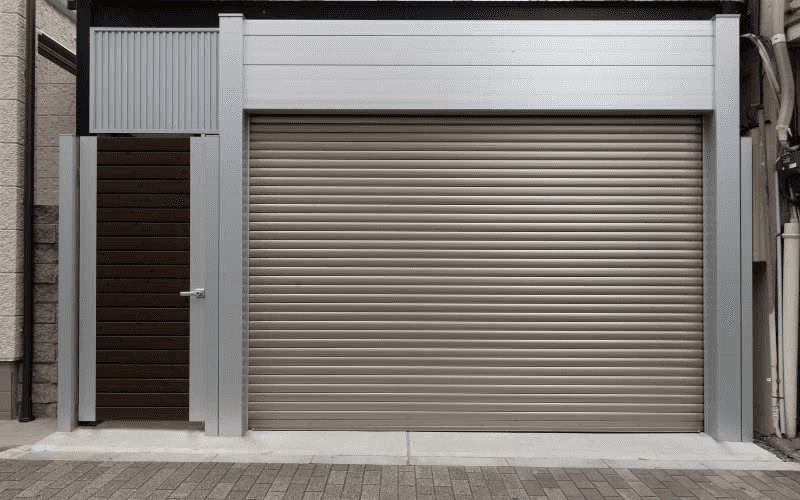
Standard residential aluminum roller shutters on bedroom, living room, and garage door applications are the core use case for tubular motors. The clean installation, quiet operation, and smart home connectivity make tubular motors the obvious specification for any quality residential project.
Commercial Storefronts and Security Grilles
Recommended: High-torque tubular motor (40–120 Nm) or three-phase external drive system
For wide commercial security shutters — typically 4 to 8 meters wide and fabricated from heavy perforated steel — high-torque tubular motors are available from brands like Somfy (Altus range), Nice, and RIB. For exceptionally wide or very heavy curtains, a three-phase external motor with industrial gearing becomes the engineered solution.
Retractable Awnings and Pergola Covers
Recommended: Tubular Motor, 6–20 Nm, with sun and wind sensor compatibility
Awning tubular motors are specifically designed for horizontal loading rather than vertical lifting. Confirm that the motor is rated for awning applications — not all roller shutter tubular motors are mechanically appropriate for awning use.
DIY Smart Blind Projects and Hobbyist Automation
Recommended: Small synchronous motor or low-voltage DC tubular motor with PWM control
For small-scale maker projects — motorizing a miniature decorative shutter, building a custom automation device, or prototyping a smart home component — small synchronous motors or brushless DC motors with encoder feedback may be entirely appropriate. These applications do not require the torque, sealing, or integrated limit systems of a full tubular motor.
Industrial Environments with Multi-Shutter Synchronization
Recommended: Synchronous motor or encoder-equipped tubular motor with group control
In warehouse or production facility environments where multiple large shutters must travel at precisely the same speed simultaneously, synchronous motors offer an inherent advantage due to their frequency-locked constant speed. Alternatively, modern tubular motor systems with position feedback encoders and group control software can achieve equivalent synchronization.
Tubular Motor vs Synchronous Motor: Complete Comparison Summary
Comparison Category | Tubular Motor | Synchronous Motor |
|---|---|---|
Installation Location | Inside the roller tube | External side mounting |
Headbox Size Required | Compact | Larger |
Typical Torque Range | 6–120+ Nm | 2–25 Nm (small units) |
Speed Consistency | Variable (load-responsive) | Constant (grid-synchronized) |
Limit Switch | Integrated (mechanical or electronic) | External (requires separate installation) |
Smart Home Compatibility | Native (RF, Zigbee, WiFi, Z-Wave) | Requires external relay/module |
IP Protection | IP44 to IP65 (model dependent) | Typically IP20–IP44 |
Noise Level | 35–48 dB (premium models) | Low motor noise, gearing variable |
Maintenance Required | Virtually none | Periodic gear/chain lubrication |
Expected Service Life | 15–25 years | Highly variable |
Aesthetics | Fully concealed | Visible external unit |
Best Application | Residential and commercial shutters | Large-format or legacy commercial systems |
Motor Unit Cost | $50–$200 USD | $20–$80 USD |
Total System Cost | Moderate | Moderate to high (additional hardware) |
Frequently Asked Questions About Roller Shutter Motors
What is the difference between a tubular motor and a synchronous motor for roller shutters?
A tubular motor is a self-contained cylindrical unit installed inside the roller shutter tube, providing integrated torque, braking, and limit control. A synchronous motor is an externally mounted AC motor that runs at a constant speed synchronized with the power supply frequency. For standard roller shutters, tubular motors are purpose-built and significantly more practical.
How do I know what torque rating I need for my roller shutter motor?
Calculate the required torque using the curtain weight, the tube radius, and a friction allowance. Most shutter manufacturers provide torque selection charts based on shutter width, height, and slat type. As a general guide, add 20–30% to your calculated minimum torque as a safety margin to prevent the motor from operating near its capacity limit.
Can I use a synchronous motor for a residential roller shutter?
Technically yes, but it is rarely advisable. Synchronous motors lack the integrated limit switches, sealed construction, smart home compatibility, and torque density that tubular motors provide. For a residential project, a tubular motor will deliver a cleaner installation, quieter operation, and significantly better long-term reliability.
Are tubular motors compatible with smart home systems like Google Home or Amazon Alexa?
Yes. Modern tubular motors with WiFi or Zigbee connectivity can be integrated with Google Home, Amazon Alexa, Apple HomeKit, and platforms such as Home Assistant or SmartThings. Somfy's TaHoma hub also provides integration across a wide ecosystem of compatible devices. Always verify the specific communication protocol of the motor before purchase to confirm compatibility with your existing hub.
What IP rating do I need for an outdoor roller shutter motor?
For shutters installed on building exteriors where the motor may be exposed to rain splash, condensation, or humidity, a minimum of IP44 is required. In coastal environments or regions with heavy rainfall, IP55 or higher is recommended. Check the motor's technical datasheet carefully — IP ratings vary between models even within the same brand range.
How long does a tubular motor last in a roller shutter?
A quality tubular motor from a reputable manufacturer — Somfy, Nice, Elero, or Dooya — is rated for 100,000 operating cycles or more. Under typical residential usage of 4–8 cycles per day, this translates to a theoretical service life exceeding 30 years of mechanical operation. Practical service lives of 15–20 years are common in real-world installations.
Can I retrofit a synchronous motor installation to a tubular motor?
In most cases, yes. Retrofitting involves removing the external synchronous drive assembly, cutting the shutter tube to the appropriate length, inserting a tubular motor, and reconnecting the power supply. Limit switch programming completes the conversion. This is a common upgrade in older commercial buildings where legacy side-drive systems are being modernized. Consult a qualified shutter installer to assess whether your specific installation is suitable for retrofit.
What brands of tubular motors are most reliable?
Somfy (France), Nice (Italy), Elero (Germany), Dooya (China), and Cherub are among the most widely used and respected brands in the global roller shutter motor market. Somfy and Nice are particularly dominant in the European residential market and offer the broadest range of smart home compatible models.
Conclusion: Tubular Motors Are the Clear Choice for Roller Shutter Applications
After a thorough technical comparison across every performance dimension — torque, installation, precision, smart home compatibility, noise, durability, and total cost of ownership — the conclusion is both clear and consistent.
For the vast majority of roller shutter applications, tubular motors are the superior choice.
They are purpose-engineered for the specific mechanical demands of roller shutter operation. Their internal mounting design delivers a clean, professional installation that synchronous motor systems simply cannot match in a residential context. Their integrated limit systems, sealed construction, and native smart home connectivity make them the logical specification for any quality motorized shutter project — whether a single bedroom window or a complete building automation installation.
Synchronous motors retain genuine value in specific scenarios: legacy commercial system maintenance, multi-shutter synchronization applications, and niche industrial use cases where constant rotational speed is a hard requirement. Outside of these applications, specifying a synchronous motor for a standard roller shutter is an avoidable compromise.
When you invest in motorizing your roller shutters, you are making a decision that will affect daily comfort and system performance for fifteen to twenty-five years. Choose the technology designed specifically for the job. Choose a tubular motor from a manufacturer with a proven track record, published cycle life data, and a full ecosystem of compatible accessories and smart home integrations.
The right motor, correctly specified and properly installed, will operate quietly, reliably, and intelligently — every morning and every evening — for decades.
Other Blogs