Blog
Rolling Shutter Motor Types Explained: Tubular, Central, and Side Motors
Author
Ray
Published
Category
Design & Inspiration
Learn about rolling shutter motors: types (tubular, central, side), selection factors (size, weight, usage, environment), applications & tips for choosing the right automated shutter drive.

Author
Ray
An experienced automation specialist with a strong background in motor technology and industrial solutions. With years of expertise in central motors, tubular motors, and automation systems, the author is dedicated to sharing insights that connect engineering innovation with real-world applications. Passionate about advancing reliable, energy-efficient, and high-performance automation products for global markets.
What’s better than insider perks, pro tips, and surprises?
Sign up to get the most recent blog articles in your email every week.
Join now.
WHY I WRITE THIS
About my business
Our company’s main product lines include tubular motors, sliding gate motors, swing gate motors, roller shutter motors, and other door automation solutions, all manufactured by trusted partner factories we have worked with for many years.
Our Services
I help them with sales and export operations, while our company also provides sourcing and procurement services in China to help international clients solve supply-related challenges. If you need assistance with procurement, please feel free to contact us.
Introduction
Rolling shutters are widely used in residential, commercial, and industrial environments because they provide security, space efficiency, and convenient operation. As automation becomes more common, many shutter systems now rely on electric motors to replace manual operation and improve daily usability.
The rolling shutter motor is one of the most important components in an automated shutter system. It provides the driving force required to lift and lower the shutter curtain while supporting smooth and controlled movement during operation.
However, not all rolling shutter motors are designed for the same applications. Different shutter sizes, installation structures, load requirements, and operating conditions may require different motor solutions.
Among the most common options are tubular motors, central motors, and side motors. Understanding how these motor types work and where they are typically used can help installers, distributors, and project suppliers select a more suitable solution for their automation projects.
What Is a Rolling Shutter Motor?
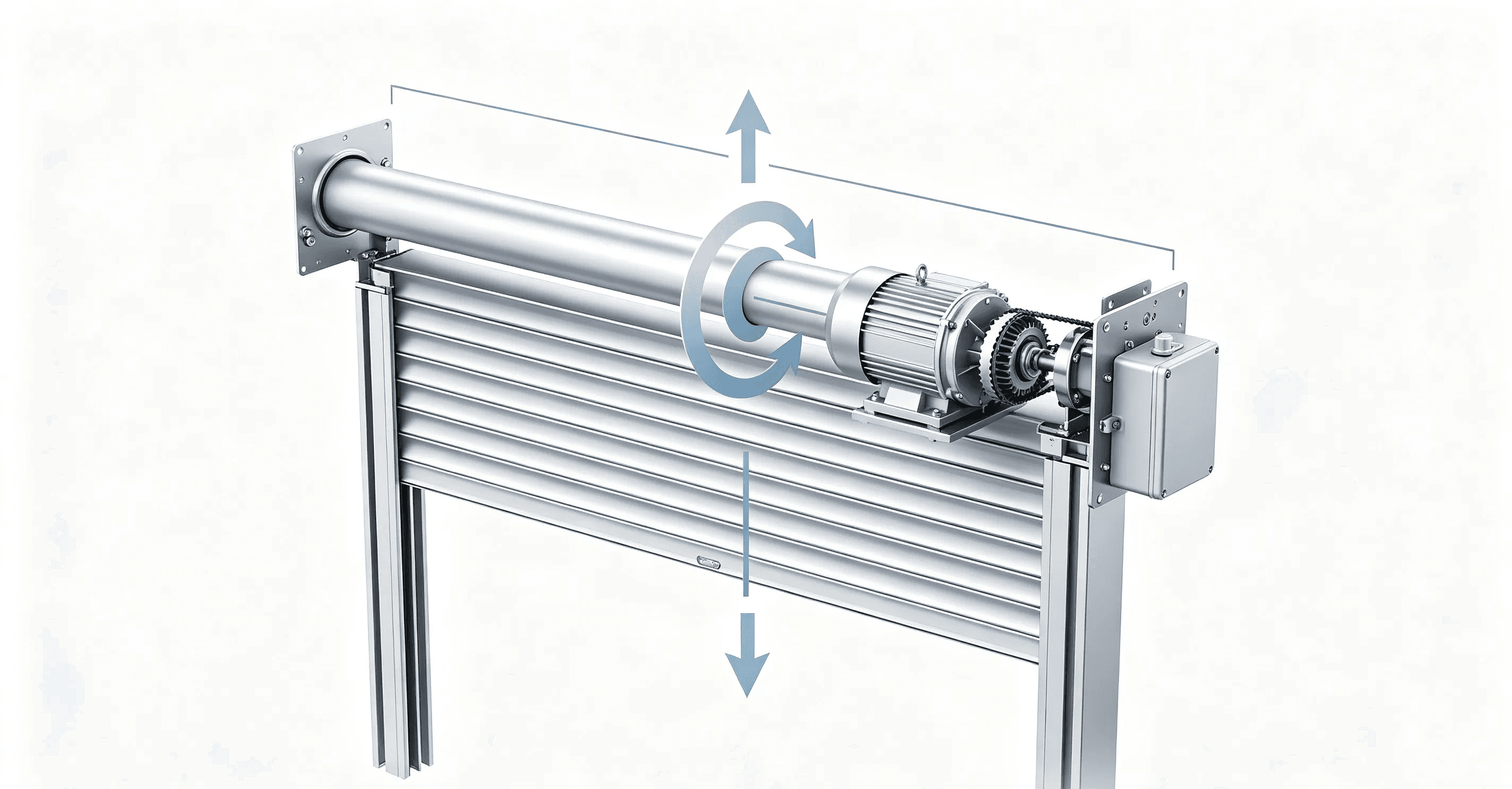
A rolling shutter motor is an electric drive component that controls the movement of a rolling shutter by converting electrical energy into mechanical force.
In a manual shutter system, users need to physically raise or lower the shutter curtain. With an automated system, the motor provides the necessary torque to rotate the shutter mechanism and control opening and closing movement.
The motor works together with other components, including the shutter curtain, shaft, control devices, and safety systems, to create a complete automated solution.
Choosing the correct motor is not only about selecting a product with higher power output. The motor needs to match the actual requirements of the shutter system, including the shutter weight, size, operation frequency, and installation environment.
A properly selected rolling shutter motor can help maintain stable operation, reduce unnecessary stress on mechanical components, and improve the overall service life of the shutter system.
Main Types of Rolling Shutter Motors
Different shutter applications require different motor structures. The three common types used in automated rolling shutter systems are tubular motors, central motors, and side motors.
Each motor type has its own design characteristics and application advantages. Understanding these differences helps buyers evaluate which solution is more suitable for their specific project.
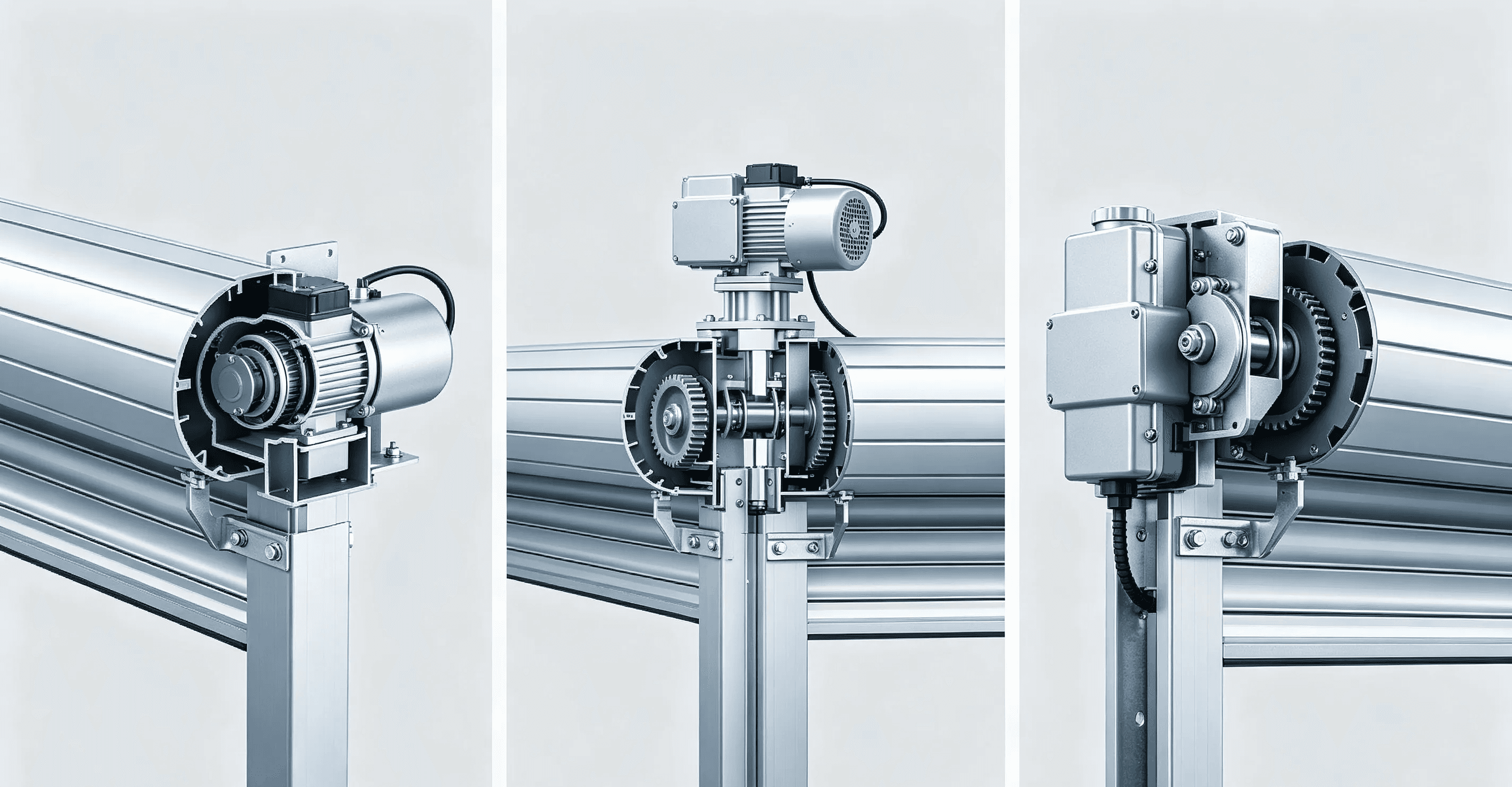
Tubular Motors: Compact Solutions for Smaller and Medium Shutters
Tubular motors are one of the most commonly used motor types for automated rolling shutters, especially in applications where installation space is limited.
The motor is installed inside the shutter tube, allowing the system to maintain a compact structure and cleaner appearance. Because of this design, tubular motors are often used for residential shutters, shop shutters, and other applications where moderate load capacity is required.
One of the main advantages of tubular motors is their space-saving installation method. Since the motor is integrated into the tube assembly, the external structure remains relatively simple and suitable for environments where appearance and installation efficiency are important.
However, tubular motors also have application limitations. They need to be selected according to the shutter weight, tube diameter, and required torque. Using a motor that does not provide sufficient power may affect movement stability and shorten service life.
For this reason, tubular motors are generally more suitable for smaller and medium-sized rolling shutter applications where the required load and operating conditions can be accurately evaluated.
Central Motors: Balanced Power for Larger Shutter Systems
Central motors are designed for applications where stronger lifting capability is required compared with smaller shutter solutions.
Unlike tubular motors that are installed inside the shutter tube, central motors are positioned within the central part of the shutter system and transfer power through the drive mechanism.
This structure allows central motors to handle larger shutter sizes and heavier loads, making them suitable for many commercial applications. They are often selected for entrances, storefronts, and other locations where shutters require more reliable driving force.
When selecting a central motor, factors such as shutter weight, operating frequency, and mechanical structure should be carefully considered. A suitable motor should provide enough torque while maintaining smooth movement throughout repeated operation.
For project suppliers and installers, understanding the relationship between motor capacity and shutter requirements is important because oversizing or undersizing the motor can both affect system efficiency.
Side Motors: High-Performance Options for Heavy-Duty Applications
Side motors are commonly used for larger rolling shutter systems that require higher power output and stronger load capacity.
Unlike tubular motors, side motors are installed externally on the side of the shutter structure. This configuration allows them to provide direct driving force for heavier shutter systems.
They are often used in industrial buildings, warehouses, and commercial facilities where shutters may experience frequent operation and demanding working conditions.
For heavy-duty applications, motor reliability becomes especially important. The selected motor needs to maintain stable performance while handling repeated cycles, larger shutter dimensions, and higher mechanical loads.
Side motors are therefore often considered when the application requires stronger performance beyond the capability of smaller motor solutions.
How to Choose the Right Rolling Shutter Motor Type
Selecting a suitable rolling shutter motor requires more than simply comparing motor power ratings. The motor needs to match the actual shutter structure, operating conditions, and expected workload to achieve reliable performance.
Different projects have different requirements. A motor used for a small commercial shutter may focus on compact installation and smooth operation, while a motor used for an industrial entrance may require stronger load capacity and higher durability.
Understanding the following factors can help installers, distributors, and project suppliers make more informed decisions when selecting a rolling shutter motor.
Consider Shutter Size and Weight
The size and weight of the shutter are among the most important factors when choosing a motor.
A larger or heavier shutter requires greater torque to lift and control movement effectively. If the motor capacity is too low for the application, it may experience excessive stress during operation, resulting in reduced efficiency or shorter service life.
On the other hand, selecting a motor with significantly higher capacity than required may increase unnecessary costs and may not provide additional benefits if the system design does not require it.
For this reason, motor selection should always begin with understanding the actual shutter specifications, including curtain weight, dimensions, and mechanical structure.
Evaluate Operating Frequency and Usage Conditions
The expected operating frequency also affects the choice of rolling shutter motor.
A shutter installed in a residential environment may only open and close a few times per day, while a commercial or industrial shutter may operate continuously throughout working hours.
Frequent operation places greater demands on motor durability, thermal performance, and overall reliability. In these applications, the motor should be selected based on the expected workload rather than only the basic lifting requirement.
Understanding the daily operating pattern helps ensure that the selected motor can maintain stable performance over long-term use.
Consider Installation Environment
The surrounding environment can influence rolling shutter motor performance.
Indoor applications may have relatively stable conditions, while outdoor or industrial installations may expose motors to temperature changes, dust, moisture, and other environmental factors.
Different environments may require different protection levels and installation considerations. A motor suitable for a controlled commercial environment may not always be the best choice for a demanding industrial location.
Evaluating the installation environment before selection helps improve reliability and reduce potential maintenance issues in the future.
Check Compatibility With the Complete Shutter System
A rolling shutter motor does not operate independently. It needs to work together with other components, including the shutter curtain, shaft, control system, and safety devices.
Even a powerful motor may not deliver the expected results if it is not properly matched with the complete shutter structure.
For example, incorrect matching between motor torque and shutter weight may affect movement smoothness, while compatibility issues with control components may influence daily operation.
Considering the complete system rather than the motor alone helps create a more balanced and reliable automation solution.
Rolling Shutter Motor Selection for Different Applications
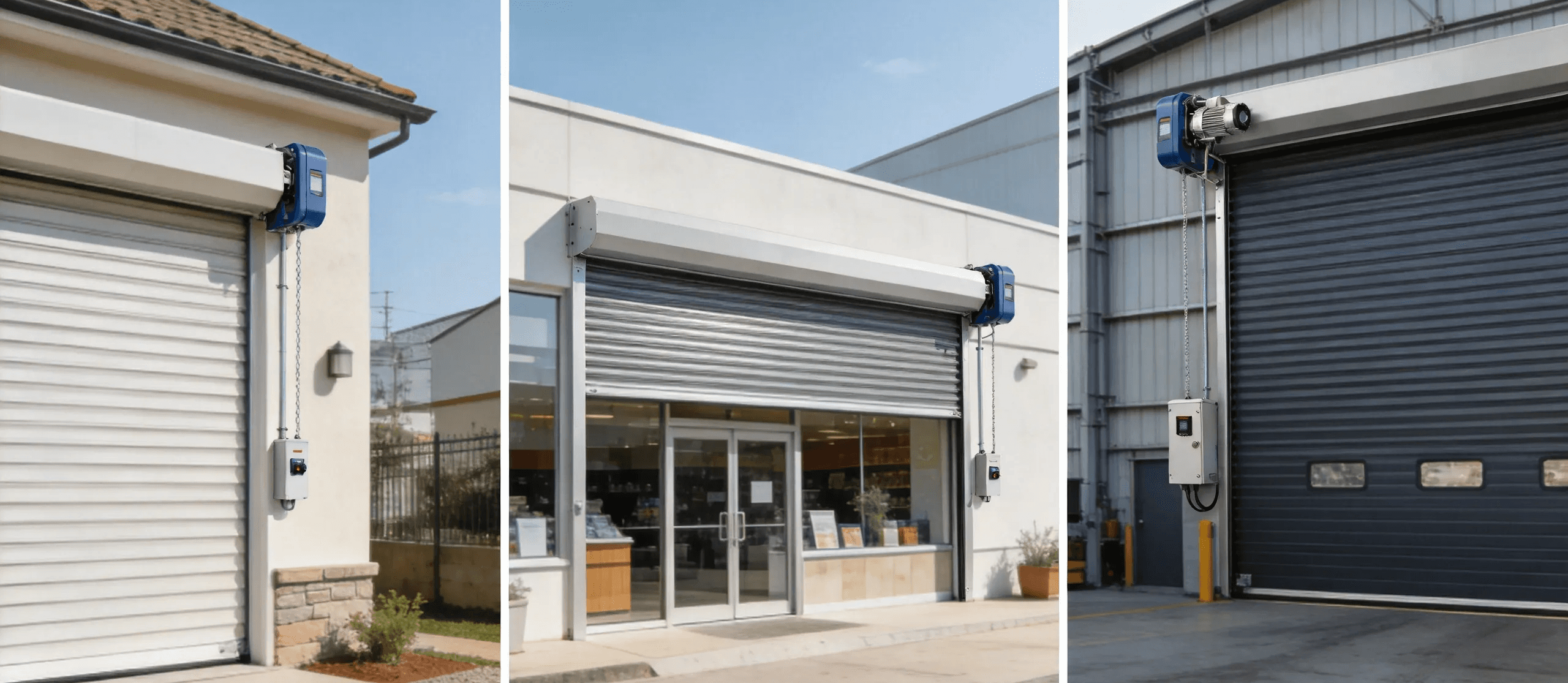
Different environments place different demands on automated shutters. Understanding common application scenarios can help buyers identify suitable motor solutions.
Residential Rolling Shutters
Residential applications usually focus on convenience, quiet operation, and simple control.
For smaller shutters, compact motor solutions are often preferred because they can provide reliable automation while maintaining a cleaner installation appearance.
In these applications, factors such as noise level, available installation space, and daily usage frequency are often more important than maximum load capacity.
Commercial Rolling Shutters
Commercial buildings often require shutters that can balance security, convenience, and frequent operation.
Retail stores, garages, and business facilities may experience more daily cycles than residential applications. Therefore, motor selection should consider both load requirements and expected operating frequency.
A properly matched motor helps maintain smooth movement while supporting consistent operation during business hours.
Industrial Rolling Shutters
Industrial applications usually involve larger shutters, heavier loads, and more demanding working conditions.
Warehouses, factories, and logistics facilities may require motors designed for higher performance and longer operating periods. In these environments, reliability and durability become key factors during motor selection.
The motor should be evaluated together with the complete door system to ensure it can meet the requirements of the working environment.
Why Proper Motor Selection Improves Rolling Shutter Performance
The motor is the driving force behind an automated rolling shutter system, but its performance depends on how well it matches the application.
A correctly selected motor can help achieve smoother movement, reduce unnecessary mechanical stress, and support longer service life. It can also improve maintenance efficiency by reducing problems caused by incorrect motor sizing or unsuitable installation.
For installers, distributors, and project suppliers, understanding the relationship between shutter requirements and motor characteristics is essential for creating reliable automation solutions.
Frequently Asked Questions
Q1: Are tubular motors better than central motors?
Neither motor type is universally better. Tubular motors are often suitable for smaller applications requiring compact installation, while central motors are commonly used for larger shutters requiring stronger lifting capability.
Q2: How do I know what torque a rolling shutter motor needs?
Motor torque requirements depend on factors such as shutter weight, dimensions, shaft design, and operating conditions. These factors should be evaluated together before selecting a motor.
Q3: Can the same rolling shutter motor be used for indoor and outdoor applications?
Not always. Outdoor installations may require additional consideration for environmental conditions such as moisture, temperature changes, and exposure to external elements.
Q4: Does a higher-power motor always provide better performance?
No. Motor performance depends on whether the motor matches the actual application requirements. A properly sized motor is usually more effective than simply choosing a higher-power option.
Q5: How often should a rolling shutter motor be maintained?
Maintenance frequency depends on the application environment and operating workload. Shutters used frequently in commercial or industrial settings may require more regular inspection than lower-use residential systems.
Conclusion
Rolling shutter motors are essential components in automated shutter systems, providing the power required for controlled and reliable movement.
Tubular motors, central motors, and side motors each have different structural characteristics and application advantages. The right choice depends on factors such as shutter size, weight, operating frequency, installation environment, and system compatibility.
For installers, distributors, and project suppliers, selecting a rolling shutter motor should be based on the complete application rather than a single specification. By evaluating the relationship between the motor and the shutter system, it is possible to create more reliable, efficient, and long-lasting automation solutions.
As a professional automation solution provider, China Develop supplies different types of door and shutter automation products designed for various application requirements. By combining suitable motor solutions with practical system design, businesses and project partners can achieve stable performance across residential, commercial, and industrial environments.
Other Blogs


