Blog
Automatic Door Safety Standards: Sensors, Emergency Functions, and Key Requirements
Author
Ray
Published
Category
Design & Inspiration
Learn about automatic door safety standards, sensors, emergency functions, obstacle detection, and key requirements for selecting and installing safe commercial door systems.


Author
Ray
An experienced automation specialist with a strong background in motor technology and industrial solutions. With years of expertise in central motors, tubular motors, and automation systems, the author is dedicated to sharing insights that connect engineering innovation with real-world applications. Passionate about advancing reliable, energy-efficient, and high-performance automation products for global markets.
What’s better than insider perks, pro tips, and surprises?
Sign up to get the most recent blog articles in your email every week.
Join now.
WHY I WRITE THIS
About my business
Our company’s main product lines include tubular motors, sliding gate motors, swing gate motors, roller shutter motors, and other door automation solutions, all manufactured by trusted partner factories we have worked with for many years.
Our Services
I help them with sales and export operations, while our company also provides sourcing and procurement services in China to help international clients solve supply-related challenges. If you need assistance with procurement, please feel free to contact us.
Introduction
Automatic doors are widely used in commercial buildings, retail stores, hospitals, hotels, offices, and other facilities where reliable pedestrian access is important. However, convenience and accessibility should not come at the expense of safe operation.
An automatic door system combines moving door panels, operators, sensors, controls, and safety devices. If these components are poorly selected, incorrectly installed, or inadequately maintained, the door can create risks such as impact, trapping, or unexpected movement.
Safety requirements also depend on the type of door, its operating mode, the building environment, and the country or region where it is installed. For example, EN 16005 addresses the safety in use of power-operated pedestrian doorsets, including sliding, swing, revolving, and folding doors, while ANSI/BHMA A156.10-2024 covers power-operated pedestrian doors in the U.S. market.
For contractors, installers, building owners, and project buyers, understanding the main safety features is therefore an important part of selecting and specifying an automatic door system.
Why Automatic Door Safety Matters
Automatic doors operate without requiring users to manually push or pull the door. This makes entrance and exit more convenient, but it also means the system needs to detect people and respond appropriately while the door is moving.
Risks of Poorly Configured Automatic Doors
An automatic door that does not detect users or obstacles correctly can create several potential hazards.
For example, problems with sensor positioning or detection coverage may cause the door to:
Close while a person is passing through
Fail to open when someone approaches
Continue moving when an obstacle is present
Open unexpectedly because of incorrect detection
Operate inconsistently in busy entrances
Modern safety standards are designed to address hazards associated with power-operated pedestrian doors. ANSI/BHMA A156.10, for example, specifically includes provisions intended to reduce the possibility of user injury or entrapment.
This is why safety should be considered during system selection and installation rather than treated as an adjustment made after the door is already operating.
Why Safety Requirements Depend on the Application
There is no single automatic door configuration that is appropriate for every building.
A low-traffic office entrance may have different requirements from a hospital entrance, shopping center, transportation facility, or emergency exit.
The application can affect factors such as:
Door type
Traffic volume
Sensor configuration
Opening and closing behavior
Emergency functions
Accessibility requirements
Required level of protection
The applicable standard can also depend on the type of automatic door. For example, ANSI/BHMA A156.10 applies to power-operated pedestrian doors, while ANSI/BHMA A156.19 addresses power-assist and low-energy power-operated swing doors.
Therefore, project teams should identify the applicable local requirements before selecting the door operator and safety configuration.
Key Automatic Door Safety Features
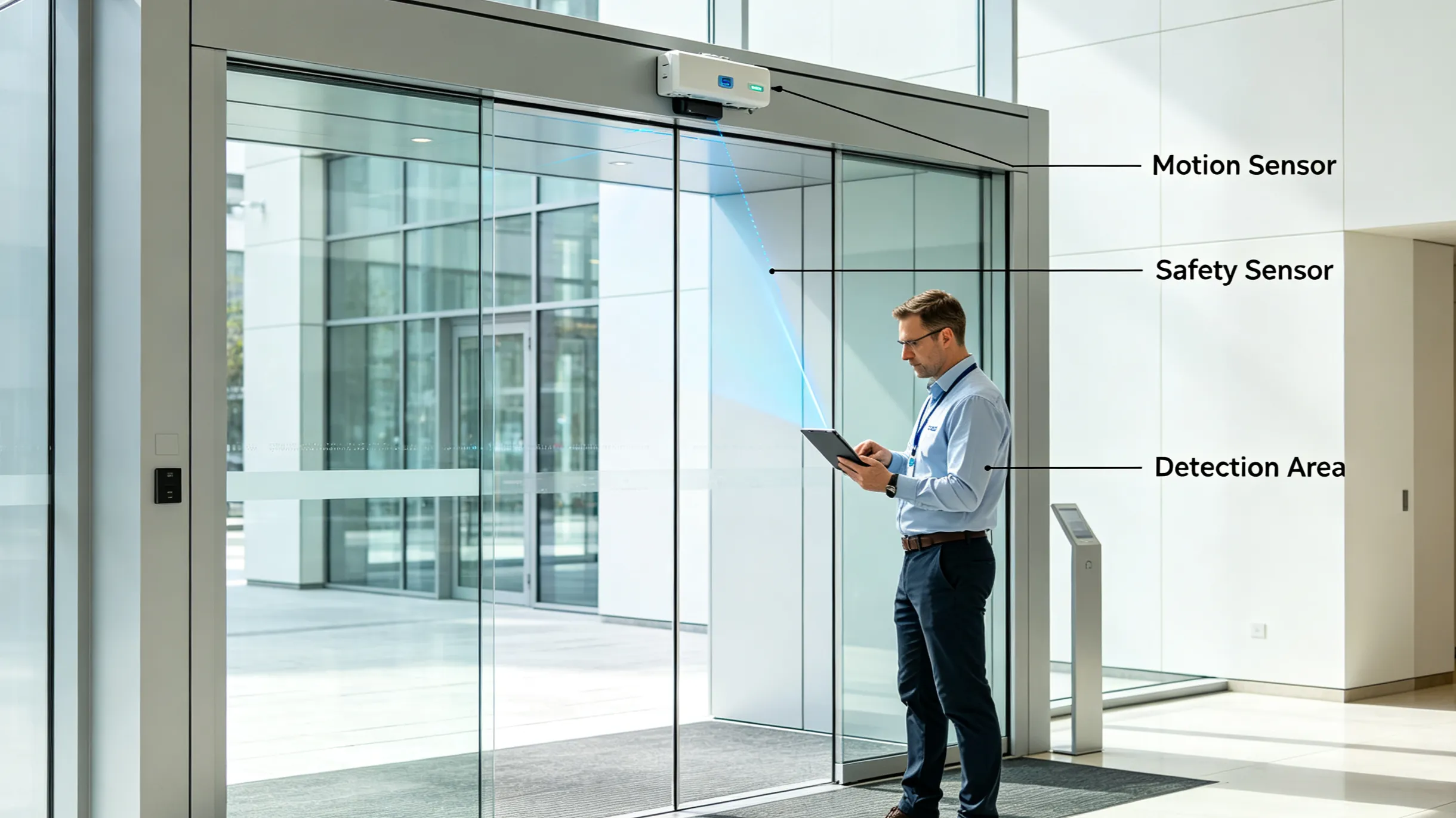
Safety does not come from a single component. A properly configured automatic door uses multiple functions to control activation, movement, obstacle detection, and emergency operation.
Safety Sensors and Presence Detection
Sensors are among the most important safety components in an automatic door system.
An activation sensor detects a person approaching the entrance and sends a signal to the door operator. Depending on the system design, additional sensing devices can monitor the doorway while the door is opening or closing.
EN 16005 recognizes different types of activation devices, including radar, infrared, and vision-based sensors, and requires the selection and positioning of activation devices to take the user's approach path into account.
For installers, this means sensor selection should not be based only on the sensor's detection technology. Its position, coverage area, surrounding environment, and relationship with the door movement also need to be considered.
A sensor that works well in one entrance may not provide the same performance in another if the approach path, traffic pattern, or surrounding environment is different.
Obstacle Detection and Door Reversal
Automatic doors should be able to respond appropriately when an obstacle or person is detected in a potentially hazardous area.
Depending on the system design, safety detection can help prevent the door from continuing its closing movement when an obstruction is present. The exact detection method and performance requirements depend on the applicable door standard and system configuration.
This function is particularly important in entrances with frequent pedestrian traffic, where people may enter the doorway from different directions or move through the opening at different speeds.
Emergency Opening and Manual Override
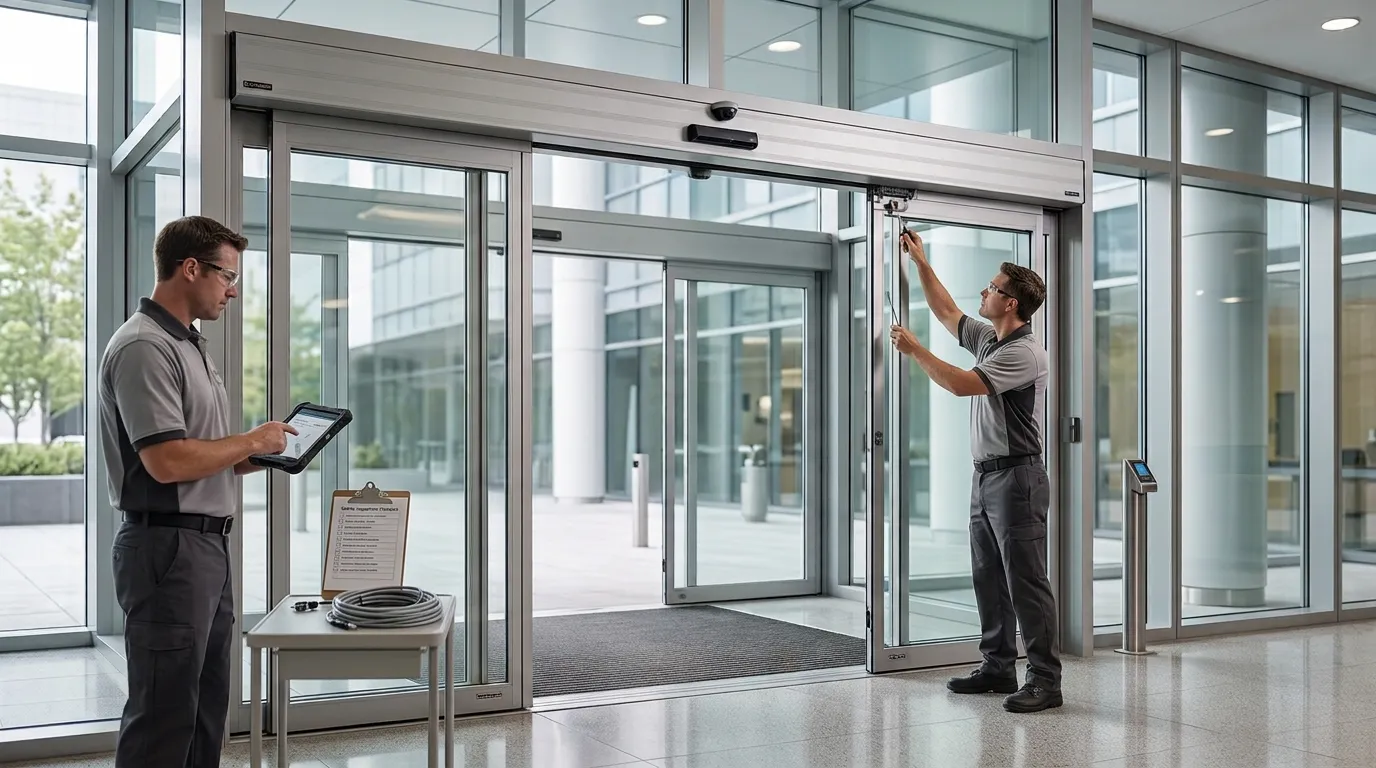
Emergency operation is another important part of automatic door safety, particularly when the entrance forms part of an escape route.
The required emergency behavior depends on the door type, building use, and applicable local regulations. EN 16005 specifically covers power-operated pedestrian doorsets used in normal access as well as emergency and escape routes.
Automatic door specifications should therefore consider what happens if:
Electrical power is interrupted
The automatic operator becomes unavailable
The door needs to be opened manually
The entrance is used as part of an emergency or escape route
The correct emergency function should be determined during project design rather than added as an afterthought.
Safe Opening and Closing Speed
Door movement is also part of the safety equation.
The operator needs to provide sufficient performance for the door to open and close effectively while avoiding unnecessary hazards during movement. Door weight, panel dimensions, traffic volume, and the surrounding environment can all influence the appropriate system configuration.
A commercial entrance with heavy glass panels and frequent pedestrian traffic may require a different operator and control configuration from a lighter, lower-use installation.
For this reason, the operator, motor, sensors, and door panels should be treated as one integrated system rather than selected independently.
Automatic Door Safety Standards and Regulations
Automatic door safety requirements are not identical in every market. The applicable requirements depend on the door type, intended use, building, and local regulations. For project teams, the safest approach is to identify the relevant standard and local requirements before specifying the equipment.
Standards for Automatic Sliding and Swing Doors
In Europe and many markets that adopt European standards, EN 16005:2023+A1:2024 is an important reference for power-operated pedestrian doorsets. It covers design and test requirements for powered pedestrian sliding, swing, revolving, and certain folding doors, including doors used for normal access as well as emergency and escape routes.
In the United States, ANSI/BHMA A156.10-2024 covers power-operated pedestrian doors and includes provisions intended to reduce the risk of user injury or entrapment. It applies to pedestrian doors that open automatically when approached or by a knowing act, but it does not cover power-assist and low-energy power-operated doors, which are addressed separately by ANSI/BHMA A156.19.
These standards should not be treated as interchangeable. A project should use the standard and regulatory requirements applicable to its location and specific door configuration.
Accessibility and Emergency Requirements
Automatic doors can contribute to accessible building entrances, but simply making a door automatic does not automatically mean that the complete entrance meets accessibility or emergency requirements.
Project teams should consider:
Clear opening requirements
Approach and traffic paths
Sensor activation
Safe passage through the doorway
Emergency operation
Manual or backup operation where required
The needs of people with reduced mobility
EN 16005 specifically includes safety in normal access as well as emergency and escape routes within its scope.
Where an automatic door forms part of an escape route or has additional fire or smoke-control functions, those requirements may involve other applicable regulations or standards beyond the automatic door standard itself. The project designer should therefore confirm the complete set of requirements rather than assuming that one door standard covers every aspect of the installation.
Why Local Requirements Should Be Verified
A manufacturer or supplier may provide a door system designed around a particular standard, but that does not necessarily mean the same configuration can be used without modification in every country.
Before purchasing or installing an automatic door, confirm:
Which standard applies to the project
Whether local building regulations add requirements
Whether accessibility rules apply
Whether the entrance is part of an emergency or escape route
Whether additional fire, smoke, or security requirements apply
This is particularly important for international projects. The same automatic sliding door may require different documentation, testing, or configuration depending on the destination market.
How to Check Automatic Door Safety Before Installation
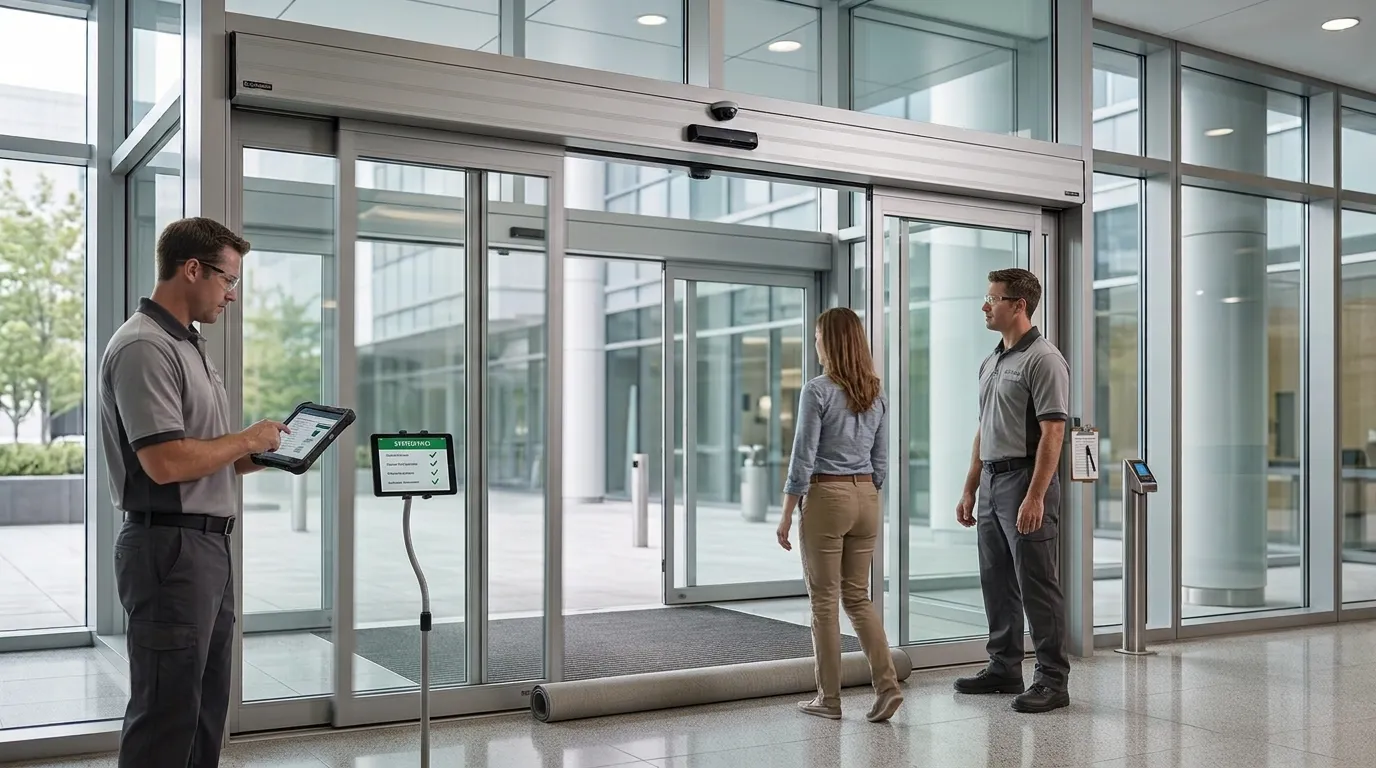
Safety should be evaluated before installation rather than only after the system is operational.
Evaluate the Entrance and Traffic Conditions
Start by understanding how the entrance will actually be used.
Consider:
Expected pedestrian traffic
Door opening frequency
Direction of pedestrian movement
Door dimensions and weight
Indoor or outdoor installation
Presence of children, elderly users, or people with reduced mobility
Whether the doorway is part of an emergency route
A busy retail entrance, for example, may require a different sensor arrangement and operating configuration from a small office entrance.
The operator and safety system should be selected according to the actual application rather than simply choosing a standard configuration.
Check Sensor Coverage
Sensor installation should be checked after the equipment has been positioned, not simply assumed to be correct because the sensor is installed.
The installer should consider whether users are detected from the expected approach paths and whether the sensing area remains appropriate while the door is moving.
Potential issues include:
Blind spots
Incorrect sensor angle
Obstructions
Reflections or environmental interference
Detection areas that are too small or too large
The exact testing method and performance criteria should follow the applicable standard and the sensor manufacturer's instructions.
Test Emergency Functions
If the automatic door is associated with an emergency or escape route, its emergency behavior should be verified as part of the project commissioning process.
Depending on the design, this may involve checking how the door behaves during:
Power interruption
Emergency activation
Manual operation
Failure of the automatic operator
The required function should be established from the applicable building and door requirements rather than assumed to be the same for every automatic door.
Confirm System Compatibility
Finally, the operator, motor, sensors, door panels, control system, and safety devices should be evaluated as one complete system.
A sensor may be technically suitable on its own but still perform poorly if its detection characteristics do not match the operator or door configuration.
Similarly, a motor with sufficient capacity does not by itself make an automatic door safe.
A proper safety assessment therefore considers the complete door system, its installation environment, and the requirements that apply to the specific project.
Common Automatic Door Safety Mistakes
Even when an automatic door uses appropriate safety components, problems can still occur if the system is poorly specified, incorrectly installed, or not properly tested. Safety should therefore be treated as an ongoing part of the door system's design, installation, and operation.
Using Insufficient Sensor Protection
One common mistake is selecting sensors based only on basic activation requirements.
An automatic door may open correctly when someone approaches it but still require additional protection around the moving door area. The sensing arrangement should reflect the door's movement, user approach paths, and potential hazard areas.
For this reason, installers should evaluate the complete detection area rather than assuming that one activation sensor is sufficient for every application.
Ignoring High-Traffic Conditions
A door used occasionally in a small office does not experience the same operating conditions as the main entrance of a shopping center, hotel, or hospital.
High-traffic entrances may experience:
More frequent opening cycles
Users approaching from different directions
Groups of people passing through together
Longer operating periods
Greater mechanical wear
These conditions should be considered when selecting the operator, sensors, and other safety-related components.
A system that is technically suitable for a low-traffic application may not be the appropriate choice for a much busier entrance.
Failing to Test Safety Functions
Installing safety components is not the same as confirming that they work correctly.
After installation, the system should be tested according to the applicable standard, manufacturer's instructions, and project requirements.
Testing may include checking:
Sensor detection
Door opening and closing behavior
Obstacle response
Emergency functions
Manual operation where applicable
This is particularly important because installation conditions can affect how sensors and other safety devices actually perform.
Treating Compliance as a One-Time Check
Automatic door safety should not be treated as something that only needs to be checked when the door is first installed.
Changes in the building environment, component wear, sensor position, or system configuration can affect performance over time.
Regular inspection and maintenance can help identify changes before they become significant problems. For example, a sensor that was correctly positioned during installation may later be affected by physical movement, environmental changes, or other alterations around the entrance.
Frequently Asked Questions
Q1: What safety features should an automatic door have?
Common safety features include appropriate activation and presence detection, obstacle protection, controlled door movement, and emergency or manual functions where required. The exact configuration depends on the door type, application, and applicable requirements.
Q2: Are safety sensors required for automatic doors?
Safety requirements vary by door type, application, and jurisdiction. Standards such as EN 16005 and ANSI/BHMA A156.10 contain requirements and protective measures intended to reduce risks associated with power-operated pedestrian doors.
Q3: What happens if an automatic sliding door detects an obstacle?
The system's response depends on its design and applicable safety requirements. Safety functions may prevent or interrupt potentially hazardous door movement when an obstruction is detected.
Q4: Do automatic doors need emergency opening functions?
Some automatic doors require specific emergency or escape-route functions depending on their location and use. EN 16005, for example, includes requirements concerning doorsets used on escape routes and emergency exits.
Q5: What standards apply to automatic doors?
The applicable standard depends on the market and door configuration. EN 16005:2023+A1:2024 is a current European standard for power-operated pedestrian doorsets, while ANSI/BHMA A156.10-2024 covers power-operated pedestrian doors in the U.S.
Q6: How can I check whether an automatic door system is safe?
Check the applicable requirements first, then evaluate the door's sensors, movement, obstacle detection, emergency functions, and overall system configuration. Testing and inspection should be performed according to the relevant standard and manufacturer's instructions.
Conclusion
Automatic door safety depends on the complete system rather than a single sensor, motor, or control device. Proper safety requires suitable equipment, correct installation, appropriate testing, and ongoing maintenance.
For contractors, building owners, and project buyers, the most reliable approach is to identify the requirements that apply to the specific project before selecting equipment. Standards such as EN 16005 and ANSI/BHMA A156.10 provide important frameworks for power-operated pedestrian doors, but local building, accessibility, fire, and emergency requirements may also need to be considered.
When safety requirements are evaluated from the beginning of a project, automatic door systems can be configured more appropriately for their intended application and operating environment.
Other Blogs


