Blog
How Automatic Door Control Systems Work: Components, Integration, and Selection Guide
Author
Ray
Published
Category
Design & Inspiration
Guide to automatic door control systems, covering working mechanisms, component matching and selection advice for commercial & industrial automated door applications.

Author
Ray
An experienced automation specialist with a strong background in motor technology and industrial solutions. With years of expertise in central motors, tubular motors, and automation systems, the author is dedicated to sharing insights that connect engineering innovation with real-world applications. Passionate about advancing reliable, energy-efficient, and high-performance automation products for global markets.
What’s better than insider perks, pro tips, and surprises?
Sign up to get the most recent blog articles in your email every week.
Join now.
WHY I WRITE THIS
About my business
Our company’s main product lines include tubular motors, sliding gate motors, swing gate motors, roller shutter motors, and other door automation solutions, all manufactured by trusted partner factories we have worked with for many years.
Our Services
I help them with sales and export operations, while our company also provides sourcing and procurement services in China to help international clients solve supply-related challenges. If you need assistance with procurement, please feel free to contact us.
Introduction
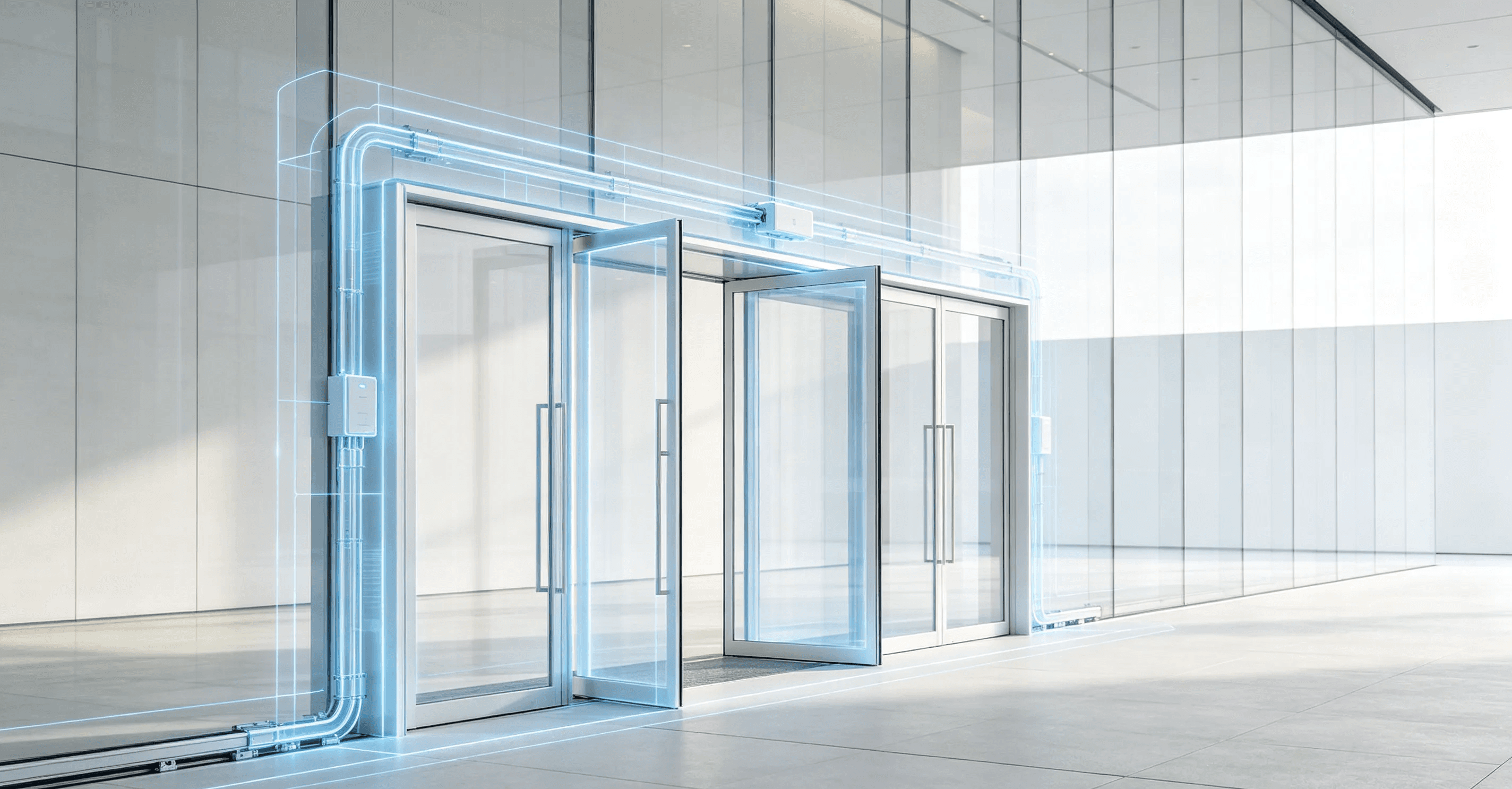
Automatic doors have become an important part of modern commercial buildings, public facilities, and industrial environments. They improve accessibility, support smoother traffic flow, and provide a more convenient entrance experience for users.
However, the movement of an automatic door is not controlled by a single component. Behind every opening and closing action is a complete control system that connects sensors, controllers, motors, and other automation devices. These components work together to detect users, process signals, and control door movement.
The automatic door control system plays a central role in coordinating communication between different parts of the automation solution. Sensors provide information about the surrounding environment, controllers process the received signals, and motors provide the mechanical force needed to operate the door.
For installers, distributors, and project suppliers, understanding how automatic door control systems work is important when selecting suitable solutions. The performance of the entire system depends not only on individual components but also on how effectively these components are integrated together.
What Is an Automatic Door Control System?
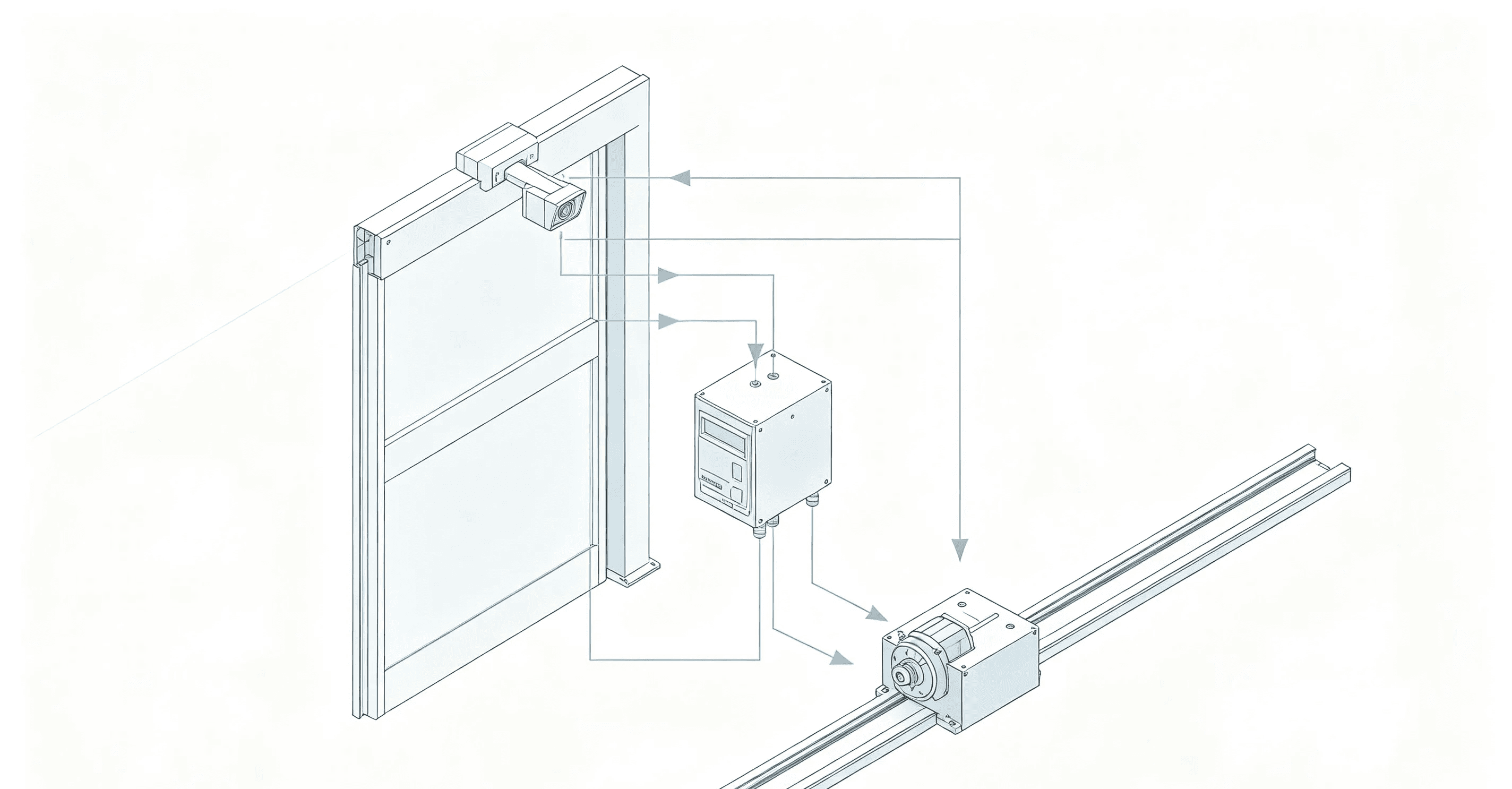
An automatic door control system is the combination of electronic and mechanical components that manages how an automated door detects, responds, and operates.
Unlike traditional manual doors, automatic doors need to make decisions before performing movement. When a user approaches an entrance or an access device sends a signal, the control system determines how the door should respond based on the programmed operating conditions.
The control system connects different parts of the automation process. It receives signals from sensors, processes information through the controller, and sends instructions to the motor to complete the required movement. This coordination allows the door to open, remain open, or close at the appropriate time.
A reliable control system is essential because automatic doors often operate repeatedly throughout the day. In commercial buildings, healthcare facilities, and industrial environments, stable communication between components helps maintain consistent performance and improve overall system reliability.
The Role of Sensors, Controllers, and Motors in Door Automation
Each component in an automatic door system has a specific function, but none of them operates independently.
Sensors act as the detection point of the system. They identify movement, presence, or access signals and provide the necessary information for the control process. Depending on the application, different sensor technologies may be used to meet specific requirements.
The controller works as the decision-making unit of the system. It receives signals from connected devices, evaluates the information, and determines how the door should operate. Through the controller, different operating parameters can be managed, including movement timing, opening and closing sequences, and safety responses.
The motor provides the mechanical power required to move the door. After receiving instructions from the controller, the motor drives the opening and closing process while working together with the door mechanism.
Because these components depend on each other, selecting compatible parts is an important factor in creating a reliable automatic door solution.
How Automatic Door Control Systems Work
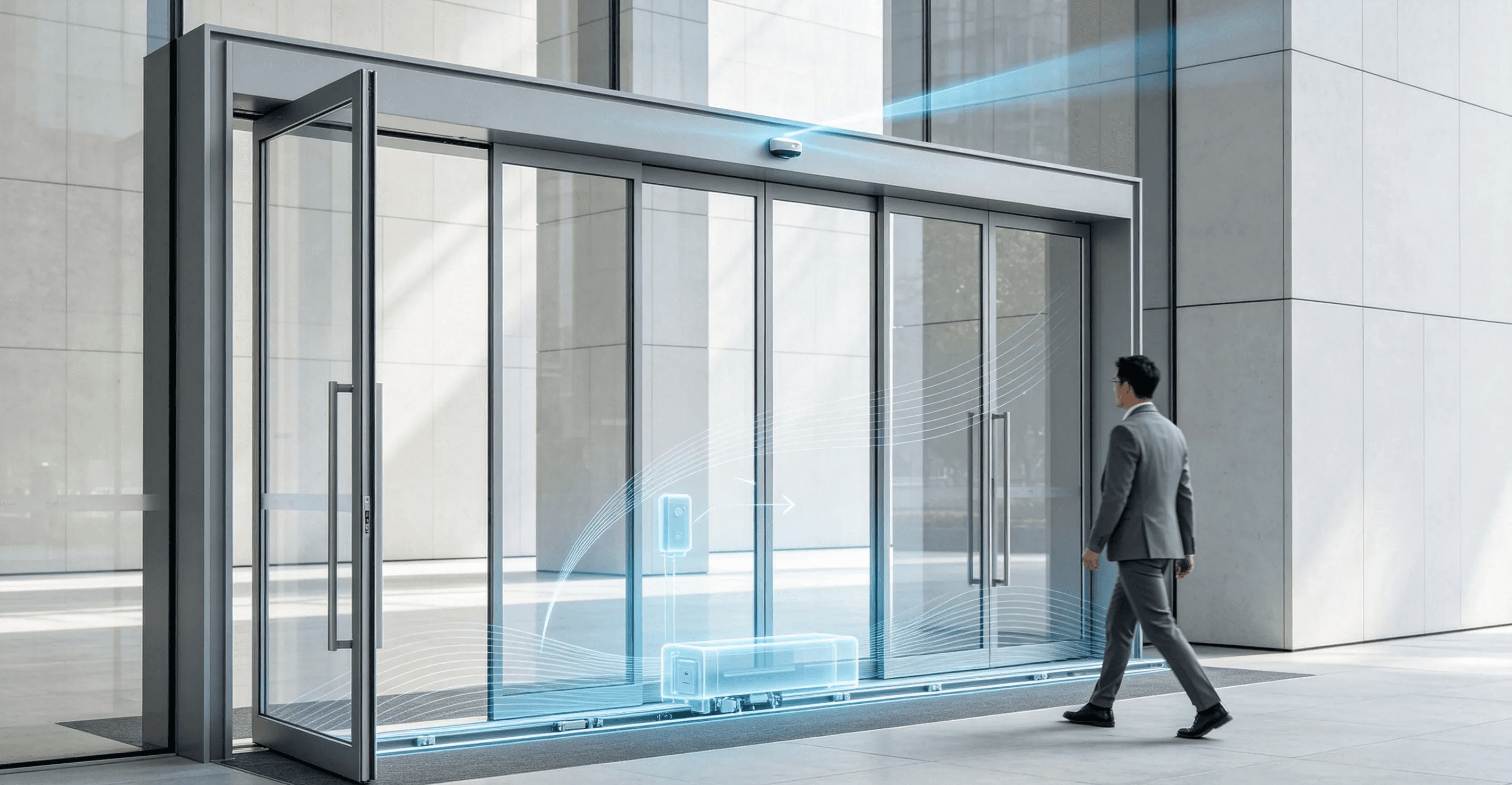
The operation of an automatic door control system involves continuous communication between detection devices, control units, and mechanical components.
When a sensor detects a user approaching the entrance, it sends a signal to the controller. The controller then analyzes the information and determines whether the door should open based on the configured operating settings.
After the decision is made, the controller communicates with the motor and other related components to perform the required action. During operation, safety-related signals may continue to be monitored to ensure that the door responds correctly to changing conditions.
This process allows automatic doors to provide convenient access while maintaining controlled and predictable movement.
Signal Detection and Processing
The first stage of automatic door operation begins with signal detection.
Depending on the system design, signals may come from motion sensors, safety sensors, remote control devices, or access control equipment. Different applications require different detection methods, which means the selected control system needs to support the specific requirements of the installation environment.
For example, a busy commercial entrance may require fast response and frequent operation capability, while a restricted-access facility may place greater importance on authorization and security management.
Communication Between Components
After receiving input signals, the controller manages communication between different components of the automatic door system.
The controller ensures that sensors, motors, and other devices operate together according to the required sequence. Without proper communication, even high-quality components may not achieve the expected performance.
A well-integrated system helps improve movement consistency, reduce unnecessary operation, and support longer service life for the automation equipment.
Key Components of an Automatic Door Control System
An automatic door control system depends on multiple components working together to achieve reliable operation. While sensors and motors are important parts of the system, the controller and other connected devices also influence how effectively the entire solution performs.
Understanding the role of each component helps installers and project suppliers select suitable automation solutions for different applications.
Controller: The Central Unit of the Automation System
The controller is one of the most important components in an automatic door control system because it manages communication between different devices.
After receiving signals from sensors or access control equipment, the controller processes the information and determines the appropriate response. It controls when the motor should start, how the door should move, and how the system should respond to different operating conditions.
A suitable controller helps maintain smooth movement and improves coordination between different components. In commercial environments where doors may operate hundreds of times per day, stable control is essential for maintaining consistent performance.
The controller also allows installers to adjust system parameters according to specific application requirements. Factors such as opening speed, closing timing, and safety responses may need to be configured differently depending on the installation environment.
Sensors and Access Devices: Providing Accurate Input Signals
Sensors and access devices act as the connection between users and the automatic door system.
In a standard commercial entrance, sensors can detect approaching users and send signals that activate the door. In controlled-access environments, the system may rely on authorized signals from devices such as remote controls or access management equipment.
The quality of the input signal directly affects how the door responds. A suitable detection method helps reduce unnecessary activation while ensuring that the door opens when access is required.
For this reason, sensor selection should always consider the application environment, traffic conditions, and safety requirements of the entrance.
Motors and Mechanical Components: Turning Signals Into Movement
While the control system manages decision-making, the motor is responsible for converting electrical instructions into physical door movement.
The controller sends commands to the motor, which then provides the force required to open and close the door. The motor must be properly matched with the door structure, weight, and expected operating frequency to maintain reliable performance.
A mismatch between the motor and control system may lead to unstable operation, increased component wear, or reduced service life.
This is why automatic door systems should be evaluated as a complete solution rather than selecting electronic and mechanical components separately.
Why System Integration Matters in Automatic Door Applications
A reliable automatic door system depends not only on the quality of individual components but also on how effectively they communicate with each other.
Even advanced sensors, controllers, and motors may not deliver expected results if they are not properly matched. For example, a sensor may detect users accurately, but poor communication between the controller and motor can affect door response and movement consistency.
System integration becomes especially important in commercial and industrial applications where doors operate frequently and downtime can affect daily operations.
By selecting compatible components and considering the complete automation process, businesses can improve operational stability and reduce potential maintenance issues.
Compatibility Between Different Components
Component compatibility is one of the key factors affecting automatic door performance.
The controller needs to communicate correctly with sensors, motors, and other connected devices. The motor must also provide suitable performance according to the door design and operating requirements.
Different door applications may have different priorities. A retail entrance may focus on smooth user movement, while an industrial entrance may require stronger performance and higher durability.
Understanding these differences helps suppliers and installers create solutions that better match actual project requirements.
How to Select the Right Automatic Door Control System
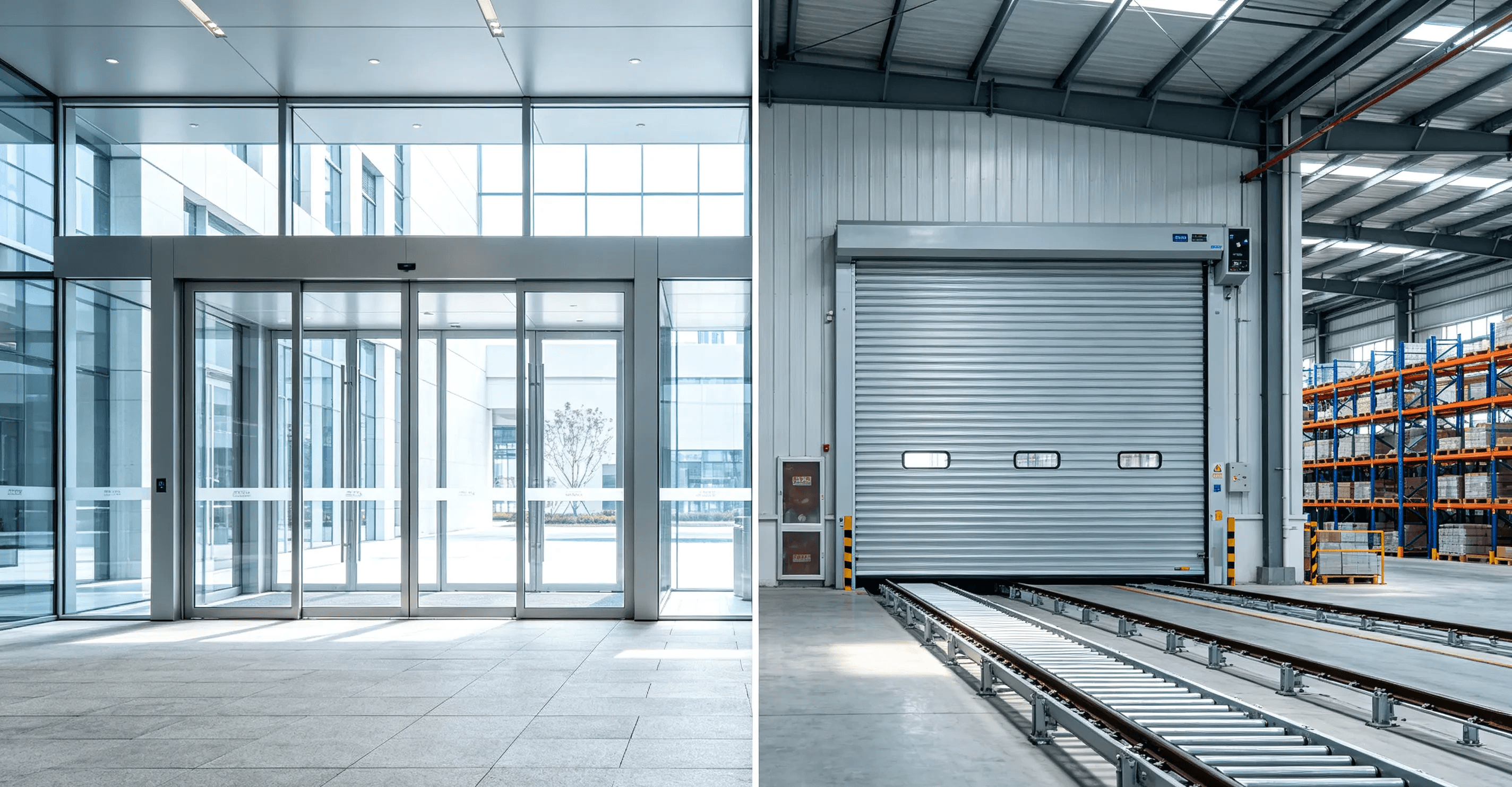
Choosing an automatic door control system requires evaluating the entire application rather than focusing on a single specification.
The right solution should match the door type, operating environment, traffic level, and required functions.
Consider the Door Type and Application
Different door structures require different control approaches.
Sliding doors, swing doors, and larger industrial entrances may use different mechanical systems and operating methods. The selected control system needs to work effectively with the specific door design to achieve stable movement.
Understanding the relationship between door structure and automation requirements helps avoid selecting components that are unsuitable for the application.
Evaluate Operating Frequency and Environment
The expected workload of an automatic door is another important consideration.
A door installed in a busy commercial building may experience continuous daily operation, while a door in a lower-traffic environment may have very different requirements.
Environmental factors should also be considered. Temperature changes, dust, moisture, and other external conditions can influence component performance and long-term reliability.
Selecting a control system based on actual working conditions helps ensure more consistent operation throughout the service life of the equipment.
Consider Future Integration Requirements
Modern automation projects often require more than basic door opening and closing functions.
Some applications may need integration with access control systems, remote operation devices, or other building management solutions.
A flexible control system can provide better adaptability when future upgrades or additional functions are required.
For businesses and project suppliers, considering future needs during the selection process can help create more practical and scalable automation solutions.
Frequently Asked Questions
Q1: Can automatic door control systems be replaced without changing the entire door?
In some cases, existing automatic door systems can be upgraded by replacing specific components. However, compatibility between the new control system, motor, sensors, and existing mechanical structure should be evaluated before replacement.
Q2: What causes an automatic door control system to stop working properly?
Common causes may include component compatibility issues, incorrect installation, sensor problems, motor-related issues, or environmental factors affecting system performance. Identifying the specific cause usually requires checking the complete automation system.
Q3: Do automatic door control systems require professional installation?
Professional installation is recommended because the controller, sensors, motor, and mechanical components need to be correctly configured and synchronized. Proper installation helps improve safety, reliability, and long-term performance.
Q4: Can one control system be used for different automatic door applications?
Not always. Different applications may require different control functions depending on door structure, operating frequency, safety requirements, and integration needs. The system should be selected according to the actual project conditions.
Q5: Are automatic door control systems suitable for industrial environments?
Yes, but industrial applications usually require systems designed for higher workloads and more demanding conditions. Factors such as door size, operating frequency, and environmental exposure should be considered during selection.
Conclusion
Automatic door control systems play an important role in connecting sensors, controllers, motors, and other automation components into one coordinated solution.
The controller manages communication and decision-making, sensors provide detection information, and motors deliver the movement required for operation. When these components are properly matched, automatic doors can provide smoother performance, improved reliability, and longer service life.
For installers, distributors, and project suppliers, selecting an automatic door control system should involve evaluating the complete application rather than focusing on individual components. Considering door type, operating conditions, and future integration requirements helps create automation solutions that meet both current and long-term needs.
As an experienced automation solution provider, China Develop focuses on delivering reliable door and gate automation products designed for different application requirements. By combining suitable components with practical system solutions, businesses and project partners can achieve more stable performance and efficient operation across various automatic door applications.
Other Blogs


