Blog
How Automatic Doors Improve Energy Efficiency in Commercial Buildings
Author
Ray
Published
Category
Design & Inspiration
Learn how automatic doors can improve commercial building energy efficiency by reducing unnecessary air exchange, controlling opening time, and supporting efficient access.


Author
Ray
An experienced automation specialist with a strong background in motor technology and industrial solutions. With years of expertise in central motors, tubular motors, and automation systems, the author is dedicated to sharing insights that connect engineering innovation with real-world applications. Passionate about advancing reliable, energy-efficient, and high-performance automation products for global markets.
What’s better than insider perks, pro tips, and surprises?
Sign up to get the most recent blog articles in your email every week.
Join now.
WHY I WRITE THIS
About my business
Our company’s main product lines include tubular motors, sliding gate motors, swing gate motors, roller shutter motors, and other door automation solutions, all manufactured by trusted partner factories we have worked with for many years.
Our Services
I help them with sales and export operations, while our company also provides sourcing and procurement services in China to help international clients solve supply-related challenges. If you need assistance with procurement, please feel free to contact us.
Introduction
Automatic doors are widely used in commercial buildings where people enter and leave frequently throughout the day. By opening and closing automatically, they can improve access convenience while helping buildings manage the movement of people more efficiently.
Beyond convenience, automatic doors can also contribute to building energy efficiency. Unnecessary door opening can allow conditioned indoor air to escape and outdoor air to enter, increasing the workload on heating, ventilation, and air-conditioning systems.
The actual energy impact depends on factors such as door type, traffic frequency, opening speed, climate, and building design. For commercial property owners, installers, and project suppliers, understanding these factors can help when selecting an automatic door system for an energy-conscious building.
How Automatic Doors Affect Building Energy Efficiency
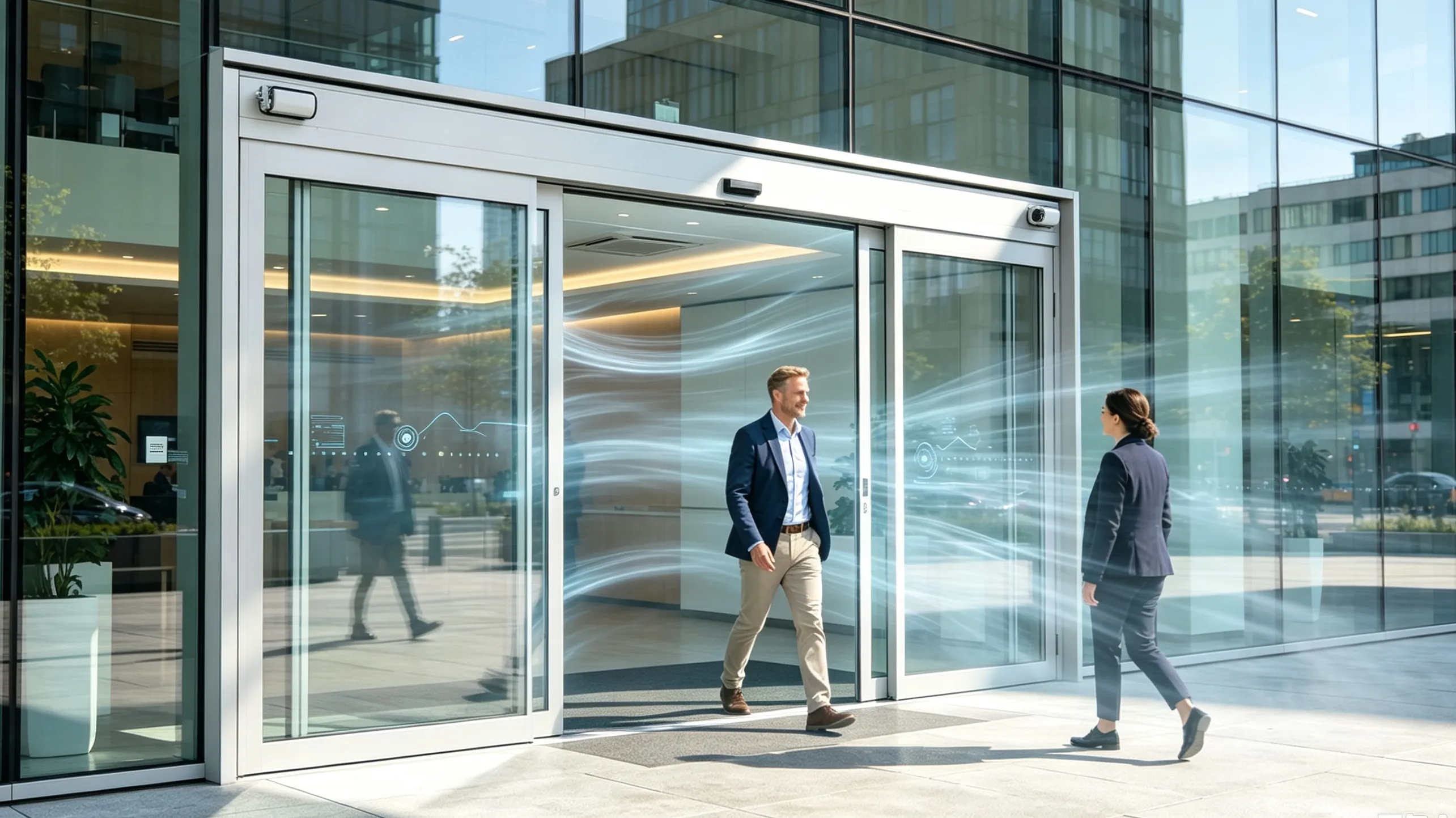
Automatic doors can influence energy use mainly by controlling how and when an entrance is opened.
Reducing Unnecessary Air Exchange
When a commercial entrance remains open for longer than necessary, outdoor air can enter while conditioned indoor air escapes.
Automatic doors can help reduce this unnecessary exchange by opening when a person approaches and closing after the person passes through.
This can be particularly useful in buildings where maintaining a stable indoor temperature is important.
Controlling Door Opening Time
The time a door remains open can also affect energy performance.
An automatic system can control the opening and closing cycle more consistently than manual operation. This may help reduce the amount of time that an entrance remains unnecessarily open.
For high-traffic buildings, even small differences in opening behavior can become more significant because the door may operate many times throughout the day.
How Automatic Doors Help Different Commercial Buildings
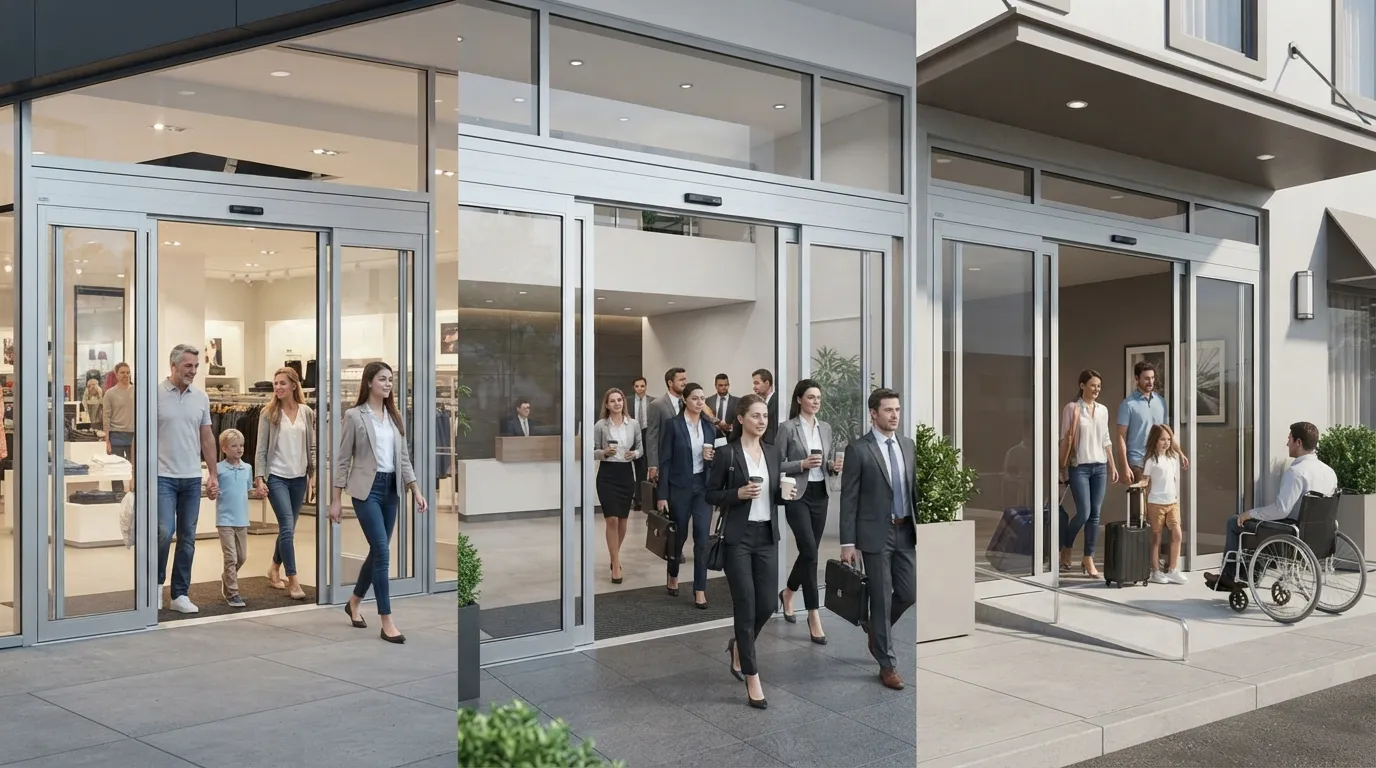
The benefits of automatic doors can vary depending on the type of commercial building and how the entrance is used.
Retail Stores
Retail stores often have frequent customer traffic throughout the day.
Automatic doors allow customers to enter and exit without manually operating the door, while sensors can help ensure that the entrance opens only when needed.
Office Buildings
Office entrances may experience concentrated traffic during morning and evening periods.
Automatic doors can provide convenient access while helping manage the opening and closing of the building entrance during busy periods.
Hotels and Public Facilities
Hotels, hospitals, and other public facilities may have continuous pedestrian traffic.
Automatic doors can help improve accessibility and provide controlled entrance operation while supporting the building's overall approach to energy management.
Features That Can Improve Energy Performance
The energy performance of an automatic door depends not only on automation itself but also on how the complete door system is configured.
Fast Opening and Closing
A door that opens and closes efficiently can reduce the amount of time an entrance remains exposed to outside conditions.
For high-traffic commercial buildings, suitable opening and closing speeds can help maintain smooth pedestrian flow while limiting unnecessary air exchange.
Sensors and Automatic Control
Sensors allow the door to respond to approaching users without requiring manual operation.
A properly configured control system can help prevent the door from remaining open when there is no traffic, while also supporting safe and predictable operation.
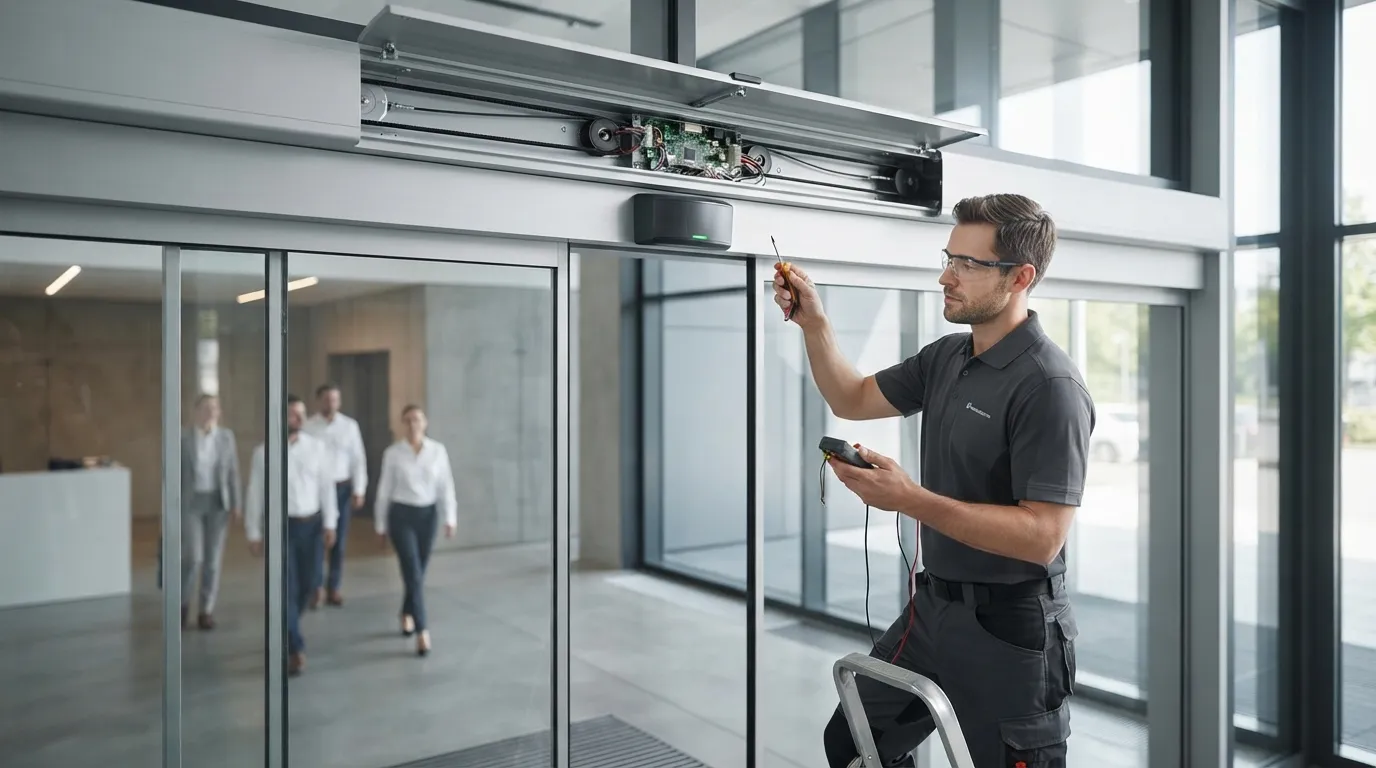
Suitable Door Configuration
Different commercial entrances have different energy and traffic requirements.
Sliding doors, swing doors, and other automatic door configurations may perform differently depending on the building layout, available space, traffic volume, and environmental conditions.
How to Choose an Automatic Door for Energy Efficiency
Energy efficiency should be considered together with traffic flow, safety, and installation requirements.
Consider Traffic Frequency
The number of people using an entrance each day can influence the most suitable automatic door configuration.
A high-traffic entrance may benefit from a system designed for frequent operation and efficient opening and closing cycles.
Consider Building Environment
Climate and indoor temperature requirements can affect the importance of controlling air exchange.
Buildings with strong heating or cooling requirements may benefit more from automatic doors that minimize unnecessary opening time.
Consider Door Size and Operating Speed
Larger doors may require more powerful motors and suitable control systems.
The opening speed should also match the application. A door that operates efficiently without compromising safety can help maintain a better balance between access convenience and energy management.
Common Mistakes to Avoid
Choosing an automatic door based only on purchase price can overlook important long-term considerations.
Ignoring Traffic Conditions
A door designed for low-frequency use may not be suitable for a busy commercial entrance.
The expected traffic volume and operating cycles should be considered before selecting the system.
Overlooking Door Maintenance
Sensors, motors, tracks, and other components require regular inspection.
Poorly maintained equipment may operate less efficiently and can create unnecessary delays or extended opening times.
Focusing Only on Energy Efficiency
Energy performance is important, but it should not be considered separately from safety, accessibility, reliability, and user experience.
A suitable automatic door should provide a balanced solution for the building's actual operating requirements.
Frequently Asked Questions
Q1: Do automatic doors save energy?
A: Automatic doors can help reduce unnecessary air exchange by controlling when an entrance opens and closes. The actual energy savings depend on the building, door design, traffic, and operating conditions.
Q2: How do automatic doors reduce heat loss?
A: They can reduce the time an entrance remains open, limiting the exchange between conditioned indoor air and outdoor air.
Q3: Are automatic sliding doors energy efficient?
A: They can be suitable for energy-conscious commercial entrances, particularly when the door is correctly sized and controlled according to traffic conditions.
Q4: Does door opening speed affect energy efficiency?
A: Yes. Efficient opening and closing can reduce the time the entrance remains open, although speed must always be balanced with safety and accessibility requirements.
Q5: What should I consider when choosing an energy-efficient automatic door?
A: Consider traffic frequency, door configuration, building environment, opening speed, motor requirements, safety features, and maintenance needs.
Conclusion
Automatic doors can contribute to energy-conscious building management by controlling entrance operation and reducing unnecessary opening time.
However, their energy performance depends on more than the automatic mechanism itself. Door configuration, traffic conditions, sensors, operating speed, and maintenance all influence the overall result.
For commercial buildings, selecting an automatic door based on the complete application can help balance energy efficiency, accessibility, safety, and reliable daily operation.
Other Blogs