Blog
Tubular Motor vs Central Motor: Which Roller Shutter Motor Is Right for Your Application?
Author
Ray
Published
Category
Design & Inspiration
Compare tubular and central roller shutter motors by installation, load capacity, maintenance, operating frequency, and applications to choose the right motor for your project.


Author
Ray
An experienced automation specialist with a strong background in motor technology and industrial solutions. With years of expertise in central motors, tubular motors, and automation systems, the author is dedicated to sharing insights that connect engineering innovation with real-world applications. Passionate about advancing reliable, energy-efficient, and high-performance automation products for global markets.
What’s better than insider perks, pro tips, and surprises?
Sign up to get the most recent blog articles in your email every week.
Join now.
WHY I WRITE THIS
About my business
Our company’s main product lines include tubular motors, sliding gate motors, swing gate motors, roller shutter motors, and other door automation solutions, all manufactured by trusted partner factories we have worked with for many years.
Our Services
I help them with sales and export operations, while our company also provides sourcing and procurement services in China to help international clients solve supply-related challenges. If you need assistance with procurement, please feel free to contact us.
Introduction
Choosing the right roller shutter motor depends on more than the size or weight of the shutter. The motor type, installation structure, required torque, operating frequency, and available installation space can all influence the final solution.
Tubular motors and central motors are two common approaches used for roller shutter automation, but they are designed around different mechanical configurations.
A tubular motor is typically installed inside the roller tube, while a central motor is mounted separately and drives the shutter shaft through a suitable transmission arrangement. These differences affect installation, maintenance, load handling, and application suitability.
For installers, distributors, and project suppliers, understanding the differences between tubular and central motors makes it easier to select a solution that matches the actual roller shutter application.
What Is a Tubular Motor?
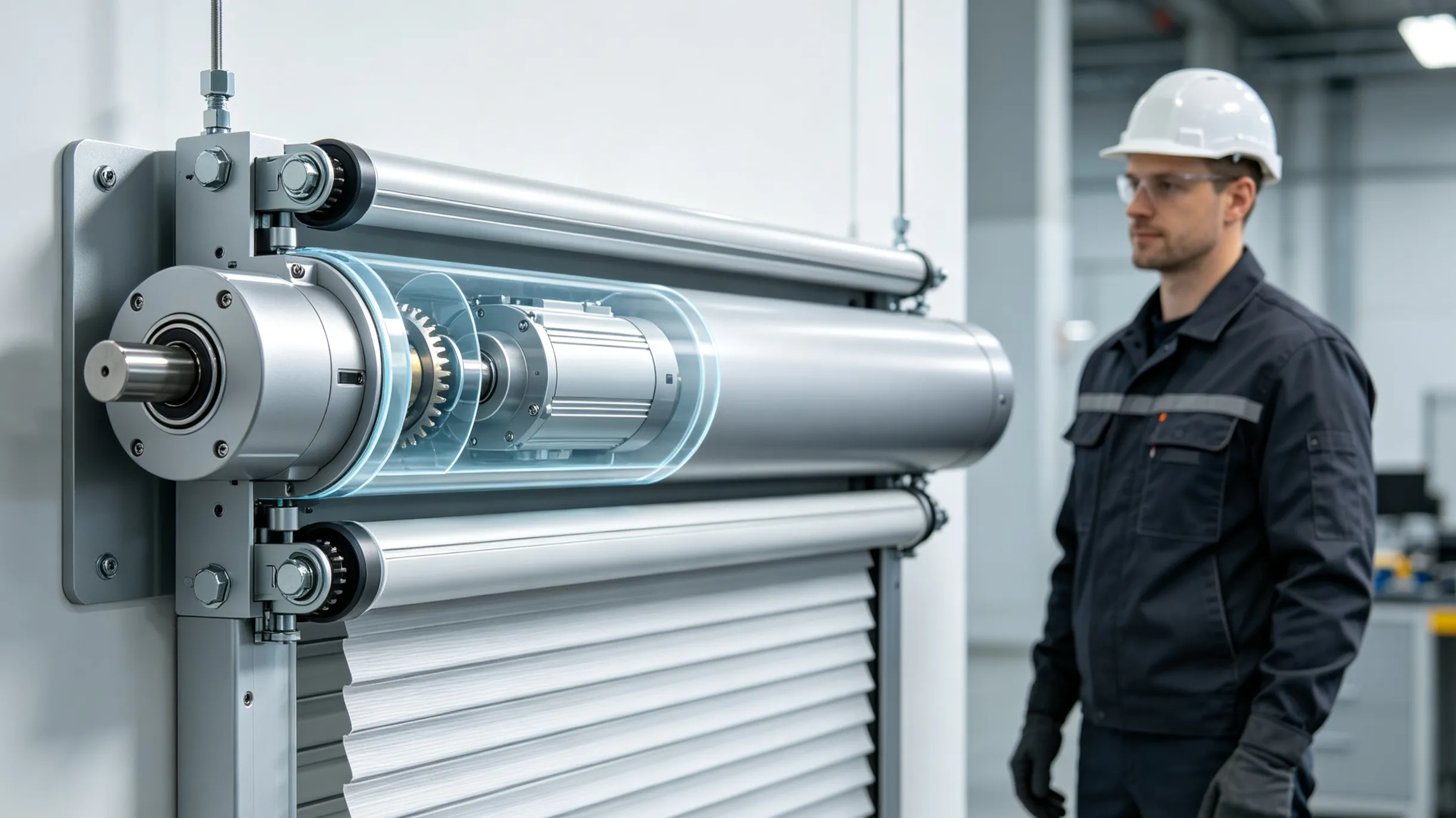
A tubular motor is a compact electric motor designed to fit inside the roller tube of a shutter system.
Because the motor is integrated into the tube, it does not require a large external motor assembly. This makes tubular motors particularly suitable for applications where space and appearance are important.
Compact Installation
One of the main advantages of a tubular motor is its compact structure.
The motor is positioned inside the roller tube, allowing the shutter assembly to remain relatively clean and space-efficient. This can be useful for residential shutters, smaller commercial shutters, awnings, and other applications with limited installation space.
Typical Applications
Tubular motors are commonly used for roller shutters where the load and operating requirements fall within the motor's rated capacity.
They can be suitable for residential buildings, shops, offices, and smaller commercial installations. Different tubular motor models are available with different torque ratings and control options.
What Is a Central Motor?
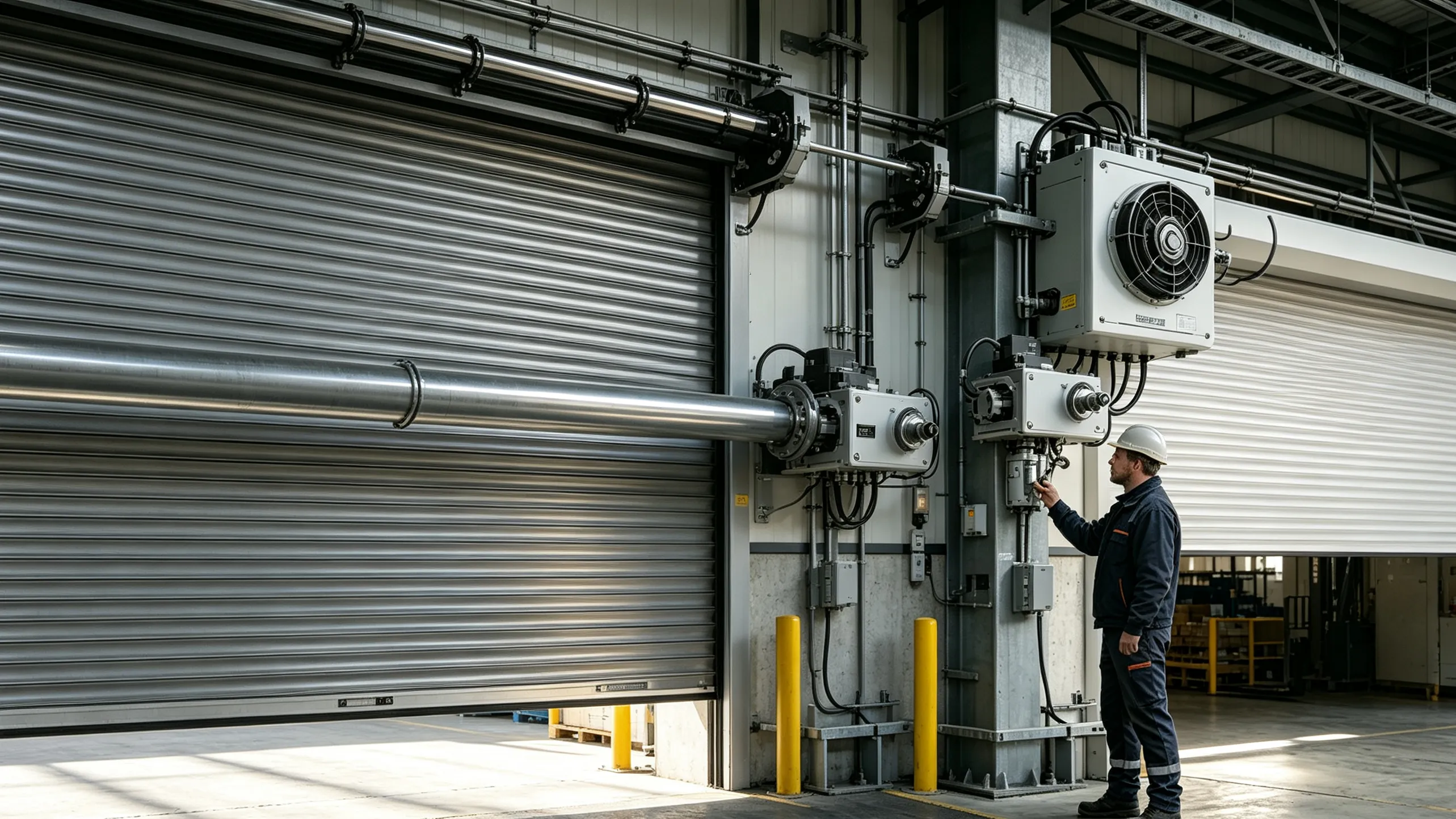
A central motor is installed separately from the roller tube and drives the shutter shaft through a central mounting arrangement.
Unlike a tubular motor, the motor itself is not contained inside the roller tube. This configuration allows the motor to provide driving force directly through the shutter's central shaft.
Higher Load Applications
Central motors are often considered for larger roller shutters where greater load-handling capability is required.
The separate motor structure can provide a practical solution for shutters with larger curtains or higher operating demands, particularly in commercial and industrial environments.
Easier Motor Access
Another characteristic of central motors is their external installation.
Because the motor is not enclosed inside the roller tube, installers and maintenance personnel may have easier access to the motor during inspection or servicing.
Tubular Motor vs Central Motor
The main difference between the two motor types is their installation and drive configuration.
Installation Structure
Tubular motors are installed inside the roller tube, creating a compact and integrated assembly.
Central motors are installed separately and connected to the shutter shaft, resulting in a more accessible motor configuration.
Load and Application Requirements
The appropriate motor depends on the actual shutter load and operating conditions.
Tubular motors can be effective for compact and moderate-load applications, while central motors may be more suitable for larger shutters and applications requiring greater driving capability.
However, motor selection should always be based on the manufacturer's rated torque and the actual mechanical requirements of the shutter rather than simply assuming that one motor type is always more powerful.
Key Factors When Comparing Tubular and Central Motors
Shutter Size and Weight
The size and weight of the shutter are among the first factors to evaluate.
A larger or heavier shutter generally requires greater torque and a suitable mechanical configuration to ensure stable movement.
Installation Space
Available installation space can also influence the decision.
Tubular motors offer a compact internal installation, while central motors require suitable space around the shutter shaft and motor assembly.
Operating Frequency
The expected number of opening and closing cycles should also be considered.
A shutter used occasionally may have different motor requirements from one operating continuously in a commercial or industrial environment.
Key Factors When Comparing Tubular and Central Motors
Maintenance and Accessibility
Maintenance requirements can differ because of the two motor configurations.
A tubular motor is installed inside the roller tube, so accessing the motor may require partial disassembly of the shutter assembly. This can make maintenance more involved depending on the installation design.
A central motor is externally mounted, which can provide easier access for inspection, adjustment, and servicing.
For commercial and industrial applications, accessibility can be an important consideration because reducing maintenance time may help limit operational interruptions.
Control and Automation Requirements
Both tubular and central motors can be integrated into automated roller shutter systems, but the available control configuration depends on the specific motor model.
Depending on the application, the system may include wall switches, remote controls, control panels, sensors, or other automation equipment.
Before selecting a motor, installers should confirm that the motor and control system are compatible with the required operating method.
Which Motor Should You Choose?
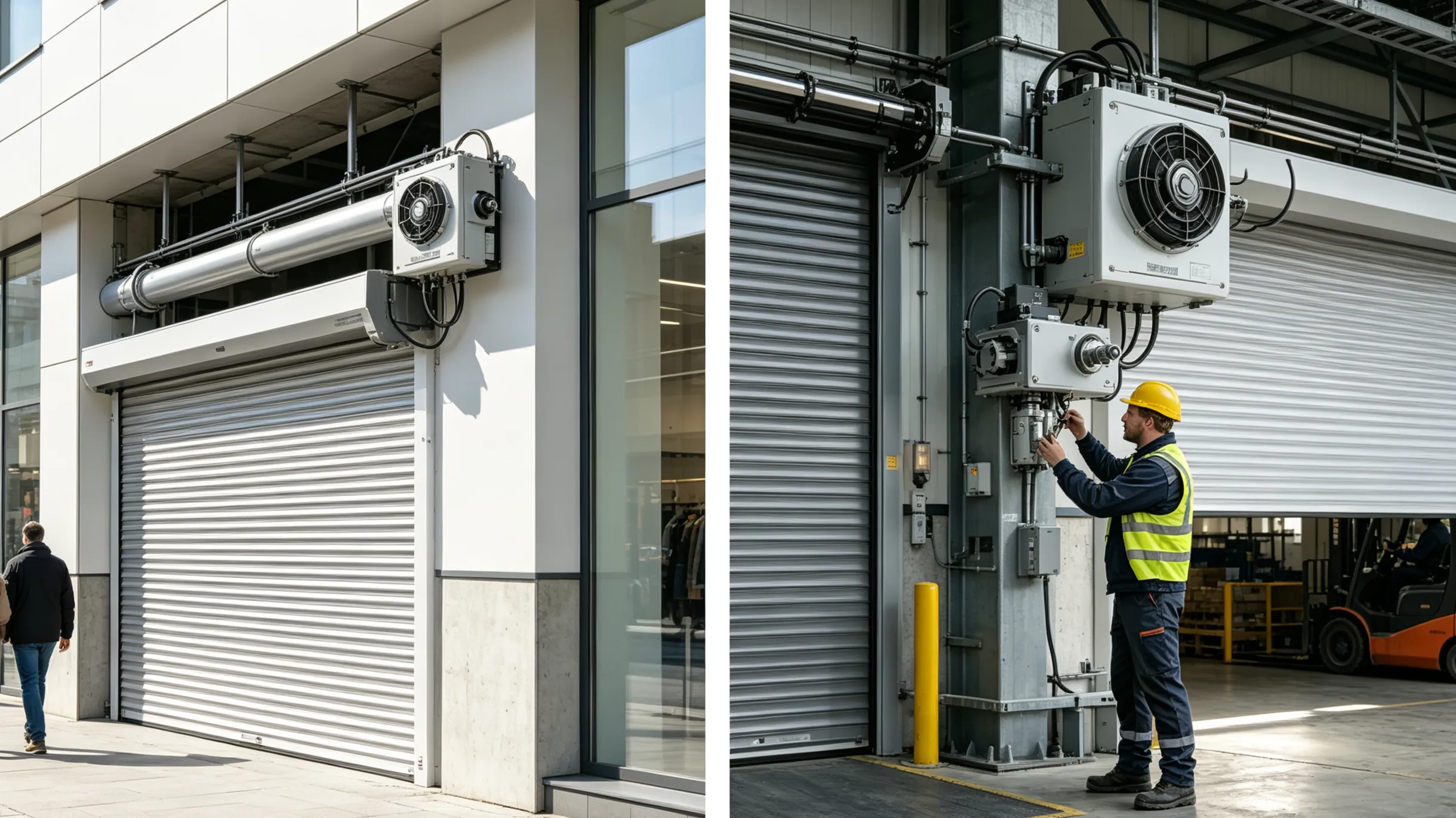
There is no universal choice between tubular and central motors. The right option depends on the roller shutter structure and project requirements.
Tubular Motors for Compact Applications
Tubular motors can be a practical choice when installation space is limited and the shutter has a suitable load requirement.
Their compact design makes them suitable for many residential and smaller commercial roller shutter applications where a clean installation is preferred.
Central Motors for Larger Shutters
Central motors may be more suitable for larger roller shutters where higher load capacity and easier motor access are important considerations.
They can be used in commercial, warehouse, and industrial applications where shutters are larger or operated more frequently.
Common Mistakes When Selecting a Roller Shutter Motor
Choosing between a tubular and central motor based only on motor type can lead to an unsuitable solution.
Focusing Only on Motor Power
Motor power alone does not determine whether a motor is suitable.
Torque, shutter weight, shaft dimensions, operating frequency, and mechanical resistance should also be evaluated.
Ignoring the Existing Shutter Structure
The motor needs to match the existing shaft, tube, mounting arrangement, and shutter mechanism.
Before replacement or installation, the complete mechanical structure should be checked to confirm compatibility.
Overlooking Operating Frequency
A motor used for occasional operation may not be suitable for a high-cycle commercial application.
Understanding the expected daily workload helps installers select a motor designed for the actual operating conditions.
Frequently Asked Questions
Q1: What is the main difference between a tubular motor and a central motor?
A: A tubular motor is installed inside the roller tube, while a central motor is mounted separately and drives the shutter shaft.
Q2: Are tubular motors suitable for commercial roller shutters?
A: Yes, tubular motors can be used for suitable commercial applications when their torque, dimensions, and duty rating match the shutter requirements.
Q3: Are central motors better for heavy roller shutters?
A: Central motors can be suitable for larger and heavier shutters, but the final choice should be based on the actual load, torque requirement, and motor specifications.
Q4: Which motor is easier to maintain?
A: Central motors can generally provide easier access because the motor is mounted outside the roller tube. However, maintenance requirements depend on the specific system design.
Q5: How do I choose between a tubular and central motor?
A: Consider shutter weight and dimensions, required torque, available installation space, operating frequency, shaft configuration, and control requirements before making a selection.
Conclusion
Tubular and central motors provide different approaches to roller shutter automation.
Tubular motors offer a compact integrated installation, while central motors can provide a practical solution for larger shutters and applications where motor accessibility is important.
The best choice should be based on the complete shutter system rather than motor type alone. Evaluating load, torque, installation space, operating frequency, and mechanical compatibility can help installers and project suppliers select a more reliable roller shutter motor solution.
Other Blogs


