Blog
Understanding Automatic Gate Safety Devices: Features, Best Practices, and Selection Guide
Author
Ray
Published
Category
Design & Inspiration
Explore automatic gate safety devices, including photocells, safety edges, and warning lights, and learn how to select the right safety solution for different gate applications.

Author
Ray
An experienced automation specialist with a strong background in motor technology and industrial solutions. With years of expertise in central motors, tubular motors, and automation systems, the author is dedicated to sharing insights that connect engineering innovation with real-world applications. Passionate about advancing reliable, energy-efficient, and high-performance automation products for global markets.
What’s better than insider perks, pro tips, and surprises?
Sign up to get the most recent blog articles in your email every week.
Join now.
WHY I WRITE THIS
About my business
Our company’s main product lines include tubular motors, sliding gate motors, swing gate motors, roller shutter motors, and other door automation solutions, all manufactured by trusted partner factories we have worked with for many years.
Our Services
I help them with sales and export operations, while our company also provides sourcing and procurement services in China to help international clients solve supply-related challenges. If you need assistance with procurement, please feel free to contact us.
Introduction
Safety devices are an important part of modern automatic gate systems. While the opener provides the force needed to move the gate, additional safety components help monitor the operating area and reduce risks during movement.
Automatic gate safety devices are used in residential entrances, commercial properties, parking facilities, and industrial sites. The required configuration can vary depending on gate structure, traffic conditions, operating frequency, and installation environment.
For installers, distributors, and project suppliers, understanding the different safety devices and their functions can help create more reliable and safer gate automation solutions.
What Are Automatic Gate Safety Devices?
Automatic gate safety devices are components designed to detect obstacles, provide warnings, or help control gate movement when an unsafe condition occurs.
They work together with the gate motor and control system rather than replacing the main automation components.
Why Safety Devices Are Important
Automatic gates can be heavy and may move with considerable force. If a person, vehicle, or object enters the movement area unexpectedly, additional safety protection can help reduce the risk of accidents or equipment damage.
A properly configured safety system can also improve operational reliability by allowing the gate to respond to changing conditions around the entrance.
Common Automatic Gate Safety Devices
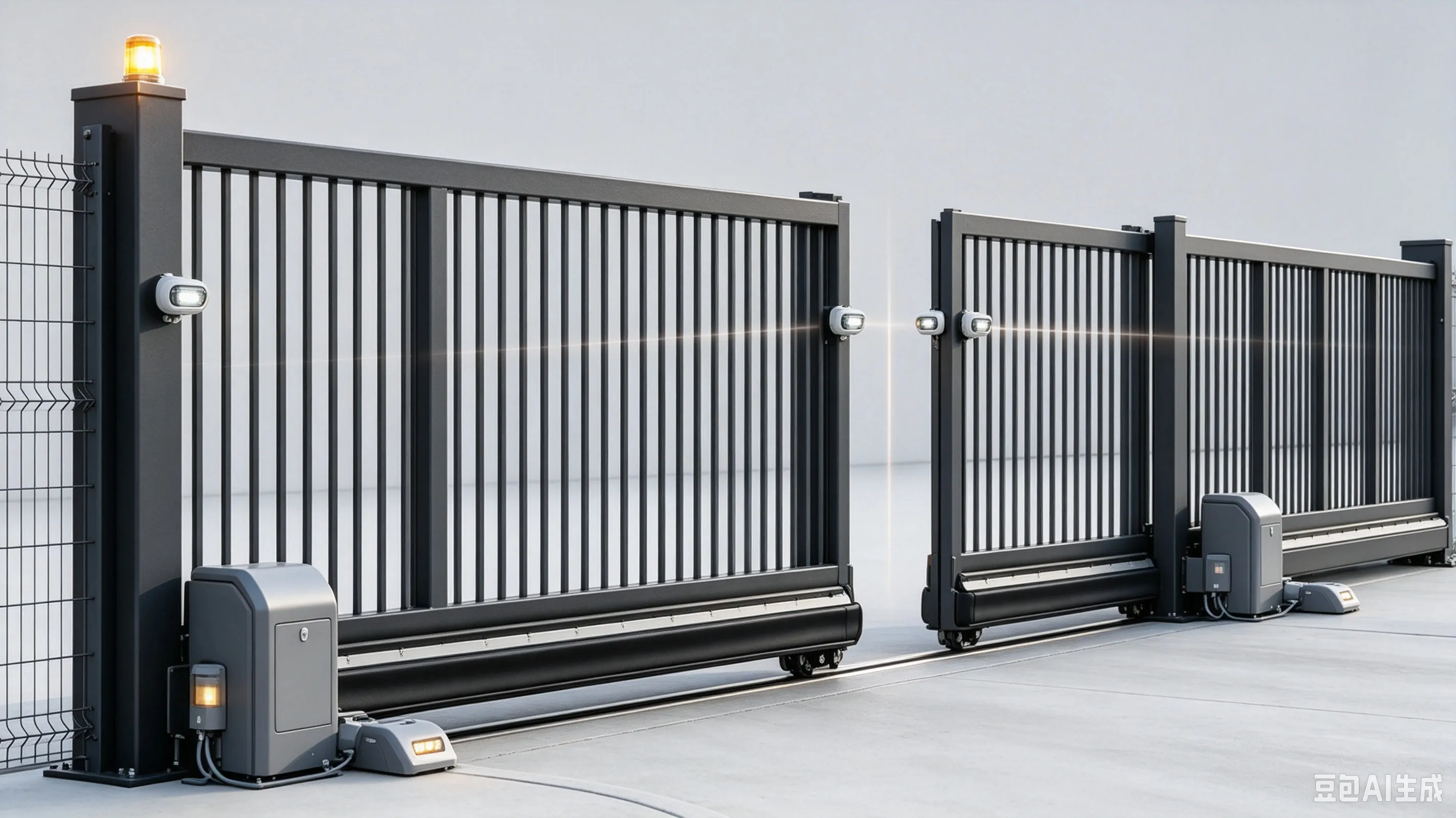
Different safety components can be used depending on the gate design and application requirements.
Photocells
Photocells are commonly used to detect objects crossing a defined area around an automatic gate.
A typical photocell system includes a transmitter and receiver. When an object interrupts the signal between them, the sensor sends information to the control system.
Photocells are widely used at vehicle and pedestrian entrances because they provide a simple method of detecting obstacles during gate operation.
Safety Edges
Safety edges are designed to detect physical contact or pressure along specific areas of a gate.
When pressure is applied to the safety edge, it can send a signal to the control system to stop or reverse the gate movement, depending on the system configuration.
They can be particularly useful for larger gates where additional protection is required along the leading or closing edge.
Warning Lights
Warning lights provide a visible indication that an automatic gate is operating.
They can alert pedestrians and drivers when the gate is opening or closing, which is especially useful at busy vehicle entrances.
For commercial and industrial applications, warning lights can be combined with other safety components to improve visibility and overall access management.
How Automatic Gate Safety Devices Work Together
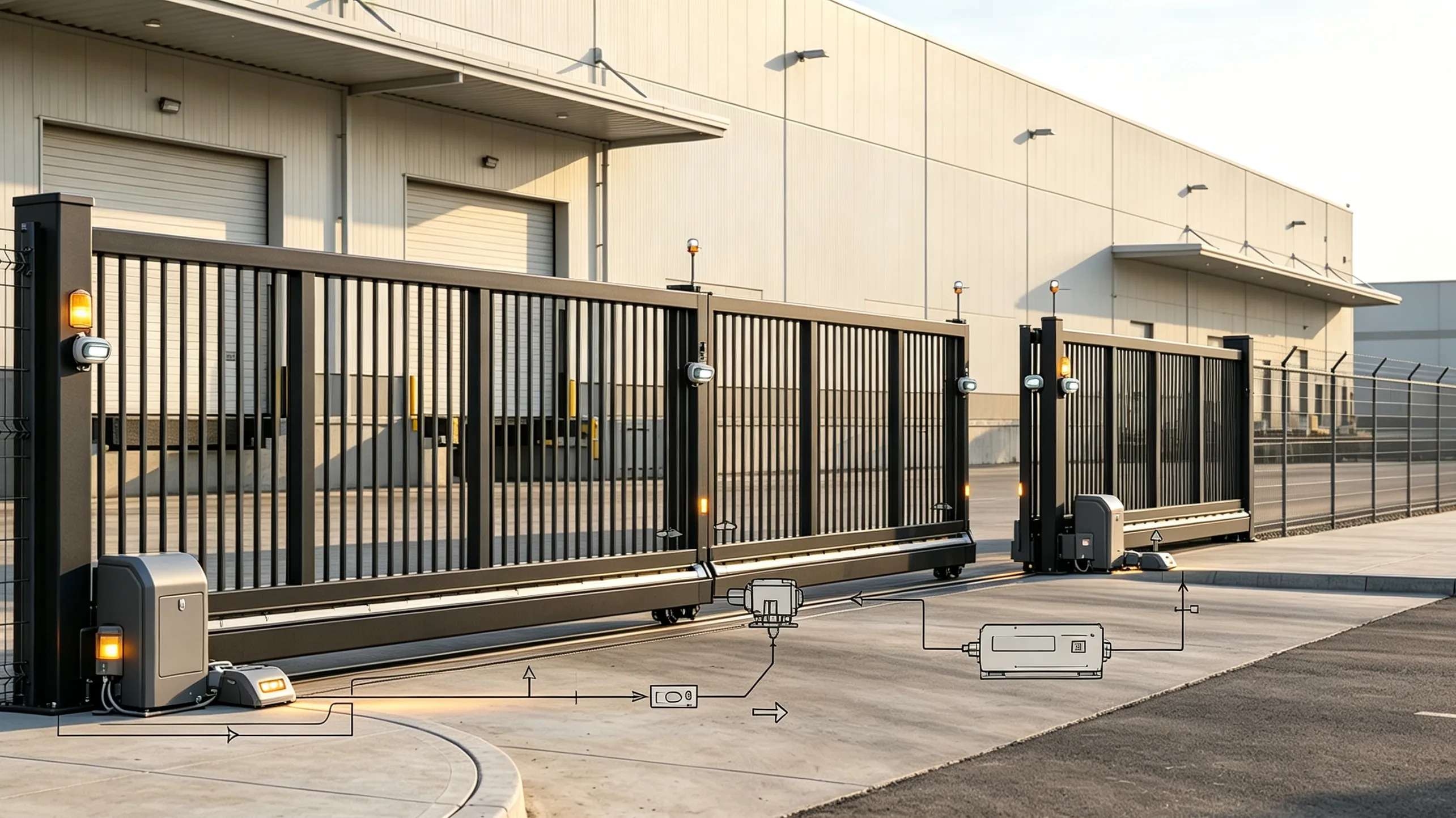
A complete safety configuration usually involves several components working with the gate controller.
Detection and Signal Transmission
When a safety device detects an obstacle or abnormal condition, it sends a signal to the control system.
The controller then evaluates the signal and determines the appropriate response according to the programmed settings.
Gate Movement Response
Depending on the system configuration, the gate may stop, prevent closing, or reverse its movement when a safety condition is detected.
The exact response depends on the type of safety device, controller, gate opener, and application requirements.
Selecting the Right Automatic Gate Safety Devices
The appropriate safety configuration depends on the gate structure, operating environment, and expected usage.
A residential driveway does not necessarily require the same safety setup as a busy commercial entrance or industrial facility.
Consider Gate Structure and Movement
The type of gate affects where safety devices should be installed and what areas need to be monitored.
Sliding gates, swing gates, and barrier gates have different movement paths and potential risk areas. Safety devices should therefore be positioned according to the actual movement of the gate.
For larger gates, additional detection or protection may be required to cover areas that could otherwise remain outside the main detection zone.
Evaluate Traffic and Operating Frequency
The number of vehicles and pedestrians passing through the gate is another important consideration.
A gate used several times per day in a private property has different requirements from one operating continuously at a commercial or industrial entrance.
Higher-frequency applications may require a more comprehensive combination of detection, warning, and protective devices.
Consider the Installation Environment
Outdoor safety devices may be exposed to rain, dust, temperature changes, and other environmental conditions.
Before selection, installers should consider whether the equipment is suitable for the actual installation environment and whether its detection range can be maintained under those conditions.
Proper installation and positioning are equally important because even a suitable safety device may not work effectively if it is incorrectly installed.
Applications of Automatic Gate Safety Devices
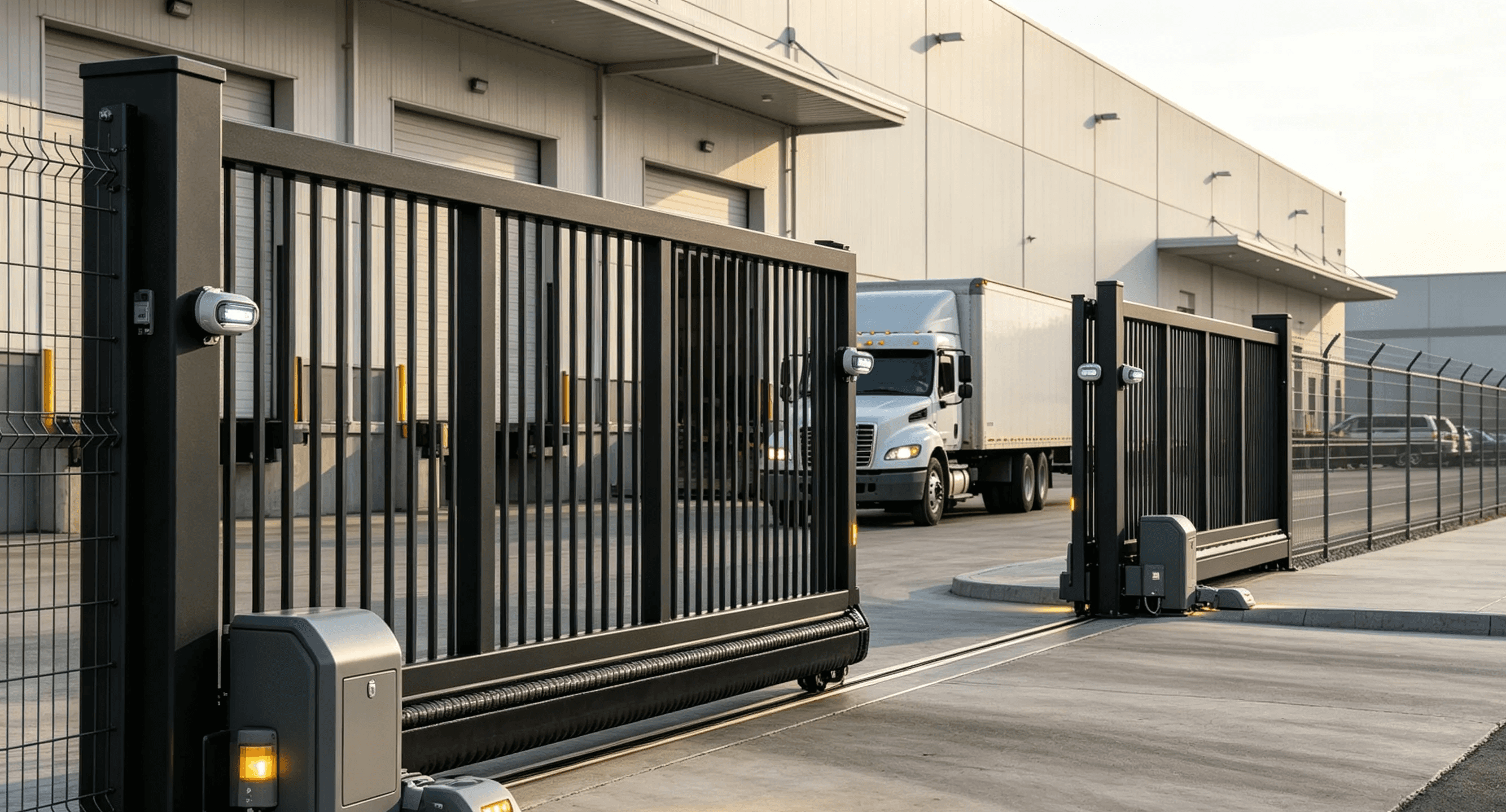
Automatic gate safety devices are used across different access environments.
Residential Gate Systems
Residential gates commonly use photocells and warning devices to improve protection around driveways and pedestrian entrances.
The safety configuration is usually designed to provide reliable protection without making the system unnecessarily complicated.
Commercial and Parking Facilities
Commercial entrances and parking facilities may experience frequent vehicle movement throughout the day.
In these environments, safety devices can help monitor vehicle paths and reduce the risk of a gate closing while a vehicle or pedestrian remains within the operating area.
Industrial Gate Systems
Industrial gates often involve larger structures, heavier loads, and higher operating frequencies.
These applications may require multiple safety components working together to provide broader protection.
For industrial projects, safety devices should be selected together with the gate opener, control system, and overall access management solution.
Common Mistakes When Selecting Gate Safety Devices
Choosing safety equipment without considering the complete gate system can reduce its effectiveness.
Using Only One Safety Device
A single sensor may not provide sufficient coverage for a large or complex gate.
The required configuration should be based on the gate's movement path and the potential risk areas.
Ignoring Installation Position
Even a suitable safety device may fail to provide effective protection if it is installed in the wrong position.
Detection range, mounting height, gate movement, and surrounding obstacles should all be considered during installation.
Overlooking Regular Maintenance
Safety components need to remain functional throughout the service life of the gate.
Dust, physical damage, misalignment, and environmental exposure can affect performance. Regular inspection helps ensure that safety devices continue to provide the intended protection.
Frequently Asked Questions
Q1: What are the main automatic gate safety devices?
A: Common safety devices include photocells, safety edges, warning lights, and other detection or protection components.
Q2: Are safety devices necessary for automatic gates?
A: Safety requirements depend on the gate design and application, but suitable safety protection is an important consideration for automated gate systems, especially in areas used by vehicles and pedestrians.
Q3: What is the difference between photocells and safety edges?
A: Photocells detect objects by interrupting a signal between a transmitter and receiver, while safety edges typically respond to physical contact or pressure.
Q4: Do industrial gates need more safety devices?
A: Industrial gates often require more comprehensive safety configurations because they may be larger, heavier, and operated more frequently than residential gates.
Q5: How often should automatic gate safety devices be checked?
A: Inspection frequency depends on the equipment and operating environment. Regular checks are recommended to identify problems such as sensor misalignment, physical damage, or contamination.
Conclusion
Automatic gate safety devices work together with motors and control systems to provide additional protection during gate operation.
Photocells, safety edges, warning lights, and other components each serve different functions, so the right combination depends on gate structure, traffic conditions, operating frequency, and installation environment.
A complete approach to safety device selection and maintenance can help improve the reliability and safety of residential, commercial, and industrial gate automation systems.
Other Blogs


