Blog
Tubular Motor vs Central Motor: Which Is Better for Roller Shutters?
Author
Ray
Published
Category
Design & Inspiration
Compare tubular motors and central motors for roller shutters. Learn their differences, applications, advantages, and how to choose the right motor solution for your shutter system.

Author
Ray
An experienced automation specialist with a strong background in motor technology and industrial solutions. With years of expertise in central motors, tubular motors, and automation systems, the author is dedicated to sharing insights that connect engineering innovation with real-world applications. Passionate about advancing reliable, energy-efficient, and high-performance automation products for global markets.
What’s better than insider perks, pro tips, and surprises?
Sign up to get the most recent blog articles in your email every week.
Join now.
WHY I WRITE THIS
About my business
Our company’s main product lines include tubular motors, sliding gate motors, swing gate motors, roller shutter motors, and other door automation solutions, all manufactured by trusted partner factories we have worked with for many years.
Our Services
I help them with sales and export operations, while our company also provides sourcing and procurement services in China to help international clients solve supply-related challenges. If you need assistance with procurement, please feel free to contact us.
Introduction
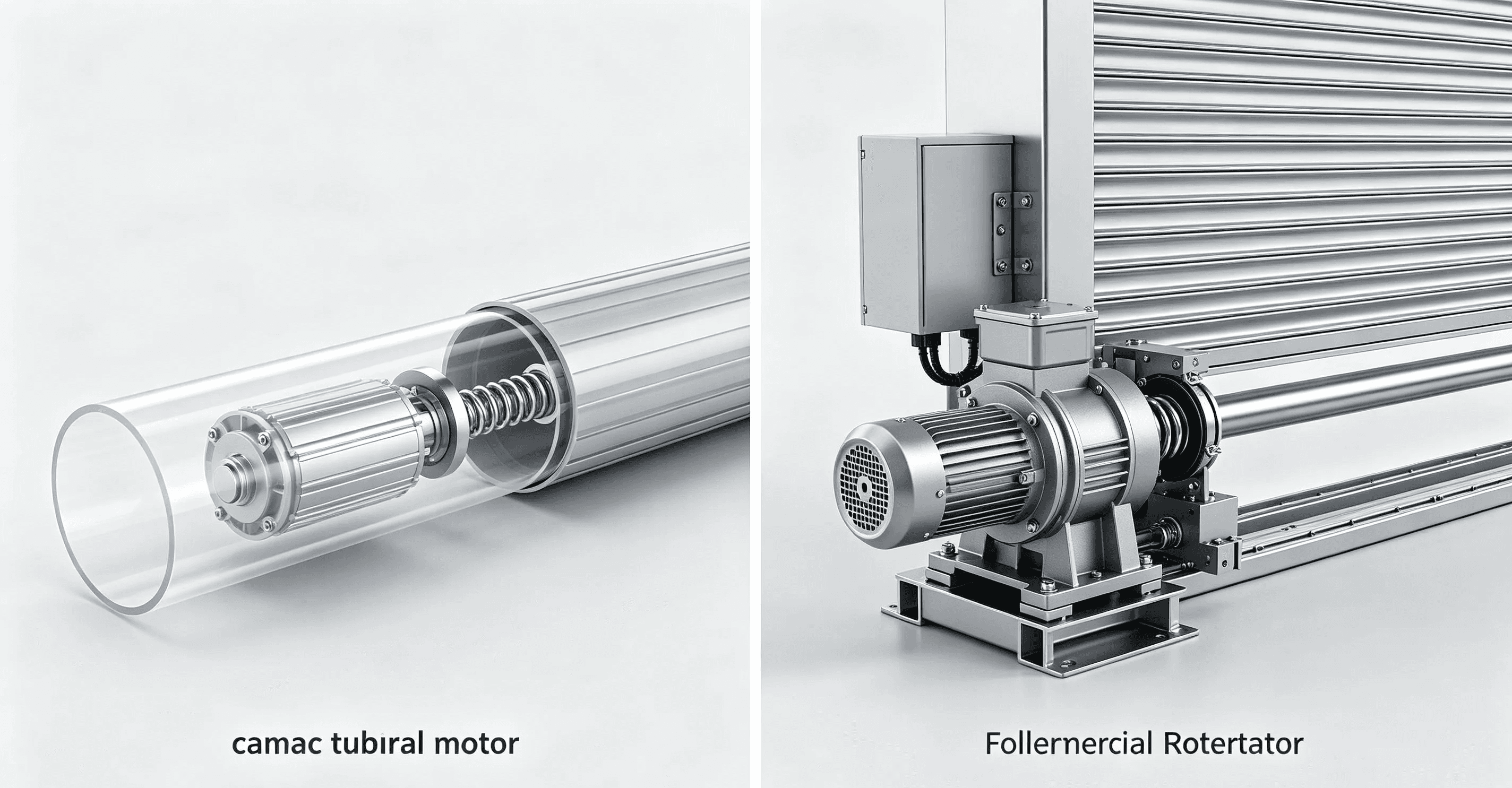
Tubular motors and central motors are two common solutions used in roller shutter automation systems.
Although both types of motors are designed to control the opening and closing movement of roller shutters, their structures, installation methods, and suitable applications are different.
Choosing between a tubular motor and a central motor depends on several factors, including shutter size, load requirements, available installation space, and expected operating frequency.
For installers, distributors, and project suppliers, understanding the differences between these two motor solutions helps create more suitable roller shutter automation systems.
Understanding Tubular Motors
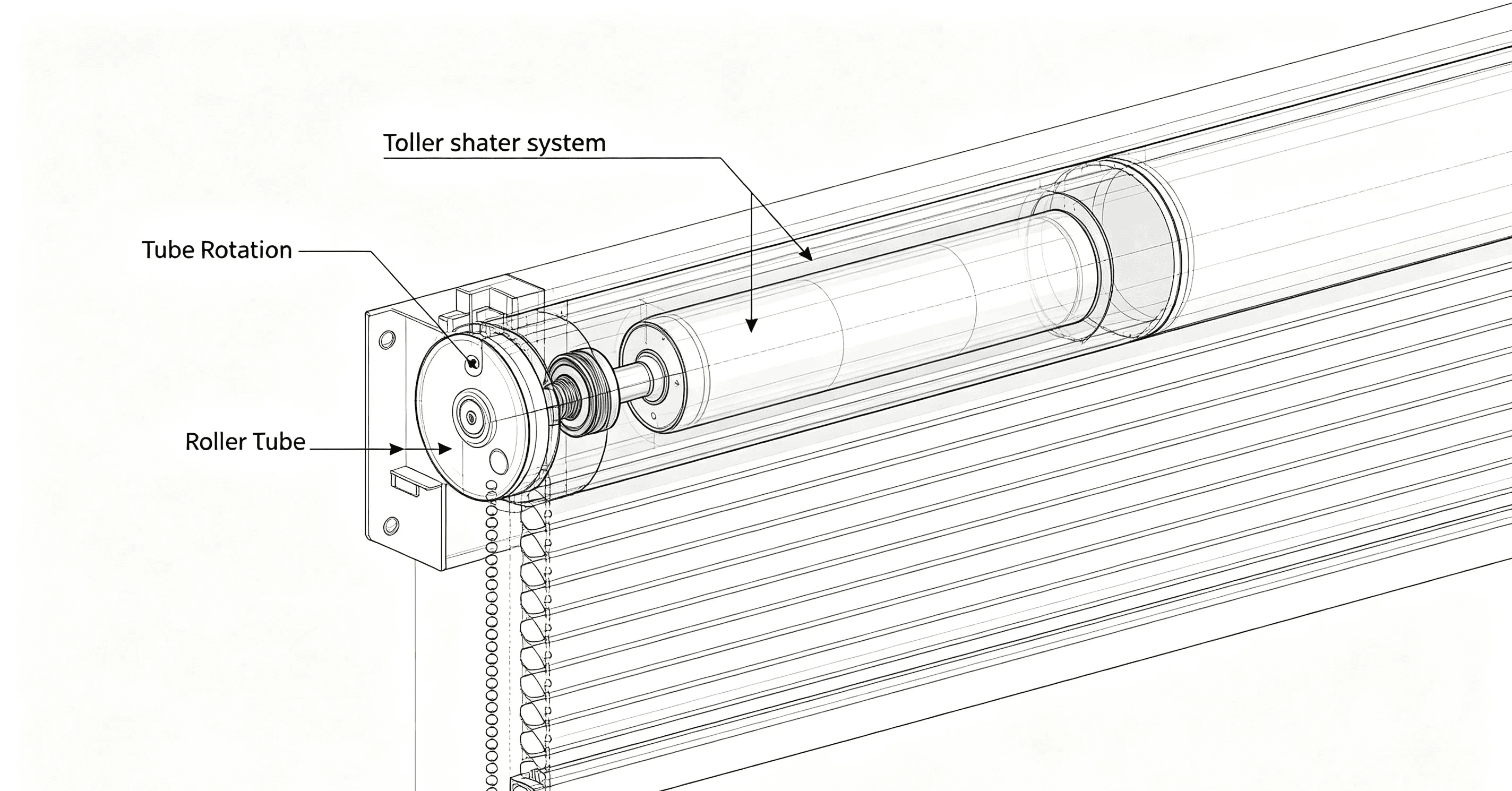
Tubular motors are compact motor solutions designed to be installed inside the shutter tube.
Because the motor is integrated into the roller tube structure, the complete system can maintain a relatively simple and space-saving design.
How Tubular Motors Work
A tubular motor operates by rotating the shutter tube to raise and lower the shutter curtain.
When the control system sends an operating command, the motor generates rotational force that turns the tube and moves the shutter upward or downward.
The motor, limit settings, and control components work together to achieve controlled movement and accurate stopping positions.
Common Applications of Tubular Motors
Tubular motors are widely used in applications where compact installation and convenient automation are important.
Common applications include:
Window shutters
Small commercial shutters
Awnings and similar automation systems
Because of their compact structure, tubular motors are often suitable for smaller and medium-sized shutter systems where installation space is limited.
Advantages of Tubular Motors
One of the main advantages of tubular motors is their simple and integrated design.
Since the motor is installed inside the tube, it requires less external installation space and provides a cleaner appearance.
Tubular motors can also support different control methods, including wall switches, remote controls, and smart automation systems, depending on the system configuration.
Understanding Central Motors
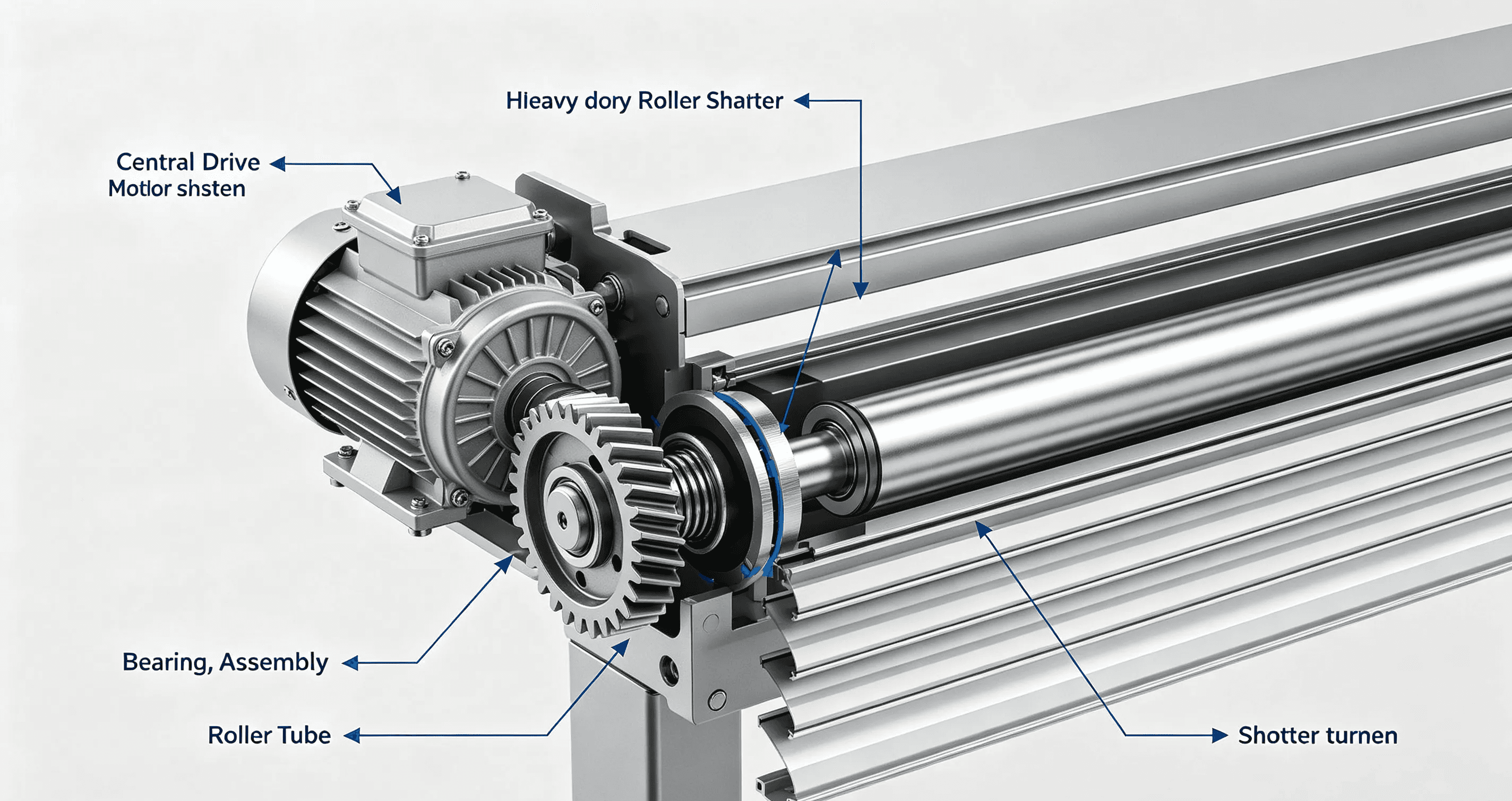
Central motors are another common solution for roller shutter automation, especially in applications requiring higher load capacity.
Unlike tubular motors, central motors are usually installed at the center of the shutter shaft and connected with the mechanical structure through a drive system.
How Central Motors Work
A central motor provides rotational force through a central drive mechanism to move the shutter curtain.
During operation, the motor transfers power to the shaft, allowing the shutter to open and close smoothly.
Because the motor is positioned externally rather than inside the tube, central motor systems can provide stronger driving capability for larger shutter applications.
Common Applications of Central Motors
Central motors are commonly used in applications where higher performance and stronger load handling are required.
Typical applications include:
Industrial shutters
Larger entrance shutters
Heavy-duty access systems
For larger shutters with higher operating demands, central motors can provide reliable performance when properly matched with the complete system.
Advantages of Central Motors
The main advantage of central motors is their ability to handle larger and heavier shutter systems.
Compared with compact tubular solutions, central motors are often selected for applications where higher torque output and stronger mechanical capability are required.
They are commonly used in commercial and industrial environments where shutters may operate frequently and require more durable automation solutions.
Tubular Motor vs Central Motor: Key Differences
Tubular motors and central motors both provide automated movement for roller shutters, but their designs make them suitable for different applications.
Understanding the differences between these two solutions helps installers and suppliers choose the right motor based on actual project requirements.
Installation Method
The installation method is one of the most noticeable differences between tubular motors and central motors.
Tubular motors are installed inside the roller tube, creating a compact and integrated structure. This design helps save space and provides a cleaner appearance, making them suitable for applications where installation space is limited.
Central motors are installed separately from the tube and connected through the shutter drive system. Although they require more installation space, this structure allows them to provide stronger mechanical performance for larger shutter systems.
Load Capacity and Application Range
Load requirements are another important factor when comparing these two motor types.
Tubular motors are commonly used for smaller and medium-sized shutters where compact design and efficient operation are priorities.
Central motors are generally more suitable for larger shutters that require higher torque and stronger driving capability. They are often selected for commercial and industrial applications where shutter size and operating frequency are higher.
The correct choice depends not only on shutter weight but also on factors such as shutter dimensions, mechanical structure, and expected workload.
Maintenance and Long-Term Reliability
Maintenance requirements can also influence motor selection.
Tubular motors offer a compact design with fewer external components, which can simplify installation and provide a neat system structure.
Central motors are often used in demanding environments where durability and load performance are more important. With proper installation and maintenance, they can provide reliable operation for larger automated shutter systems.
For both motor types, regular inspection of mechanical components and control systems helps maintain long-term performance.
How to Choose Between Tubular Motor and Central Motor
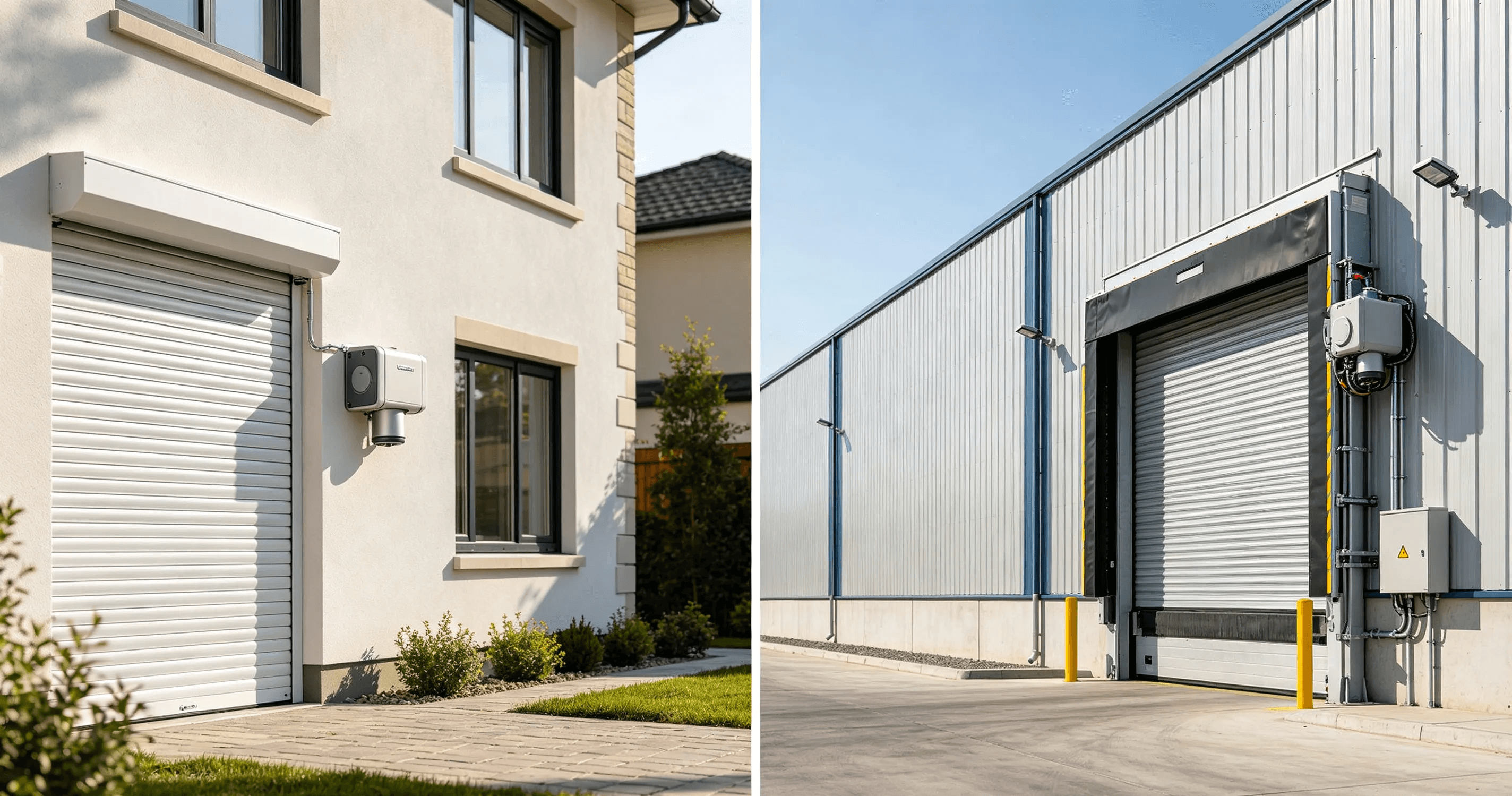
Selecting the right motor requires evaluating the complete roller shutter application rather than focusing on motor type alone.
The most suitable solution depends on shutter size, installation conditions, operating frequency, and performance requirements.
Residential Roller Shutter Applications
For residential applications, tubular motors are often a practical choice because they provide compact installation and convenient automation.
Residential shutters usually have lower operating frequency and smaller dimensions, making a compact motor solution sufficient for many applications.
However, the final selection should still consider shutter weight, available installation space, and user requirements.
Commercial and Industrial Roller Shutter Applications
Commercial and industrial environments often require stronger motor solutions due to larger shutters and more frequent operation.
For these applications, central motors may provide advantages because they are designed to handle higher loads and more demanding working conditions.
The selected motor should be evaluated together with the complete shutter system to ensure reliable performance.
Common Selection Mistakes
One common mistake is choosing a motor only based on price or basic power specifications.
A lower-cost solution may not provide sufficient performance if it does not match the shutter structure and operating conditions.
Another mistake is selecting a motor without considering future requirements. A shutter system that may experience increased usage in the future may require a more durable solution from the beginning.
Ignoring installation conditions can also create problems. The available space, shutter design, and mechanical structure should all be considered before making the final decision.
Frequently Asked Questions
Q1: What is the main difference between tubular motors and central motors?
A: The main difference is the installation structure. Tubular motors are installed inside the roller tube, while central motors are installed separately and drive the shutter through a central mechanism.
Q2: Which motor is better for large roller shutters?
A: For larger and heavier roller shutters, central motors are often more suitable because they can provide stronger driving capability and higher load performance.
Q3: Are tubular motors suitable for commercial shutters?
A: Yes, tubular motors can be used for some commercial applications, especially smaller or medium-sized shutters. However, larger commercial systems may require central motors.
Q4: Do tubular motors require less installation space?
A: Yes. Because tubular motors are installed inside the roller tube, they usually provide a more compact installation design compared with central motor systems.
Q5: How do I choose the right roller shutter motor?
A: The choice depends on shutter size, weight, operating frequency, installation environment, and required performance. The motor should always be matched with the complete shutter system.
Conclusion
Tubular motors and central motors each provide different advantages for roller shutter automation.
Tubular motors are often preferred for compact and space-efficient applications, while central motors are commonly selected for larger shutters requiring stronger performance.
The right choice depends on the complete application, including shutter structure, workload, and installation requirements. By evaluating these factors carefully, installers and suppliers can create more reliable and efficient roller shutter automation solutions.
Other Blogs


