Blog
Sliding Gate Opener: Complete Guide to Types, Components, and Selection
Author
Ray
Published
Category
Design & Inspiration
Learn how sliding gate openers work, explore their types, components, applications, and key selection factors for residential, commercial, and industrial gate automation systems.

Author
Ray
An experienced automation specialist with a strong background in motor technology and industrial solutions. With years of expertise in central motors, tubular motors, and automation systems, the author is dedicated to sharing insights that connect engineering innovation with real-world applications. Passionate about advancing reliable, energy-efficient, and high-performance automation products for global markets.
What’s better than insider perks, pro tips, and surprises?
Sign up to get the most recent blog articles in your email every week.
Join now.
WHY I WRITE THIS
About my business
Our company’s main product lines include tubular motors, sliding gate motors, swing gate motors, roller shutter motors, and other door automation solutions, all manufactured by trusted partner factories we have worked with for many years.
Our Services
I help them with sales and export operations, while our company also provides sourcing and procurement services in China to help international clients solve supply-related challenges. If you need assistance with procurement, please feel free to contact us.
Introduction
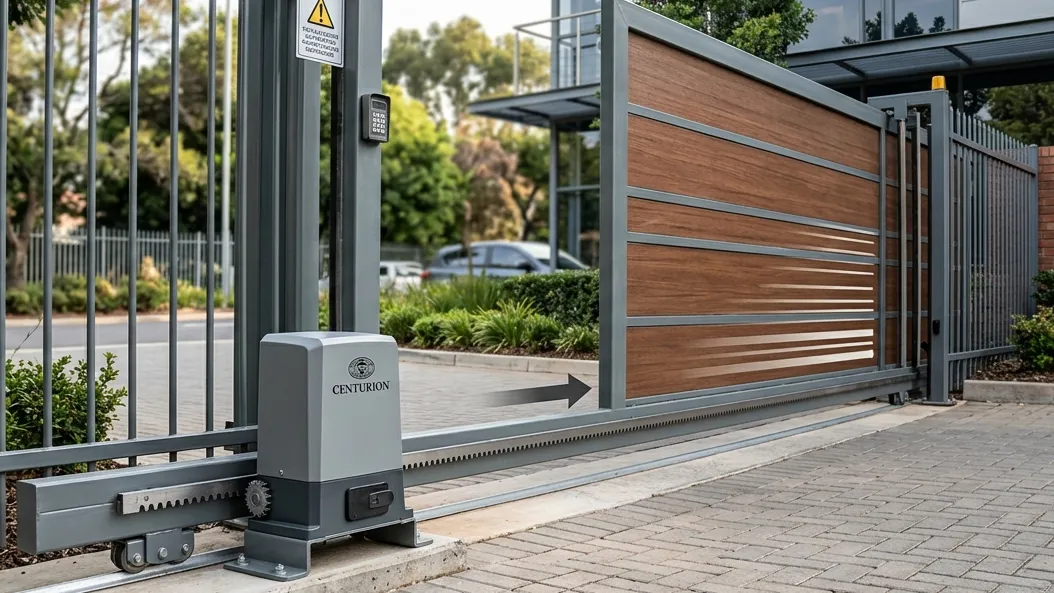
Sliding gate openers are one of the most commonly used automation solutions for gates that move horizontally along a track.
Compared with manual sliding gates, an automatic sliding gate opener provides more convenient operation while improving access efficiency and security. These systems are widely used in residential entrances, commercial properties, parking areas, and industrial facilities.
Although sliding gate openers may appear simple, their performance depends on the coordination between the motor, control system, gear mechanism, and gate structure.
For installers, distributors, and project suppliers, understanding how sliding gate openers work, what types are available, and how to select the right solution helps create more reliable and efficient gate automation systems.
What Is a Sliding Gate Opener?
A sliding gate opener is an automatic device designed to control the opening and closing movement of a sliding gate.
Unlike swing gate systems that rotate around hinges, sliding gates move horizontally along a fixed track. The opener provides the driving force required to move the gate panel while the control system manages operation commands and safety functions.
A complete sliding gate automation system usually includes a motor unit, gear mechanism, control board, remote control, and safety components.
The purpose of a sliding gate opener is not only to automate gate movement but also to improve convenience, reliability, and access control.
How Sliding Gate Openers Work
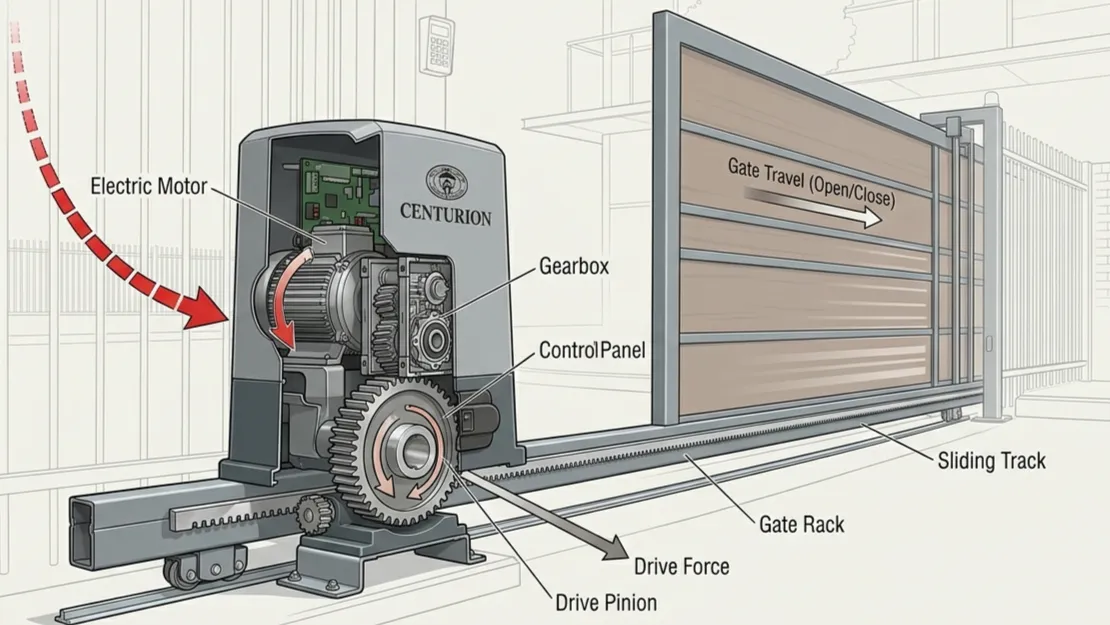
A sliding gate opener operates by converting electrical energy into mechanical movement.
When a user sends an opening or closing command through a remote control, keypad, sensor, or access device, the control unit processes the signal and activates the motor.
Motor and Gear Mechanism Operation
The motor generates rotational force, which is transferred through the gear system to move the gate.
Most sliding gate systems use a rack and pinion mechanism. The gear attached to the motor engages with a toothed rack installed along the gate, allowing the motor to push or pull the gate horizontally.
This mechanism provides controlled movement and helps maintain stable operation throughout the opening and closing process.
Control and Safety Functions
The control system manages different operating functions, including movement direction, speed control, and stopping positions.
Safety components such as obstacle detection sensors help monitor the gate movement area and reduce potential risks during operation.
By coordinating the motor, controller, and safety devices, a sliding gate opener can provide smooth and reliable automated access.
Main Components of a Sliding Gate Opener
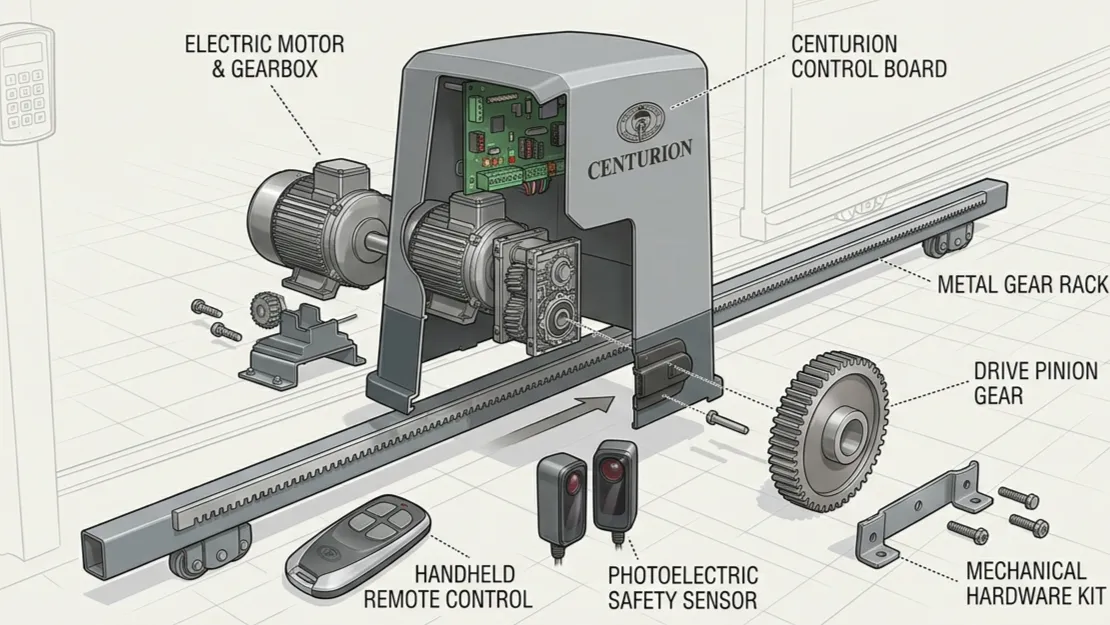
A sliding gate opener consists of several components that work together to achieve automatic movement.
Motor Unit
The motor unit is the main power source of the system.
It provides the force required to move the gate and must be selected according to factors such as gate weight, size, and operating frequency.
A motor that is properly matched with the gate requirements can improve efficiency and reduce unnecessary stress on the system.
Gear Rack and Drive System
The gear rack and drive system transfer motor power into gate movement.
The rack is usually installed along the sliding gate, while the drive gear connects with the motor output.
The quality and alignment of these mechanical components directly influence movement smoothness and long-term reliability.
Control Board and Access Devices
The control board acts as the communication center of the sliding gate opener.
It receives signals from remote controls, sensors, and other access devices, then controls the motor according to programmed settings.
Modern systems may also support additional functions such as smart access control and integration with security systems.
Types of Sliding Gate Openers
Sliding gate openers can be designed in different ways depending on gate size, application requirements, and operating conditions.
Choosing the right type depends on factors such as gate weight, frequency of use, and the expected working environment.
Rack and Gear Sliding Gate Openers
Rack and gear sliding gate openers are one of the most common solutions for automated sliding gates.
This system uses a motor-driven gear that engages with a rack installed along the gate. When the motor rotates, the gear moves along the rack and drives the gate horizontally.
These openers are widely used in residential and commercial applications because they provide controlled movement, simple installation, and reliable operation.
Heavy Duty Sliding Gate Openers
Heavy duty sliding gate openers are designed for larger gates and applications with higher operating demands.
They are commonly used in industrial facilities, warehouses, and large commercial entrances where gates may be heavier and operate more frequently.
Compared with standard solutions, heavy duty models typically require stronger motors and more durable mechanical components to maintain stable performance under continuous use.
How to Choose a Sliding Gate Opener
Selecting a sliding gate opener requires evaluating the complete gate system rather than focusing on motor power alone.
The right solution should match the gate structure, operating conditions, and expected workload.
Consider Gate Weight and Size
Gate weight and dimensions are among the most important factors when selecting an opener.
A larger and heavier gate requires greater driving capability to achieve smooth movement. However, the actual requirement also depends on factors such as track condition, gate balance, and mechanical resistance.
Choosing an opener with suitable capacity helps reduce motor stress and improves long-term reliability.
Evaluate Operating Frequency
The expected number of daily operating cycles also affects opener selection.
A residential gate may only operate several times per day, while commercial entrances or industrial facilities may require frequent operation.
For high-frequency applications, the opener should be designed to handle repeated cycles without excessive wear or reduced performance.
Consider Installation Environment
The surrounding environment can influence sliding gate opener performance.
Outdoor installations may face conditions such as rain, dust, temperature changes, and humidity. These factors should be considered when selecting equipment for long-term operation.
A suitable opener should be compatible with the installation environment and provide reliable performance under actual working conditions.
Applications of Sliding Gate Openers
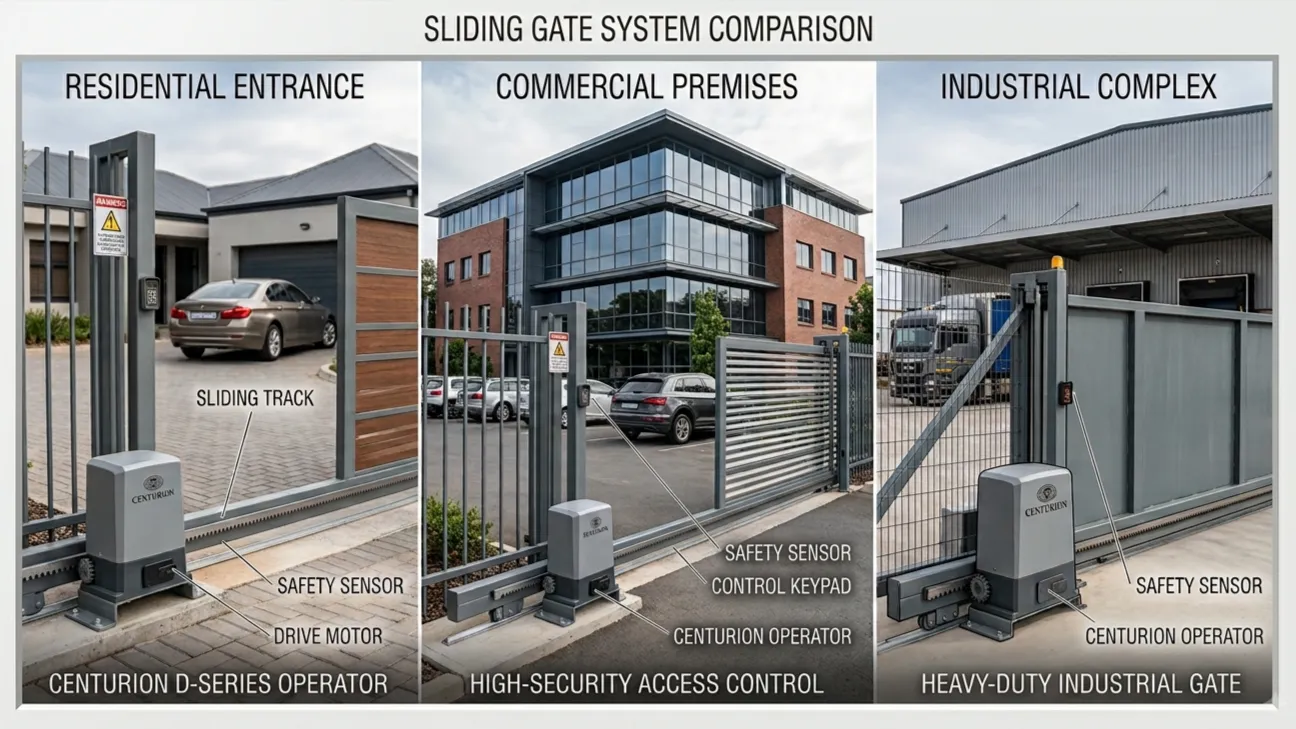
Sliding gate openers are used in many applications where controlled access and automated movement are required.
Residential Applications
Residential sliding gate systems are commonly used for driveways, private entrances, and property access points.
In these applications, users usually prioritize convenience, quiet operation, and simple control methods such as remote access.
A properly selected opener can provide reliable daily operation while improving the overall user experience.
Commercial and Industrial Applications
Commercial and industrial sites often require sliding gate openers for vehicle access management and security control.
Applications such as warehouses, factories, parking facilities, and logistics centers may require stronger solutions due to higher operating frequency and larger gate structures.
For these environments, durability, safety integration, and long-term reliability are important selection factors.
Common Mistakes When Choosing a Sliding Gate Opener
One common mistake is selecting an opener based only on the gate weight.
Although weight is important, other factors such as gate condition, operating frequency, and installation environment also affect actual performance requirements.
Another mistake is ignoring the quality of the mechanical system. Problems with tracks, rollers, or gate alignment may affect operation even when the opener itself is suitable.
Some projects also overlook future requirements. Choosing a flexible solution with suitable capacity can help avoid unnecessary replacement when usage demands increase.
Frequently Asked Questions
Q1: What is a sliding gate opener?
A: A sliding gate opener is an automatic motorized device that controls the opening and closing movement of a sliding gate along a track.
Q2: How does a sliding gate opener work?
A: A sliding gate opener uses a motor and gear mechanism to move the gate horizontally. The motor drives a gear that engages with a rack installed on the gate.
Q3: What size sliding gate opener do I need?
A: The required opener size depends on gate weight, dimensions, operating frequency, and mechanical conditions. The motor should be matched with the complete gate system.
Q4: Are sliding gate openers suitable for industrial gates?
A: Yes. Heavy duty sliding gate openers are commonly used for industrial applications where larger gates and frequent operation are required.
Q5: Can sliding gate openers work with access control systems?
A: Yes. Many sliding gate openers can integrate with remote controls, sensors, keypads, and other access management devices.
Conclusion
Sliding gate openers provide an efficient automation solution for gates used in residential, commercial, and industrial environments.
Selecting the right opener requires considering multiple factors, including gate structure, weight, operating frequency, and installation conditions.
By choosing a properly matched sliding gate opener, installers and project suppliers can improve system reliability, reduce maintenance requirements, and create more effective automated access solutions.
Other Blogs


