Blog
Automatic Door Installation Guide: Key Steps, Requirements, and Best Practices
Author
Ray
Published
Category
Design & Inspiration
Learn the key steps of automatic door installation, including site evaluation, operator setup, sensor adjustment, testing, and maintenance considerations for commercial projects.


Author
Ray
An experienced automation specialist with a strong background in motor technology and industrial solutions. With years of expertise in central motors, tubular motors, and automation systems, the author is dedicated to sharing insights that connect engineering innovation with real-world applications. Passionate about advancing reliable, energy-efficient, and high-performance automation products for global markets.
What’s better than insider perks, pro tips, and surprises?
Sign up to get the most recent blog articles in your email every week.
Join now.
WHY I WRITE THIS
About my business
Our company’s main product lines include tubular motors, sliding gate motors, swing gate motors, roller shutter motors, and other door automation solutions, all manufactured by trusted partner factories we have worked with for many years.
Our Services
I help them with sales and export operations, while our company also provides sourcing and procurement services in China to help international clients solve supply-related challenges. If you need assistance with procurement, please feel free to contact us.
Introduction
Automatic doors are widely used in commercial buildings, retail stores, hospitals, hotels, and public facilities because they provide convenient access and improve pedestrian flow.
However, installing an automatic door system is not simply a matter of mounting a door operator and connecting power. A successful installation requires careful planning, suitable component selection, correct positioning, and proper testing.
For installers, contractors, and project suppliers, understanding the key installation steps and requirements can help reduce problems during operation and improve the long-term reliability of the automatic door system.
This guide explains the main considerations involved in automatic door installation, from site evaluation to system adjustment.
What Should Be Considered Before Automatic Door Installation?
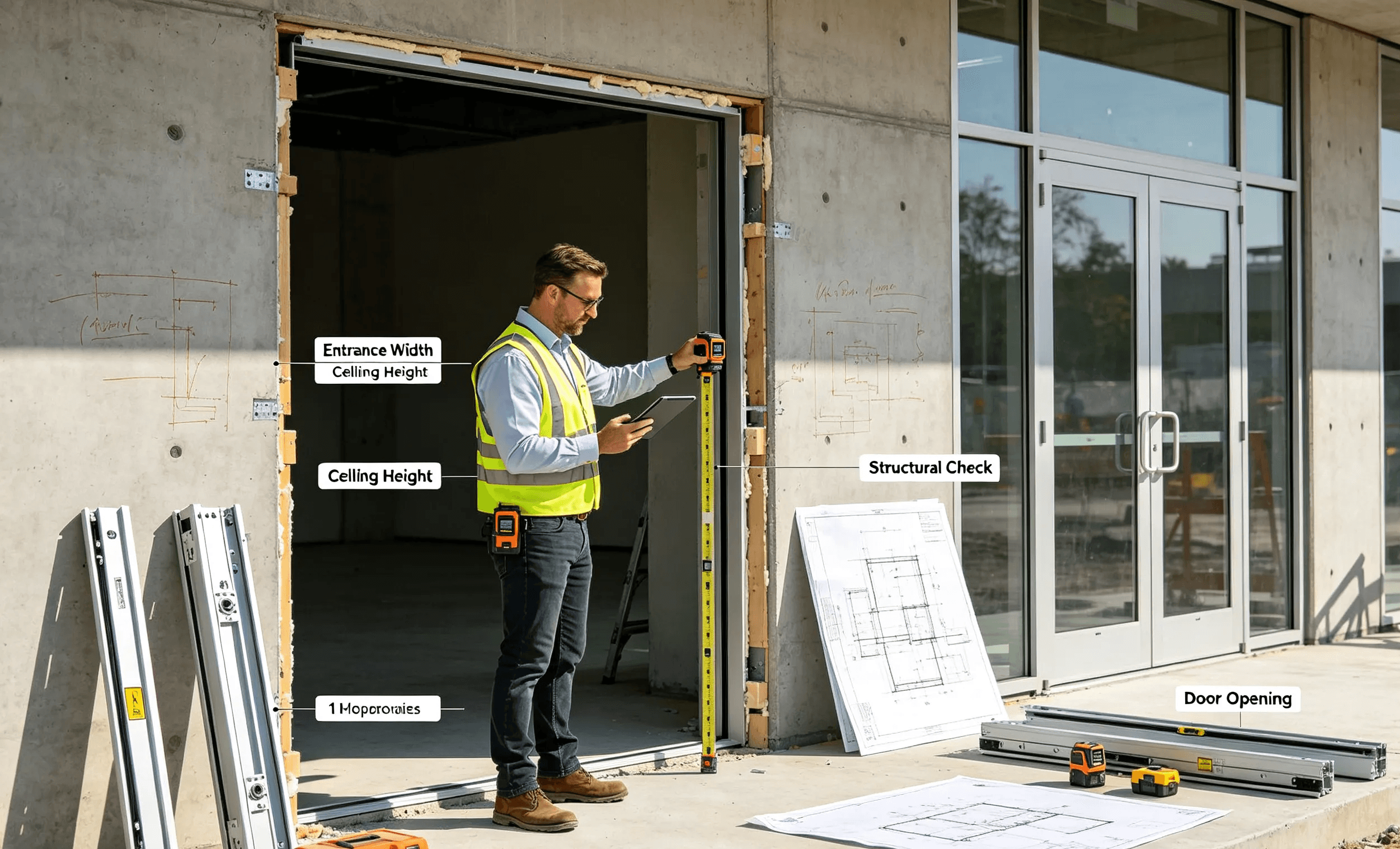
Before starting installation, the building environment and door requirements should be carefully evaluated.
A proper assessment helps ensure that the selected automatic door system matches the actual application.
Evaluate the Installation Location
The installation environment directly affects the choice and performance of an automatic door system.
Before installation, consider factors such as:
Available installation space
Door opening size
Building structure
Pedestrian traffic conditions
Indoor and outdoor environment
For example, a busy commercial entrance may require a different solution compared with a small office entrance.
Understanding the location helps installers select suitable door types, operators, and control components.
Check Door Type and System Compatibility
Different automatic door types have different installation requirements.
Common automatic door solutions include:
Sliding doors
Swing doors
Curved automatic doors
Heavy-duty commercial doors
Each system requires compatible operators, sensors, and mechanical components.
Before installation, installers should confirm that all components work together properly to avoid adjustment issues or reduced system performance.
Consider Power Supply and Control Requirements
Automatic doors require reliable electrical connections and suitable control systems.
The installation plan should consider:
Power supply location
Wiring requirements
Controller placement
Sensor connection points
Proper planning helps create a cleaner installation and reduces the need for modifications later.
Main Steps of Automatic Door Installation
Although installation procedures may vary depending on the door type and manufacturer requirements, most automatic door projects follow several basic steps.
Preparing the Door Structure
The first step is ensuring that the door structure is ready for automation.
Installers should check:
Door frame condition
Door alignment
Available mounting points
Structural strength
A properly prepared structure provides a stable foundation for the operator and other components.
If the existing door structure is unsuitable, additional reinforcement or adjustments may be required before installing automation equipment.
Installing the Door Operator
The door operator is one of the key components responsible for automatic movement.
During installation, the operator must be mounted correctly according to the door design and manufacturer specifications.
Important considerations include:
Correct mounting position
Proper mechanical connection
Alignment between operator and door panels
Secure fixing of components
Incorrect installation may result in noisy operation, uneven movement, or unnecessary stress on the system.
Installing Sensors and Control Components
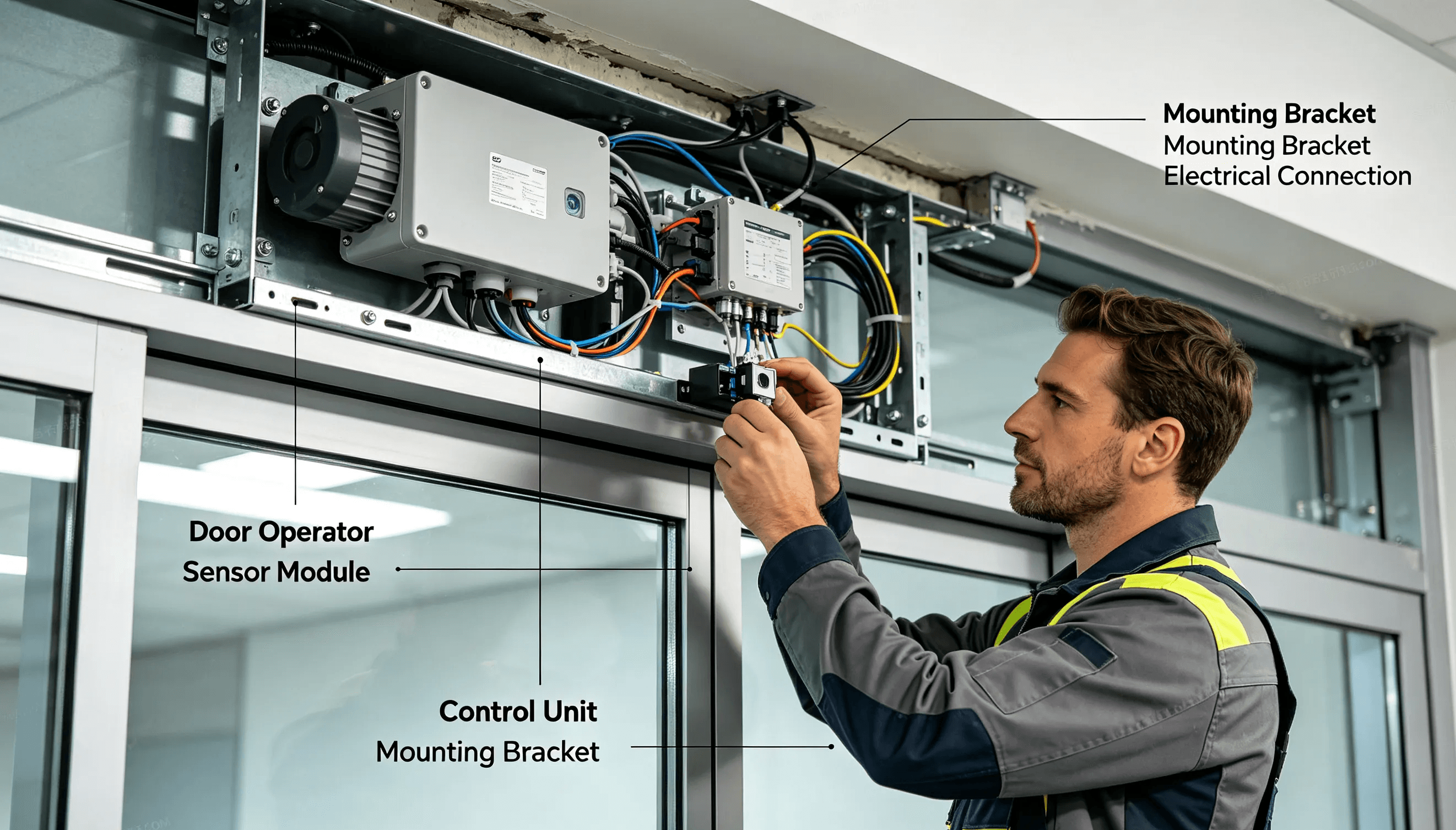
Sensors allow the automatic door to detect users and operate correctly.
During installation, sensors should be positioned carefully to ensure:
Reliable user detection
Suitable detection range
Safe door operation
The controller, safety devices, and other electrical components should also be connected correctly to ensure smooth communication between all parts of the system.
Testing and Adjustment After Installation
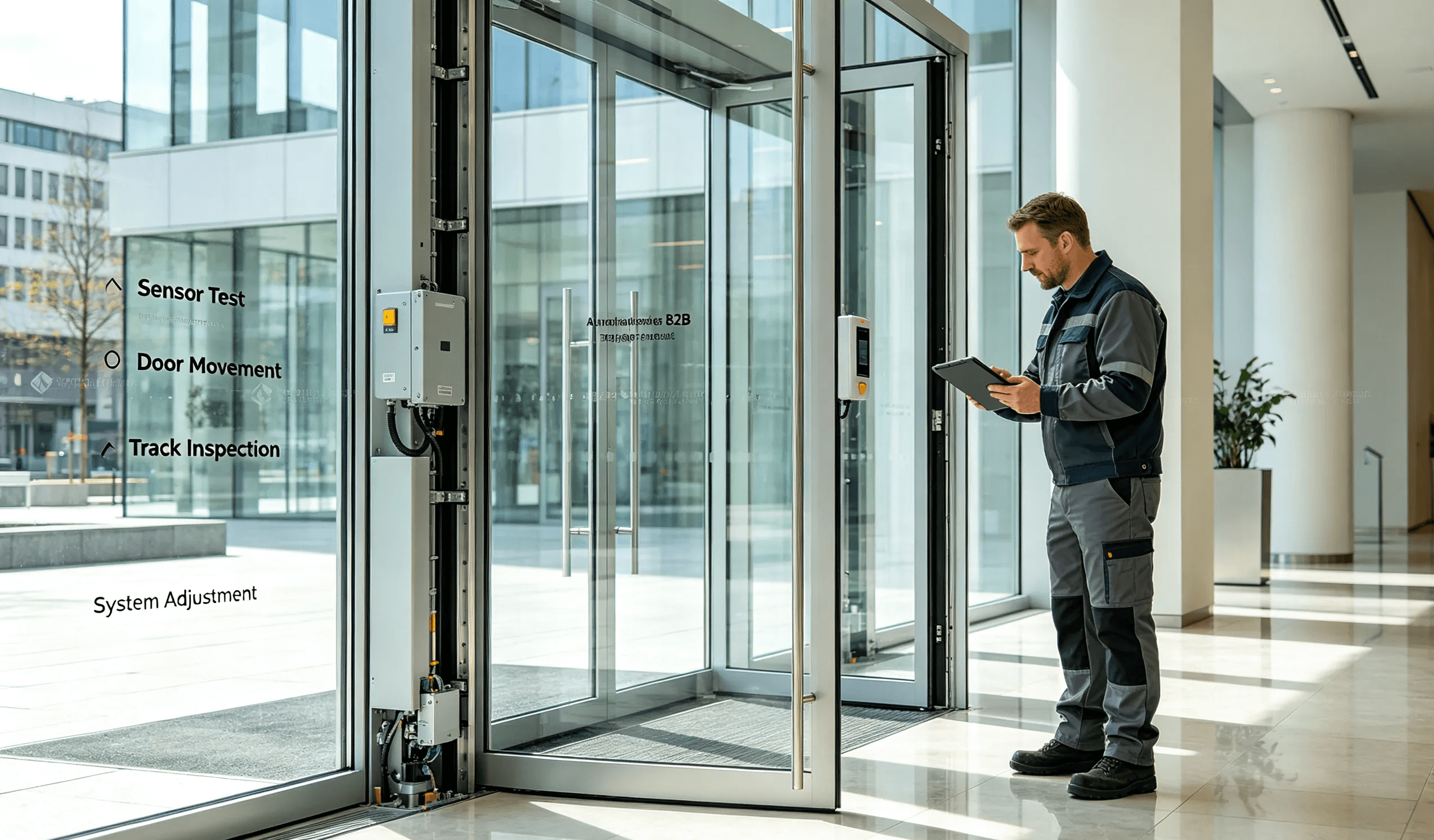
After all components are installed, the automatic door system needs to be tested and adjusted before being put into regular operation.
Testing helps confirm that the door operates smoothly, safely, and according to the expected requirements.
Checking Door Movement
The first step is verifying the basic movement of the door.
Installers should check:
Opening and closing speed
Door alignment
Smooth movement
Operating noise
Full opening and closing position
If the door movement is unstable or uneven, adjustments may be required to the operator settings or mechanical components.
Adjusting Sensor Performance
Sensor adjustment is an important part of the commissioning process.
The sensor detection area should be configured according to the entrance environment.
Proper adjustment helps ensure:
Users are detected at the correct distance
The door does not open unnecessarily
The door remains safe during operation
Incorrect sensor settings may cause delayed opening, repeated activation, or reduced user experience.
Testing Safety Functions
Safety testing should be completed before the system is delivered.
Installers should verify:
Safety sensor response
Emergency operation functions
Manual opening capability
A properly tested system helps reduce operational risks and provides safer access for users.
Common Mistakes During Automatic Door Installation
Even with high-quality components, installation mistakes can affect the performance and service life of an automatic door system.
Ignoring Site Conditions
One common mistake is installing a system without fully evaluating the entrance environment.
Factors such as:
Heavy pedestrian traffic
Limited installation space
Building structure
can influence the final system configuration.
A solution designed without considering these conditions may require frequent adjustments later.
Incorrect Sensor Positioning
Sensor location has a direct impact on automatic door performance.
If sensors are positioned incorrectly, problems may include:
Door opening too late
Unnecessary door activation
Safety detection issues
Proper positioning and adjustment are essential for reliable operation.
Skipping Final Testing
Some installation issues may not be obvious until the door is used regularly.
Skipping final testing can result in problems such as:
Uneven movement
Incorrect opening speed
Safety function failures
A complete commissioning process helps identify and solve these issues before the system enters daily operation.
Maintenance Considerations After Installation
Proper maintenance helps extend the service life of automatic door systems.
Regular Inspection of Components
Important components should be checked periodically, including:
Door operator
Sensors
Tracks
Rollers
Control system
Regular inspection helps identify early signs of wear and prevents unexpected downtime.
Keeping the System Clean
Dust and debris can affect moving components and sensor performance.
Keeping tracks, sensors, and mechanical parts clean helps maintain smooth operation.
For commercial buildings with frequent daily use, regular maintenance is especially important.
Frequently Asked Questions
Q1: How long does automatic door installation take?
A: Installation time depends on the door type, building conditions, and system complexity. Simple installations may take less time, while larger commercial projects require more preparation and testing.
Q2: What should be checked before installing an automatic door?
A: Installers should evaluate door size, available space, building structure, power supply, traffic conditions, and system compatibility before installation.
Q3: Can existing doors be converted into automatic doors?
A: In many cases, existing doors can be automated if the structure is suitable and compatible with the required operator system.
Q4: Why is sensor adjustment important after installation?
A: Proper sensor adjustment ensures reliable user detection, prevents unnecessary operation, and improves safety.
Q5: How often should automatic doors be maintained?
A: Maintenance frequency depends on usage level and installation environment. High-traffic entrances usually require more frequent inspection.
Conclusion
Automatic door installation requires careful planning, correct component installation, and thorough system testing.
From evaluating the site conditions to adjusting sensors and checking safety functions, every step affects the final performance of the system.
For installers, contractors, and project suppliers, following proper installation practices helps create automatic door solutions that are safer, more reliable, and better suited to long-term commercial use.
Other Blogs


