Blog
How to Choose the Right Tubular Motor for Roller Shutters
Author
Ray
Published
Category
Design & Inspiration
Learn how to choose the right tubular motor for roller shutters by understanding torque, shutter size, tube compatibility, operating frequency, and control requirements.


Author
Ray
An experienced automation specialist with a strong background in motor technology and industrial solutions. With years of expertise in central motors, tubular motors, and automation systems, the author is dedicated to sharing insights that connect engineering innovation with real-world applications. Passionate about advancing reliable, energy-efficient, and high-performance automation products for global markets.
What’s better than insider perks, pro tips, and surprises?
Sign up to get the most recent blog articles in your email every week.
Join now.
WHY I WRITE THIS
About my business
Our company’s main product lines include tubular motors, sliding gate motors, swing gate motors, roller shutter motors, and other door automation solutions, all manufactured by trusted partner factories we have worked with for many years.
Our Services
I help them with sales and export operations, while our company also provides sourcing and procurement services in China to help international clients solve supply-related challenges. If you need assistance with procurement, please feel free to contact us.
Introduction
Tubular motors are one of the most commonly used drive solutions for roller shutter automation because of their compact design, reliable operation, and flexible installation options.
However, choosing the right tubular motor is not simply a matter of selecting a motor with higher power. The correct solution depends on several factors, including shutter size, curtain weight, required torque, installation structure, and operating frequency.
For installers, distributors, and project suppliers, selecting an unsuitable tubular motor can lead to poor performance, increased wear, or unnecessary replacement costs.
Understanding the key selection factors can help ensure that the motor matches the roller shutter system and provides reliable long-term operation.
What Is a Tubular Motor?
A tubular motor is an electric motor designed to be installed inside the roller tube of a shutter system.
Unlike externally mounted motors, tubular motors are integrated into the tube structure, creating a compact automation solution that requires less installation space.
Compact Design and Installation Advantages
The internal installation structure is one of the main advantages of tubular motors.
Because the motor is placed inside the roller tube, the overall shutter assembly can maintain a cleaner appearance while reducing the space required around the installation area.
This makes tubular motors suitable for applications where space efficiency and a neat installation are important considerations.
Common Applications of Tubular Motors
Tubular motors are widely used in:
Residential roller shutters
Awnings
Small and medium-sized roller shutter systems
Retail and office applications
Different tubular motor models are available with different torque ratings, control options, and operating capabilities to meet various application requirements.
Key Factors When Choosing a Tubular Motor
Selecting a tubular motor requires evaluating the complete roller shutter system rather than looking at one specification alone.
Consider the Roller Shutter Size
The size of the shutter is one of the first factors to evaluate.
Larger shutters generally create higher mechanical loads, meaning the motor needs to provide sufficient torque to lift and control the curtain smoothly.
Before selecting a motor, installers should consider:
Shutter width and height
Curtain material
Tube diameter
Overall shutter weight
A motor that is too small may struggle during operation, while an oversized motor may increase unnecessary costs.
Calculate the Required Torque
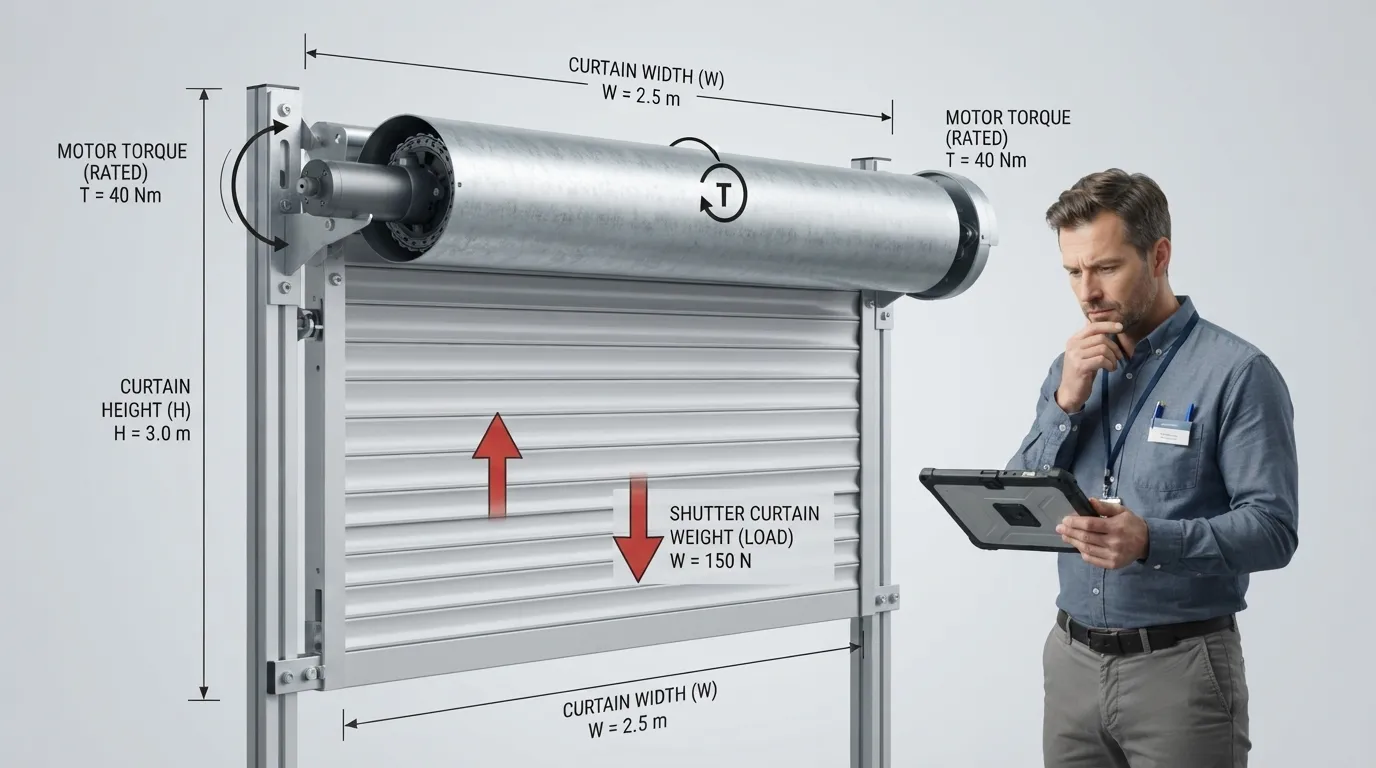
Torque is one of the most important specifications when choosing a tubular motor.
The motor must provide enough rotational force to move the shutter curtain according to the actual load requirements.
The required torque depends on factors such as:
Total shutter weight
Roller tube size
Mechanical resistance
Installation configuration
Selecting the correct torque rating helps the shutter operate smoothly while reducing stress on the motor and other components.
Understanding Tubular Motor Torque Ratings
Different tubular motors are designed for different load capacities.
Matching Motor Torque with Shutter Weight
A common mistake is selecting a motor only based on shutter dimensions without considering the actual weight.
Two shutters with similar sizes may require different motors if they use different materials, such as aluminum, steel, or insulated curtain profiles.
For this reason, motor selection should always consider both the physical size and the total load of the shutter.
Avoiding Under-Sized Motors
A motor with insufficient torque may experience:
Slow operation
Difficulty lifting the shutter
Increased mechanical stress
Reduced service life
Choosing an appropriate torque rating helps maintain stable operation and prevents unnecessary strain on the automation system.
Additional Factors When Choosing a Tubular Motor
Torque and shutter size are important, but other factors also influence whether a tubular motor is suitable for a specific application.
Consider the Roller Tube Compatibility
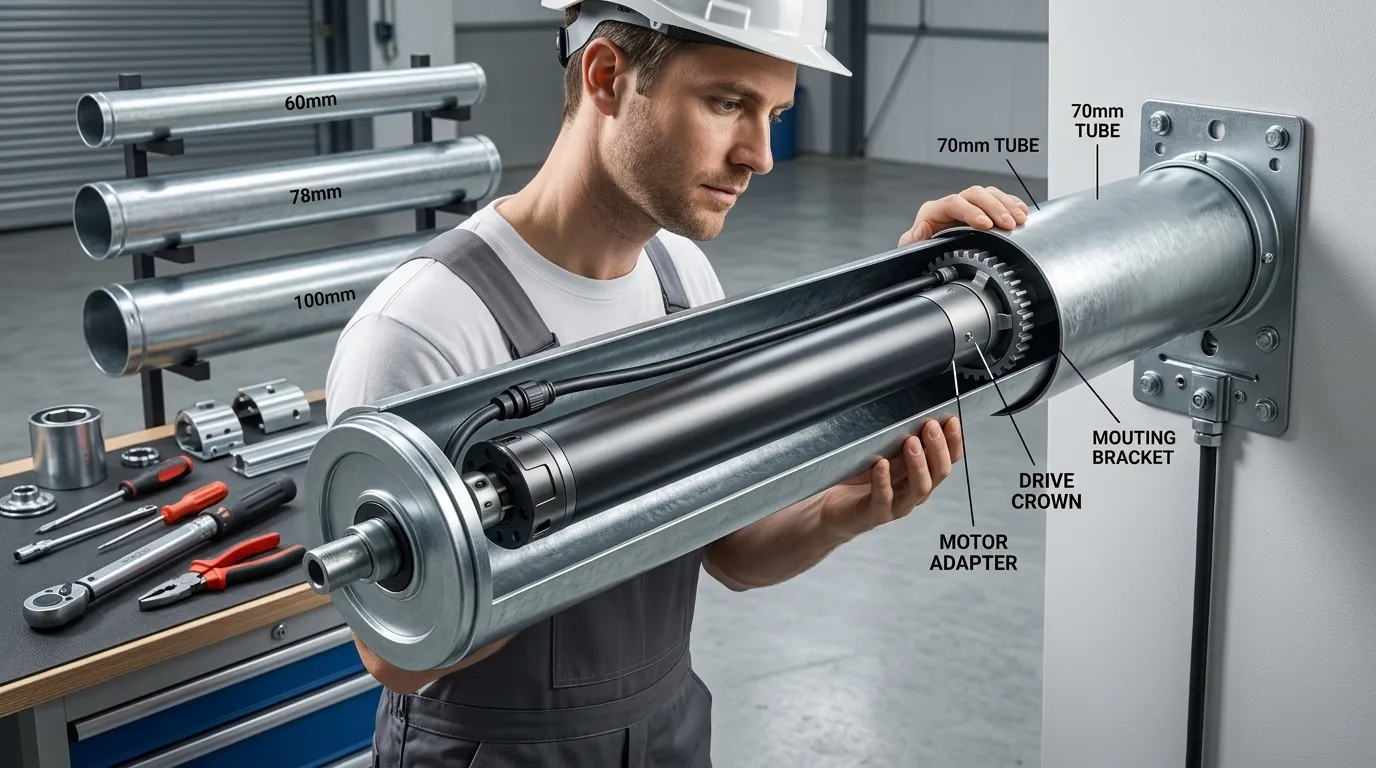
The tubular motor must match the roller tube used in the shutter system.
Different tube diameters and designs may require different motor sizes and installation methods.
Before selecting a motor, installers should confirm:
Tube diameter compatibility
Motor mounting requirements
Adapter and bracket compatibility
Available installation space
A motor that does not match the tube structure may affect installation efficiency and overall system performance.
Evaluate Operating Frequency
The expected operating frequency is another important consideration.
A residential shutter that opens a few times per day has different requirements compared with a commercial shutter that operates repeatedly throughout business hours.
For higher-frequency applications, the motor should be selected according to its duty cycle and long-term operating capability.
Considering usage patterns helps prevent premature wear and improves system reliability.
Select the Right Control Option
Modern tubular motors can support different control methods depending on the application requirements.
Possible control options include:
Wall switches
Remote controls
Smart home systems
For commercial projects, compatibility between the motor and the overall control system should be confirmed before installation.
Common Mistakes When Selecting a Tubular Motor
Choosing the wrong tubular motor can affect both performance and service life.
Selecting Only Based on Price
A lower-cost motor may appear attractive initially, but selecting only by price can lead to problems if the motor does not match the application requirements.
Important factors such as torque rating, durability, operating frequency, and compatibility should also be considered.
Ignoring Installation Conditions
The installation environment can influence motor performance.
Factors such as available space, temperature, moisture, and frequency of use should be evaluated before choosing a motor.
A solution suitable for an indoor residential shutter may not be appropriate for a demanding commercial application.
Overlooking Compatibility With Other Components
The tubular motor works together with the roller tube, brackets, shutter curtain, and control system.
A mismatch between these components may create installation difficulties or reduce operating efficiency.
A complete system evaluation helps ensure better performance.
Tubular Motor Applications

Tubular motors are suitable for many roller shutter applications where compact automation and reliable operation are required.
Residential Roller Shutters
Residential shutters often benefit from tubular motors because of their compact size and clean installation.
They can provide convenient automated control while fitting into limited installation spaces.
Commercial Window Shutters
Retail stores and office buildings may use tubular motors for window shutters and smaller access solutions.
In these applications, appearance, space efficiency, and reliable daily operation are often important considerations.
Awnings and Light Shading Systems
Tubular motors are also commonly used in motorized awnings and shading systems.
Their compact design allows them to be integrated into systems where hidden installation and smooth movement are required.
Frequently Asked Questions
Q1: How do I choose the right tubular motor for a roller shutter?
A: The motor should be selected based on shutter weight, dimensions, required torque, tube compatibility, operating frequency, and control requirements.
Q2: Is a higher torque tubular motor always better?
A: Not necessarily. The motor should match the actual shutter load. An oversized motor may increase costs, while an undersized motor may reduce performance.
Q3: Can tubular motors be used for commercial applications?
A: Yes. Tubular motors can be suitable for commercial applications when the motor specifications match the shutter size and operating requirements.
Q4: What information is needed before selecting a tubular motor?
A: Installers should know the shutter dimensions, curtain material, total weight, roller tube size, usage frequency, and required control method.
Q5: How long can a tubular motor operate?
A: Service life depends on motor quality, installation conditions, operating frequency, and proper maintenance.
Conclusion
Choosing the right tubular motor requires more than checking motor power. The shutter size, weight, torque requirement, tube compatibility, operating frequency, and control system all influence the final selection.
A properly matched tubular motor can provide smoother operation, improved reliability, and longer service life for roller shutter automation systems.
For installers and project suppliers, evaluating the complete shutter application before selection helps create a more efficient and dependable automation solution.
Other Blogs


