Blog
Sliding Door Operators vs Swing Door Operators: How to Choose the Right Automatic Door Solution
Author
Ray
Published
Category
Design & Inspiration

Author
Ray
An experienced automation specialist with a strong background in motor technology and industrial solutions. With years of expertise in central motors, tubular motors, and automation systems, the author is dedicated to sharing insights that connect engineering innovation with real-world applications. Passionate about advancing reliable, energy-efficient, and high-performance automation products for global markets.
What’s better than insider perks, pro tips, and surprises?
Sign up to get the most recent blog articles in your email every week.
Join now.
WHY I WRITE THIS
About my business
Our company’s main product lines include tubular motors, sliding gate motors, swing gate motors, roller shutter motors, and other door automation solutions, all manufactured by trusted partner factories we have worked with for many years.
Our Services
I help them with sales and export operations, while our company also provides sourcing and procurement services in China to help international clients solve supply-related challenges. If you need assistance with procurement, please feel free to contact us.
Introduction
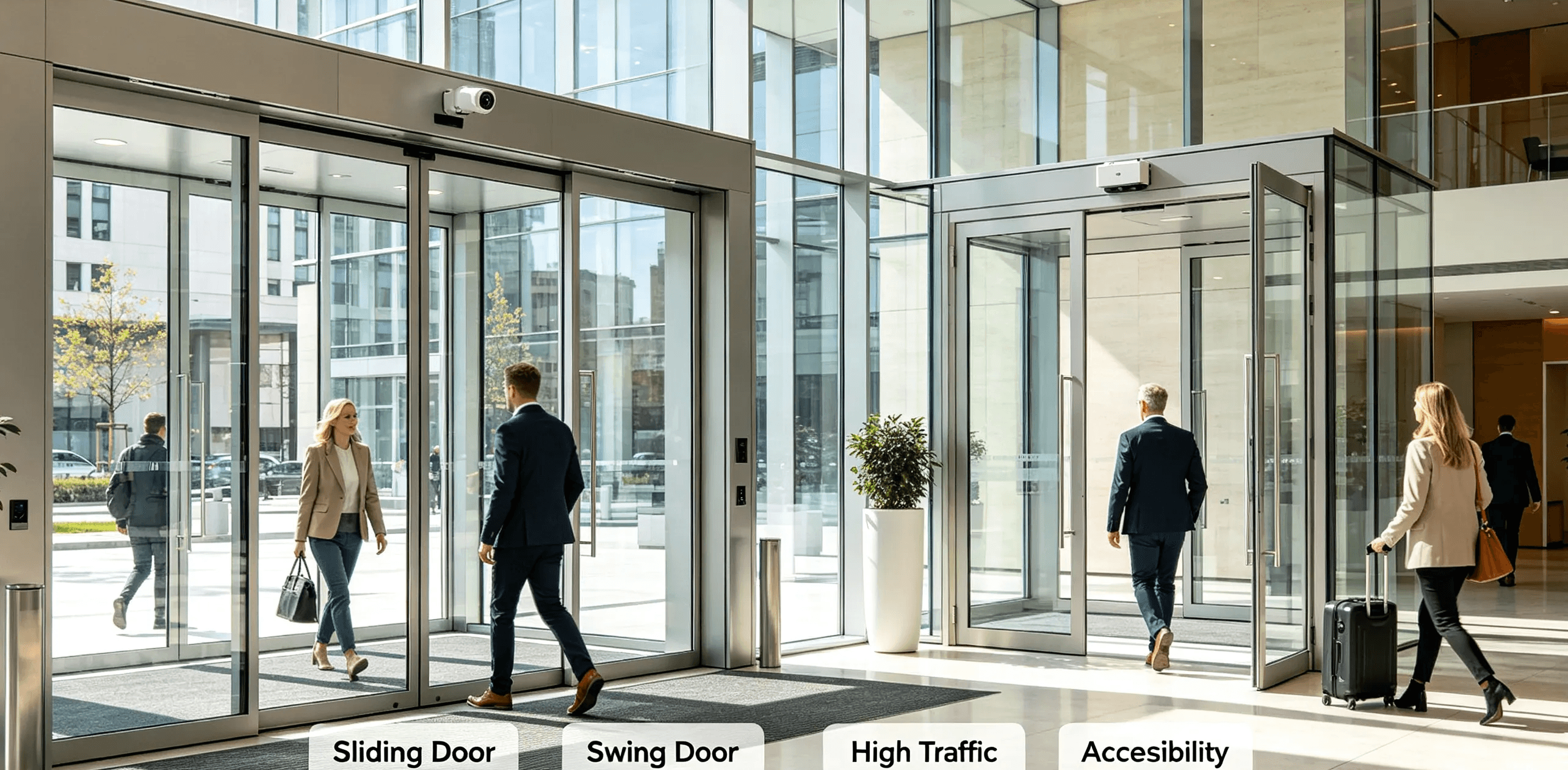
Automatic doors are widely used in commercial buildings to improve accessibility, pedestrian flow, and operational convenience. However, not every entrance requires the same type of automatic door solution.
Two of the most common automatic door systems are sliding door operators and swing door operators. While both can provide automated access, they have different working methods, space requirements, and suitable applications.
Choosing between these two solutions depends on factors such as building layout, available space, traffic volume, accessibility requirements, and installation conditions.
For architects, contractors, installers, and project suppliers, understanding the differences between sliding and swing door operators can help select a more suitable automatic door system for each project.
What Are Sliding Door Operators?
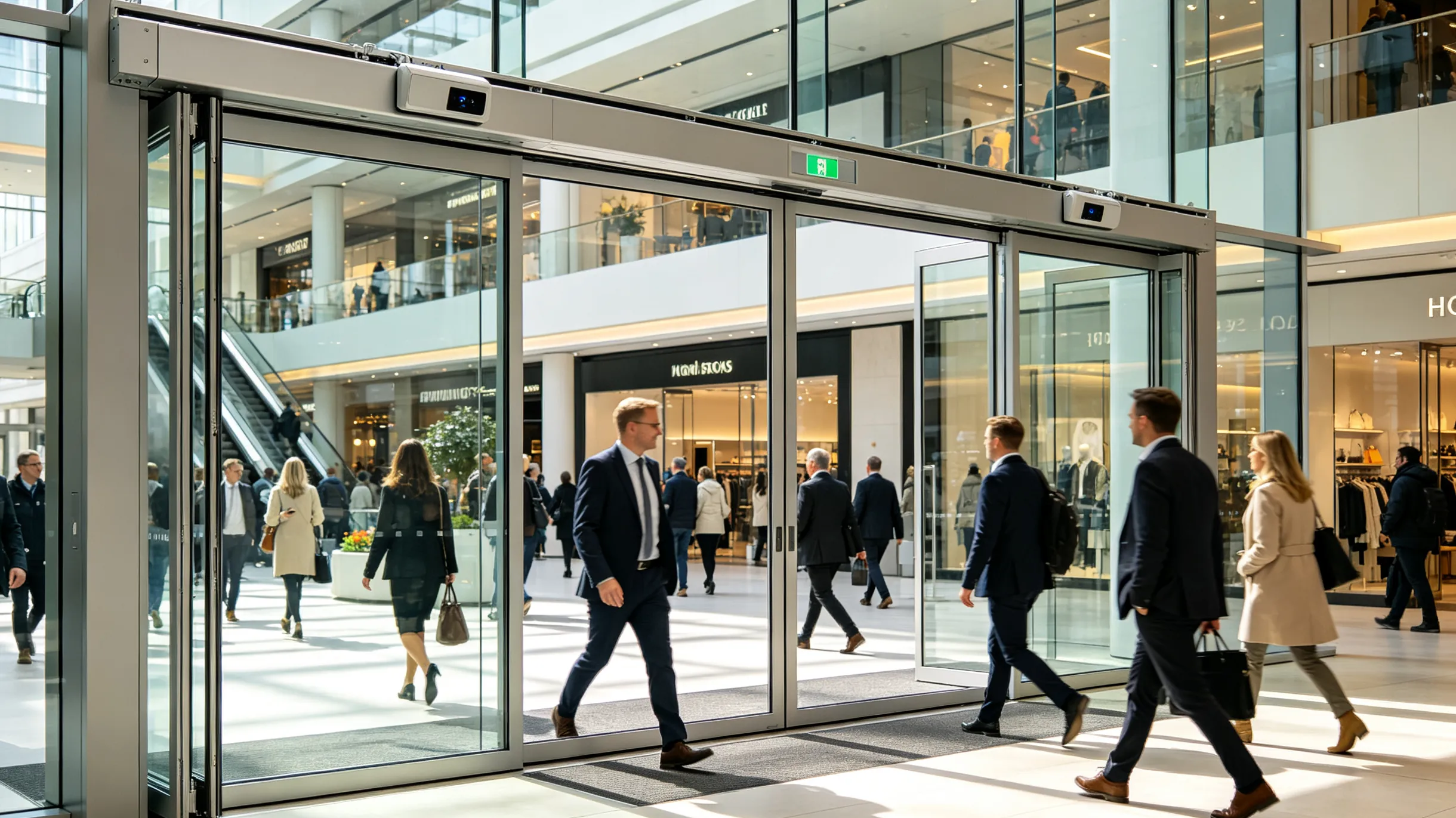
Sliding door operators are automation systems designed to open and close doors by moving the door panels horizontally along a track.
They are one of the most common solutions for commercial entrances because they provide smooth operation and efficient pedestrian access.
How Sliding Door Systems Work
A sliding automatic door system typically includes:
Door operator
Motor and control unit
Sensors
Sliding tracks
Door panels
Safety components
When a person approaches the entrance, sensors detect movement and send a signal to the controller. The operator then activates the motor, which moves the door panels sideways along the track.
After the user passes through, the system automatically closes the door according to the configured settings.
Advantages of Sliding Door Operators
Sliding door systems offer several benefits for commercial applications.
Efficient use of space
Because the door panels move horizontally, sliding doors do not require additional swing space in front of or behind the entrance.
This makes them suitable for entrances where available space is limited.
Smooth pedestrian flow
Sliding doors allow multiple people to pass through at the same time, making them suitable for locations with frequent foot traffic.
Modern appearance
The combination of glass panels and automatic sliding movement creates a clean and professional entrance appearance, which is commonly used in:
Shopping centers
Office buildings
Hotels
Airports
What Are Swing Door Operators?
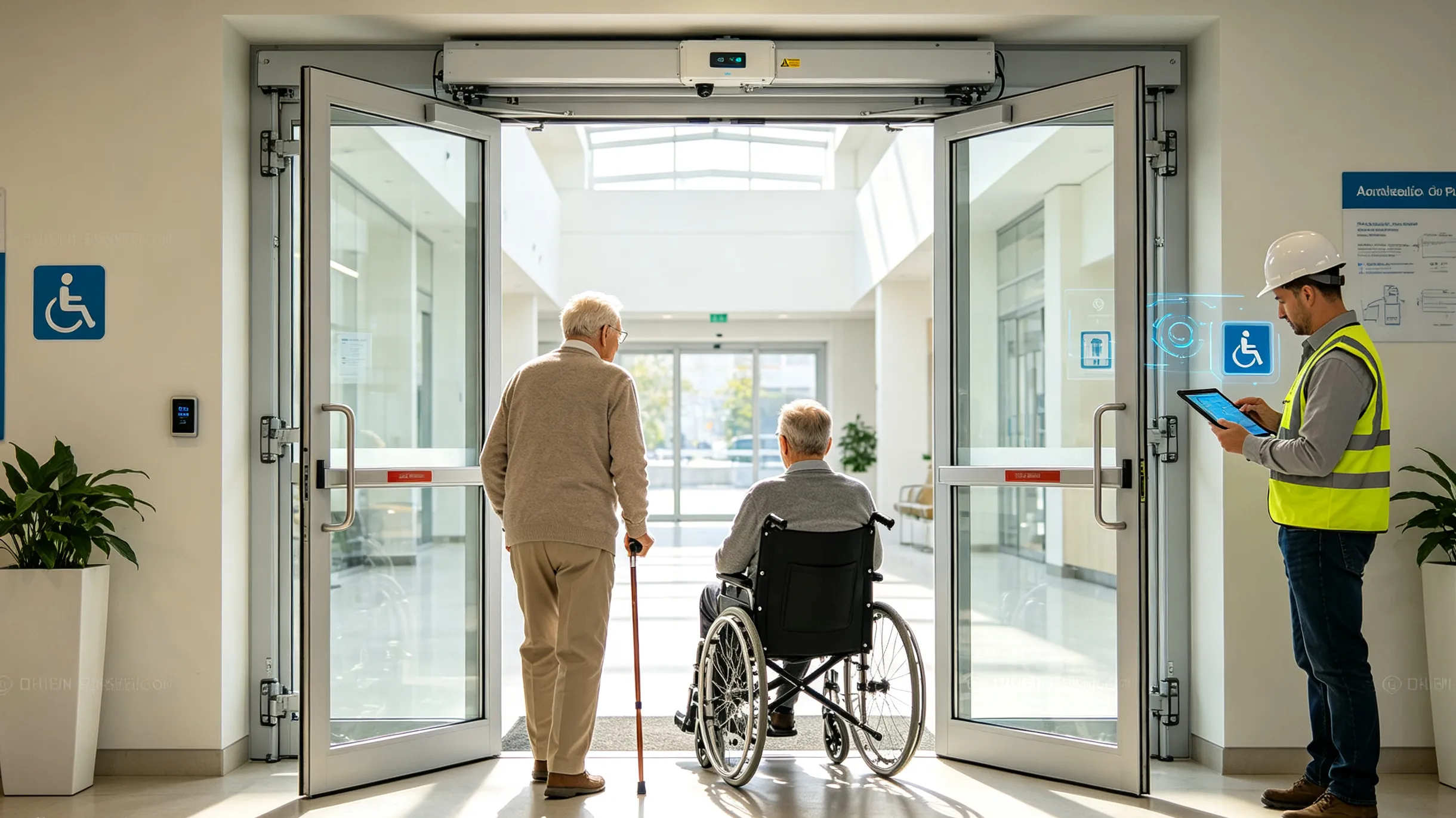
Swing door operators are automation systems that open and close doors by rotating the door panel around its hinges.
They are commonly used where a traditional hinged door structure already exists or where a sliding system is not suitable.
How Swing Door Systems Work
A swing door operator is installed above or beside the door and controls the opening and closing movement.
The system usually includes:
Door operator
Control unit
Activation sensors
Safety devices
When the sensor detects an approaching user, the operator activates the mechanism to push or pull the door open.
After the user passes, the door returns to its closed position automatically.
Advantages of Swing Door Operators
Swing door operators provide several advantages for specific applications.
Suitable for existing door structures
Many buildings already have hinged doors installed. Adding an automatic swing door operator can upgrade accessibility without replacing the complete entrance system.
Flexible installation options
Swing doors can be used in locations where sliding doors may not be practical due to architectural limitations.
Accessibility improvement
Automatic swing doors can provide easier access for:
Elderly users
Wheelchair users
People carrying items
They are often used in healthcare facilities, offices, and public buildings where accessibility is an important requirement.
Sliding Door Operators vs Swing Door Operators
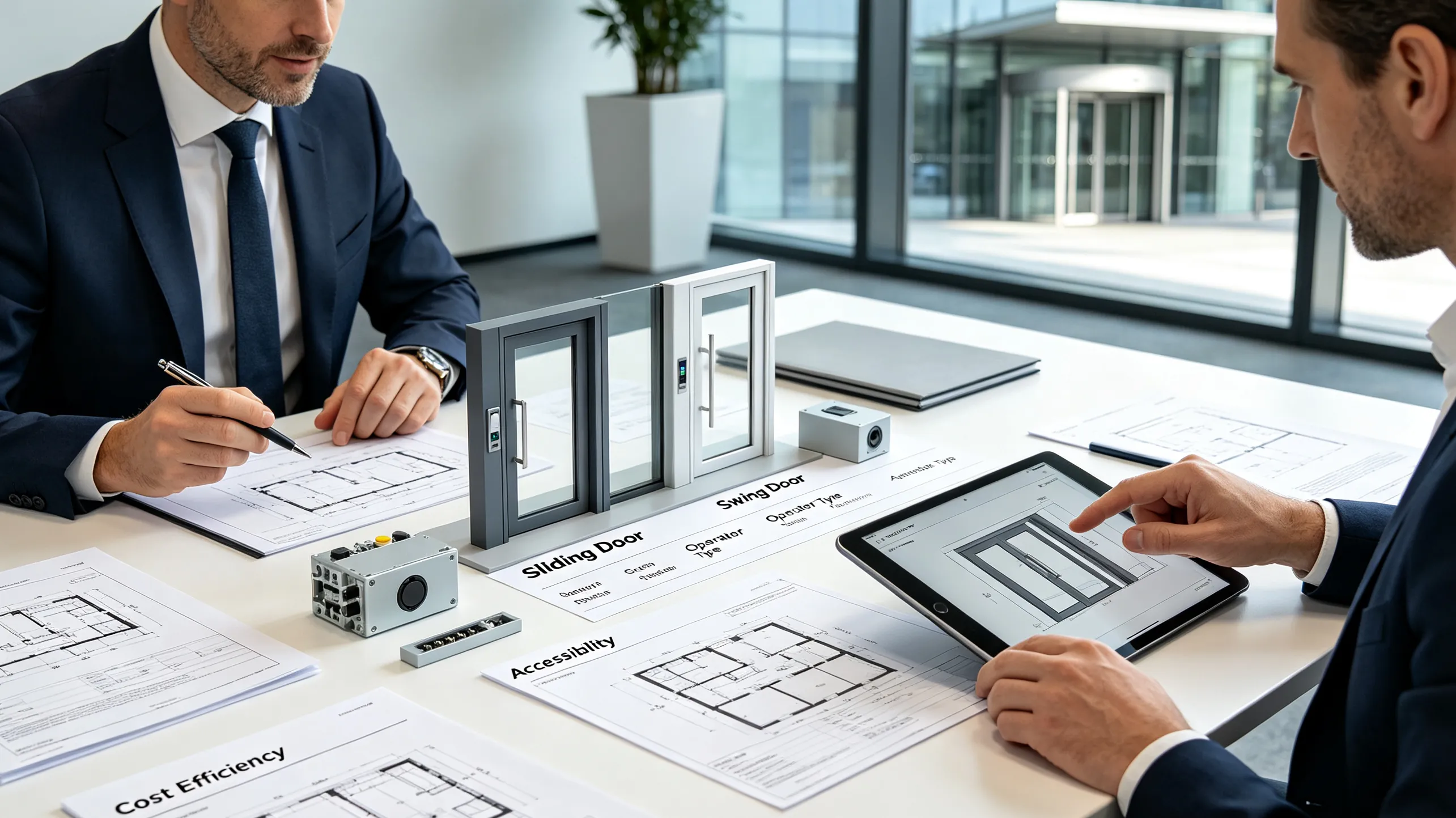
Although both systems provide automatic access, sliding and swing door operators have different characteristics. The right choice depends on the building environment, entrance design, and expected usage.
Space Requirements
Space availability is one of the first factors to consider.
Sliding doors move horizontally along a track, which means they require sufficient side space for the door panels to open.
They are suitable for entrances with wider wall areas and high pedestrian flow.
Swing doors, on the other hand, require open space in the door movement area because the door panel rotates during operation.
They may be a better choice for entrances where side space is limited but there is enough clearance for the door swing.
Traffic Flow and Usage Frequency
The expected number of users can influence the most suitable automatic door solution.
Sliding doors are commonly used in high-traffic environments because they allow continuous pedestrian movement and can handle frequent opening cycles.
Typical applications include:
Shopping malls
Supermarkets
Airports
Large commercial buildings
Swing doors are often suitable for locations with moderate traffic levels or where a single entrance needs to provide automated accessibility.
Examples include:
Office entrances
Healthcare rooms
Small commercial facilities
Accessibility Considerations
Accessibility is an important factor when selecting an automatic door system.
Both sliding and swing door operators can improve access for people with mobility challenges, but their suitability depends on the entrance layout.
Sliding doors often provide a wider clear opening area, which can be beneficial for:
Wheelchairs
Hospital equipment
Large groups of users
Swing doors can also provide accessible entry solutions, especially when upgrading existing hinged doors.
However, the required opening space and door weight should be evaluated before installation.
Suitable Applications
Different buildings may require different automatic door solutions.
Sliding door operators are commonly used in:
Retail stores
Shopping centers
Hotels
Office entrances
They are ideal where smooth pedestrian flow and frequent operation are priorities.
Swing door operators are commonly used in:
Hospitals
Clinics
Office buildings
Public facilities
Interior access doors
They are often selected when space conditions or existing door structures make sliding systems less practical.
Applications of Different Automatic Door Solutions
The best automatic door system depends on how the entrance will be used.
Retail Stores and Shopping Centers
Retail environments usually experience high customer traffic throughout the day.
Sliding door operators are commonly preferred because they provide:
Wide access openings
Smooth customer movement
Efficient entrance operation
For busy commercial entrances, reliable sensors and durable operators are important for maintaining daily performance.
Hospitals and Healthcare Facilities
Healthcare buildings often require doors that support accessibility, safety, and hands-free operation.
Swing door operators are frequently used for:
Treatment areas
Internal access points
Sliding doors may also be suitable for main entrances where larger pedestrian flow is expected.
Office Buildings and Public Facilities
Office buildings often require a balance between appearance, convenience, and reliability.
Sliding doors are commonly used at main entrances, while swing door operators may be suitable for internal access points or areas with existing hinged doors.
Public facilities should consider:
User volume
Accessibility needs
Safety requirements
Maintenance conditions
before selecting the system.
How to Choose the Right Automatic Door Solution
Selecting between sliding door operators and swing door operators requires evaluating the specific needs of the project.
The best solution is not always the most advanced option, but the one that matches the building layout, user requirements, and operating conditions.
Consider Building Layout
The physical structure of the entrance is one of the most important selection factors.
Before choosing an automatic door system, consider:
Available installation space
Entrance width
Wall structure
Existing door type
Indoor and outdoor conditions
For entrances with sufficient side space, sliding doors can provide efficient operation.
For buildings with existing hinged doors or limited side clearance, swing door operators may offer a more practical solution.
Consider User Traffic
Traffic volume directly affects system selection.
High-traffic entrances usually require solutions that can handle frequent opening and closing cycles.
Sliding door operators are often preferred for areas with:
Continuous pedestrian movement
Large numbers of visitors
Wide entrance requirements
Swing door operators may be more suitable for areas with lower traffic levels but specific accessibility requirements.
Understanding user behavior helps prevent selecting a system that is unsuitable for daily operation.
Consider Safety Requirements
Safety should always be considered when selecting an automatic door solution.
Important factors include:
Sensor performance
Door movement speed
Emergency operation
Safe closing control
Different applications may require different safety configurations.
For example, hospitals and public facilities may require additional safety considerations because users may include elderly people, patients, or people with limited mobility.
Common Mistakes When Selecting Automatic Door Systems
Choosing an automatic door solution based only on appearance or initial cost can create problems later.
A proper selection process should consider long-term operation, maintenance, and user requirements.
Choosing Based Only on Appearance
Modern glass sliding doors often create an attractive entrance design, but appearance should not be the only consideration.
A visually appealing solution may not always be suitable if:
Traffic volume is too high
Installation space is insufficient
Maintenance requirements are overlooked
The system should first meet functional requirements before aesthetic preferences.
Ignoring Installation Conditions
Each building has different structural and environmental conditions.
Ignoring factors such as:
Available space
Existing door structure
Power supply
may result in additional modification work or reduced system performance.
A proper site evaluation before selection can help avoid these issues.
Overlooking Future Maintenance
Automatic doors operate through multiple components working together.
Before choosing a system, consider:
Availability of replacement parts
Ease of maintenance
Technical support
A suitable automatic door solution should not only perform well after installation but also remain practical throughout its service life.
Frequently Asked Questions
Q1: What is the main difference between sliding and swing door operators?
A: Sliding door operators open doors by moving panels horizontally along a track, while swing door operators open doors by rotating panels around hinges.
Q2: Which automatic door system is better for high-traffic entrances?
A: Sliding door operators are usually more suitable for high-traffic entrances because they provide smooth pedestrian flow and wider access.
Q3: Are swing door operators suitable for existing doors?
A: Yes. Swing door operators can often be installed on existing hinged doors if the structure and door weight are suitable.
Q4: Which automatic door is better for hospitals?
A: Both systems can be used in healthcare facilities. The choice depends on the application, available space, accessibility requirements, and traffic conditions.
Q5: How do I choose between sliding and swing automatic doors?
A: Consider entrance space, traffic volume, accessibility needs, safety requirements, and future maintenance before selecting a solution.
Conclusion
Sliding door operators and swing door operators both provide reliable automatic access solutions, but they are designed for different applications.
Sliding doors are often ideal for high-traffic entrances where smooth movement and space efficiency are important. Swing doors are a practical choice for locations with existing hinged doors or specific accessibility requirements.
For contractors, installers, and project suppliers, selecting the right automatic door solution requires evaluating the complete application rather than focusing on one feature alone.
A properly matched system can improve convenience, safety, and long-term performance for commercial buildings.
Other Blogs


